

Definition
Matcha is a finely ground powder made from specially grown green tea leaves. Unlike regular green tea, where the leaves are steeped and discarded, matcha is whisked into water or milk and consumed whole, giving it a richer flavor and higher concentration of nutrients and antioxidants.
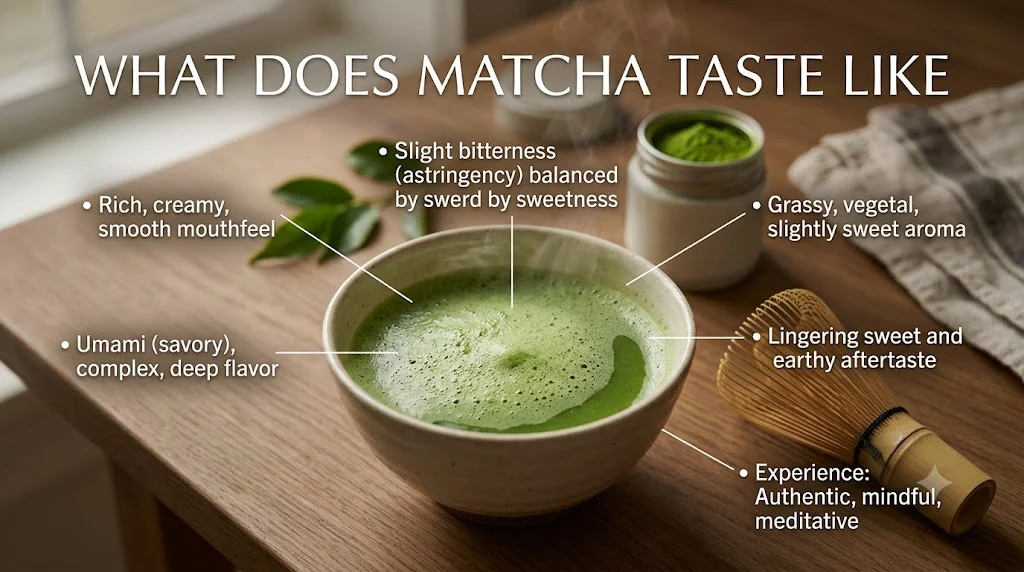
You’ve probably seen matcha everywhere from vibrant green lattes on social media to specialty drinks at coffee shops. But before taking your first sip, one question naturally comes to mind: What does matcha taste like? The answer isn’t as simple as “green tea.” Matcha has a unique flavor profile that combines earthy, grassy, slightly sweet, and umami-rich notes, creating a taste experience unlike any other tea.
Whether you’re curious about trying matcha for the first time or wondering why people are obsessed with it, understanding its flavor can help set the right expectations. The taste of matcha can vary depending on its quality, preparation method, and whether it’s served plain or mixed into a latte. In this guide, we’ll break down exactly what matcha tastes like, what influences its flavor, and why some people love it from the very first sip.
The Honest Truth About Your First Sip
You have probably seen that brilliant green powder all over social media. Maybe a friend raved about their morning matcha ritual. Perhaps you are curious about the alleged health benefits or the smooth energy boost that coffee just cannot deliver.
But there is one question that stops most people cold before they ever buy that first tin.
What does matcha taste like?
It is a fair question. Nobody wants to spend money on something that tastes like grass clippings mixed with dirt. And honestly, the internet gives you a lot of conflicting answers. Some people call it sweet and creamy. Others describe it as bitter and vegetal. Who is telling the truth?
Here is the reality. They are all correct.
Matcha taste is not a single note. It is a symphony of flavors that shifts dramatically based on quality, preparation, and your own palate. The same powder can taste like a luxurious savory treat or a punishment depending on how you treat it.
This guide will give you the unvarnished truth. We will break down every flavor note, explain why quality matters more than you think, and show you exactly how to make matcha taste good. No fluff. No marketing nonsense. Just the real deal about matcha tea taste.
The Core Matcha Flavor Profile: What You Actually Taste
Let us cut through the confusion right now. Matcha green tea taste centers on three primary sensations that work together or fight each other depending on the quality.
Umami: The Savory Secret Weapon
Umami is that deep, satisfying savoriness you find in ripe tomatoes, aged cheese, and mushroom broth. In matcha, umami comes from amino acids, particularly L-theanine, which develops during the shading process.
When farmers cover tea plants weeks before harvest, the plants produce more chlorophyll and amino acids to compensate for the lack of sunlight. This creates a rich, broth-like flavor that coats your tongue. High-quality ceremonial matcha tastes almost like a clear vegetable broth with a hint of seaweed. It is complex, satisfying, and entirely unique in the tea world.
A good matcha should make your mouth water slightly. That is the umami working its magic.
Grassiness: Fresh, Green, and Alive
That vegetal punch is the second pillar of matcha flavor. Think about freshly cut grass, young spinach leaves, or even the smell of a garden after rain. This comes from the chlorophyll and plant compounds concentrated in the powdered leaves.
The grassiness is not a bad thing. In fact, it is a hallmark of authentic matcha flavor. But there is a spectrum. High-quality matcha offers a sweet, almost floral grassiness that feels fresh and pleasant. Lower-quality matcha can taste like dried hay or stale greens, which is far less appealing.
Bitterness: The Sharp Edge
Bitterness is the most controversial element of matcha taste. Some people hate it. Others learn to appreciate it as a balancing act.
Bitterness in matcha comes from tannins and certain catechins. It hits the back of your tongue and lingers briefly. Think of it like the bitterness in dark chocolate or espresso. It is not inherently bad. It provides structure and contrast to the sweetness and umami.
The problem is when bitterness overwhelms everything else. That usually signals poor quality or bad preparation. More on that later.
The Complete Matcha Flavor Wheel
| Flavor Note | Description | Intensity in High Quality | Intensity in Low Quality |
|---|---|---|---|
| Umami | Savory, broth-like, mouthwatering | High | Low to none |
| Sweetness | Natural, mild, honey-like | Moderate | Minimal |
| Grassiness | Fresh cut greens, spinach | Pleasant and bright | Stale and hay-like |
| Bitterness | Sharp, astringent, clean | Balanced | Overwhelming |
| Earthiness | Mineral, soil-like | Subtle and grounding | Muddy or dusty |
| Creaminess | Texture-based, velvety | Silky and smooth | Thin or gritty |
The Texture Question
Here is something most guides overlook. Matcha taste is inseparable from matcha texture. The powder does not dissolve like sugar. It suspends in the water, creating a creamy, almost thick mouthfeel that regular steeped tea cannot replicate.
When you whisk matcha properly, you create a microfoam that adds a velvety body to the drink. This texture carries the flavor compounds across your tongue differently than a clear liquid. It makes the taste feel richer and more substantial.
A good matcha should feel like liquid velvet. A bad one feels thin, watery, or chalky.
The Quality Cliff: Ceremonial Versus Culinary Matcha
You cannot understand matcha flavor without understanding matcha grades. The difference between ceremonial and culinary matcha is not subtle. It is a canyon.
Ceremonial Grade Matcha
Ceremonial grade represents the highest quality. Producers select the youngest, most tender leaves from the top of the plant. They remove the stems and veins before stone-grinding the leaves into a fine powder.
What It Tastes Like:
- Dominant umami with natural sweetness
- Smooth, creamy texture
- Minimal bitterness that fades quickly
- Complex flavor notes that evolve as you sip
- Bright, vibrant jade color
Best Used For:
- Drinking straight as usucha (thin tea)
- Traditional tea ceremonies
- Koicha (thick tea) preparations
- Mindful sipping experiences
Ceremonial matcha tastes so good that you genuinely do not need sugar or milk. It stands on its own with a flavor profile that surprises and delights even skeptical first-timers.
Culinary Grade Matcha
Culinary grade uses older leaves, including stems and veins. The color is duller, often yellowish or olive green. The flavor is bolder, more bitter, and less refined.
What It Tastes Like:
- Strong astringency and bitterness
- Minimal umami or sweetness
- Grassy but often in a harsh way
- Thin or gritty texture
- Lingering bitter aftertaste
Best Used For:
- Matcha lattes and smoothies
- Baking and desserts
- Ice cream and confections
- Cooking and savory dishes
Culinary grade is not bad tea. It is simply designed for a different purpose. The bold flavors hold up against milk, sugar, and other ingredients. But drinking it straight would be a mistake.
The Price and Quality Connection
Here is a hard truth. You get what you pay for with matcha.
| Quality Level | Price Range (per 30g) | Flavor Expectation |
|---|---|---|
| Low culinary | $10-$15 | Bitter, harsh, yellow-green, unpleasant straight |
| Mid culinary | $15-$25 | Acceptable in lattes, still bitter plain |
| High culinary | $25-$40 | Decent in lattes, some umami |
| Entry ceremonial | $40-$60 | Noticeable umami, mild bitterness, smooth |
| Premium ceremonial | $60-$100 | Rich umami, sweet, complex, silky |
| Ultra-premium ceremonial | $100+ | Exquisite, multi-layered, unforgettable |
The difference between a $15 matcha and a $50 matcha is staggering. The $50 version tastes like a completely different beverage. It is smoother, sweeter, and infinitely more pleasant.
Breaking Down the Flavor Experience: Sip by Sip
Let us walk through a sip of high-quality ceremonial matcha. Understanding what happens at each stage helps you appreciate the complexity of matcha green tea taste.
The Aroma Before You Sip
Take a moment to smell your matcha before drinking. High-quality powder releases a sweet, grassy, almost floral fragrance. It reminds me of fresh spring air mixed with a hint of vanilla. This aroma primes your taste buds for what is coming.
Low-quality matcha smells different. You might detect hay, dust, or stale greens. That is a warning sign. The flavor will likely match the aroma.
The First Contact
Your lips touch the bowl. The liquid feels silky and smooth, almost like a thin cream. This texture is unique to matcha tea taste. No other tea feels quite like it.
The Front of the Tongue
The first flavor you notice is usually a subtle sweetness. It is not sugary. It is more like a natural stevia or honeydew melon note. This sweetness comes from the amino acids and acts as a gentle introduction.
The Mid-Sip Wave
Then the grassiness arrives. Fresh spinach, young wheatgrass, or edamame. It is vegetal but alive. In good matcha, this flavor feels bright and invigorating. In bad matcha, it feels old and musty.
The Back of the Tongue
Here comes the umami. That savory richness spreads across your tongue, reminding you of broth or roasted vegetables. This is where ceremonial matcha truly shines. The umami should be distinct and satisfying.
The Finish
The bitterness appears last, and it should be brief. A high-quality matcha leaves a clean, drying sensation with a hint of astringency. It fades within seconds, leaving behind a sweet aftertaste.
The Aftertaste
Good matcha lingers. The umami and sweetness remain in your mouth for a minute or two. You might even notice a pleasant tingle on your tongue. This is the sign of a well-crafted tea.
The Umami Controversy: Why Some People Taste Fish
Here is a common question. Does matcha taste fishy?
The answer is no, but the confusion makes sense. Matcha contains compounds similar to those found in seaweed and seafood. These create an umami flavor that some people interpret as fishy, especially if they are not familiar with savory tea.
However, actual fishiness is a flaw. It suggests the matcha is old, poorly stored, or oxidized. Fresh, high-quality matcha should taste vegetal and savory, not seafood-like.
If your matcha tastes fishy, try a different brand or a fresher batch. That is not how authentic matcha flavor should present itself.
Why Your First Sip Probably Shocked You
Let us be honest. Most people do not love matcha the first time. That is completely normal.
The Expectation Problem
You see a bright green powder. You expect something sweet and fruity because the color suggests tropical vibes. Instead, you get savory and vegetal. Your brain short-circuits. This is not what green drinks taste like in your experience.
The Acquired Taste Reality
Matcha is an acquired taste, much like coffee, wine, or dark chocolate. Your palate needs time to adjust and appreciate the complexity.
The Typical Matcha Journey:
- Sip 1: “What is this? Grassy and weird. I am not sure.”
- Sip 3: “Okay, I kind of get the umami thing. It is interesting.”
- Sip 5: “This is actually growing on me. I want another sip.”
- Sip 10: “I crave this. Why do I crave this? The flavor is so unique.”
The Brain Connection
Here is the fascinating part. Matcha contains L-theanine, an amino acid that promotes calm focus. It also contains caffeine for alertness. Together, they create a state of relaxed concentration that feels genuinely pleasant.
Your brain starts connecting the taste with that good feeling. Before you know it, you crave the flavor. It is a learned association that makes matcha increasingly enjoyable over time.
Matcha Lattes versus Pure Matcha: Two Different Animals
When people ask does matcha taste good, they often mean matcha lattes. That is a very different question from whether pure matcha tastes good.
The Matcha Latte Transformation
A matcha latte transforms the flavor profile in significant ways. Milk clings to the bitter compounds, softening the harsh edges. The creamy texture amplifies the natural sweetness. Sugar or honey adds another layer of sweetness that masks the vegetal notes.
The result is a drink that tastes more like a green tea milkshake. It is approachable, comforting, and easy to love. Most people who dislike pure matcha enjoy matcha lattes.
Sweetened Versus Unsweetened
| Preparation | Taste Profile | Who It Is For |
|---|---|---|
| Unsweetened pure matcha | Bold, savory, complex, slightly bitter | Purists, tea connoisseurs, health-focused drinkers |
| Sweetened pure matcha | Mellow, approachable, balanced | Newcomers, people with a sweet tooth |
| Unsweetened matcha latte | Creamy, savory, rich, mildly sweet | Keto dieters, people avoiding sugar |
| Sweetened matcha latte | Dessert-like, smooth, easy drinking | Beginners, casual drinkers, indulgence seekers |
Iced Matcha Flavor
Cold temperatures change matcha flavor significantly. Bitterness becomes less pronounced. The grassiness fades. The drink tastes smoother and more refreshing but loses some aromatic complexity.
Iced matcha is perfect for summer days. Just do not expect the same depth of flavor you get from hot preparation. The cold dulls some of the more delicate notes.
The Bitterness Problem: What Causes It and How to Fix It
Bitterness is the number one complaint about matcha taste. But here is the truth. Matcha is not supposed to be unbearably bitter.
Why Your Matcha Tastes Bitter
Boiling Water: This is the biggest culprit. Boiling water scorches the delicate matcha powder, releasing all the bitter tannins at once. The flavor becomes harsh and unpleasant.
Low-Quality Powder: Culinary grade matcha contains more stems and veins, which carry bitterness. Ceremonial grade removes these parts, leaving behind the sweeter, smoother elements.
Too Much Powder: Using a heaping tablespoon instead of a precise half to one teaspoon throws the balance off. More powder means more bitterness.
Poor Whisking: Clumps of powder create concentrated bitter pockets. Thorough whisking prevents this.
Old Matcha: Matcha loses freshness quickly. Old powder tastes stale and more bitter than fresh powder.
How to Fix Bitter Matcha
- Use 160-175°F water. Never boiling. The lower temperature extracts the pleasant flavors without the harsh tannins.
- Sift your powder. This removes clumps and ensures even dispersion.
- Whisk vigorously. A bamboo whisk creates microfoam that softens astringency.
- Add a pinch of salt. This sounds strange but it works. Salt suppresses bitterness and enhances sweetness and umami.
- Adjust the ratio. Start with half a teaspoon of powder and work your way up.
Preparation Tips That Actually Change the Flavor
Preparation is not just about making tea. It is about unlocking the flavor. Here are the real techniques that make a difference.
Sifting Is Non-Negotiable
Matcha powder clumps. Those clumps create bitter pockets in your drink. Sifting through a fine mesh strainer breaks up the clumps and ensures a smooth, even flavor.
Water Temperature: The Goldilocks Zone
| Temperature | Effect |
|---|---|
| Below 160°F | Flavor does not fully extract. Tea tastes weak and thin. |
| 160-175°F | Perfect extraction. Sweetness and umami come forward. Bitterness is minimized. |
| Above 175°F | Tannins release. Tea tastes harsh and bitter. |
| Boiling (212°F) | Disaster. Completely bitter and undrinkable. |
The Whisking Technique
A bamboo whisk (chasen) is not a gimmick. The fine tines create aeration that produces microfoam. This foam softens the astringency and adds that coveted creamy texture.
Whisk in a zigzag or M motion, not a circular motion. Circular whisking does not create enough air. The M motion introduces oxygen and breaks up the powder more effectively.
The Water-to-Powder Ratio
For usucha (thin tea): Use one teaspoon of powder to about 70ml (2.5 ounces) of water.
For koicha (thick tea): Use two teaspoons of powder to about 40ml (1.5 ounces) of water.
Koicha is intensely concentrated and only for ceremonial grade. Culinary grade cannot handle this ratio. It would be unbearably bitter.
Matcha Versus Green Tea: The Flavor Showdown
People often ask how matcha compares to regular green tea. The answer is straightforward. They are different beverages with different flavor profiles.
Matcha Versus Sencha
| Factor | Matcha | Sencha |
|---|---|---|
| Form | Powdered whole leaves | Steeped loose leaves |
| Texture | Creamy, thick | Thin, clear |
| Flavor Intensity | Strong, concentrated | Lighter, more delicate |
| Umami | High | Moderate |
| Bitterness | Manageable with good quality | Can be more astringent |
| Preparation | Whisked | Steeped |
Sencha is like a light broth. Matcha is like an espresso. Both are green tea but they hit your palate very differently.
Matcha Versus Coffee
| Factor | Matcha | Coffee |
|---|---|---|
| Flavor Notes | Grassy, savory, sweet | Roasted, acidic, chocolatey |
| Energy Effect | Calm focus | Jittery alertness |
| Bitterness | Can be balanced | Often prominent |
| Acidity | Low | High |
| Preparation | Whisking | Brewing or espresso |
Coffee and matcha are polar opposites in the flavor wheel. If you love roasted, acidic notes, matcha might surprise you with its vegetal, savory approach.
The Health Halo Effect and Flavor Perception
Here is something interesting. Knowing a food is healthy changes how you perceive its taste.
The Psychology of Healthy Eating
Studies show that when people know a food has health benefits, they rate its flavor more positively. This is called the halo effect. Matcha benefits from this in a big way.
What the Health Benefits Actually Are
Matcha contains concentrated antioxidants called catechins. The most famous is EGCG, which research links to various health benefits. The shading process boosts chlorophyll and L-theanine. The L-theanine promotes relaxation without drowsiness.
The Flavor Connection
These compounds also contribute to the flavor. The catechins add astringency. The chlorophyll adds grassiness. The L-theanine adds umami and sweetness.
You cannot separate the health from the flavor. They come from the same source. The same compounds that make matcha beneficial also make it taste like matcha.
The Takeaway
You do not have to choke down matcha for health reasons. With the right grade and preparation, you will genuinely enjoy the flavor. The health benefits become a bonus rather than a justification.
Matcha Quality Grades Explained
Understanding matcha grades helps you make better purchasing decisions. Here is what you need to know.
How Producers Grade Matcha
Producers grade matcha based on several factors:
- Leaf position on the plant
- Age of the leaves
- Processing methods
- Color and texture
- Flavor profile
The Grade Breakdown
Ceremonial Grade:
- Youngest, tender leaves from the top
- Hand-picked
- Stone-ground slowly
- Bright jade green color
- Rich umami and sweetness
- Smooth, fine texture
Premium Grade:
- Slightly older leaves
- Machine-picked
- Good color and flavor
- Acceptable for drinking
Culinary Grade:
- Older leaves including stems
- Machine-picked and processed
- Duller color
- More bitter and astringent
- Best for cooking and lattes
Industrial Grade:
- Lowest quality
- Used for food products and extracts
- Not suitable for drinking
What the Color Tells You
The color of matcha tells you a lot about quality.
| Color | Quality | What It Means |
|---|---|---|
| Bright, vibrant jade green | High | Young leaves, proper shading, fresh |
| Medium green | Medium | Older leaves, less shading |
| Yellowish green | Low | Stems and veins included, oxidized |
| Brownish or olive | Very low | Old, poor quality, not fresh |
Bright green means high chlorophyll and amino acids. That translates to better flavor. Dull colors mean lower quality and weaker taste.
The Regional Difference: Uji Versus Shizuoka
Matcha from different regions tastes different. The terroir matters, just like with wine.
Uji Matcha
Uji, near Kyoto, produces some of the most famous matcha. The flavor is rich, deep, and complex with prominent umami. Uji matcha often has a sweet, almost fruity undertone beneath the grassiness.
Shizuoka Matcha
Shizuoka produces more matcha by volume. The flavor tends to be brighter and more vegetal. It is often more approachable and less intense than Uji matcha.
Other Regions
Kyushu and Kagoshima also produce matcha. These southern regions have warmer climates, leading to different flavor profiles. They are generally less complex but still offer good quality.
The Flavor Differences
| Region | Flavor Profile | Best For |
|---|---|---|
| Uji | Rich umami, sweet, complex, deep | Drinking straight, ceremonial use |
| Shizuoka | Bright, vegetal, approachable | General drinking, lattes |
| Kyushu | Mild, gentle, less intense | Beginners, casual drinking |
| Kagoshima | Clean, fresh, crisp | Iced matcha, summer drinks |
How to Choose Matcha for Your Palate
You are unique. Your taste buds are unique. Here is how to choose matcha that fits your preferences.
If You Are a Beginner
Start with a mid-range ceremonial grade from Uji. The sweetness and umami will be accessible. Avoid cheap matcha. It will turn you off the experience entirely.
Consider starting with matcha lattes. The milk and sweetener make the flavor more approachable while you develop your palate.
If You Love Coffee
You might find matcha surprising at first. The flavor is completely different. Look for a matcha with pronounced umami and low bitterness. The savory notes might appeal to your coffee-loving palate more than you expect.
If You Avoid Sugar
Stick with unsweetened ceremonial matcha. The natural sweetness provides plenty of flavor without added sugar. Avoid culinary grade, which needs sugar to taste good.
If You Want the Highest Umami
Look for matcha from Uji, specifically from the first harvest. The umami is most concentrated in these teas. Expect to pay a premium, but the flavor is unmistakable.
If You Want to Save Money
Buy culinary grade for lattes and baking. Reserve ceremonial grade for drinking straight. This gives you the best of both worlds without breaking the bank.
The Traditional Tea Ceremony Experience
The Japanese tea ceremony, or chanoyu, is the ultimate matcha experience. It reveals what matcha is truly meant to taste like.
Preparation in the Ceremony
The host prepares the matcha with meticulous care. Every movement has meaning. The water is precisely heated. The powder is carefully measured. The whisking is deliberate.
The Koicha Experience
Koicha is thick tea. It uses twice the powder and half the water of usucha. The result is a thick, almost syrupy drink with intense umami.
Koicha is not for beginners. It is intensely concentrated and demands high-quality matcha. But it represents the pinnacle of matcha taste.
The Usucha Experience
Usucha is thin tea. It uses less powder and more water. The flavor is lighter and more approachable. This is what most people drink daily.
Why Ceremony Matters
The ceremony emphasizes mindfulness and presence. You focus entirely on the tea. This attention changes how you perceive the flavor. When you are fully present, you notice nuances you might miss otherwise.
The Caffeine Factor: How It Affects Taste Perception
Matcha contains caffeine. About 35-45mg per serving, which is less than coffee but more than regular green tea. This caffeine interacts with your taste buds in interesting ways.
Caffeine and Bitterness
Caffeine is naturally bitter. The bitterness in matcha comes partly from the caffeine itself. This is why lower-quality matcha, which has less balancing sweetness, tastes more bitter.
The L-Theanine Balance
L-theanine modulates the caffeine experience. It promotes calm focus instead of jittery alertness. This combination also affects flavor perception. The calming effect makes the tea feel more pleasant overall.
The Energy Effect on Flavor
When you drink matcha on an empty stomach, the caffeine hits faster. You might perceive the flavor differently compared to drinking it with food. Some people find matcha tastes more bitter when they are hungry.
Storing Matcha: How Freshness Affects Taste
Matcha is perishable. Exposure to light, heat, and air destroys the flavor compounds. Proper storage preserves the delicate taste.
The Enemy of Matcha
- Light: Breaks down chlorophyll and degrades the color.
- Heat: Speeds up oxidation and dulls the flavor.
- Air: Oxidizes the powder and introduces staleness.
- Moisture: Causes clumping and potential spoilage.
Proper Storage
Store matcha in an airtight container. Keep it in a cool, dark place. The refrigerator works well, but make sure the container is completely sealed to prevent moisture absorption.
Shelf Life
| Storage Condition | Shelf Life (Opened) |
|---|---|
| Room temperature, opened | 1-2 months |
| Refrigerator, sealed | 3-6 months |
| Freezer, sealed | 6-12 months |
Signs of Stale Matcha
- Dull, brownish color
- Weak aroma
- Flat or dusty flavor
- Increased bitterness
- Loss of umami
The Price Question: What Should You Pay?
Matcha pricing confuses many people. You can spend $10 or $100. Here is what you are actually paying for.
What You Pay For
Harvest: The first harvest (ichibancha) commands premium prices. The leaves are younger and more flavorful. Later harvests are cheaper but less complex.
Processing: Stone-grinding is slow and laborious. A stone mill produces only about 30-40 grams per hour. Machine grinding is faster but creates heat that damages the flavor.
Shading: Proper shading requires structures and labor. This adds cost.
Sourcing: Matcha from specific regions like Uji carries a premium.
Freshness: Fresh matcha tastes better. Premium producers prioritize freshness.
What You Should Pay
| Purpose | Price Range (per 30g) |
|---|---|
| Daily lattes | $15-$25 |
| Casual drinking | $30-$50 |
| Special occasions | $50-$80 |
| Ceremonial experience | $80-$150 |
Do not pay less than $15 for any matcha. You will get industrial grade that tastes harsh. Do not pay more than $150 unless you are a true connoisseur.
Real People, Real Reactions
Here are unedited responses from matcha newbies. These capture the honest experience.
“I did not expect it to taste so savory. It reminded me of vegetable broth, not tea.”
“The first sip was shocking. I thought I bought the wrong thing. But by the third sip, I was actually intrigued.”
“With oat milk and a little honey, it is my new obsession. Straight? I am not there yet.”
“I get the spinach thing now. But somehow it works? It makes no sense but it tastes good.”
“The bitterness surprised me. But it did not linger like coffee bitterness. It faded and left a sweet taste.”
“I tried cheap matcha first and hated it. Then I tried ceremonial and understood what everyone was talking about.”
The pattern is clear. Almost no one calls matcha bad after adjusting their expectations. They call it different or surprising. That is the key. It is not a bad taste. It is an unfamiliar one.
The Future of Matcha Flavor
Matcha is evolving. Producers are experimenting with new processing methods, blends, and applications. Here is what is happening.
New Processing Techniques
Some producers are experimenting with different grinding methods. Others are exploring alternative shading durations. These innovations create new flavor profiles.
Blends and Customization
Blending matcha from different regions creates unique flavor combinations. Some producers now offer custom blends tailored to specific taste preferences.
Sustainable Production
Organic matcha is growing in popularity. These products focus on sustainable farming practices while maintaining flavor quality.
The Flavor Exploration
Just as coffee drinkers explore single-origin beans, matcha drinkers are exploring single-origin matchas. Each region and farm produces distinctive flavors worth exploring.
FAQs
Does matcha taste fishy?
No. Matcha can have seaweed-like umami notes, which some misinterpret as fishy. That is actually a sign of quality. Genuine fishiness indicates stale or oxidized powder.
Why does my matcha taste like dirt?
That earthy note is normal. But if it tastes like dirty dirt, you might have stale or low-grade powder. Fresh, high-quality matcha tastes vegetal, not muddy.
Can I make matcha taste better?
Absolutely. Adjust water temperature, use less powder, add milk, or sweeten lightly. Proper whisking also makes a significant difference.
Is matcha supposed to be sweet?
Not sweet like sugar. But high-quality matcha has a natural, mild sweetness that emerges when you sip it slowly. This sweetness balances the bitterness and umami.
What does matcha taste like with milk?
Milk softens the bitterness and amplifies the creamy texture. The vegetal notes become more subtle. The drink tastes richer and more approachable.
Does matcha taste good to everyone?
No. Some people genuinely do not like the vegetal, savory flavor. But many people who initially dislike matcha grow to love it as their palate adjusts.
What does matcha taste like compared to green tea?
Matcha is more concentrated, creamier, and more savory. Regular green tea is thinner, lighter, and more floral. They are related but very different drinking experiences.
How do I know if I bought good matcha?
Look for bright green color, sweet aroma, smooth texture, and a flavor that balances sweetness, umami, and mild bitterness. If it tastes harsh, you bought low quality.
Conclusion
In conclusion, matcha has a unique flavor that is often described as earthy, grassy, slightly sweet, and pleasantly bitter. Its rich umami taste sets it apart from regular green tea, creating a smooth and full-bodied drinking experience. The exact flavor can vary depending on the quality of the matcha, how it is prepared, and whether it is enjoyed plain or in a latte.
For first-time drinkers, matcha may taste different than expected, but many people grow to appreciate its complex flavor profile over time. High-quality matcha tends to be smoother, sweeter, and less bitter, making it more enjoyable for beginners. Whether you love it immediately or acquire the taste gradually, matcha offers a distinctive and refreshing experience that has made it popular around the world.
Discover More Related Articles:
- What Does AM and PM Stand For | Meaning, Full Form & Examples In 2026
- What Does a Hemorrhoid Look Like | Pictures, Symptoms & Identification Guide In 2026
- What Does Shingles Look Like | Pictures, Symptoms & Treatment Tips In 2026