

Definition
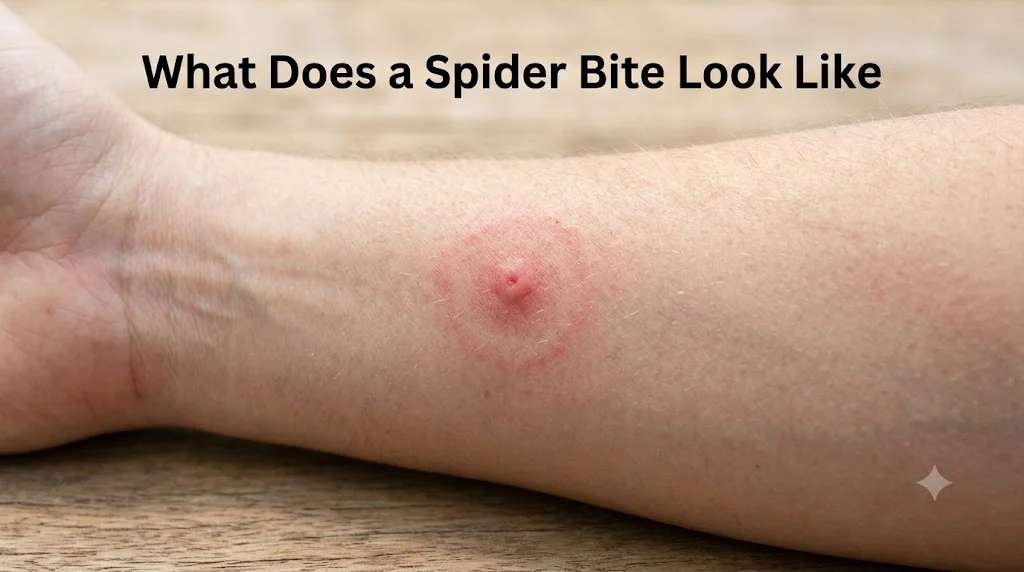
In simple terms, a spider bite usually appears as a red, inflamed mark that may resemble a mosquito bite or other insect bite, making it difficult to identify without additional symptoms or evidence of a spider being present.
You wake up one morning and notice a red, swollen mark on your arm. So what is it? Could it be a spider?
Here’s the thing most people who think they have a spider bite actually don’t. But when a spider does bite, knowing what it looks like can make all the difference between brushing it off and catching something serious early.
This guide breaks down exactly what a spider bite looks like at every stage, on every part of the body, and from every type of spider that matters. You’ll also learn how to tell a spider bite apart from a mosquito bite, a bed bug bite, and even a skin infection because those are easier to mix up than you’d think.
Let’s get into it.
Understanding Spider Biology: Why Bites Look the Way They Do
Before diving into the visual details, it helps to understand why spider bites produce the reactions they do. Spiders inject venom through chelicerae specialized mouthparts tipped with hollow fangs. The venom serves one purpose for the spider: immobilizing prey. When it enters human skin, the immune system treats it as a foreign threat and mounts a response.
Two main venom types produce two very different bite appearances:
- Cytotoxic venom (brown recluse) destroys cell membranes directly at the bite site. This is why brown recluse bites cause tissue death the venom literally breaks down skin and underlying tissue.
- Neurotoxic venom (black widow) attacks the nervous system rather than local tissue. This is why black widow bites look minor locally but cause severe systemic symptoms.
Most non-venomous spiders produce neither type in significant amounts. Their venom is designed for insects, not mammals, so it causes only minor irritation in humans essentially an immune overreaction to a small foreign protein.
This biological framework explains everything you’ll see in this guide. Local damage comes from cytotoxic venom. Systemic symptoms come from neurotoxic venom. And mild reactions come from venom that simply isn’t potent enough to do much in a human body.
How Spider Bites Happen
Most spiders aren’t looking for a fight. They bite humans only when they feel cornered or get accidentally pressed against the skin think rolling over onto one in bed or shaking out a shoe with one hiding inside.
The bite itself often goes unnoticed. Spider fangs are small. The venom doesn’t always trigger an immediate burning sensation, especially with non-venomous species. Many people discover the bite hours later, already red and wondering what happened.
Common situations where spider bites occur:
- Reaching into a woodpile, garage box, or garden shed
- Putting on clothes or shoes that were left undisturbed
- Sleeping near baseboards, under beds, or on outdoor furniture
- Working in basements or attics without protective clothing
Common bite locations on the body:
- Arms and hands (most frequently direct contact)
- Legs and feet (especially ankles)
- Neck and face (during sleep)
- Torso (trapped under clothing)
Here’s something worth knowing: the classic “two fang marks” you’ve heard about are real but rarely visible. Most spider bites leave a single mark or two marks so close together they look like one. Don’t rely on puncture marks alone to confirm a spider bite.
What Does a Spider Bite Look Like? The Full Visual Breakdown
This is the core of everything. Spider bite appearance changes significantly over time, and what it looks like on day one is completely different from day three.
What a Spider Bite Looks Like Right After It Happens
In the first couple of hours, a spider bite can look almost identical to a mosquito bite. Don’t let that fool you into dismissing it.
Typical immediate appearance:
- Small, raised red or pink bump
- Possible pale or white center surrounded by a faint red ring
- Mild swelling at the site
- Tiny puncture marks (visible in some cases, invisible in others)
- Skin may feel slightly warm to the touch
The size is usually small comparable to a pea or less. There’s no dramatic wound, no black tissue, nothing alarming at this stage for the vast majority of bites. Most non-venomous bites never get worse than this.
What a Spider Bite Looks Like After a Few Days
This window is where bites differentiate themselves. A harmless bite starts improving. A venomous one starts making itself known.
For non-venomous spider bites:
- Redness gradually fades from the edges inward
- Swelling starts to reduce
- Itching may still be present but decreasing
- No new symptoms develop
For venomous or reactive bites:
- Redness spreads beyond the original area
- Swelling increases, sometimes dramatically
- A blister or fluid-filled bubble forms at the center
- Pain intensifies rather than fading
- Skin may begin changing color pale, blue, or dark
The 48-hour mark is your clearest signal. If it’s getting better, you’re probably fine. If it’s getting worse, act on it.
Spider Bite Stages: Visual Progression at a Glance
| Stage | Timeframe | What It Looks Like | Symptoms You’ll Feel |
|---|---|---|---|
| Initial | 0 to 2 hours | Small red bump, possible puncture mark | Mild sting, warmth |
| Early | 2 to 24 hours | Widening redness, swelling begins | Itching, tenderness |
| Peak | 24 to 72 hours | Blister possible, redness at widest | Pain, heat, itching |
| Improving (non-venomous) | Day 3 to 7 | Redness fades, swelling shrinks | Symptoms decreasing |
| Worsening (venomous) | Day 2 to 5 | Darkening center, spreading redness | Increasing pain, possible systemic effects |
| Healing | Day 7 to 14 | Flat, fading mark | Minimal discomfort |
| Severe (brown recluse) | Weeks | Open wound, possible scarring | Ongoing pain, tissue loss |
What Does a Spider Bite Look Like on Skin by Body Location
Location matters more than most people realize. The same bite can look completely different depending on where it lands.
On the arm or leg: A well-defined red circle, often with a clear center. Swelling is visible but contained. These are the easiest bites to monitor because the skin is firm and reactions stay localized.
On the face: Facial skin is looser and more vascular. Even a mild bite can produce significant swelling an eyelid bite might nearly swell shut. This doesn’t necessarily indicate a severe bite; it just reflects the anatomy.
On a child’s skin: Children react more intensely to almost every bite. Redness spreads further, swelling looks more alarming, and symptoms arrive faster. That said, the severity spectrum is the same most are still harmless.
On darker skin tones: Redness is harder to detect. Focus on texture and touch instead look for swelling, raised skin, and warmth rather than relying on color change alone.
Spider Bite Identification: Which Spider Did This?
Identifying a spider bite by appearance alone is genuinely difficult even dermatologists often can’t confirm it without knowing the spider was present. But certain bites do follow recognizable patterns.
Non-Venomous Spider Bite Appearance
The vast majority of spider bites fall into this category. Garden spiders, jumping spiders, cellar spiders they can all bite, but their venom is too weak to cause anything beyond local irritation.
What it looks like:
- Small red bump, similar to a mosquito bite
- Mild swelling and itching
- No blister, no color change, no spreading redness
- Resolves completely within 3 to 7 days
This is the baseline. When people say “I got a spider bite and it was no big deal,” this is what happened.
What Does a Black Widow Spider Bite Look Like?
The black widow is North America’s most medically significant spider. Here’s the irony: the bite itself often looks minor. The real danger is what happens next.
Local appearance:
- Two small fang marks (sometimes visible)
- Immediate sharp pain at the site
- Redness and swelling develop around the bite
- A characteristic halo or target pattern may appear red center, pale ring, red outer ring
- The wound itself typically stays small and doesn’t develop dramatic tissue damage
What makes black widow bites dangerous isn’t the wound it’s the venom.
Within 30 minutes to 2 hours, systemic symptoms can develop:
- Severe muscle cramps and rigidity, particularly in the abdomen and back
- Profuse sweating disproportionate to temperature
- Nausea and vomiting
- Rapid heart rate
- Chest tightness or difficulty breathing
- Restlessness and anxiety
Where black widows live: Dark, undisturbed spaces. Woodpiles, garages, outdoor toilets, storage boxes, under patio furniture.
What Does a Brown Recluse Spider Bite Look Like?
The brown recluse earns its reputation. While not every bite causes serious damage, the ones that do are visually distinctive and medically serious.
Initial appearance (first 2 to 8 hours):
- Mild redness, possibly dismissed as a minor irritation
- Burning sensation at the site that intensifies over time
- A pale or blanched center develops as venom disrupts blood flow
The classic “red, white, and blue sign”: This is the hallmark of a brown recluse bite. The central area turns pale or white (tissue ischemia), surrounded by a bluish-purple ring (bruising and venom spread), surrounded by an outer ring of redness (inflammation). It looks like a target or bullseye with unusual discoloration.
Day 2 to 4:
- A blister forms at the center
- Pain is significant and consistent
- The surrounding skin feels tight and hot
Important context: Studies estimate that necrotic wounds occur in roughly 10 to 15 percent of confirmed brown recluse bites. The majority of bites cause moderate local reactions that resolve without necrosis. That said, necrotic wounds heal slowly sometimes over weeks to months and may leave permanent scars.
Where brown recluses live: South-central and midwestern United States. Dark corners, inside stored cardboard boxes, attics, closets, and under furniture.
What Does a Wolf Spider Bite Look Like?
Wolf spiders are large, fast, and alarming to encounter but their bites are far less serious than their appearance suggests.
Appearance:
- Visible fang marks due to the spider’s size
- Immediate redness and moderate swelling
- Possible tearing of skin in severe bites (wolf spiders have strong jaws)
- Local pain, warmth, itching
Wolf spider bites rarely cause significant tissue damage. Symptoms typically resemble a bee sting and resolve within a few days to a week.
What Does a Hobo Spider Bite Look Like?
Hobo spiders were once considered a significant medical threat in the Pacific Northwest, blamed for necrotic wounds similar to the brown recluse. More recent research has walked that back considerably most studies now suggest hobo spider bites are less severe than previously thought.
Appearance:
- Red, tender, swollen area
- Possible blister within 24 hours in some cases
- Flat wound rather than deep necrosis in most documented cases
Systemic symptoms some people report:
- Headache (sometimes severe)
- Nausea
- Fatigue
- Vision disturbances
What Does a Jumping Spider Bite Look Like?
Tiny, curious, and surprisingly bold, jumping spiders are one of the most commonly encountered house spiders. Their bites are essentially harmless.
Appearance:
- Very small red dot or tiny raised bump
- Minimal swelling
- Mild itching
Resolves within 1 to 2 days. No medical attention needed in healthy adults.
Spider Bite Symptoms: Complete Reference
Understanding appearance is one thing. Knowing what you feel is equally important especially when the bite is in an awkward location you can’t see easily.
Local Symptoms
These are the symptoms centered directly on or immediately around the bite:
- Redness | the primary visual marker, ranging from faint pink to deep red
- Swelling | varies from barely noticeable to significantly puffy
- Itching | common in non-venomous bites, peaks around 24 to 48 hours
- Burning sensation | more characteristic of venomous bites
- Tenderness | the area hurts when pressed
- Blister formation | fluid-filled bubble at the center
- Skin discoloration | bruising, pallor, or darkening
- Puncture marks | present in some bites, absent in many
- Lesion formation | open wound in severe cases
Systemic Symptoms
These symptoms appear away from the bite site and signal a medically serious situation:
- Fever and chills
- Nausea and vomiting
- Severe muscle cramps (hallmark of black widow)
- Sweating
- Headache
- Rapid heartbeat
- Difficulty breathing
- Dizziness
- Numbness or tingling in limbs
If any systemic symptoms appear, seek emergency medical care immediately. Don’t wait to see if they pass.
What an Infected Spider Bite Looks Like
Spider bites can become infected with bacteria, especially if scratched. An infected bite looks and feels different from a regular reaction.
Signs of infection:
- Expanding redness that continues to grow after 48 to 72 hours
- Increasing warmth radiating from the wound
- Pus or discharge from the bite
- Red streaks extending outward from the wound (this is a medical emergency indicates spreading infection entering the lymphatic system)
- Worsening pain after the first few days
- Fever accompanying local wound changes
- Swollen lymph nodes near the bite site
Red streaks from a wound are a sign of lymphangitis a potentially life-threatening infection. Go to an emergency room immediately if you see this.
Symptoms Comparison by Spider Type
| Spider | Local Wound | Pain Level | Systemic Risk | Healing Time |
|---|---|---|---|---|
| Non-venomous | Small red bump | Mild | None | 3 to 7 days |
| Black Widow | Minor mark, halo | Moderate | High (neurotoxic) | Days (with treatment) |
| Brown Recluse | Necrotic lesion | Significant | Low to moderate | Weeks to months |
| Wolf Spider | Red, swollen | Moderate | Very low | 3 to 7 days |
| Hobo Spider | Possible blister | Moderate | Low | 1 to 2 weeks |
| Jumping Spider | Tiny red dot | Minimal | None | 1 to 2 days |
How to Tell If a Spider Bit You
You won’t always catch the spider in the act. Most people identify a potential bite after the fact which means working backward from symptoms and context.
Clues that point toward a spider bite:
- Single, isolated bite mark (not a cluster)
- You were in a spider-prone environment recently (garage, garden, storage area)
- The bite appeared overnight or while working in low-light conditions
- Possible two puncture marks visible at the center
- Symptoms worsen over 24 to 48 hours rather than improving
Self-Assessment Checklist
Use this to organize your thinking:
- [ ] Is it a single bite, not a cluster of multiple marks?
- [ ] Were you in a dark or undisturbed space recently?
- [ ] Can you see any puncture marks at the center?
- [ ] Did symptoms appear within hours of being in that environment?
- [ ] Is the bite getting worse after 24 hours rather than better?
- [ ] Are there any systemic symptoms present?
If you checked multiple boxes, a spider bite is plausible. But here’s the honest truth: even doctors often can’t confirm a spider bite without witnessing the spider. The diagnosis is almost always presumptive based on context and symptoms.
Spider Bite vs Other Bug Bites: How to Tell Them Apart
This is where people get confused most often. Spider bites mimic lots of other skin conditions and insect bites.
Spider Bite vs Mosquito Bite
Mosquito bites appear almost immediately after the bite within minutes. They produce a uniformly raised, dome-shaped welt that’s intensely itchy. They fade within hours to a day for most people.
Spider bites develop more slowly, last longer, may have a central puncture mark, and don’t typically produce the same uniform dome shape.
Key difference: Timing. Mosquito bites announce themselves fast. Spider bites are slow starters.
Spider Bite vs Bed Bug Bite
Bed bugs are systematic feeders. They typically leave multiple bites in a row or cluster pattern on skin exposed during sleep. The bites are flat, red, and extremely itchy.
Spider bites are almost always singular and isolated. They have a different central appearance and often have more significant swelling.
Key difference: Pattern. Bed bugs leave a trail. Spiders leave one mark.
Spider Bite vs Flea Bite
Flea bites concentrate around the ankles and lower legs. They’re tiny, intensely itchy red dots that appear in irregular groups. Fleas prefer jumping from floor-level onto lower extremities.
Spider bites can appear anywhere on the body, are larger, and have more defined swelling.
Spider Bite vs Tick Bite
Ticks attach and feed if you check the skin, the tick may still be there. Some tick bites produce a characteristic bull’s-eye rash (erythema migrans) associated with Lyme disease. That expanding ring rash is unique and specific.
Spider bites don’t leave an attached insect and don’t produce the bull’s-eye pattern.
Spider Bite vs Skin Infection
This is the most medically significant comparison. Brown recluse bites are frequently misidentified as cellulitis, and vice versa. Even experienced clinicians misdiagnose this regularly.
Cellulitis produces diffuse, spreading redness without a clear central bite mark. It starts from a break in the skin (cut, scratch, pore) and expands outward uniformly.
Spider bites start with a central wound and expand from there. The center matters it tells you where the injury originated.
Bug Bite Comparison Table
| Feature | Spider | Mosquito | Bed Bug | Flea | Tick |
|---|---|---|---|---|---|
| Number of marks | Single | Single | Clusters or lines | Groups | Single |
| Location | Anywhere | Exposed skin | Exposed skin during sleep | Ankles, lower legs | Anywhere |
| Onset speed | Slow (hours) | Fast (minutes) | Overnight | Fast | Slow |
| Puncture marks | Sometimes | No | No | No | Yes (attached insect) |
| Central mark | Yes | No | No | No | Sometimes |
| Systemic risk | Yes (some spiders) | Rarely | No | Rarely | Yes (disease transmission) |
| Typical duration | Days to weeks | Hours to days | Days | Days | Days to weeks |
Spider Bite Appearance on Special Populations
What Does a Spider Bite Look Like on a Child?
Children’s skin is more reactive. Even a mild bite produces a more dramatic visual response. Redness spreads further, swelling is more pronounced, and the reaction often looks more alarming than it actually is.
That said, children are genuinely at higher risk from venomous spider bites. A black widow bite that causes significant discomfort in an adult can be dangerous for a small child because the venom-to-body-weight ratio is much higher.
When to act immediately for children:
- Any suspected black widow or brown recluse bite
- Systemic symptoms of any kind
- Bite on the face, neck, or near the eyes
- A child under 5 with significant local symptoms
Always consult a doctor for spider bites in children under 12 when symptoms are more than a small red bump.
What Does a Spider Bite Look Like on a Dog?
Dogs get bitten, too usually on the face or paws from investigating spiders directly.
Signs a dog may have been bitten:
- Sudden licking or pawing at a specific spot
- Localized swelling, especially on the snout or paw
- Hair loss or redness at the site
- Whimpering when the area is touched
Signs of serious envenomation in dogs:
- Vomiting or drooling
- Muscle tremors or weakness
- Lethargy and collapse
- Difficulty breathing
Brown recluse and black widow bites can be life-threatening in dogs. Contact a veterinarian immediately if either is suspected.
When Should You Worry About a Spider Bite?
Most spider bites don’t require medical attention. But certain signs demand it and quickly.
Seek urgent care or emergency treatment if you notice:
- Symptoms worsening rather than improving after 48 hours
- Expanding redness with red streaks radiating outward
- Tissue turning dark purple, brown, or black
- Severe muscle cramps, chest tightness, or difficulty breathing
- High fever alongside the wound
- Bite on the face, neck, or genitals
- Bite on a child under 12 with moderate or severe symptoms
- Nausea, vomiting, sweating, or dizziness developing after a bite
- Any suspicion of black widow or brown recluse involvement
Poison Control Center (US): 1-800-222-1222 Available 24/7. They can walk you through symptom assessment over the phone at no cost.
Spider Bite Treatment and First Aid
Immediate Home Care for Non-Venomous Bites
Acting quickly reduces discomfort and lowers infection risk. Here’s what to do:
- Wash the area thoroughly with soap and water for at least a minute
- Apply a cold pack wrapped in cloth 10 minutes on, 10 minutes off to control swelling
- Elevate the limb if the bite is on an arm or leg
- Take an antihistamine like diphenhydramine (Benadryl) for itching
- Use ibuprofen or acetaminophen for pain if needed
- Keep it clean and monitor closely over the next 48 to 72 hours
What NOT to Do
Some instincts are wrong. Avoid these:
- Don’t squeeze or pop blisters | this opens the wound to bacteria
- Don’t apply heat | warmth accelerates venom absorption and spread
- Don’t cut the bite open | this is not a snakebite; incision is not appropriate
- Don’t apply a tourniquet | dangerous and unnecessary
- Don’t ignore a worsening bite expecting it to self-resolve
When Medical Treatment Is Required
Some bites need professional intervention:
Black widow bites: Antivenom (Latrodectus antivenom) is available and highly effective. It’s given intravenously in hospital settings. Pain management, muscle relaxants, and supportive care are also part of treatment. Most people recover fully within 24 to 48 hours of treatment.
Brown recluse bites: There’s no approved antivenom in the US for brown recluse bites. Treatment is supportive and wound-focused:
- Wound cleaning and dressing
- Pain management
- Antibiotics if secondary infection develops
- Surgical debridement for necrotic tissue in severe cases
- Skin grafting occasionally needed for large wounds
Infected bites: Oral or IV antibiotics depending on severity. Red streaks require immediate emergency care.
Tetanus: If you haven’t had a tetanus shot within the past 5 to 10 years, a booster is recommended after any puncture wound.
How Long Does a Spider Bite Last?
Healing time varies significantly based on the spider species, individual reaction, and whether infection develops.
| Bite Type | Expected Healing Time |
|---|---|
| Non-venomous, mild | 3 to 7 days |
| Non-venomous, reactive | 1 to 2 weeks |
| Wolf spider | 5 to 10 days |
| Hobo spider | 1 to 2 weeks |
| Black widow (treated) | 1 to 3 days (systemic); 1 to 2 weeks (local) |
| Brown recluse (mild) | 2 to 4 weeks |
| Brown recluse (necrotic) | 6 weeks to 6 months; possible permanent scarring |
| Infected bite | Varies widely; weeks with antibiotic treatment |
Signs your spider bite is healing properly:
- Redness fades from the outer edges inward (not the center outward)
- Swelling steadily decreasing each day
- Pain and tenderness diminishing
- Itching reducing after the first 48 hours
- No new symptoms developing
Spider Bite Rash: What It Looks Like and What It Means
Not all spider bites stay as a single mark. Some develop a rash and that can mean very different things depending on the context.
Types of rashes associated with spider bites:
Localized rash: Redness spreading outward from the bite in a uniform pattern. This is usually a standard immune response your body releasing histamine into the surrounding tissue. It looks like a flat, pink-to-red area around the central mark. Uncomfortable, but not alarming on its own.
Hive-like reaction: Some people have an allergic hypersensitivity response. Multiple raised welts appear near the bite or even elsewhere on the body. This suggests a more significant allergic component and warrants antihistamine treatment. If throat tightness or breathing difficulty accompanies it, this is anaphylaxis call emergency services.
Spreading cellulitic rash: Warm, red skin that spreads beyond 4 to 5 inches from the bite over 24 to 48 hours. This suggests either a significant venom reaction or bacterial infection has taken hold. Both need medical attention.
Spider Bite Swelling: What’s Normal and What’s Not
Swelling is one of the most consistent features of spider bites but the degree varies enormously.
Normal swelling:
- Centered at the bite site
- Peaks within 24 to 48 hours
- Soft and pitting (pressing leaves a temporary indent)
- Decreases steadily after 48 hours
- Proportional to the bite location (face swells more than forearm)
Concerning swelling:
- Continues expanding after 48 to 72 hours
- Extremely firm or hot to the touch
- Spreads across an entire joint or limb segment
- Accompanied by red streaks or significant fever
- Affecting breathing or swallowing (face or neck bites)
The body part matters enormously. A black widow bite on the hand may cause the entire hand and wrist to swell. A bite near the eye might temporarily close the eye. Neither of these automatically signals danger but both warrant a doctor’s assessment.
Elevating the affected limb is the single most effective home measure for controlling spider bite swelling. Gravity is your friend here.
Common Myths About Spider Bites
Misinformation about spider bites is everywhere. Let’s clear up the biggest ones.
Myth: Most mystery skin lesions are spider bites. Reality: Studies looking at wounds attributed to spider bites found that the majority were actually MRSA infections, other bacterial infections, or other skin conditions. Spiders are blamed far more often than they’re actually responsible.
Myth: You can always see two fang marks. Reality: Spider fangs are tiny. Most bites leave a mark too small to distinguish individual puncture points without magnification. Absence of visible fang marks means nothing.
Myth: Brown recluse spiders are found all across the US. Reality: Brown recluse spiders have a specific geographic range centered in the south-central United States roughly Missouri, Kansas, Oklahoma, Arkansas, Tennessee, and surrounding states. They’re not native to California, New England, or the Pacific Northwest. Many “brown recluse bites” reported outside this range are almost certainly something else.
FAQs
What does a spider bite look like when it first happens?
Right after a spider bite, you’ll typically see a small, raised red or pink bump very similar to a mosquito bite. There may be a tiny pale center. Mild swelling and warmth are common.
What does a spider bite look like after a few days?
For non-venomous bites, it looks better flatter, less red, less swollen. For venomous bites, it looks worse possibly blistered, darkening at the center, with spreading redness and increasing pain.
How do I know if a spider bit me?
Look for a single, isolated mark with possible puncture marks, combined with context were you in a spider-prone area recently? Did the bite appear overnight or after working in a dark space?
What does a spider bite look like compared to a mosquito bite?
Mosquito bites appear within minutes, are uniformly itchy and raised, and fade within hours to a day. Spider bites develop more slowly, last longer, may have a puncture mark at the center, and tend to have a more defined, localized swelling.
What does a spider bite look like on a child?
Similar to adults but with more pronounced swelling and redness. Reactions spread further and look more alarming. Children with systemic symptoms from any spider bite need immediate medical evaluation.
What does an infected spider bite look like?
Expanding redness that continues spreading after 48 to 72 hours, warmth, pus or discharge, and potentially red streaks extending outward from the site. Fever often accompanies infection.
Conclusion
In conclusion, most spider bites are harmless and cause only mild symptoms such as redness, swelling, itching, or slight discomfort. However, because spider bites can resemble other insect bites, skin conditions, or infections, it’s important to pay attention to how the affected area changes over time. Monitoring symptoms can help you determine whether simple home care is enough or if medical attention is needed.
If a bite becomes increasingly painful, shows signs of infection, or is accompanied by severe symptoms such as difficulty breathing, fever, or spreading skin damage, seek medical care promptly. Knowing what a spider bite looks like and recognizing potential warning signs can help you respond appropriately and protect your health.
Discover More Related Articles:
- What Does AM and PM Stand For | Meaning, Full Form & Examples In 2026
- What Does a Hemorrhoid Look Like | Pictures, Symptoms & Identification Guide In 2026
- What Does Shingles Look Like | Pictures, Symptoms & Treatment Tips In 2026