

Definition
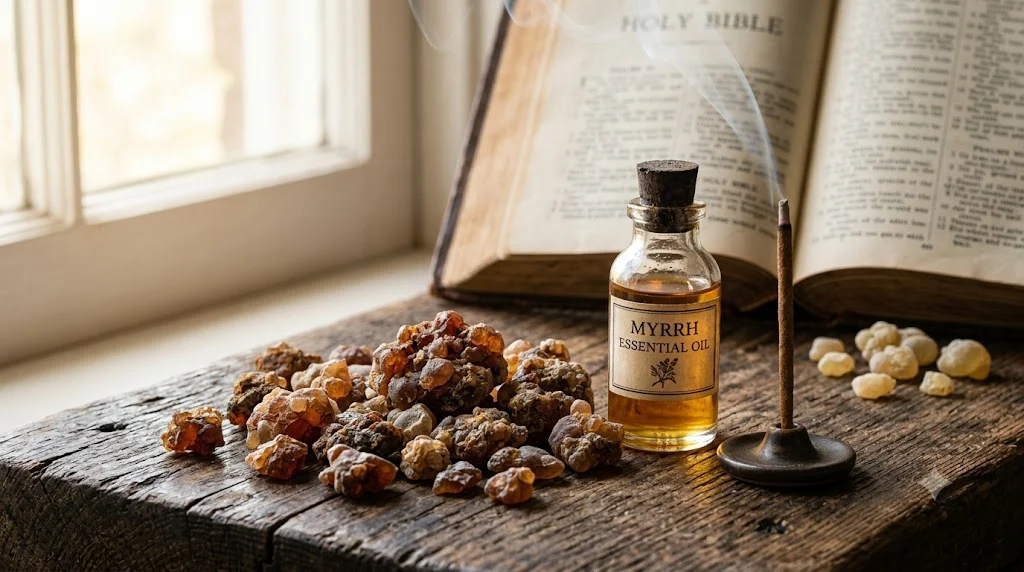
Myrrh is a natural resin obtained from certain thorny trees, especially those in the genus Commiphora. It has been used for thousands of years in perfumes, incense, medicines, and religious ceremonies because of its distinctive fragrance and preservative properties.
Myrrh is a natural resin obtained from certain thorny trees and has been valued for thousands of years for its fragrance, medicinal uses, and religious significance. It is most commonly known as one of the three gifts brought to Jesus by the Wise Men in the Bible.
Today, myrrh is still used in perfumes, incense, traditional medicine, and spiritual practices around the world. Understanding the meaning of myrrh helps reveal its rich history and cultural importance across different civilizations.
You probably know myrrh from a single line in a Christmas carol. “Gold, frankincense, and myrrh.” It sounds fancy. Maybe a little strange. But here’s the thing: myrrh meaning goes way deeper than a baby shower gift for Jesus. This fragrant resin has a bitter taste, a darker history, and a surprisingly practical side.
So what does myrrh mean exactly? Buckle up. You’re about to find out.
A Quick First Look at Myrrh
Before we dive into ancient tombs and Bible stories, let’s nail down the basics. The myrrh definition is simple once you break it down.
| Term | Simple Answer |
|---|---|
| Myrrh meaning | A fragrant resin that oozes from Commiphora tree bark |
| Part of speech | Noun |
| Pronunciation | “MUR” (rhymes with fur or sir) |
| Origin | Arid regions of Arabia, Somalia, and Ethiopia |
| Primary historical uses | Perfume, medicine, embalming, religious incense |
Think of myrrh as dried tree sap. But not the sticky messy kind on your car windshield. This sap hardens into small reddish-brown “tears” that smell warm, earthy, and slightly bitter. People have traded it for thousands of years. They’ve fought over it. They’ve buried their dead with it.
Now let’s get into the real meaning of myrrh.
What Is Myrrh Really? The Botanical Truth
Here’s where the myrrh definition gets physical. Myrrh comes from several species of the Commiphora tree. The most common one is Commiphora myrrha. These trees don’t look like your friendly neighborhood oak. They’re thorny. Scraggly. They thrive in rocky, dry soil where almost nothing else wants to grow.
How do you get myrrh resin? You cut the bark. The tree bleeds a pale yellow sap. That sap hardens in the hot sun. Within a few weeks, it turns into reddish-brown chunks the size of walnuts. Workers call these chunks “tears.”
One tree produces only a few pounds of resin per year. That scarcity explains why myrrh was worth more than gold in some ancient markets.
Define myrrh in simple words: It’s tree blood that becomes a precious rock.
Myrrh vs Frankincense – What’s the Difference?
People confuse these two all the time. They often appear together, but they’re not the same. Here’s the breakdown.
| Feature | Myrrh | Frankincense |
|---|---|---|
| Tree genus | Commiphora | Boswellia |
| Resin color | Reddish-brown to black | Pale yellow to greenish |
| Scent | Earthy, bitter, smoky | Citrusy, piney, sweet |
| Primary historical use | Embalming, medicine, pain relief | Incense, meditation, perfume |
| Taste | Bitter | Slightly bitter with pine notes |
| Biblical gift to Jesus | Yes | Yes |
Frankincense smells lighter and brighter. Myrrh smells darker and heavier. One lifts you up. The other grounds you down. Together they balance each other like yin and yang.
Where Does Myrrh Come From?
The myrrh origin story starts in harsh landscapes. Today the main producers are Somalia, Ethiopia, Yemen, and Kenya. Somalia produces the largest volume. The quality varies by region, but the best myrrh comes from wild trees growing in remote mountain valleys.
How do people harvest it today? Mostly the same way they did 4,000 years ago. Workers climb the thorny trees. They make small cuts with a special knife. They return two to four weeks later to collect the dried tears. Then they sort the resin by color and purity. Lighter chunks sell for more money.
Sustainable harvesting matters. Overcutting kills trees. Some cooperatives in Ethiopia now train harvesters to rotate cuts across different trees. That way the forest stays healthy for the next generation.
Myrrh Etymology | What the Word Itself Means
Words carry history. Myrrh’s name is no exception. The myrrh etymology traces back through several languages, each adding a layer of meaning.
- Arabic: murr – means “bitter”
- Hebrew: mar – also means “bitter”
- Greek: mýrrha – kept the bitter sense but added “fragrant gum”
- Latin: myrrha – the direct parent of the English word
- English: myrrh – dropped the final vowel but kept the bitterness
So myrrh meaning includes bitterness right in its DNA. That fits perfectly with its role in the Bible, where it often symbolizes suffering or sorrow. But here’s the twist: bitterness wasn’t a bad thing in ancient medicine. Bitter herbs and resins were the antibiotics of their day.
Myrrh Pronunciation | Say It Right
Let’s clear this up fast. The myrrh pronunciation confuses everyone.You say one syllable: MUR.
Rhymes with:
- Fur
- Sir
- Blur
- Her
Common mistake: adding an extra vowel at the end (“myrrh-uh”). Don’t do that. Just say mur. Like a cat’s purr without the P.
Try this trick: Say “murmur” out loud. Now drop the second “mur.” You’re left with the correct myrrh pronunciation.
Myrrh Meaning in the Bible
Now we’re getting to the heart of it. The myrrh biblical meaning runs deep. This resin appears more than a dozen times in Scripture, and each appearance adds a new layer of symbolism.
Old Testament | Sacred Oil and Royal Beauty
The first major mention happens in Exodus. God gives Moses a recipe for holy anointing oil. The ingredients? Liquid myrrh, cinnamon, cane, cassia, and olive oil. This oil consecrated priests, prophets, and kings. Without myrrh, no one could enter the sacred space.
Why myrrh? Because its bitterness represented the cost of holiness. You don’t approach the divine without sacrifice.
Later in Esther, myrrh shows up in a surprising context. Before a woman could meet the king, she underwent twelve months of beauty treatments. Six months with oil of myrrh. Six months with perfumes and cosmetics. Myrrh prepared her body. But it also prepared her spirit. The resin’s warming and purifying properties were believed to make someone fit for royalty.
New Testament | The Christmas Story and the Cross
This is where most people first hear about myrrh. The Wise Men brought three gifts to baby Jesus: gold, frankincense, and myrrh. Gold for a king. Frankincense for a priest. But myrrh? That’s for death.
Why was myrrh given to Jesus? Because it foreshadowed his crucifixion. Myrrh was a primary ingredient in embalming mixtures. Giving it to a newborn was strange. Almost morbid. But it told the world that this baby would die for others.
The myrrh Christmas story doesn’t end at the manger. Jump ahead thirty years to the cross. When Jesus hung dying, someone offered him wine mixed with myrrh. This was a common painkiller for criminals. It numbed the senses. But Jesus refused it. He wanted to face death fully conscious.
After his death, Nicodemus brought a massive amount of myrrh and aloes—about seventy-five pounds. They wrapped Jesus’s body with the spices according to Jewish burial customs. The gift at his birth became the gift at his death. That’s the full myrrh biblical meaning right there. It brackets Jesus’s entire life.
| Bible Reference | Context | Myrrh’s Role |
|---|---|---|
| Exodus 30:23-25 | Holy anointing oil | Sacred consecration |
| Esther 2:12 | Beauty treatment | Royal preparation |
| Matthew 2:11 | Gift from Wise Men | Foreshadowing death |
| Mark 15:23 | Offered at crucifixion | Pain relief (refused) |
| John 19:39-40 | Burial preparation | Embalming spice |
What Does Myrrh Mean in the Bible in One Sentence?
It means that suffering and honor can coexist. It means the most precious gifts sometimes come wrapped in bitterness.
Myrrh Spiritual Meaning Across Cultures
The myrrh spiritual meaning extends far beyond Christianity. Many ancient cultures saw this resin as a bridge between earth and heaven.
Ancient Egypt: Egyptians used myrrh for embalming mummies. But they also burned it in temples dedicated to the sun god Ra. Priests believed the smoke carried prayers upward. The resin symbolized the setting sun—death followed by rebirth.
Greek and Roman medicine: Hippocrates prescribed myrrh for sores and internal bleeding. Roman soldiers carried myrrh-based salves into battle. They burned it in homes to ward off plague. The spiritual meaning shifted to protection and purification.
Traditional Chinese Medicine (TCM): Myrrh entered Chinese medical texts around 600 AD. Practitioners call it mo yao. They use it for stagnant blood, trauma, and pain. The spiritual angle is less explicit, but the resin is seen as moving stuck energy.
Ayurveda (India): Myrrh supports oral health and skin healing in Ayurvedic practice. It’s considered a “rasayana”—a substance that rejuvenates the body. The spiritual meaning here connects to cleansing and longevity.
Modern spiritual use: People burn myrrh resin or use myrrh essential oil during meditation. The scent is grounding. It helps release old pain, grief, or resentment. Some say it “kills the ego.” Others just like the smell when they pray.
The common thread across all these traditions? Myrrh transforms something painful (bitter resin) into something sacred (healing smoke). That’s the myrrh spiritual meaning in a nutshell.
Myrrh Uses | Then and Now
Let’s get practical. What can you actually do with myrrh? The list is longer than you think.
Ancient Myrrh Uses
People didn’t collect this resin for fun. They used it for survival, status, and spirituality.
- Embalming: Egyptians removed organs, then packed the body cavities with myrrh and natron salt. The resin acted as a preservative and deodorizer.
- Perfume: Roman women wore myrrh-based scents to parties. The rich bathed in myrrh oil. The smell signaled wealth.
- Incense: Temples across the Middle East burned myrrh daily. The smoke was a physical offering to the gods.
- Medicine: Ancient doctors treated coughs, wounds, worms, and toothaches with myrrh. It worked as a mild anesthetic and antimicrobial.
- Trade currency: On the Incense Route, one pound of myrrh could buy a slave or a cow. It was money you could smell.
Modern Myrrh Uses
You don’t have to be an Egyptian priest to use myrrh today. Modern products contain this resin in surprising ways.
Myrrh essential oil is the most common form. You’ll find it in health food stores and aromatherapy kits. Dilute it before putting it on your skin. Pure oil can cause irritation.
What is myrrh used for in daily life? Here’s a bullet list of real applications.
- Mouthwash and toothpaste (fights bacteria that cause gingivitis)
- Sore throat sprays (coats and soothes irritated tissue)
- Anti-inflammatory creams (for minor arthritis or muscle pain)
- Scented candles (earthy fragrance, not floral or sweet)
- Skin care serums (astringent properties tighten pores)
- Soaps and lotions (adds a warm, resinous scent)
You can also buy raw myrrh resin. Drop a few tears onto a charcoal disc and light it. The smoke is intense at first but settles into a meditative aroma. Perfect for quiet evenings or prayer spaces.
Myrrh Benefits | What the Evidence Says
Let’s separate fact from hype. Myrrh benefits are real but limited. No, it won’t cure cancer. No, it’s not a substitute for antibiotics. But the resin does have legitimate therapeutic properties.
Proven or Likely Benefits
| Benefit Claim | What the Evidence Shows |
|---|---|
| Antimicrobial | Multiple studies confirm myrrh kills oral bacteria. It reduces plaque and gingivitis. |
| Anti-inflammatory | Lab research shows it lowers inflammatory markers when applied to skin or gums. |
| Astringent | The resin tightens tissues. That’s why it appears in acne and wrinkle products. |
| Mild analgesic | Compounds in myrrh activate opioid receptors. The effect is weak but real. |
| Antifungal | Some studies found myrrh oil inhibits Candida yeast species. |
What Myrrh Does Not Do
Ignore the wild claims online. Myrrh does not:
- Cure COVID-19
- Shrink tumors on its own
- Replace prescription painkillers
- Work instantly for severe infections
- Heal broken bones by topical application
Use myrrh as a supportive herb, not a miracle cure.
How to Use Myrrh Safely
Follow these rules.
For mouthwash: Add 1–2 drops of myrrh essential oil to a cup of warm water. Swish for 30 seconds. Spit it out. Don’t swallow.
For skin: Mix 1 drop of myrrh oil with 1 teaspoon of carrier oil (coconut, jojoba, or olive). Apply to small areas only.
For inhalation: Put 3–5 drops of myrrh oil in a diffuser. Or burn resin on a charcoal tablet in a well-ventilated room.
Never do this: Drink pure myrrh essential oil. It causes stomach cramps, nausea, and kidney irritation.
Pregnancy warning: Myrrh can stimulate uterine contractions. Avoid it during pregnancy unless a doctor says otherwise.
Myrrh Significance in Religion | More Than Just Christianity
We’ve focused a lot on Christianity. But the myrrh significance in religion shows up in other faiths too.
Islam: Hadith literature mentions myrrh as a healing substance. The Prophet Muhammad reportedly recommended it for respiratory issues and wounds.
Judaism: Myrrh was part of the ketoret—the sacred incense blend burned in the Temple in Jerusalem. The recipe was so holy that misusing it carried a death penalty.
Eastern Orthodox Christianity: Myrrh plays a role in the preparation of chrism (holy oil) for baptism and confirmation. The resin symbolizes the fragrance of Christ’s sacrifice.
Rastafarianism: Some Rastafarians burn myrrh during reasoning sessions. The smoke is thought to purify the space and open the mind.
The common thread? Myrrh connects physical healing to spiritual cleansing across almost every major tradition.
Myrrh Symbolism | What Does It Represent?
The myrrh symbolism is rich. This one resin does multiple symbolic jobs depending on the context.
- Death and mourning: Because of its embalming use
- Purification: Because burning it cleanses spaces
- Royalty: Because only the wealthy could afford it
- Sacrifice: Because it comes from wounding a living tree
- Healing: Because of its medicinal properties
- Bitterness: Because of its taste and the suffering it represents
When you see myrrh in art or literature, ask yourself which symbolism fits.
What Does Myrrh Symbolize Spiritually for You?
You don’t need a religion to appreciate the myrrh spiritual meaning. Think of it this way: growth requires wounds. A tree produces its most valuable sap only after someone cuts it. The same goes for people. Your hardest moments often produce your deepest strength.
Myrrh reminds us that bitter things can be precious. That death isn’t the end. That smoke rising from burning resin is like prayers leaving your mouth—visible for a moment, then gone, but somehow still present.
Myrrh in the Christmas Story | Why It Still Matters
Let’s return to that nativity scene. Three Wise Men. Three gifts. We spend so much time on the gold that we forget the weird one.
The myrrh Christmas story is actually the most radical part of the entire narrative. Imagine going to a baby shower today. You bring diapers, a onesie, maybe a savings bond. Now imagine someone brings a vial of embalming fluid. Everyone would freak out. Security would get involved.
That’s how strange the gift of myrrh was. It told Mary and Joseph, “Your son will die young, and it will be ugly.” Not exactly a Hallmark moment.
So why include it in the story? Because the Bible never pretends that faith removes suffering. The myrrh Christmas story acknowledges pain right at the beginning. It says, “This joy comes with a cost. Are you still in?”
For modern readers, the myrrh meaning in Christianity is a reality check. You can love something fully even when you know it will hurt later. That’s not pessimism. That’s courage.
How Is Myrrh Used Today? A Practical Guide
You’re sold on the history and symbolism. Now you want to try it yourself. Fair enough. Here’s exactly how to use myrrh today.
Buying Myrrh
Look for these forms.
- Raw resin tears: Irregular brown chunks. Best for burning on charcoal.
- Essential oil: Golden to amber liquid. Distilled from the resin. Very concentrated.
- Powdered myrrh: Ground resin. Used in capsules or homemade toothpaste.
- Tincture: Myrrh dissolved in alcohol. Used for oral care.
Where to buy? Health food stores, herb shops, online retailers (just check reviews first). Expect to pay 10–25forasmallbottleofessentialoil.Rawresinischeaper—around5–15 per ounce.
Burning Myrrh Resin
- Buy a charcoal disc (hookah charcoal works fine).
- Light the edge of the disc until it sparks. Put it in a heat-safe burner.
- Wait 5 minutes for the disc to glow orange.
- Drop 2–3 myrrh tears onto the disc.
- The smoke will be thick at first. It mellows after 30 seconds.
Warning: Open a window. The smoke is strong.
Making Myrrh Mouthwash
Mix these ingredients in a small glass jar.
- 1 cup distilled water
- 2 drops myrrh essential oil
- 1 drop peppermint oil (optional for taste)
- 1 teaspoon baking soda (optional for whitening)
Shake well before each use. Swish for 30 seconds. Do not swallow. Lasts one week in the fridge.
Using Myrrh for Skin
Mix 1 drop of myrrh oil with 1 tablespoon of aloe vera gel or jojoba oil. Apply to pimples, small cuts, or dry patches. Test on a small skin area first. Some people react to the oil.
Myrrh vs Frankincense | Which One Should You Choose?
People ask this constantly. The answer depends on your goal.
Choose myrrh if you want:
- Grounding, earthy scent
- Oral health benefits
- Skin tightening effects
- Embalming or funeral symbolism (yes, that’s a thing for some rituals)
Choose frankincense if you want:
- Uplifting, citrusy scent
- Meditation and prayer aid
- Anti-aging skin benefits
- Brighter, sweeter incense smoke
Or use both. They complement each other perfectly. Burn them together. Blend the oils. Put a drop of each in your diffuser. That’s what the Wise Men did, after all.
FAQs
Let’s wrap up with short, direct answers to the questions people search for most.
What does myrrh mean in the Bible?
It means consecration, suffering, and preparation for death.
Is myrrh safe to eat?
No. Do not eat raw resin or essential oil. Small amounts in historical recipes were used, but modern products are too concentrated.
Does myrrh smell good?
That’s subjective. Most people describe it as warm, balsamic, and slightly medicinal. It’s not floral or sweet. Think old library or ancient temple.
What does myrrh represent in spiritual terms?
Purification, letting go of the ego, and transforming pain into healing.
Can I use myrrh every day?
In a diffuser or as incense, yes. On your skin, no more than 2–3 times per week. In your mouth, limit to once daily.
Why did Jesus refuse myrrh on the cross?
He wanted to face death fully conscious. Accepting the painkiller would have dulled his suffering and reduced his sacrifice.
What is the difference between myrrh and myrrh oil?
Resin is the raw dried sap. Essential oil is steam-distilled from the resin and much more potent.
Conclusion
You started this article wanting to know the myrrh meaning. Now you have it. It’s a bitter resin from a thorny tree. It’s a gift for a newborn king that doubles as a burial spice. It’s an ancient medicine, a sacred incense, and a spiritual tool for letting go.
But here’s the deeper myrrh meaning that most articles miss. Myrrh teaches us that value often hides in uncomfortable places. The best things in life love, growth, faith, even healing usually come with some bitterness attached. You don’t get the treasure without the wound.
Next time you hear “gold, frankincense, and myrrh,” don’t just think of a nativity scene. Think of a tree bleeding tears of resin in a dry desert. Think of a man refusing pain relief because his mission mattered more. Think of a gift so strange and so honest that it tells the whole story in one word: sacrifice.
Discover More Related Articles:
- Pentacles Meaning | Symbolism & Spiritual Significance In 2026
- Rizz Meaning | Understanding the Internet’s Favorite Dating Slang In 2026
- Disposition Meaning | Psychology, Law & Daily Life In 2026