
Definition
“FR” in text means “for real.” It’s commonly used in texting, social media, and online chats to emphasize honesty, agreement, or seriousness. Depending on context, it can express sincerity (“I’m serious”), agreement (“same here”), or even disbelief (“are you serious?”).
Have you ever received a text that simply says “FR” and wondered what it actually means? You’re not alone. This two-letter abbreviation appears everywhere from Snapchat and TikTok to Instagram, WhatsApp, and everyday chats. If you’ve been asking what does FR mean, the answer depends on the conversation, but in most cases, it stands for “for real.” Understanding this popular slang can help you avoid confusion and keep up with modern texting language.
In this guide, you’ll discover exactly what does FR mean, where people use it, and how it changes the tone of a message. We break everything down in plain English with real-life examples, so whether you’re a student, parent, or social media user, you’ll quickly understand when and why people type “FR.”
Our content is carefully researched, fact-checked, and based on real-world messaging trends to provide accurate, trustworthy, and easy-to-follow explanations. By the end, you’ll know how to use FR naturally and confidently in your own conversations.
Origin and Popularity of “FR”
The abbreviation “FR” stands for “for real,” a phrase that has been used in spoken English for decades. It originally gained traction in urban slang and casual conversation, often used to emphasize truth or sincerity.
How “FR” Became Popular:
- 📱 Text messaging culture shortened phrases for speed
- 🌐 Social media platforms like TikTok and Twitter amplified its use
- 🎮 Online gaming and chat communities normalized quick abbreviations
- 👥 Gen Z slang trends made it a staple in everyday communication
Today, “FR” is one of the most widely used texting abbreviations worldwide.
How “FR” Is Used in Texting
“FR” is extremely versatile. It can be used in different ways depending on context and tone.
1. To Show Agreement
Used to say “I agree” or “same.”
- “That movie was boring fr”
- “Fr, I didn’t like it either”
👉 Tone: Friendly, relatable
2. To Emphasize Honesty or Seriousness
Used to show you’re being genuine or not joking.
- “I’m tired fr”
- “You need to study fr this time”
👉 Tone: Sincere, serious
3. To Express Surprise or Disbelief
Sometimes used like “really?” or “are you serious?”
- “You got a 100%? Fr??”
- “He said that? fr?? 😳”
👉 Tone: Curious, shocked
4. To Add Emphasis in Casual Speech
Adds weight to a statement.
- “That was the best food ever fr”
- “This is the hardest level fr”
👉 Tone: Dramatic, expressive
Real-Life Examples of “FR” in Context
Here’s how “FR” works in everyday conversations:
Friendly Tone 😊
- “You’re my best friend fr ❤️”
- “That song hits different fr”
Neutral Tone 😐
- “I think we should leave now fr”
- “This assignment is long fr”
Slightly Negative / Dismissive Tone 😒
- “You’re still doing that? fr?”
- “That excuse again? fr…”
Example Table: “FR” in Different Contexts
| Situation | Text Example | Meaning | Tone |
|---|---|---|---|
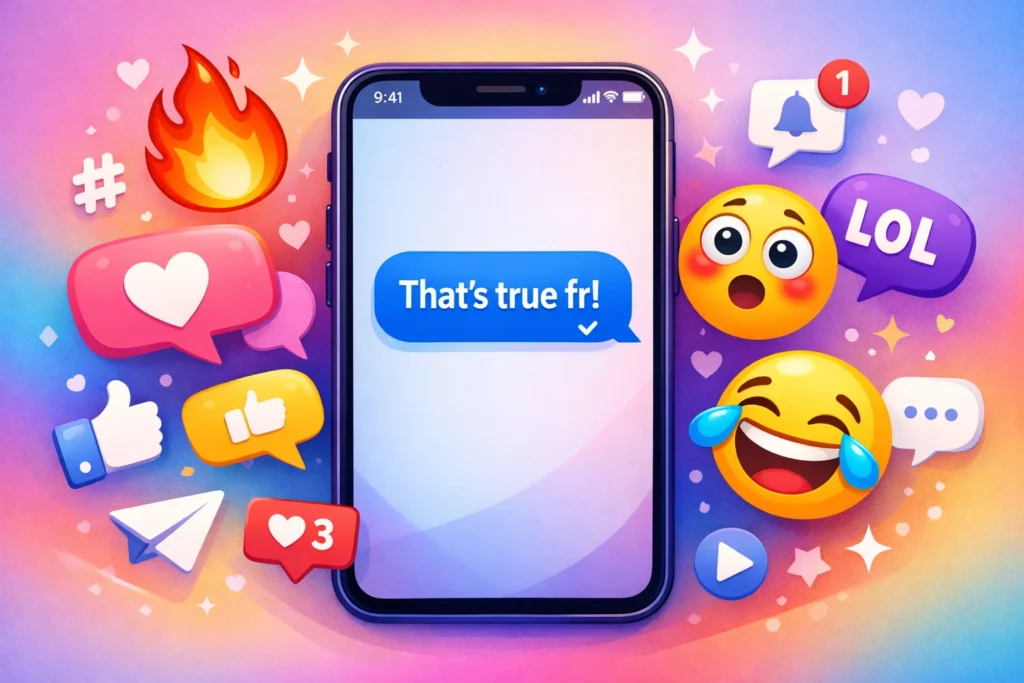
| Agreement | “Fr, that’s true” | I agree | Friendly |
| Serious Statement | “I’m done with this fr” | I’m serious | Firm |
| Surprise | “You met them? fr??” | Really? | Shocked |
| Emphasis | “That was amazing fr” | Very / truly | Excited |
| Doubt / Disbelief | “You believe that? fr?” | Are you serious? | Skeptical |
Tone Matters: How “FR” Can Change Meaning
One of the most interesting things about “FR” is how much tone affects its meaning.
Same word, different vibe:
- “I like her fr” → Genuine affection ❤️
- “I like her fr…” → Slight hesitation 🤨
- “I like her fr??” → Questioning 😅
👉 Punctuation and emojis completely change the meaning.
Comparison: “FR” vs Similar Text Abbreviations
“FR” isn’t the only slang used to express agreement or seriousness. Here’s how it compares:
| Abbreviation | Meaning | Usage Style | Example |
|---|---|---|---|
| FR | For real | Casual, versatile | “That’s true fr” |
| ONG | On God | Strong emphasis | “I didn’t do it ong” |
| NGL | Not gonna lie | Honest admission | “Ngl, that was funny” |
| TBH | To be honest | Slightly formal honesty | “Tbh, I disagree” |
| ISTG | I swear to God | Emotional emphasis | “ISTG I didn’t do it” |
👉 FR is lighter and more casual compared to stronger phrases like “ONG” or “ISTG.”
Alternate Meanings of “FR”
While “FR” usually means “for real,” it can have other meanings depending on context:
1. “FR” = France 🇫🇷
- Used in international contexts or addresses
- Example: “Shipping to FR”
2. “FR” = Friend (rare)
- Sometimes used informally
- Example: “That’s my fr”
3. “FR” in Gaming
- Could mean “frame rate”
- Example: “Low fr makes the game lag”
👉 Always rely on context to understand the correct meaning.
When to Use “FR” (and When Not To)
✔️ Use “FR” When:
- Texting friends or peers
- Posting on social media
- Keeping conversations casual
- Emphasizing honesty quickly
❌ Avoid “FR” When:
- Writing professional emails
- Academic or formal writing
- Communicating with clients or teachers
Polite or Professional Alternatives to “FR”
If you want to sound more formal or respectful, here are better options:
| Casual (FR) | Professional Alternative |
|---|---|
| “I’m tired fr” | “I’m genuinely feeling tired” |
| “That’s true fr” | “That’s absolutely correct” |
| “You need to stop fr” | “I strongly recommend you stop” |
| “I mean it fr” | “I truly mean that” |
Common Mistakes to Avoid
- ❌ Using “FR” in formal writing
- ❌ Overusing it in every sentence
- ❌ Misinterpreting tone without context
- ❌ Assuming it always means agreement
👉 Remember: context is everything.
FAQs:
1. What does “FR” stand for in texting?
“FR” stands for “for real,” meaning genuinely, seriously, or truly.
2. Is “FR” rude or disrespectful?
No, but it can sound dismissive depending on tone and punctuation.
3. What does “fr fr” mean?
“Fr fr” means “for real, for real,” adding extra emphasis or sincerity.
4. Can “FR” mean something else?
Yes, it can mean France, frame rate, or friend depending on context.
5. Is “FR” formal or informal?
It’s informal and best used in casual conversations.
6. How do you reply to “FR”?
You can reply with:
- “Yeah fr”
- “Exactly”
- “I know right”
7. Is “FR” used worldwide?
Yes, especially in English-speaking online communities.
8. Why do people use “FR” instead of “for real”?
It’s faster, trendier, and fits casual texting style.
Conclusion
“FR” may be just two letters, but it carries a lot of meaning in modern communication. Whether you’re agreeing with someone, emphasizing your honesty, or reacting in disbelief, this simple abbreviation helps you sound more natural and expressive online.
“FR” in text simply means “for real,” and it’s one of the most popular slang terms used in modern digital conversations. It helps people express honesty, agreement, surprise, or emphasis in a quick and casual way.
Discover More Related Articles:
- 250+ Polite Responses to “Oh Wow”: Funny Conversation Starter for 2026
- 200+ Funny, and Cute Responses to “Oh My Gosh OMG” for 2026