
Definition
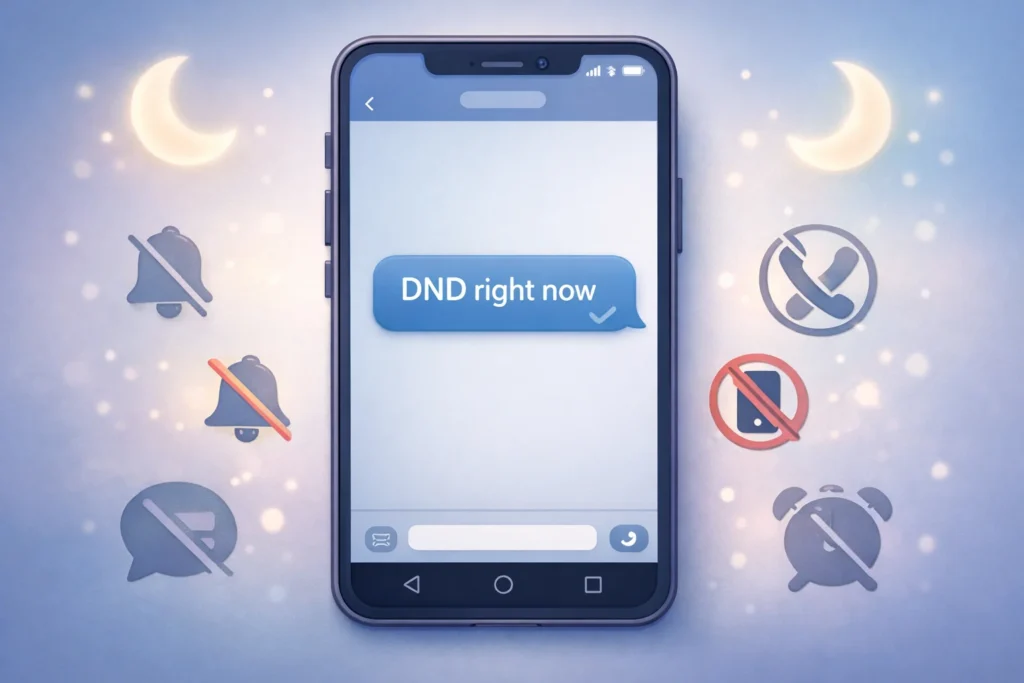
DND in text stands for “Do Not Disturb.”
It’s commonly used in messages, social media, and chat apps to indicate that someone is busy, unavailable, or prefers not to be interrupted at the moment.
Ever received a message saying “DND” and wondered what it means? You are not alone. Online conversations are full of short forms, and DND meaning in text can change depending on the situation. In most chats, DND means “Do Not Disturb,” a phrase used when someone does not want calls, messages, or interruptions.
The DND full form is Do Not Disturb, but the meaning of DND can also depend on context. People use this abbreviation in texting, social media, gaming, and everyday conversations. Understanding what does DND stand for helps you avoid confusion and reply correctly.
In this guide, we will explain what does DND mean in texting, DND meaning in chat, DND meaning slang, and how this popular abbreviation is used in real conversations with simple examples.
Origin and Popularity of “DND”
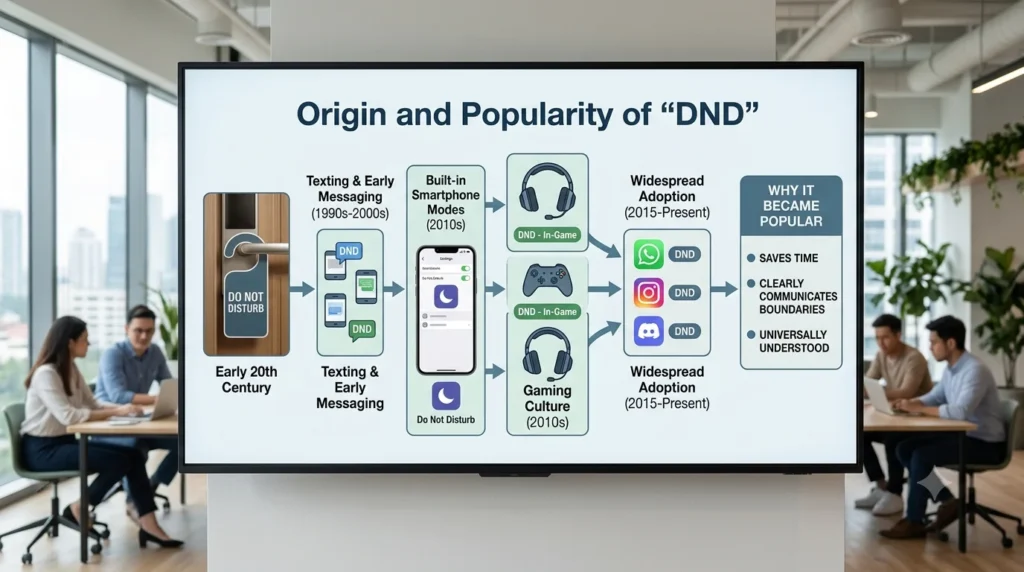
The term “Do Not Disturb” existed long before texting it originally appeared on door signs in hotels, offices, and even hospitals to signal privacy or rest.
How It Entered Digital Communication:
- Early messaging platforms: Users began shortening phrases to type faster.
- Smartphone features: “Do Not Disturb” became a built-in phone mode.
- Gaming culture: Players used “DND” to avoid interruptions mid-game.
- Social media: Apps like WhatsApp, Instagram, and Discord made status updates common.
Why It Became Popular:
- Saves time typing
- Clearly communicates boundaries
- Universally understood across platforms
- Works in both casual and semi-professional settings
Today, “DND” is widely recognized across age groups and digital platforms.
DND Full Form
DND stands for “Do Not Disturb.”
It is commonly used in phones, apps, and communication settings to silence calls, messages, and notifications so the user is not interrupted. When DND mode is turned on, the device may still receive notifications, but it won’t alert the user with sound, vibration, or pop-ups depending on the settings.
In simple words, DND helps you focus, rest, or work without distractions.
Common uses of DND:
- On mobile phones to silence notifications
- In meetings or classes to avoid interruptions
- While sleeping or studying for better concentration
- On apps like WhatsApp, Gmail, or gaming platforms to reduce alerts
So, DND is basically a “quiet mode” that helps manage interruptions and maintain focus.
How “DND” Is Used in Real Life
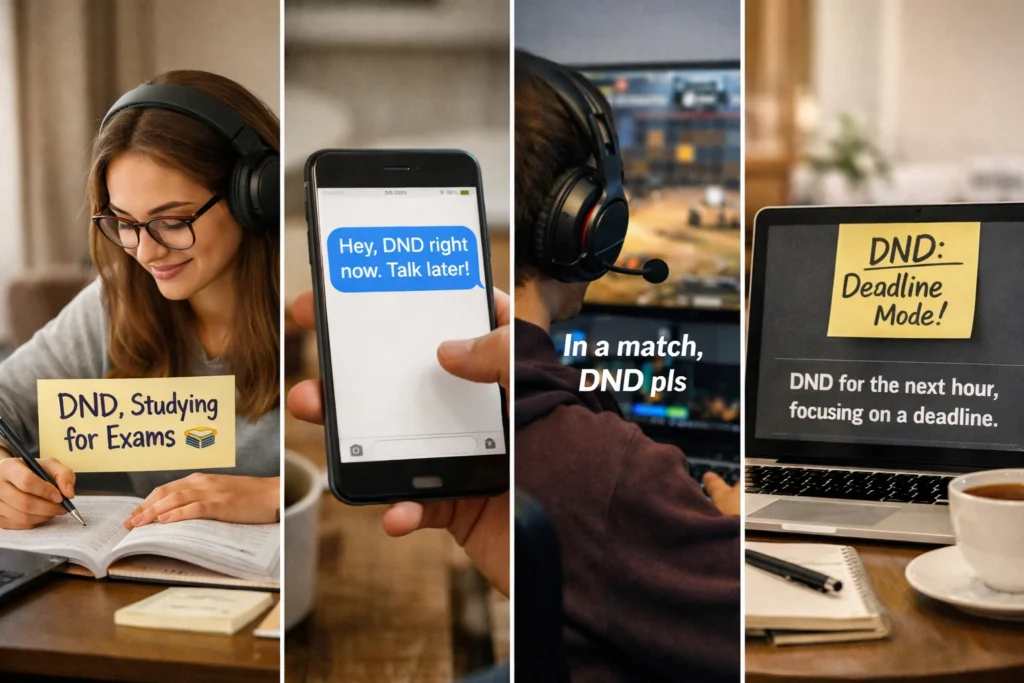
“DND” is flexible and can appear in different contexts depending on tone and intent.
Common Uses:
- Status updates:
“DND, studying for exams 📚” - Direct replies:
“Hey, DND right now. Talk later!” - Gaming chats:
“In a match, DND pls” - Work chats:
“DND for the next hour focusing on a deadline.”
Example Table: DND in Different Contexts
| Situation | Example Message | Tone | Meaning |
|---|---|---|---|
| Casual texting | “DND rn 😂” | Light/friendly | Busy but relaxed |
| Studying | “DND, exam prep” | Neutral | Needs focus |
| Work setting | “DND until 3 PM” | Professional | Not available temporarily |
| Gaming | “DND, ranked match” | Focused | Avoid interruptions |
| Annoyed response | “DND.” | Slightly dismissive | Wants space immediately |
| Social media bio | “DND most of the day 🔕” | Informational | Frequently unavailable |
Tone Matters: Friendly vs Neutral vs Dismissive
Even though “DND” is short, its tone can vary depending on context and punctuation.
1. Friendly Tone 😊
- “DND right now, will text you later!”
- “On DND mode 😂 catch you soon”
👉 Sounds polite and relaxed
2. Neutral Tone 😐
- “DND until 5 PM”
- “Currently DND”
👉 Straightforward and informational
3. Dismissive or Slightly Rude Tone 😒
- “DND.”
- “I said DND”
👉 Can feel abrupt if not softened with context
When Should You Use “DND”?
Use “DND” when you want to:
- Focus on work or studies
- Avoid distractions
- Take a break from conversations
- Set boundaries without long explanations
- Let others know you’ll reply later
Pro Tip:
If you’re unsure about tone, add a few extra words or an emoji to make it sound friendlier.
Polite and Professional Alternatives to “DND”
In some situations especially formal or workplace communication you may want to avoid abbreviations.
Better Alternatives:
- “I’m currently unavailable.”
- “I’ll respond later.”
- “In a meeting right now.”
- “Focusing on work will get back to you soon.”
- “Taking some time offline.”
Example:
❌ “DND right now”
✅ “I’m currently unavailable but will reply shortly.”
Comparison: DND vs Similar Text Abbreviations
Here’s how “DND” compares with other commonly used texting terms:
| Abbreviation | Meaning | Usage Context | Tone Level |
|---|---|---|---|
| DND | Do Not Disturb | Busy/unavailable | Neutral |
| BRB | Be Right Back | Short absence | Casual |
| AFK | Away From Keyboard | Gaming/work chats | Casual |
| OOO | Out Of Office | Work emails/status | Professional |
| IDLE | Inactive | Online/gaming status | Neutral |
| BUSY | Busy | General status | Direct |
Key Difference:
- DND = “Don’t interrupt me”
- BRB = “I’ll be back soon”
Alternate Meanings of “DND”
While “Do Not Disturb” is the most common meaning in texting, “DND” can have other meanings depending on context.
1. Dungeons & Dragons (D&D)
- A popular tabletop role-playing game
- Example: “We’re playing DND tonight!”
2. Department of National Defence (Canada)
- Used in official/government contexts
3. Digital Not Disturb (less common variation)
- Refers to device settings
👉 Always rely on context to understand the correct meaning.
Real-Life Examples of “DND” in Conversations
Example 1: Friendly Chat
Friend: “Wanna hang out?”
You: “DND right now, finishing homework 😅”
Example 2: Work Message
Colleague: “Quick question?”
You: “On DND for the next hour will reply soon.”
Example 3: Gaming
Teammate: “Join voice?”
You: “DND, in a match!”
Example 4: Slightly Annoyed Tone
Person: “Why aren’t you replying?”
You: “I’m DND.”
Common Mistakes to Avoid
- Using “DND” in formal emails
→ Replace with full phrases - Sounding too abrupt
→ Add context or soften tone - Overusing it in personal chats
→ Might seem distant or uninterested - Confusing it with “D&D”
→ One is a game, the other is a status
FAQs:
1. What does DND mean in texting?
DND means “Do Not Disturb,” indicating that someone is busy or unavailable.
2. Is DND rude to use?
Not necessarily. It depends on tone. Adding context or emojis can make it sound more polite.
3. What does DND mean on WhatsApp or Instagram?
It usually means the person doesn’t want notifications or messages at that moment.
4. Can DND be used in professional settings?
Yes, but it’s better to use full phrases like “currently unavailable” in formal communication.
5. What is the difference between DND and silent mode?
- DND: Blocks notifications completely
- Silent: Allows notifications but without sound
6. What does DND mean in gaming?
It means the player doesn’t want to be interrupted during gameplay.
7. Is DND the same as “busy”?
Similar, but DND specifically means “don’t disturb me.”
8. Why do people use DND instead of typing full sentences?
Because it’s faster, convenient, and widely understood in digital communication.
Conclusion:
“DND” might be just three letters, but it plays a big role in modern communication. It helps people set “DND” is a simple yet powerful abbreviation that helps people communicate availability quickly and clearly. It stands for “Do Not Disturb” and is widely used across texting, social media, gaming, and even work settings to signal that someone is busy or prefers not to be interrupted.
While it’s convenient and commonly understood, tone matters. Adding a few extra words or emojis can make it feel more polite and friendly, especially in personal conversations. In professional situations, using full phrases is usually the better choice.
Overall, understanding how to use “DND” correctly helps you respect boundaries, manage communication better, and avoid misunderstandings in everyday digital interactions.
Discover More Related Articles:
- 250+ Polite Responses to “Oh Wow”: Funny Conversation Starter for 2026
- 200+ Funny, and Cute Responses to “Oh My Gosh OMG” for 2026