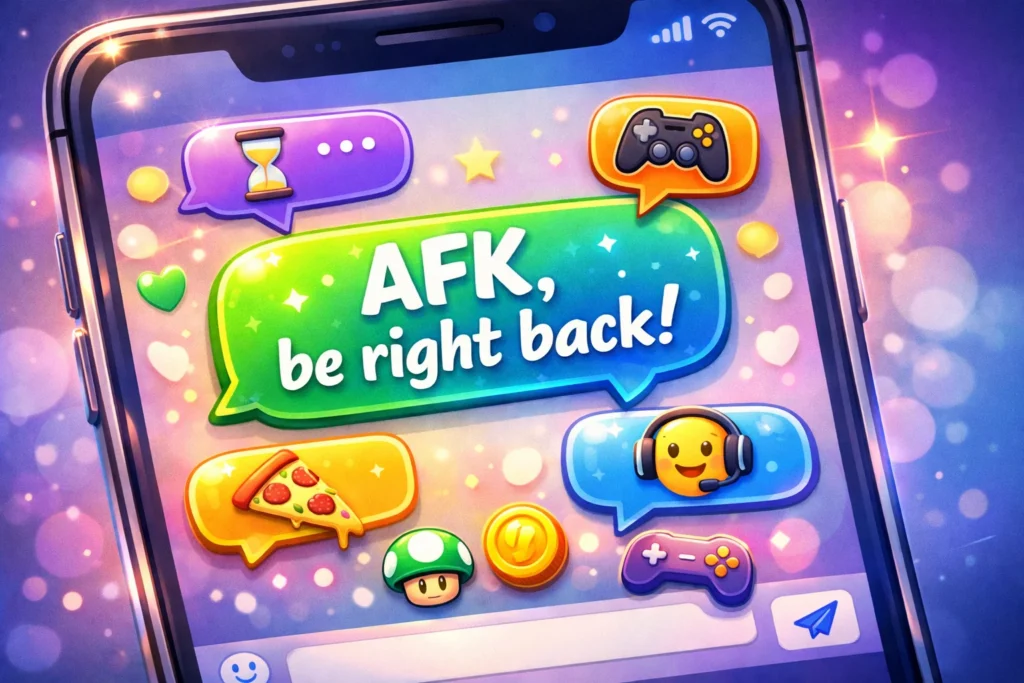

Definition
AFK stands for “Away From Keyboard.” It is a commonly used internet abbreviation that indicates someone is temporarily not available to respond because they have stepped away from their device or are not actively paying attention to the chat.
Have you ever received a message that simply says “AFK” and wondered what it means? You’re not alone. This short internet abbreviation appears everywhere, from text messages and group chats to online games and workplace conversations. If you are new to online communication, it can be confusing at first.
In simple terms, AFK meaning is “Away From Keyboard.” It tells others that someone is temporarily unavailable and cannot respond right away. If you’re asking what does AFK mean, looking for the definition AFK, curious about AFK signification, or want to understand AFK meaning gaming, this guide has you covered. Drawing on common internet usage and widely accepted digital communication standards, we’ll explain AFK bedeutung with clear examples, real life scenarios, and practical tips so you can use it naturally and confidently in any online conversation.
Origin of AFK
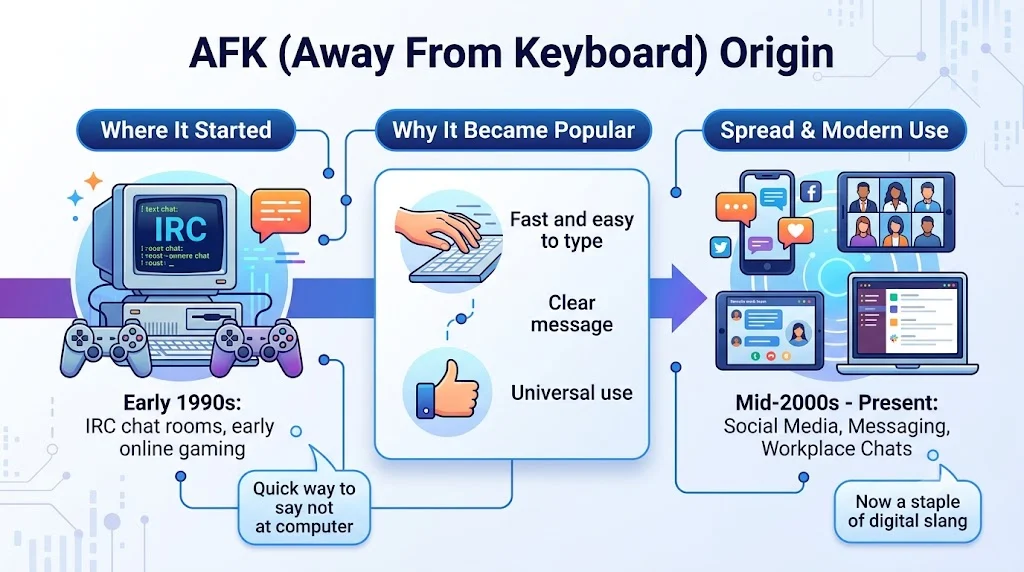
The term AFK (Away From Keyboard) dates back to the early days of internet chat rooms and online gaming in the 1990s.
Where It Started:
- Early IRC (Internet Relay Chat) platforms
- Multiplayer online games
- Forums and message boards
Back then, most users were on desktop computers. So when someone stepped away, they would type “AFK” to let others know they weren’t ignoring messages they were just physically gone.
Why It Became Popular:
- Quick to type
- Easy to understand
- Universal across platforms
Over time, AFK spread from niche online communities into:
- Social media (WhatsApp, Instagram, Discord)
- Workplace chats (Slack, Microsoft Teams)
- Everyday texting
Today, it’s part of everyday digital language.
What Does AFK Mean in Different Contexts?
While the core meaning remains the same, the context can slightly change how “AFK” is interpreted.
1. Gaming Context 🎮
In gaming, AFK meaning in game is often used to indicate a temporary absence.
Example:
- “AFK for 5 mins, don’t start the match.”
👉 Here, it signals teammates not to proceed without you.
2. Casual Chat 💬
In texting or messaging apps, AFK means stepping away briefly.
Example:
- “AFK, dinner time 🍽️”
👉 Friendly and casual tone.
3. Work or Professional Chat 💼
In workplace communication, AFK can still be used but carefully.
Example:
- “Going AFK for a quick meeting.”
👉 Acceptable in informal teams, but may sound too casual in formal environments.
4. Social Media / Online Presence 🌐
Sometimes AFK is used humorously or loosely.
Example:
- “Mentally AFK today 😴”
👉 Not literal used to express distraction or low energy.
How to Use AFK in Chat
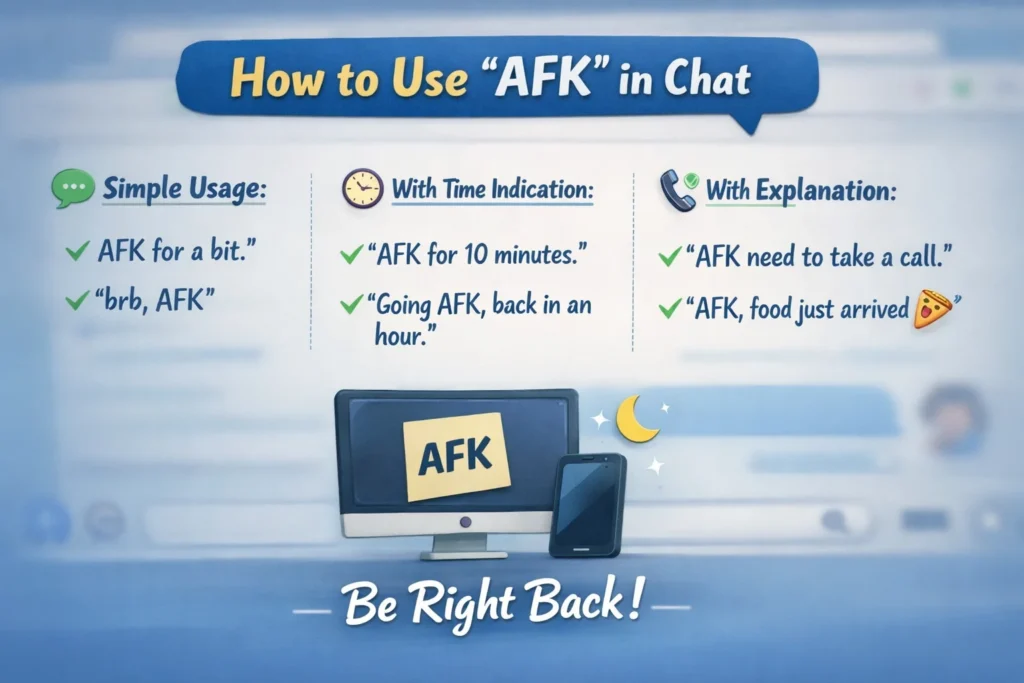
Here are some common ways to use AFK naturally in conversations:
Simple Usage:
- “AFK for a bit.”
- “brb, AFK”
- “AFK, be right back.”
With Time Indication:
- “AFK for 10 minutes.”
- “Going AFK, back in an hour.”
With Explanation:
- “AFK need to take a call.”
- “AFK, food just arrived 🍕”
Example Table: AFK in Different Situations
| Situation | Example Message | Tone |
|---|---|---|
| Gaming | “AFK 5 mins, don’t queue yet.” | Informative |
| Friendly Chat | “AFK, mom’s calling 😅” | Casual/Friendly |
| Work Chat | “AFK for a quick break.” | Semi-professional |
| Humor | “Brain AFK today 🤯” | Playful |
| Slightly Dismissive | “AFK.” (no explanation) | Cold/Neutral |
Tone and Interpretation: What AFK Really Signals
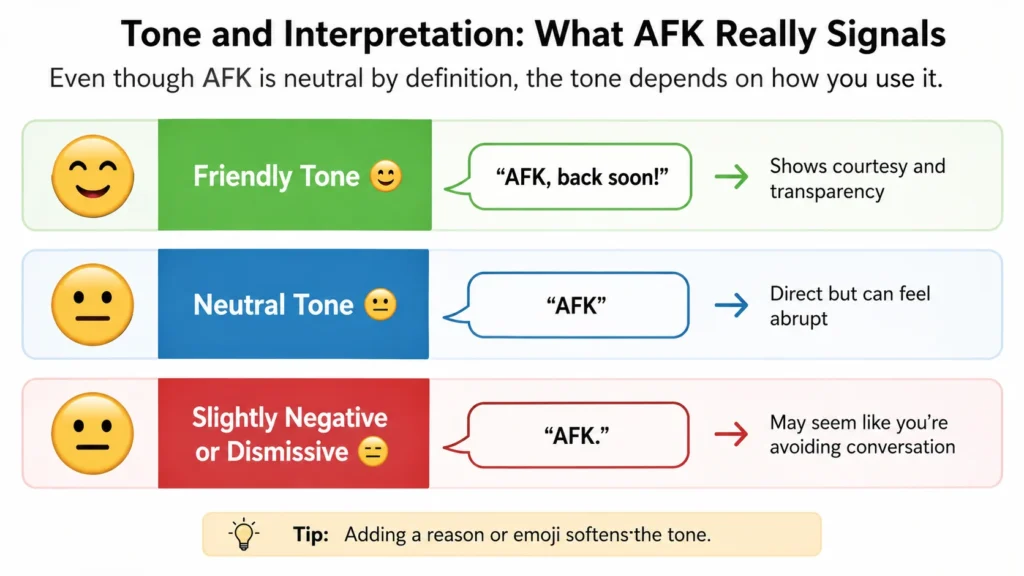
Even though AFK is neutral by definition, the tone depends on how you use it.
Friendly Tone 😊
- “AFK, back soon!”
- Shows courtesy and transparency
Neutral Tone 😐
- “AFK”
- Direct but can feel abrupt
Slightly Negative or Dismissive 😶
- “AFK.” (without context)
- May seem like you’re avoiding conversation
👉 Tip: Adding a reason or emoji softens the tone.
AFK vs Similar Chat Abbreviations
AFK isn’t the only shorthand people use. Here’s how it compares:
| Abbreviation | Meaning | Difference from AFK |
|---|---|---|
| BRB | Be Right Back | Shorter absence, more immediate |
| GTG | Got To Go | Leaving completely |
| TTYL | Talk To You Later | Ending conversation |
| IDK | I Don’t Know | Unrelated (response-based) |
| OOO | Out Of Office | More formal, work-specific |
Key Insight:
- AFK = Temporary absence
- GTG = Leaving entirely
When Should You Use AFK?
Use AFK when:
- You’re stepping away temporarily
- You want to avoid seeming rude or unresponsive
- You’re in casual or semi-casual conversations
Best Situations:
- Gaming sessions
- Group chats
- Informal workplace chats
When NOT to Use AFK
AFK isn’t always appropriate.
Avoid Using AFK In:
- Formal emails
- Professional client communication
- Serious discussions
Instead of:
- “AFK for meeting”
Use:
- “I’ll be unavailable for the next 30 minutes due to a meeting.”
Polite & Professional Alternatives to AFK
If you want to sound more polished, here are better options:
Professional Alternatives:
- “I’ll be away for a few minutes.”
- “Stepping out briefly.”
- “I’ll be unavailable for a short time.”
Friendly Alternatives:
- “Be right back!”
- “Stepping away for a bit 😊”
- “Back in a few!”
Alternate Meanings of AFK (Rare)
While “Away From Keyboard” is the primary meaning, AFK can have other interpretations in niche contexts:
- AFK (Gaming Slang Extension): Not actively playing even if present
- AFK (Humor): “Away From Knowledge” (jokingly used)
These are rare and context-dependent.
Real-Life Usage Examples
Friendly Chat:
- “AFK, grabbing snacks 🍿”
👉 Tone: Light and casual
Gaming:
- “AFK 2 mins, don’t kick me”
👉 Tone: Urgent but clear
Work Chat:
- “Going AFK for lunch, back at 2 PM”
👉 Tone: Acceptable but slightly informal
Dismissive:
- “AFK.”
👉 Tone: Could feel abrupt or uninterested
Why AFK Is Still Popular Today
Despite newer slang, AFK remains widely used because:
- It’s universally recognized
- It’s quick and efficient
- It fits fast-paced digital communication
- It works across platforms
Even with mobile devices replacing keyboards, the phrase stuck because habits don’t change easily.
FAQs:
1. What does AFK stand for in chat?
AFK stands for Away From Keyboard, meaning the person is temporarily not available.
2. Is AFK rude to use?
Not usually. However, using it without context can feel abrupt. Adding a reason makes it more polite.
3. What is the difference between AFK and BRB?
AFK means stepping away, while BRB (Be Right Back) suggests a very short absence.
4. Can AFK be used in professional settings?
Yes, but only in informal workplace chats. For formal communication, use full sentences instead.
5. Does AFK mean offline?
No. AFK means you’re still online but not actively present.
6. How long does AFK usually mean?
It depends typically a few minutes to an hour, depending on context.
7. What does “AFK farming” mean in games?
It refers to gaining rewards in a game while being inactive.
8. Is AFK still popular in 2026?
Yes. It remains widely used across gaming, chat apps, and social media.
Conclusion:
AFK (Away From Keyboard) is a simple but widely used chat abbreviation that means someone is temporarily not available or has stepped away from their device. It’s especially common in gaming, social media, and casual messaging, helping people quickly communicate short breaks without long explanations.
While AFK is easy and convenient, its tone depends on context adding a reason or friendly emoji can make it sound more polite and natural. In professional settings, it’s better to use full phrases instead of abbreviations.
Overall, AFK remains a key part of online communication even today because it’s fast, clear, and universally understood across digital platforms.
Discover More Related Articles:
- 250+ Polite Responses to “Oh Wow”: Funny Conversation Starter for 2026
- 200+ Funny, and Cute Responses to “Oh My Gosh OMG” for 2026