Quick Answer 🔥
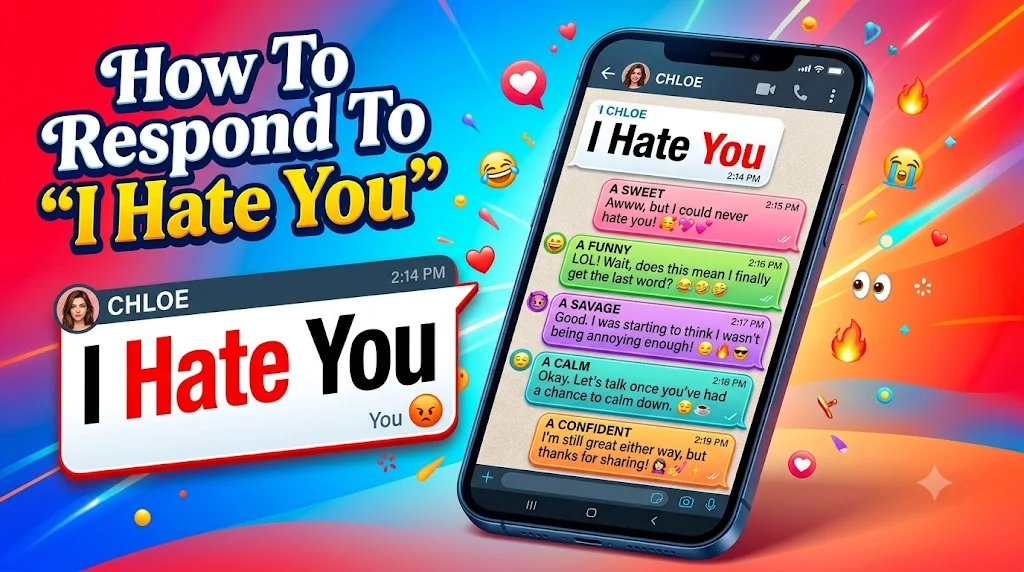
If someone says “I hate you,” your response depends on the situation, your relationship, and whether they’re joking or genuinely upset. The best replies stay calm, match the tone, and help keep the conversation from spiraling.
Top replies: “I’m sorry you feel that way.”, “Want to talk about it?”, “I’ll give you some space.”, “I still care about you.”, “That’s fair if you’re upset.”
We’ve all seen that message pop up at the worst possible time. Maybe it’s from your best friend after a prank, your sibling during an argument, your crush after a misunderstanding, or someone venting in the heat of the moment. Seeing “I hate you” can catch anyone off guard.
The good news? Not every “I hate you” means someone truly hates you. Sometimes it’s frustration, sarcasm, playful teasing, or emotions running high. Knowing how to respond to “I hate you” the right way can calm things down, make someone laugh, or even strengthen your relationship. Whether you want to be funny, sweet, confident, or respectful, these ready to copy replies have you covered.
Clever Responses
- That’s one way to say hello.
Example: Great for surprising texts.
Meaning: It cleverly redirects the conversation. - Interesting plot development.
Example: Perfect for dramatic friends.
Meaning: It compares life to a TV show. - I’ll add that to today’s feedback.
Example: Use in playful banter.
Meaning: It treats the insult like a review. - Noted for future updates.
Example: Great for sarcastic conversations.
Meaning: It jokes like you’re software. - Well, that’s awkward.
Example: Best after unexpected messages.
Meaning: It acknowledges the tension lightly. - I’ve heard worse.
Example: Perfect for confident personalities.
Meaning: It shows resilience. - You practiced that, didn’t you?
Example: Use when someone sounds dramatic.
Meaning: It playfully questions their delivery. - That’s a spicy opinion.
Example: Great for internet humor.
Meaning: It keeps things light. - I respect the commitment.
Example: Perfect for over the top reactions.
Meaning: It jokes about their determination. - Message received.
Example: Best for ending drama politely.
Meaning: It calmly acknowledges them. - That escalated quickly.
Example: Use after a minor disagreement.
Meaning: It points out the sudden intensity. - You’re committed to the bit.
Example: Great when they’re joking.
Meaning: It assumes they’re being playful. - I’ll survive somehow.
Example: Perfect with close friends.
Meaning: It shows confidence. - Well, that’s today’s plot twist.
Example: Use during unexpected conversations.
Meaning: It adds humor to tension. - Strong words for a Tuesday.
Example: Great for random outbursts.
Meaning: It humorously highlights the timing.
Polite Responses
- I’m sorry you’re upset.
Example: Perfect during respectful conversations.
Meaning: It shows empathy. - I appreciate your honesty.
Example: Use when someone shares real feelings.
Meaning: It values openness. - Thank you for telling me.
Example: Great for mature discussions.
Meaning: It acknowledges their feelings calmly. - I hope we can work through this.
Example: Best for close relationships.
Meaning: It encourages reconciliation. - I wish you the best.
Example: Use if the conversation is ending.
Meaning: It remains respectful. - Take care of yourself.
Example: Great after giving space.
Meaning: It shows kindness. - I understand.
Example: Perfect during disagreements.
Meaning: It accepts their emotions. - Let’s leave it here for now.
Example: Use when emotions are high.
Meaning: It prevents further conflict. - I respect your feelings.
Example: Great for mature conversations.
Meaning: It validates their perspective. - I hope things get better.
Example: Best after emotional exchanges.
Meaning: It ends on a positive note. - I’m here if you need me.
Example: Use with people you care about.
Meaning: It offers support. - Thanks for being honest.
Example: Great for constructive conversations.
Meaning: It appreciates honesty. - Let’s talk another time.
Example: Perfect during heated moments.
Meaning: It suggests a healthier discussion later. - I understand your frustration.
Example: Use after a misunderstanding.
Meaning: It acknowledges their emotions. - I hope we can move forward.
Example: Great after resolving conflict.
Meaning: It encourages healing.
Sarcastic Responses
- I’m absolutely devastated.
Example: Perfect when a friend is clearly exaggerating after a harmless joke.
Meaning: It playfully pretends to be heartbroken without taking the comment seriously. - Please, tell me something I don’t know.
Example: Great for sarcastic banter with close friends.
Meaning: It jokes that the statement isn’t surprising. - I’ll try to sleep tonight somehow.
Example: Best when the mood is light and playful.
Meaning: It sarcastically acts like the comment is life changing. - Breaking news, apparently.
Example: Use when someone dramatically announces they hate you.
Meaning: It treats the moment like an obvious headline. - That’s today’s compliment, I guess.
Example: Great for teasing conversations.
Meaning: It humorously flips an insult into praise. - Good thing I’m still my favorite.
Example: Perfect when you want to stay confident.
Meaning: It shows self confidence with a playful edge. - Should I print that on a T shirt?
Example: Best after hearing the same complaint multiple times.
Meaning: It jokes about making their words memorable. - I’ll add that to my collection.
Example: Great for repeated playful arguments.
Meaning: It pretends insults are collectibles. - Thanks for the emotional update.
Example: Perfect for dramatic texting.
Meaning: It lightly pokes fun at their honesty. - Your fan mail keeps getting better.
Example: Use with sarcastic friends.
Meaning: It humorously treats hate like admiration. - What a heartwarming message.
Example: Great for obvious sarcasm.
Meaning: It jokes about the negativity. - You rehearsed that, didn’t you?
Example: Best when their delivery is extra dramatic.
Meaning: It playfully questions how prepared they sounded. - I’ll notify the committee.
Example: Perfect for random outbursts.
Meaning: It sarcastically acts like their opinion is official business. - How will I ever recover?
Example: Great when everyone knows they’re joking.
Meaning: It exaggerates your fake sadness. - Noted with absolutely zero panic.
Example: Use when you want to stay cool.
Meaning: It shows the comment didn’t shake you.
Responses
- That’s not the insult you think it is.
Example: Perfect when someone wants a reaction.
Meaning: It confidently dismisses their words. - You’ll survive, and so will I.
Example: Great after a heated disagreement.
Meaning: It reminds them life goes on. - Your opinion has been filed.
Example: Best for confident personalities.
Meaning: It sarcastically minimizes their criticism. - That’s your choice.
Example: Use when you don’t want to argue.
Meaning: It calmly accepts their feelings. - I wasn’t asking for approval.
Example: Great when someone is trying to bring you down.
Meaning: It shows confidence and independence. - Cool story.
Example: Perfect for shutting down unnecessary drama.
Meaning: It signals you’re not interested in arguing. - You’ll be okay.
Example: Use with someone being overly dramatic.
Meaning: It keeps your composure. - That changes absolutely nothing.
Example: Best when someone wants to provoke you.
Meaning: It shows emotional control. - I still have a great day ahead.
Example: Great for staying positive.
Meaning: It refuses to let negativity win. - You’ll need a stronger comeback.
Example: Perfect during playful roasting.
Meaning: It challenges them humorously. - I’m rooting for your healing.
Example: Use when someone is clearly emotional.
Meaning: It responds with unexpected confidence. - That sounded more exhausting than convincing.
Example: Great after a long rant.
Meaning: It points out the drama calmly. - Stay mad if it helps.
Example: Best for ending an argument.
Meaning: It refuses to engage further. - I’m still doing just fine.
Example: Perfect when protecting your peace.
Meaning: It shows resilience. - You’ll have to try harder than that.
Example: Great for confident banter.
Meaning: It implies their words had little impact.
Cute Responses
- You’ll get over it. ❤️
Example: Perfect with siblings or close friends.
Meaning: It gently lightens the mood. - I still like you though.
Example: Great for playful disagreements.
Meaning: It responds with kindness instead of anger. - Aww, you’re adorable when you’re mad.
Example: Best with someone who enjoys teasing.
Meaning: It turns frustration into affection. - I’ll win you back.
Example: Perfect after a harmless mistake.
Meaning: It shows optimism. - Can we be friends again tomorrow?
Example: Great after a silly fight.
Meaning: It encourages making up. - I’ll take that as temporary.
Example: Use when emotions are running high.
Meaning: It assumes the feeling won’t last. - I’m sending you a virtual hug anyway.
Example: Great for close relationships.
Meaning: It responds with warmth. - I still saved you a snack.
Example: Perfect with family or friends.
Meaning: It shows kindness despite the conflict. - You’re too cute to stay mad forever.
Example: Best with someone you’re close to.
Meaning: It playfully predicts they’ll forgive you. - I’ll be here when you’re done being mad.
Example: Great after a small argument.
Meaning: It shows patience. - Fine, but I’m keeping our memories.
Example: Perfect for playful drama.
Meaning: It adds humor and sweetness. - You secretly like me.
Example: Great for teasing friends.
Meaning: It jokingly rejects the insult. - I’m not giving up on you.
Example: Best for meaningful friendships.
Meaning: It expresses loyalty. - Your anger expires in 24 hours.
Example: Perfect for funny texting.
Meaning: It jokes that they’ll calm down soon. - I’ll wait for your apology. 😊
Example: Great when you know they’re joking.
Meaning: It confidently expects things to improve.
Sweet Responses
- I still care about you.
Example: Perfect when someone is upset but important to you.
Meaning: It reassures them that your feelings haven’t changed. - I’m sorry I hurt you.
Example: Use when you know you’ve made a mistake.
Meaning: It takes responsibility with sincerity. - I hope we can work through this.
Example: Great after an emotional disagreement.
Meaning: It focuses on repairing the relationship. - You don’t have to like me right now.
Example: Best when giving someone space.
Meaning: It accepts their emotions without arguing. - I’ll be here when you’re ready to talk.
Example: Perfect after a heated conversation.
Meaning: It leaves the door open for reconciliation. - I never wanted us to end up here.
Example: Great during meaningful conflicts.
Meaning: It expresses regret without placing blame. - I understand you’re hurting.
Example: Use when emotions are running high.
Meaning: It shows empathy and emotional maturity. - I hope tomorrow feels better.
Example: Perfect after a rough day.
Meaning: It offers kindness and optimism. - Take all the time you need.
Example: Great when someone needs space.
Meaning: It respects their emotional boundaries. - You still matter to me.
Example: Best for close friends or loved ones.
Meaning: It reminds them they’re valued. - I want us to be okay again.
Example: Use after a misunderstanding.
Meaning: It expresses a desire to make peace. - No matter what, I wish you happiness.
Example: Perfect if the conversation is ending.
Meaning: It shows kindness even during conflict. - I appreciate you being honest.
Example: Great when someone shares difficult feelings.
Meaning: It values honesty over pretending. - I’m willing to listen.
Example: Best when you want to understand their side.
Meaning: It invites a calm conversation. - I hope we can laugh about this someday.
Example: Perfect after a temporary argument.
Meaning: It looks forward to better days.
Confident Responses
- I’m comfortable with who I am.
Example: Perfect when someone is trying to hurt your confidence.
Meaning: It shows strong self respect. - That’s your opinion, and I respect it.
Example: Great for staying calm under pressure.
Meaning: It accepts their view without changing yours. - I’m not defined by one sentence.
Example: Use after receiving harsh words.
Meaning: It reminds everyone that one opinion isn’t everything. - I’ll keep moving forward.
Example: Best after an argument.
Meaning: It focuses on growth instead of conflict. - I know my worth.
Example: Perfect when protecting your self esteem.
Meaning: It shows confidence and emotional strength. - I’m not here to be liked by everyone.
Example: Great when facing criticism.
Meaning: It accepts that not everyone will agree. - I’m okay with disagreement.
Example: Use during mature conversations.
Meaning: It shows emotional stability. - That won’t ruin my day.
Example: Perfect for shutting down negativity.
Meaning: It refuses to give hurtful words power. - I wish you well anyway.
Example: Great for ending an argument peacefully.
Meaning: It responds with maturity. - I’ll let my actions speak for me.
Example: Best when words are getting heated.
Meaning: It values behavior over arguments. - I’m choosing peace today.
Example: Perfect when avoiding unnecessary drama.
Meaning: It prioritizes emotional well being. - I don’t need to win this argument.
Example: Great for mature conflict resolution.
Meaning: It values peace over being right. - I’m stronger than one angry moment.
Example: Use after receiving hurtful comments.
Meaning: It shows resilience. - I respect myself too much to argue.
Example: Perfect when walking away from drama.
Meaning: It demonstrates self control. - I’ll keep being me.
Example: Great when someone dislikes your personality.
Meaning: It stays authentic without apology.
FAQs
What does “I hate you” usually mean?
It often expresses frustration, disappointment, or anger rather than literal hatred.
Is “I hate you” ever said jokingly?
Yes. Friends, siblings, and couples sometimes say it playfully after teasing or harmless pranks.
What’s the best response if someone is genuinely angry?
Stay calm, acknowledge their feelings, and avoid arguing in the moment.
Should I joke if someone says “I hate you”?
Only if you’re sure they’re joking too. If they’re genuinely upset, empathy works much better.
What if I don’t actually mean “I hate you”?
Tell the person you spoke out of frustration and apologize sincerely.
Conclusion
Hearing someone say “I hate you” isn’t pleasant, but your response can completely change where the conversation goes next. Sometimes a funny comeback breaks the tension. Other times, a calm or heartfelt reply is exactly what’s needed. The key is reading the situation and matching your response to the person’s mood.
Keep these replies handy for texts, DMs, group chats, or face to face conversations. Save your favorites, share them with friends, and don’t be afraid to personalize them. A thoughtful response can turn an awkward moment into a better conversation.
Discover More Related Articles:
- 200+ How to Respond to You Look Like Trouble | That Actually Work In 2026
- 200+ Compliment Replies to You Have Beautiful Eyes | That Are Sweet & Flirty In 2026
- 181+ When He Says You Look So Innocent Replies | That Leave Him Smiling In 2026

Lucas Evans is a content writer at Respoflow.com, focused on conversation replies, texting culture, and everyday communication. He creates clear, practical guides that help readers choose the right words with confidence. His writing is simple, reader-friendly, and designed for real-life use.