
Definition
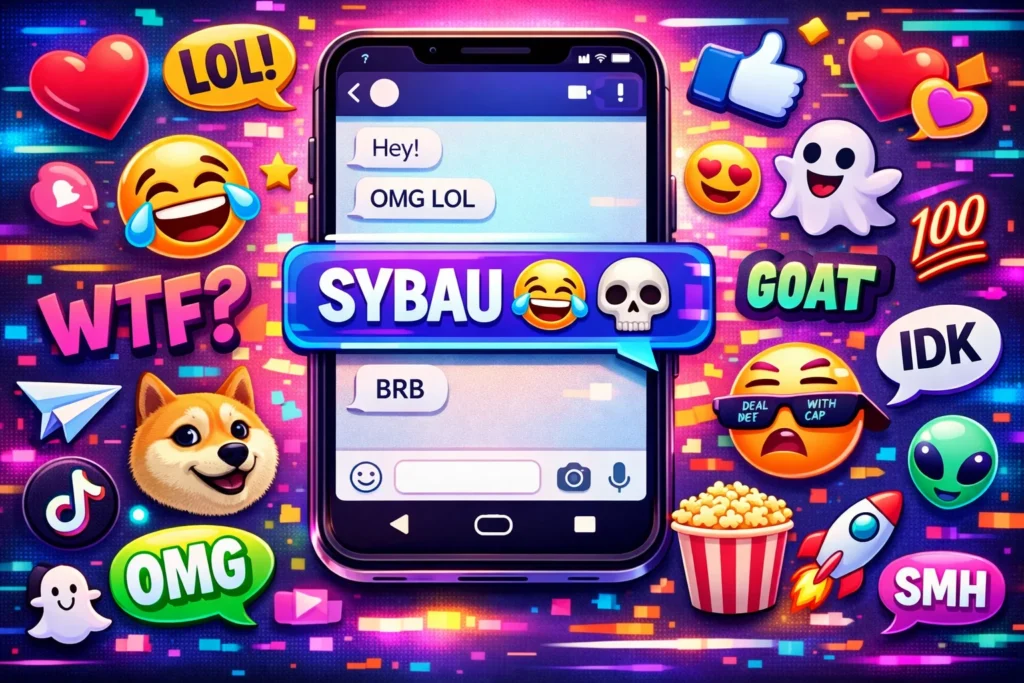
SYBAU means “Shut Your Boring Ass Up” in text slang. It is a rude or dismissive internet abbreviation used to tell someone to stop talking, usually in a joking, sarcastic, or aggressive tone depending on context.
If you’ve been scrolling through TikTok comments, Snapchat streaks, or random group chats and suddenly saw someone type “SYBAU”, you’re not alone in wondering what it means. Internet slang evolves fast, and new abbreviations like this often leave people confused, curious, or even slightly shocked.
Understanding what does sybau mean in text is important because modern digital communication is full of coded language, slang shortcuts, and viral acronyms that change tone instantly. One small word can turn a message from friendly to rude, funny, or completely dismissive.
So before you reply to something you don’t fully understand, it’s worth decoding it properly.
Origin of SYBAU
The abbreviation SYBAU comes from internet slang culture, especially from platforms like:
- TikTok comment sections
- Snapchat chats
- Twitter (X) conversations
- Gaming communities
It is part of a larger trend where users shorten rude or expressive phrases into acronyms. Instead of typing the full sentence, people compress it into quick, punchy abbreviations.
SYBAU likely became more visible through meme culture and Gen Z texting habits, where exaggerated humor and sarcasm are common.
Key reasons for its rise:
- Faster texting style
- Meme-driven humor
- Online roasting culture
- Viral comment trends
It is not considered formal language and is mainly used in casual digital conversations.
What Does SYBAU Mean in Texting?
SYBAU is a dismissive slang phrase used when someone finds another person:
- Annoying
- Repetitive
- Boring
- Overly dramatic
- Or simply unwanted in the conversation
However, tone matters a lot. It can be:
- Playful among friends
- Sarcastic in memes
- Harsh or offensive in arguments
So context decides whether it feels funny or disrespectful.
Usage of SYBAU in Real Conversations
Here’s how SYBAU is typically used in real online chats:
- When someone is joking too much
- When a friend is teasing you nonstop
- When you want to shut down boring talk (sarcastically)
- In meme replies or roasting threads
Example Situations:
- Group chat teasing
- TikTok comment replies
- Gaming trash talk
- Friendly banter between close friends
Examples of SYBAU in Text (With Context)
| Situation | Example Message | Tone |
|---|---|---|
| Friend joking too much | “SYBAU bro, you’re not even funny 😭” | Playful |
| Online argument | “SYBAU, you don’t know what you’re talking about” | Aggressive |
| Meme reply | “SYBAU this is actually hilarious 💀” | Humorous |
| Roasting friend | “SYBAU before I expose you 😂” | Friendly roast |
| Annoying spam | “SYBAU stop flooding the chat” | Neutral annoyed |
Tone Breakdown of SYBAU
SYBAU can shift meaning depending on tone:
1. Playful Tone
Used between close friends joking around.
👉 Feels like teasing, not insulting.
2. Neutral Dismissive Tone
Used to stop unnecessary talk.
👉 Mild irritation, not serious.
3. Aggressive Tone
Used in arguments or conflicts.
👉 Can be rude or offensive.
4. Meme Tone
Used ironically in funny posts.
👉 Just part of humor culture.
Comparison With Similar Internet Slang
SYBAU belongs to a family of internet slang expressions used to shut down conversation.
| Term | Meaning | Tone |
|---|---|---|
| SYBAU | Shut Your Boring Ass Up | Rude / sarcastic |
| STFU | Shut The F*** Up | Very rude |
| LOL | Laugh Out Loud | Positive |
| LMAO | Laughing My A** Off | Humorous |
| IDC | I Don’t Care | Neutral / dismissive |
| BRUH | Expression of disbelief | Casual |
Key Difference:
SYBAU is more personal and insulting compared to general reactions like LOL or BRUH.
Alternate Meanings of SYBAU
While the dominant meaning is slang-based, SYBAU does not have widely accepted formal or alternative meanings.
However, in rare contexts, people may misinterpret or joke that it stands for something else, but these are not standard or recognized.
So in most cases:
👉 SYBAU = internet slang insult or joke
When Should You Use SYBAU?
Use It When:
- Talking casually with close friends
- You understand the humor context
- You are joking or meme-sharing
- Everyone involved is comfortable with sarcasm
Avoid It When:
- Talking to strangers
- Professional conversations
- Sensitive discussions
- You don’t know the tone of the group
Because it can easily come off as disrespectful.
Polite or Professional Alternatives
If you want to express the same idea without sounding rude, you can use:
- “Let’s change the topic”
- “I think we’re going off track”
- “Can we pause this conversation?”
- “Not really interested in this topic”
- “Let’s keep it chill”
These keep the message clear without offending anyone.
SYBAU in Social Media Culture
SYBAU is part of a bigger trend in online communication:
- Short slang dominates texting
- Humor is often sarcastic or exaggerated
- Memes turn insults into jokes
- Gen Z communication favors speed over formality
You’ll mostly see it in:
- TikTok comments
- Discord chats
- Instagram reels comment sections
- Gaming lobbies
It reflects how digital language is constantly evolving.
FAQs:
1. What does SYBAU mean in text messages?
It means “Shut Your Boring Ass Up,” a slang phrase used to tell someone to stop talking in a rude or joking way.
2. Is SYBAU offensive?
Yes, it can be offensive depending on tone and context, especially in serious conversations.
3. Is SYBAU used in a friendly way?
Sometimes yes, among close friends who joke with each other.
4. Where is SYBAU commonly used?
Mostly on TikTok, Snapchat, Discord, Twitter, and gaming chats.
5. What is the difference between SYBAU and STFU?
STFU is more harsh and explicit, while SYBAU is slightly more meme-based but still rude.
6. Can I use SYBAU in professional chats?
No, it is not appropriate for professional or formal communication.
7. Why do people use SYBAU instead of typing full words?
Because internet slang is faster, trendier, and fits meme culture.
8. What should I say instead of SYBAU?
You can use polite phrases like “let’s change the topic” or “can we move on from this?”
Conclusion
Understanding what does sybau mean in text helps you navigate modern internet conversations with confidence. While it may look like just another random acronym, SYBAU actually carries a strong tone that can be playful, sarcastic, or even rude depending on context.
Whether you’re chatting with friends or scrolling through social media, knowing slang like SYBAU keeps you one step ahead in digital conversations—and helps you avoid misunderstandings while staying in the loop.
Discover More Related Articles:
- Lamentation Mean in the Bible: Why It Matters for Christians in 2026
- Adam Mean in the Bible: Symbolism, and Impact in 2026