
Definition
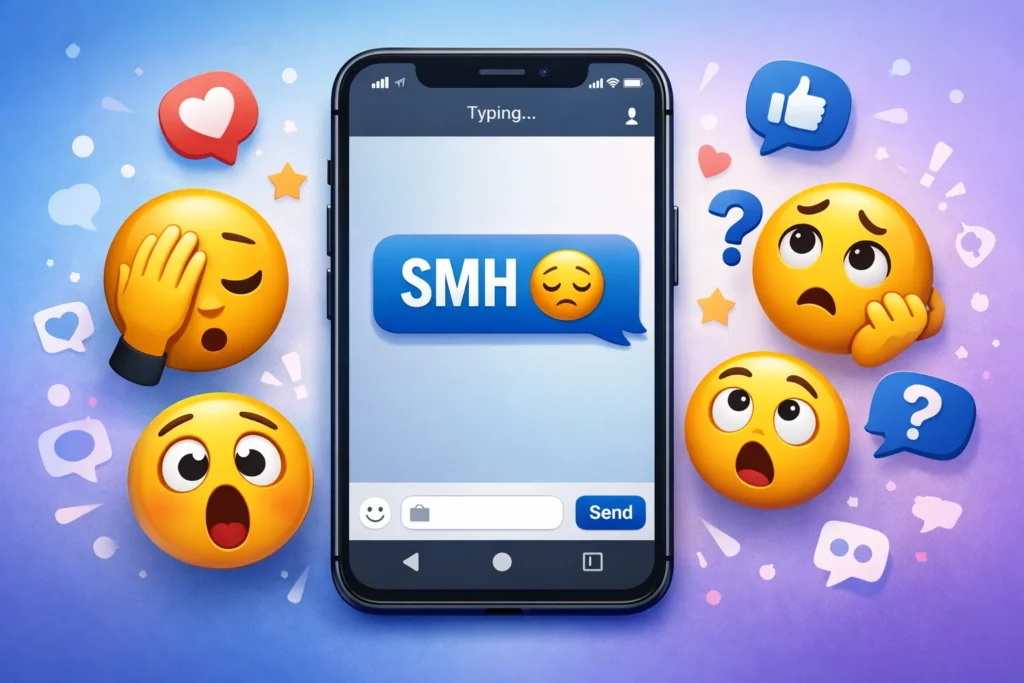
SMH stands for “Shaking My Head.” It is an internet slang abbreviation used in texting and online communication to express disappointment, disbelief, frustration, or disapproval about something.
In simple terms, SMH is used when someone finds something silly, annoying, or hard to believe and wants to react without typing a full sentence.
If you’ve ever seen someone reply with “SMH” in a chat and wondered what it means, you’re not alone. This small three-letter abbreviation has become a major part of modern texting culture.
From social media comments to WhatsApp messages and TikTok replies, SMH is everywhere. It’s quick, expressive, and instantly conveys emotion without needing long explanations.
But what makes SMH so popular is not just its meaning—it’s the tone behind it. Sometimes it’s funny, sometimes sarcastic, and sometimes genuinely disappointed.
Let’s break it down in detail.
Origin of SMH and How It Became Popular
SMH originated in early internet chatrooms and SMS culture in the early 2000s. As texting became more common and character limits mattered, people started shortening emotional expressions.
Instead of typing:
- “I can’t believe this… I’m shaking my head right now”
People simply wrote:
- “SMH”
Why it became viral:
- Rise of social media platforms (Twitter, Facebook, Instagram)
- Faster communication needs
- Meme culture and reaction comments
- Easy emotional expression in just 3 letters
Today, SMH is widely recognized across all age groups, especially among teenagers and young adults.
How SMH Is Used in Real Conversations
SMH is flexible and can be used in different emotional tones depending on context.
Common situations where SMH is used:
- Someone does something silly
- A disappointing situation happens
- A shocking or unbelievable statement
- A frustrating mistake
- Funny but awkward moments
Examples of SMH in Text Messages
Here are real-life style examples to help you understand how SMH is used:
1. Friendly Tone
- “You forgot your homework again? SMH 😂”
2. Disappointed Tone
- “He lied again after promising he wouldn’t. SMH.”
3. Funny/Sarcastic Tone
- “You tried to cook noodles and burned water? SMH 😂”
4. Annoyed Tone
- “SMH, why would you park like that?”
SMH Meaning in Different Contexts
| Context Type | Meaning of SMH | Example |
|---|---|---|
| Friendly | Light teasing or joking disappointment | “You missed the bus again SMH 😂” |
| Serious | Genuine frustration or disbelief | “SMH, that decision makes no sense.” |
| Sarcastic | Mocking or joking tone | “Oh great, another Monday mistake. SMH.” |
| Social media reaction | Quick response to posts/comments | “SMH people still believe this?” |
SMH in Social Media Culture
On platforms like TikTok, Instagram, and X (Twitter), SMH is often used as a quick reaction comment.
Typical usage:
- Commenting on viral videos
- Reacting to bad decisions
- Responding to memes
- Expressing disbelief in trending topics
Example:
- Video: Someone drops their phone in water twice
- Comment: “SMH 😭”
Alternate Meanings of SMH
While SMH mostly means “Shaking My Head,” in rare cases it can have other meanings depending on context:
- “So Much Hate” (rare slang usage)
- “Scratching My Head” (confusion instead of disappointment)
However, these meanings are not commonly used in modern texting. The standard meaning remains Shaking My Head.
SMH vs Similar Internet Abbreviations
Here’s how SMH compares with other popular slang terms:
| Abbreviation | Meaning | Difference |
|---|---|---|
| SMH | Shaking My Head | Disapproval or disbelief |
| LOL | Laugh Out Loud | Humor or laughter |
| OMG | Oh My God | Surprise or shock |
| BRB | Be Right Back | Temporary absence |
| IDC | I Don’t Care | Indifference |
| SMH vs Facepalm | Expression of frustration | Facepalm is more visual/emotional |
Key Insight:
SMH is more about reaction to someone else’s action, not just emotion.
Polite or Professional Alternatives to SMH
In formal or professional communication, SMH should be avoided. Instead, you can use:
- “That’s disappointing”
- “I find this surprising”
- “I’m not sure that was the best decision”
- “This is unfortunate”
- “I don’t agree with this approach”
These alternatives keep your communication respectful and professional.
When You Should Use SMH
When it’s appropriate:
- Casual chats with friends
- Social media comments
- Light humor or sarcasm
- Informal texting
Why SMH Is So Popular in Modern Communication
SMH is widely used because:
- It saves time
- It expresses emotion quickly
- It fits meme culture
- It works in many contexts
- It feels natural in digital conversations
In a fast-moving online world, short emotional expressions like SMH are becoming the new language of reaction.
FAQs:
1. What does SMH stand for in texting?
SMH stands for “Shaking My Head,” used to show disappointment or disbelief.
2. Is SMH rude?
Not usually. It depends on tone. It can be playful, sarcastic, or slightly critical.
3. What does SMH mean on Snapchat or Instagram?
It means the same—Shaking My Head—used in captions or comments.
4. Can SMH mean confusion?
Sometimes people use it to mean “Scratching My Head,” but this is rare.
5. Is SMH still popular in 2026?
Yes, it is still widely used in texting and social media reactions.
6. What is the difference between SMH and facepalm?
SMH is text-based reaction, while facepalm is a visual expression of frustration.
7. Can SMH be used in professional emails?
No, it is too informal for professional or formal communication.
8. What are some alternatives to SMH?
You can say “That’s disappointing,” “I’m surprised,” or “That’s unfortunate.”
Conclusion:
SMH, short for Shaking My Head, is one of the most widely used internet slang expressions. It captures feelings of disbelief, disappointment, or frustration in just three letters.
Whether used in a funny conversation or a serious reaction, SMH helps people communicate emotions quickly and effectively in digital conversations.
However, it’s important to understand context what feels funny in one chat might feel rude in another. So using SMH wisely ensures your message is always understood correctly.
In short, SMH is not just slang it’s a reflection of modern digital communication where emotions meet speed.
Discover More Related Articles:
- “En” Mean in Spanish: How “En” Differs From “Sobre” in 2026
- What Does NT Mean in Gaming?: Ranked Matches in 2026