
Definition
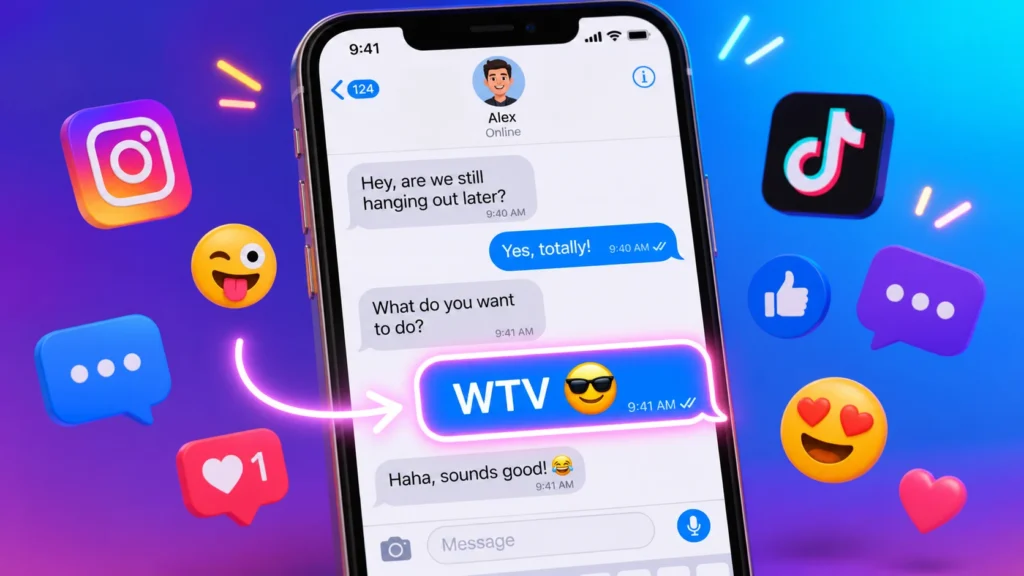
WTV in text means “whatever.” It is a casual internet abbreviation used in messaging and social media to show indifference, lack of interest, or a relaxed attitude toward something being discussed.
In simple terms, “wtv” = “whatever”, and it can express:
- Not caring about a situation
- Agreeing without strong feelings
- Dismissiveness or annoyance (depending on tone)
Example:
- “We can go to the mall or cinema.”
- “WTV, I don’t mind.”
This short form is widely used in texting, Snapchat, Instagram, and gaming chats because it is quick, informal, and easy to type.
Origin and Popularity of WTV
The abbreviation WTV comes from early internet chat culture and SMS texting when people tried to shorten words to save time and character space.
Why it became popular:
- Fast typing in chats and mobile texting
- Influence of early social media platforms (MSN, Facebook, Yahoo Messenger)
- Gen Z and teen texting slang culture
- Common use in memes and casual online conversations
Today, WTV is still widely used, especially in:
- WhatsApp chats
- TikTok comments
- Instagram DMs
- Online gaming chats
Its meaning hasn’t changed much, but its tone depends heavily on context.
How WTV Is Used in Real Conversations
WTV is flexible and can express different moods depending on how it is used.
1. Neutral / Casual Meaning
Used when someone genuinely doesn’t have a preference.
Example:
- A: “Pizza or burgers?”
- B: “WTV is fine with me.”
👉 Meaning: No strong opinion
2. Dismissive or Slightly Rude Tone
Can show irritation or lack of interest.
Example:
- A: “You should come to the event.”
- B: “WTV.”
👉 Meaning: I don’t care / I’m not interested
3. Passive Agreement
Used when someone is avoiding conflict.
Example:
- “Let’s just do it your way, wtv.”
👉 Meaning: I agree, but not strongly
4. Emotional or Frustrated Tone
Sometimes used when someone feels tired of discussing something.
Example:
- “WTV, do what you want.”
👉 Meaning: Frustration or giving up on discussion
Example Table: WTV in Different Contexts
| Situation | Example Message | Meaning |
|---|---|---|
| Casual choice | “WTV you like.” | No preference |
| Indifference | “WTV, I don’t care.” | Lack of interest |
| Agreement | “Sure, wtv works.” | Mild agreement |
| Frustration | “WTV, forget it.” | Annoyance |
| Friendly chat | “WTV 😂” | Relaxed tone |
Comparison: WTV vs Similar Text Abbreviations
Understanding WTV becomes easier when compared with similar slang.
| Abbreviation | Full Form | Meaning | Tone |
|---|---|---|---|
| WTV | Whatever | Indifference or flexibility | Neutral / Casual / Dismissive |
| IDC | I don’t care | Strong indifference | More direct / blunt |
| IDK | I don’t know | Uncertainty | Neutral |
| NVM | Never mind | Dropping topic | Neutral |
| TBH | To be honest | Honest opinion | Neutral / Serious |
👉 Key difference:
- WTV = flexible attitude
- IDC = stronger emotional distance
Alternate Meanings of WTV
Although “whatever” is the most common meaning, WTV can rarely be used differently:
- WTV (rare technical use): short form for “Web TV” in older tech contexts
- WTV file extension: used in Windows Media Center recordings
However, in texting and social media, 99% of the time WTV means “whatever.”
Tone Guide: When WTV Sounds Friendly or Rude
WTV is highly tone-sensitive.
Friendly tone:
- “WTV you want 😊”
- Shows flexibility and calm attitude
Neutral tone:
- “WTV works”
- No emotional weight
Negative tone:
- “WTV.”
- Can feel cold, annoyed, or dismissive
👉 Important tip: punctuation and emojis completely change how WTV feels.
Polite Alternatives to WTV
If you want to sound more respectful or professional, you can use these instead:
- “I’m okay with anything.”
- “That works for me.”
- “No preference.”
- “I’m fine either way.”
- “Up to you.”
These are better for:
- Formal chats
- School or workplace communication
- Conversations where tone matters
When You Should Avoid Using WTV
Even though WTV is common, it’s not always appropriate.
Avoid using it:
- In professional emails
- With teachers or seniors
- In serious conversations
- When trying to show respect
Instead, use full phrases like “That’s fine with me.”
Why People Use WTV in Texting
People prefer WTV because:
- It saves time
- It feels casual and modern
- It fits social media culture
- It works in memes and short replies
- It expresses attitude quickly
However, overusing it can sometimes make messages sound uninterested or rude.
FAQs:
1. What does WTV stand for in texting?
WTV stands for “whatever,” used to show indifference or flexibility.
2. Is WTV rude?
It can be, depending on tone. Alone, it may sound dismissive.
3. Is WTV used in formal communication?
No, it is only for casual texting or social media.
4. What is the difference between WTV and IDC?
WTV is softer and flexible, while IDC (I don’t care) is stronger and more blunt.
5. Can WTV mean anything else?
Rarely, it can mean “Web TV” or be a file extension, but not in texting.
6. How do you reply to WTV?
You can continue the conversation normally or ask for clarification.
7. Is WTV still popular in 2026?
Yes, especially among teens and on social media platforms.
8. What is a polite way to replace WTV?
You can say “I’m fine with anything” or “That works for me.”
Conclusion
WTV in text simply means “whatever,” but its meaning depends heavily on tone and context. It can show indifference, agreement, flexibility, or even frustration. While it is widely used in casual chats and social media, it should be avoided in formal communication.
If you want to stay clear and respectful, it’s better to use full phrases like “I don’t mind” or “That works for me.” But in everyday texting, WTV remains one of the most common and versatile slang abbreviations.
Discover More Related Articles:
- Lamentation Mean in the Bible: Why It Matters for Christians in 2026
- Adam Mean in the Bible: Symbolism, and Impact in 2026