
Definition:
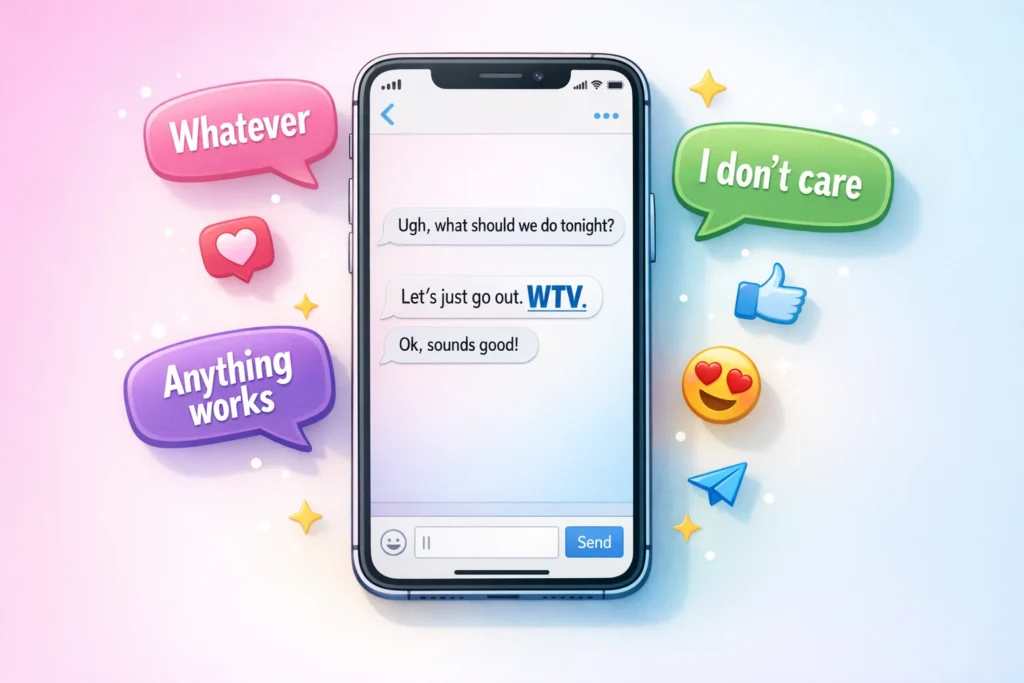
WTV in texting means “whatever.” It is an informal internet slang abbreviation used to show indifference, flexibility, or sometimes mild dismissiveness in conversations.
If you’ve been scrolling through Instagram DMs, Snapchat chats, TikTok comments, or WhatsApp conversations, you’ve probably seen the abbreviation “wtv” pop up everywhere. At first glance, it might look confusing like some kind of code or typo. But in reality, it’s one of the simplest and most commonly used internet slang terms.
Modern texting culture thrives on speed and convenience. Instead of typing long words like “whatever,” people shorten them into quick, punchy abbreviations. That’s exactly where wtv meaning in texting comes in.
But here’s the interesting part: depending on how it’s used, “wtv” can sound chill, rude, passive-aggressive, or completely neutral. It’s a small word with a surprisingly big emotional range.
In this guide, we’ll break down everything you need to know from meaning and origin to real-life examples, tone explanations, comparisons, and polite alternatives.
Origin and Popularity of “WTV”
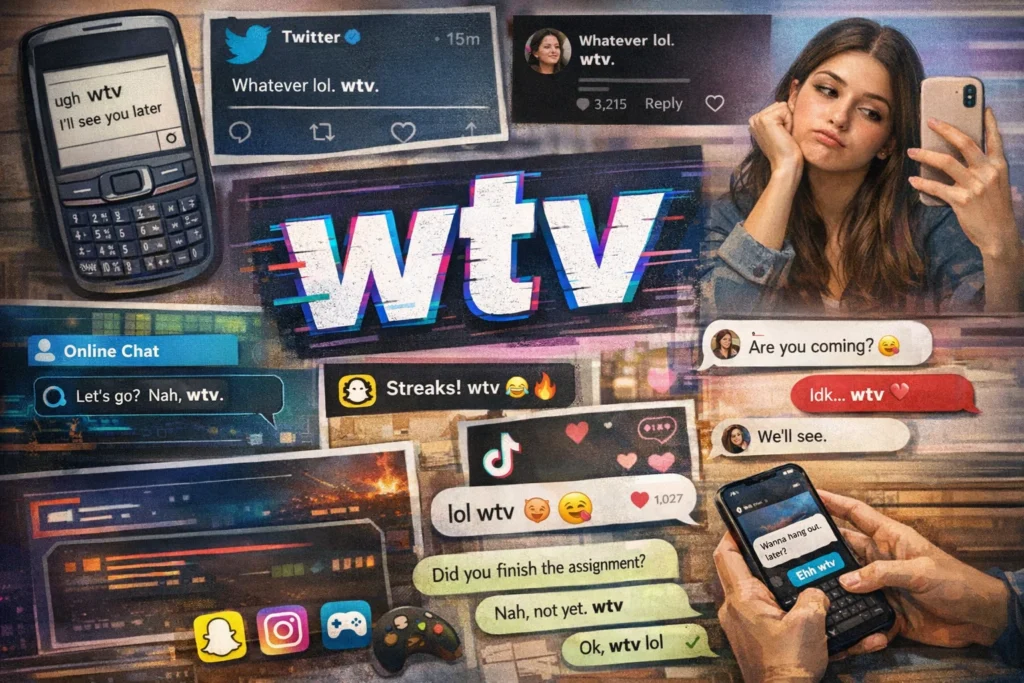
The abbreviation “wtv” comes directly from the word “whatever.” Like many texting shortcuts, it emerged during the early 2000s when SMS texting was limited to 160 characters and people wanted faster communication.
Why it became popular:
- 💬 Early SMS culture encouraged abbreviations
- 📱 Rise of smartphones made casual texting more frequent
- 🌐 Social media platforms like Twitter (now X) promoted short expressions
- ⚡ Gen Z and Gen Alpha internet slang culture embraced shortcuts
Over time, “wtv” became a staple in digital communication, especially in:
- Snapchat streak chats
- TikTok comment sections
- Instagram DMs
- Gaming chats
- WhatsApp conversations
Today, it’s not just a shortcut it’s a tone indicator.
What Does WTV Mean in Texting?
At its core, wtv = whatever, but the meaning depends heavily on context.
1. Indifference
Used when someone doesn’t care much about the outcome.
“Where should we eat?”
“wtv, I’m fine with anything.”
2. Agreement without preference
Shows flexibility.
“Movie or gaming?”
“wtv works for me.”
3. Dismissive attitude
Can sound slightly rude depending on tone.
“You should study more.”
“wtv…”
4. Ending a conversation
Sometimes used to close a topic.
“I don’t want to argue.”
“wtv, forget it.”
Real-Life Examples of WTV in Different Contexts
Here’s a clear table showing how wtv meaning in texting changes with context:
| Situation | Message Example | Meaning | Tone |
|---|---|---|---|
| Friendly chat | “wtv you choose 😊” | Flexible | Neutral/Positive |
| Argument | “wtv I don’t care” | Disinterest | Cold/Dismissive |
| Casual planning | “wtv sounds good” | Agreeing | Chill |
| Annoyed reply | “wtv…” | Frustration | Passive-aggressive |
| Group chat | “wtv let’s just go” | Decision-making | Neutral |
As you can see, tone matters more than the abbreviation itself.
Tone of “WTV” – Friendly or Rude?
One of the most important things about wtv in texting is that it has no fixed emotion. The tone depends on punctuation, emojis, and conversation flow.
😊 Friendly usage:
- “wtv works 😄”
- “I’m good with wtv you want”
😐 Neutral usage:
- “wtv is fine”
- “sure, wtv”
😒 Negative usage:
- “wtv.”
- “wtv I don’t care”
💡 Tip:
Adding emojis softens the tone significantly, while periods (.) can make it sound more serious or irritated.
Comparison with Similar Texting Terms
To fully understand what does wtv mean in texting, it helps to compare it with similar slang terms.
| Abbreviation | Full Form | Meaning | Difference |
|---|---|---|---|
| wtv | whatever | indifference or flexibility | Most versatile |
| idc | I don’t care | stronger indifference | more blunt |
| ig | I guess | uncertainty | less dismissive |
| meh | meh | boredom | emotional reaction |
| k | okay | minimal response | more neutral |
Alternate Meanings of WTV
While “whatever” is the main meaning, there are a few rare or unrelated interpretations:
- WTV = Watch This Video (rare internet shorthand)
- WTV = World Television (old media context)
- WTV = Whatever TV (casual content tagging online)
👉 However, in 99% of texting conversations, wtv simply means “whatever.”
When and How to Use WTV Properly
Using slang like wtv meaning in texting correctly depends on social context.
✔ Good situations:
- Casual conversations
- Friendly chats
- Group decisions
- Informal online messaging
❌ Avoid using when:
- Talking to teachers or professionals
- Serious emotional conversations
- Job-related messages
- Situations requiring clarity or respect
Smart usage tips:
- Use emojis to soften tone 😊
- Avoid overusing it in arguments
- Don’t use it in professional communication
- Match the other person’s tone
Polite and Professional Alternatives to WTV
If you want to avoid sounding rude or too casual, here are better alternatives:
Instead of “wtv”:
- “I’m okay with anything.”
- “That works for me.”
- “I’m flexible.”
- “You can decide.”
- “No preference.”
More professional versions:
- “I’m open to suggestions.”
- “I’ll go with your recommendation.”
- “Either option is fine with me.”
These alternatives help maintain respect and clarity in communication.
Why People Prefer Using WTV in Texting
There are several reasons why wtv is widely used in digital conversations:
- ⚡ Saves time while typing
- 📱 Fits fast-paced messaging culture
- 😎 Sounds casual and relaxed
- 💬 Helps avoid long explanations
- 🌍 Universally understood in internet slang
It reflects the modern communication style: short, quick, and expressive.
Common Mistakes People Make With WTV
Even though it’s simple, people sometimes misuse it:
Mistake 1: Using it in serious conversations
→ Can seem disrespectful
Mistake 2: Overusing it
→ Makes you sound uninterested
Mistake 3: Misreading tone
→ “wtv” from a friend might not always be rude
Mistake 4: Using it in formal writing
→ Not appropriate for professional emails
FAQs
1. What does WTV mean in texting?
It means “whatever,” used to show indifference, flexibility, or casual agreement.
2. Is WTV rude in messages?
It can be rude depending on tone and context, especially in arguments.
3. Is WTV slang or abbreviation?
Yes, it is internet slang and a shortened form of “whatever.”
4. What is the full form of WTV?
The full form is “whatever.”
5. Can I use WTV in formal chats?
No, it’s better to avoid it in professional or formal communication.
6. What does WTV mean from a girl or boy?
It has no gender-specific meaning it depends on tone, not the person.
7. Is WTV the same as IDC?
Not exactly. “IDC” (I don’t care) is stronger and more blunt than “wtv.”
8. How do I respond to WTV?
You can reply normally, ask clarification, or continue the conversation depending on context.
Conclusion
In simple terms, “wtv” in texting means “whatever,” and it is used to show indifference, flexibility, or casual agreement in conversations. While it can sound friendly and relaxed in many situations, its tone can also come across as rude or dismissive depending on how and where it is used.
The key takeaway is that context matters a lot punctuation, emojis, and the flow of conversation all change how “wtv” is interpreted. In casual chats, it helps save time and keeps conversations short. However, in formal or sensitive situations, it’s better to use clearer and more polite alternatives like “I’m fine with anything” or “you can decide.”
Understanding slang like wtv meaning in texting helps you communicate more naturally in today’s digital world while avoiding misunderstandings.
Discover More Related Articles:
- 200+ Funny, and Cute Responses to “Oh My Gosh OMG” for 2026
- 250+ Polite Responses to “Oh Wow”: Funny Conversation Starter for 2026