
Definition
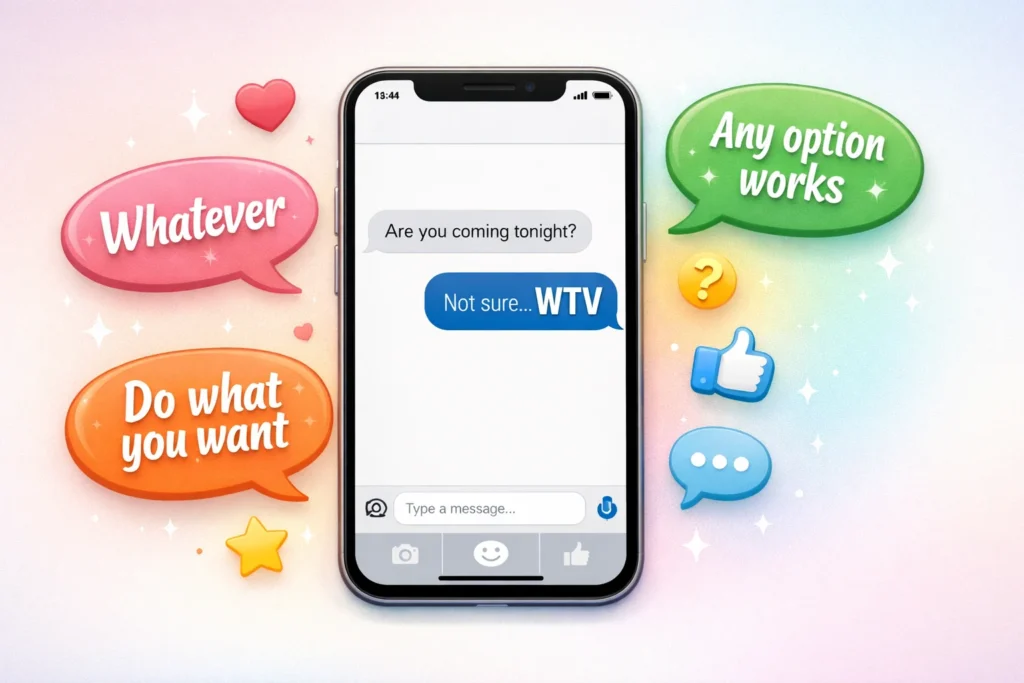
WTV is a popular texting abbreviation that stands for “whatever.” It is commonly used in digital communication such as text messages, social media, and online chats to express indifference, agreement, dismissal, or a lack of strong preference.
If you’ve ever received a message that simply says “wtv”, you might have paused for a moment wondering what it meant. In today’s fast-paced digital world, abbreviations and slang dominate online conversations, helping people communicate quickly and efficiently.
Among these, WTV has become a widely recognized shorthand, especially among younger generations and frequent social media users. Whether it’s used to show flexibility in plans, signal indifference, or subtly end a conversation, understanding the meaning and tone of WTV can help you interpret messages more accurately and respond appropriately.
This comprehensive guide explores everything you need to know about WTV, including its definition, origin, real-world usage, tone variations, comparisons with similar terms, and polite alternatives.
What Does WTV Mean in Text?
At its core, WTV is a shortened form of the word “whatever.” It is commonly used to:
- Express indifference or lack of preference.
- Indicate agreement or flexibility.
- Convey dismissal or mild annoyance.
- End a conversation when the speaker has nothing more to add.
Quick Overview
| Abbreviation | Meaning | Tone | Common Usage |
|---|---|---|---|
| WTV | Whatever | Friendly, Neutral, or Dismissive | Text messages, social media, chats |
Origin of WTV
1. Evolution of Internet Slang
The abbreviation WTV emerged alongside the rise of internet and mobile communication in the late 1990s and early 2000s. As texting became more common, users began shortening words to save time and character space. “Whatever” was frequently shortened to “w/e” or “wtv,” with WTV becoming particularly popular due to its simplicity and ease of typing.
2. Influence of SMS and Social Media
The popularity of WTV increased with the growth of platforms such as:
- SMS texting
- Instant messaging services
- Social media platforms like Instagram, Snapchat, TikTok, and Twitter (X)
These platforms encouraged quick, concise communication, making abbreviations like WTV a natural fit.
3. Cultural and Generational Adoption
While WTV is widely understood across age groups, it is especially common among Gen Z and Millennials, who frequently use shorthand expressions in digital conversations.
How WTV Is Used in Real-Life Conversations
The meaning of WTV can vary depending on the context and tone. Here are the most common ways it is used:
1. Expressing Indifference
When someone doesn’t have a strong opinion or preference.
Example:
- Friend: “Do you want pizza or burgers?”
- You: “WTV, I’m fine with either.”
Tone: Neutral or relaxed 😊
2. Showing Flexibility or Agreement
Used to indicate that any option is acceptable.
Example:
- “We can meet today or tomorrow.”
- “WTV works for me!”
Tone: Friendly and cooperative 👍
3. Conveying Dismissiveness
Sometimes WTV can signal annoyance or a desire to end a conversation.
Example:
- Person A: “You never listen to me.”
- Person B: “WTV.”
Tone: Negative or dismissive 😒
4. Ending a Conversation
It may be used to close a discussion when the speaker no longer wishes to engage.
Example:
- “I’ve explained everything already. WTV.”
Tone: Final or disengaged 🚫
Tone Variations of WTV
Understanding tone is essential for interpreting WTV correctly.
| Tone | Meaning | Example | Emoji Suggestion |
|---|---|---|---|
| Friendly | Easygoing agreement | “WTV you choose is fine!” | 😊 |
| Neutral | Lack of preference | “WTV, I don’t mind.” | 👍 |
| Dismissive | Annoyance or indifference | “WTV, do what you want.” | 😒 |
| Sarcastic | Subtle disagreement | “Oh, sure… WTV.” | 🙄 |
Examples of WTV in Different Contexts
Friendly Context
- “WTV movie you want to watch is fine with me.”
- “Let’s meet whenever WTV works!”
Neutral Context
- “WTV, I’ll go along with the plan.”
- “Choose the restaurant, WTV is okay.”
Negative or Dismissive Context
- “You always think you’re right. WTV.”
- “If you don’t care, then WTV.”
Professional or Semi-Formal Context
While WTV is rarely used in professional communication, it may appear in informal workplace chats:
- “WTV time suits everyone, I can adjust.”
Comparison with Related Abbreviations
Understanding how WTV compares with similar slang terms can help avoid misunderstandings.
| Abbreviation | Meaning | Tone | Key Difference |
|---|---|---|---|
| WTV | Whatever | Neutral to dismissive | Most versatile |
| IDK | I Don’t Know | Neutral | Expresses uncertainty |
| IDC | I Don’t Care | Often negative | More blunt and harsher |
| NVM | Never Mind | Neutral | Withdraws a statement |
| W/E | Whatever | Similar to WTV | Less commonly used today |
| K | Okay | Can be dismissive | Shorter and sometimes colder |
Alternate Meanings of WTV
Although WTV most commonly means “whatever,” it can occasionally represent other phrases depending on the context:
| Alternate Meaning | Context |
|---|---|
| Watch Television | Rare; used in entertainment discussions |
| World Television | Media or broadcasting references |
| White | Informal shorthand in gaming or design contexts |
These alternate meanings are uncommon, and context usually makes the intended meaning clear.
Polite and Professional Alternatives to WTV
Since WTV can sometimes sound dismissive, especially in professional or formal settings, consider using more polite alternatives:
| Situation | Alternative Phrase |
|---|---|
| Showing flexibility | “Either option works for me.” |
| Expressing indifference | “I don’t have a preference.” |
| Ending a discussion politely | “Let’s go with your suggestion.” |
| Maintaining professionalism | “I’m happy to proceed with any option.” |
| Casual friendliness | “I’m good with anything!” |
Example Comparison
| Informal | Polite/Professional |
|---|---|
| “WTV you decide.” | “I’m happy with whatever you choose.” |
| “WTV, it doesn’t matter.” | “It’s not a major concern for me.” |
| “WTV.” | “Let’s move forward with your plan.” |
When to Use and Avoid WTV
Appropriate Situations
- Casual conversations with friends or family
- Social media comments and captions
- Informal group chats
- Situations where flexibility is intended
Situations to Avoid
- Professional emails or business communication
- Academic writing
- Conversations requiring sensitivity or empathy
- Formal customer interactions
FAQs
1. What does WTV mean in texting?
WTV stands for “whatever.” It is used to express indifference, agreement, or dismissal depending on the context.
2. Is WTV rude?
It can be. While it is often neutral or friendly, WTV may sound dismissive or annoyed if used abruptly or without additional context.
3. Is WTV the same as IDC?
Not exactly. WTV suggests flexibility or indifference, while IDC (I Don’t Care) is typically more blunt and can come across as harsher.
4. How is WTV used on Snapchat or Instagram?
On social media, WTV is commonly used in captions, comments, or direct messages to indicate flexibility or a carefree attitude.
5. Can WTV be used in professional communication?
It is generally not recommended. More formal alternatives such as “Either option works for me” are preferable in professional settings.
6. What is the difference between WTV and W/E?
Both abbreviations mean “whatever,” but WTV is more widely used in modern texting.
7. Does WTV always have a negative meaning?
No. The tone depends on context. It can be friendly, neutral, or dismissive.
8. How should I respond to WTV in a conversation?
Your response should match the tone:
- Friendly: “Great, let’s go with this option!”
- Neutral: “Okay, I’ll decide then.”
- Dismissive: “Is everything alright?”
Conclusion
The abbreviation WTV is a simple yet versatile piece of modern digital slang that stands for “whatever.” Its meaning can range from friendly flexibility to dismissive indifference, making context and tone essential for accurate interpretation.
While it is perfectly suitable for casual conversations and social media interactions, it is best avoided in professional settings where clearer and more polite language is preferred.
By understanding how and when to use WTV, you can communicate more effectively and interpret digital conversations with greater confidence.
Discover More Related Articles:
- 220+ Best Responses To How Are You: That Feel Natural for 2026
- 260+ Best Responses To Nice To Meet You: That Spark Attraction in 2026