
Definition
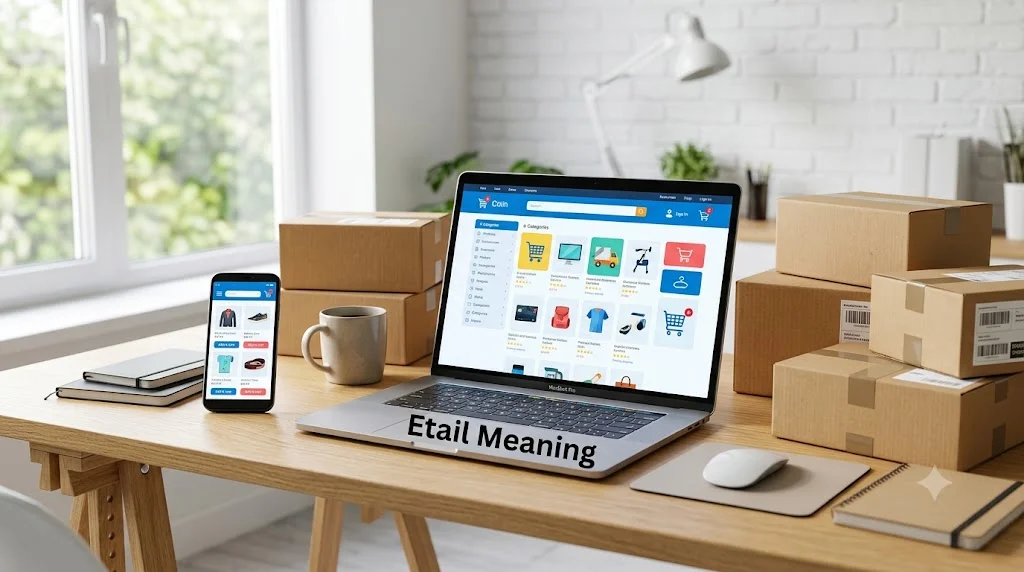
Etail (short for electronic retail) is the process of selling products or services online through websites, mobile apps, or digital marketplaces instead of physical stores. Businesses that use etail allow customers to browse, purchase, and often receive products without visiting a brick-and-mortar location.
Etail is short for electronic retail, a term used to describe the process of selling products or services online through websites, mobile apps, or digital marketplaces. Instead of visiting a physical store, customers can browse products, compare prices, place orders, and receive deliveries from the comfort of their homes. As online shopping continues to grow worldwide, understanding the meaning of etail has become increasingly important for shoppers, business owners, and anyone interested in e-commerce.
The term etail is commonly used in business, marketing, and e-commerce discussions to distinguish online retail from traditional brick-and-mortar stores. Companies like Amazon, Walmart, and many direct-to-consumer brands are examples of businesses that operate in the etail space. Whether you’re reading business news, studying digital marketing, or launching an online store, you’ll likely encounter this term.
In this guide, you’ll learn the etail meaning, how it works, its key features, real-world examples, advantages, and the difference between etail and traditional retail. By the end, you’ll have a clear understanding of why electronic retail has become a major part of today’s digital economy and how it continues to shape the future of shopping.
Etail Meaning
Let’s start with the basics.
Etail (also written as e-tail) is a blend of “electronic” and “retail.” It refers specifically to selling retail goods and services directly to consumers over the internet .
An e-tailer is any business that sells products through digital channels websites, mobile apps, or social media platforms. When you buy a pair of sneakers from a brand’s website, that’s etail. When you order a new phone case through Instagram, that’s also etail.
Merriam-Webster defines e-tail as “retail business conducted online via the World Wide Web,” with the first documented use dating back to 1995 . That’s nearly three decades of digital retail evolution.
The term describes a specific kind of online business activity. Unlike traditional retail, which relies on physical stores, etail operates entirely online, offering greater convenience and cost savings .
Etail vs Ecommerce: They’re Not the Same Thing
Here’s where most people get tripped up.
Many folks use these terms interchangeably, but that’s like saying all squares are rectangles technically true but missing the nuance.
Ecommerce is the big umbrella. It covers any online transaction: B2B (business-to-business), B2C (business-to-consumer), C2C (consumer-to-consumer like eBay), digital banking, supply chain management, mobile commerce, and yes etail .
Etail is a subset. It’s specifically focused on B2C retail sales. When a business sells a physical product (or sometimes a service) directly to an everyday consumer via the internet, that’s etail .
The key differences break down like this:
| Aspect | Etail | Ecommerce |
|---|---|---|
| Scope | Specific | Broad |
| Activities | Selling retail products online | Online financial services, supply chain management, digital marketing, data collection, plus retail sales |
| Market | Primarily B2C | B2C, B2B, C2C, D2C, C2B |
| Complexity | Simpler | More complex |
Here’s a practical way to think about it. Imagine you’re developing a retail app but don’t have the resources to implement every feature at once. Start with a Minimum Viable Product (MVP) that focuses on core retail functions that’s your etail app. As you add payment processing, inventory management, and other features, it evolves into a full ecommerce platform .
Etail is something very specific. It’s the foundation upon which broader ecommerce capabilities are built.
How Etail Actually Works
Running an etail business isn’t just about throwing products on a website and hoping for the best. There’s a whole engine running behind that “Add to Cart” button.
Setting Up Your Digital Storefront
First, you need a place to sell. Platforms like Shopify, WooCommerce, and Magento let businesses build customized online stores without needing a computer science degree .
Sellers upload product listings with photos, descriptions, and pricing. This is where the customer’s journey begins and first impressions matter immensely.
Managing Inventory
Inventory management kicks in next. You need to track stock across multiple warehouses to avoid those dreaded “out of stock” notifications. Good inventory systems prevent overselling and help you plan reorders.
Processing Payments
When a customer hits that checkout button, the real magic happens. Payment gateways like PayPal, Stripe, and others process the transaction securely .
This is critical stuff. Payment fraud remains a significant concern in online retail.
Fulfillment and Shipping
After payment clears, the order moves to fulfillment: picking, packing, and shipping the product out the door. Many e-tailers use dropshipping or fulfillment services like Amazon FBA to handle logistics .
Customer Experience and Retention
Smart e-tailers don’t stop after delivery. They track customer behavior through analytics, run targeted digital marketing campaigns, and offer customer service through live chat or email to keep shoppers coming back.
Customer feedback is crucial. Gathering opinions helps improve service, product offerings, and overall business strategies .
Types of E-tailers
Not all online retailers operate the same way. They fall into two main camps.
Pure Play E-tailers
These businesses live entirely online. No physical stores. No storefronts. Just digital shelves.
Amazon started this way, and companies like AliExpress, Wayfair, and countless Shopify stores follow this model. The advantage? Lower overhead costs and the ability to scale globally without leasing expensive retail space .
Brick-and-Click E-tailers
These are traditional physical retailers that added an online channel. Think Walmart, Target, or Apple.
You can walk into their store and touch the product, but you can also order it from your couch. This omnichannel approach gives customers flexibility and gives the business twice the opportunity to make a sale .
Real-World Etail Examples You Already Know
You’re probably interacting with e-tailers daily without realizing it.
Amazon dominates the space. It’s the poster child for pure play etail, though it’s also evolved into a marketplace where third-party sellers list their products.
Walmart has transformed from a brick-and-mortar giant into a formidable online retailer. They’re the perfect example of how traditional retail is evolving .
Etsy focuses on handmade and vintage goods a niche etailer that connects artisans directly with buyers.
Shopify powers millions of independent etail stores, from small-batch clothing brands to specialty food companies.
Even small entrepreneurs are getting in on the action. Platforms like TikTok and Instagram have become vital channels for e-tailers to engage with target audiences and drive sales .
Etail Industry Statistics That Will Surprise You
The numbers tell a powerful story about where retail is heading.
Global Ecommerce Growth
Global ecommerce sales are projected to cross $6 trillion** in 2024. By 2027, that figure is expected to hit **$8 trillion .
An estimated 2.71 billion consumers will shop online by the end of 2024. That’s more than a third of the world’s population.
Mobile Commerce Dominance
Mobile commerce (m-commerce) has surged and is now a cornerstone of the etail industry. mCommerce sales are projected to hit $3.56 trillion by 2025 that’s a staggering 73% of total e-commerce sales .
79% of smartphone users have bought items directly from their mobile devices. If your etail business isn’t optimized for mobile, you’re leaving money on the table.
Social Commerce Growth
Social media platforms have revolutionized how consumers shop online.
71% of consumers are more likely to recommend a brand with a positive social media presence. That’s a powerful endorsement for investing in your social channels.
Shipping Expectations
80% of consumers consider shipping speed and cost when making an online purchase . Fast, reliable shipping isn’t a luxury anymore it’s a baseline expectation.
Customer Reviews Matter
85% of consumers trust online reviews as much as personal recommendations . Encouraging customer reviews and ratings isn’t just nice to have it’s essential for building trust.
Why Etail Matters for Customer Experience
Etail fundamentally changes how customers interact with brands.
Convenience Is King
Shopping 24/7 from anywhere beats driving to the mall every time. Etail offers unparalleled convenience, letting customers shop on their own schedule.
Cost Savings
Etail often means lower prices. Without the overhead of physical stores, e-tailers can offer competitive pricing and pass savings to customers.
Global Reach
Brands can now sell to customers halfway across the world without opening a single foreign store. This opens up massive opportunities for growth.
Personalization
Online retailers can track customer behavior and preferences, offering personalized recommendations and targeted promotions. This level of customization is difficult to achieve in a physical store.
Customer Feedback Loop
Online reviews and ratings give businesses immediate feedback. This helps improve products and services, ultimately leading to higher customer satisfaction and loyalty .
The Challenges of Etail
Etail isn’t all smooth sailing. Behind the “order confirmed” email lies a mountain of headaches.
Returns Management
Returns are a nightmare for online retailers. Since customers can’t try before they buy, return rates skyrocket compared to physical stores . Managing returns efficiently while maintaining profitability is one of the biggest challenges e-tailers face.
Logistics Complexity
Managing inventory, shipping, and delivery across multiple warehouses requires constant attention. For businesses using dropshipping or third-party fulfillment, this becomes even more complicated.
Customer Service Demands
Since you never meet customers face-to-face, every email, chat, or phone call matters. Neglect customer service, and customers won’t just leave they’ll tell others about their bad experience.
Intense Competition
It’s not just other e-tailers you’re fighting. It’s the entire online marketplace. Standing out requires a solid marketing strategy, great SEO, and constant innovation.
Payment Fraud
Payment fraud remains a significant concern. Nearly 3% of ecommerce revenue was lost to payment fraud in 2023. Securing transactions without creating friction for legitimate customers is a delicate balance.
What Does Etail Mean in Business Context?
In business terminology, etail meaning refers specifically to the B2C retail segment of ecommerce.
Think of it this way. If you’re selling office supplies to other businesses online, that’s B2B ecommerce not etail. If you’re selling those same supplies directly to consumers through your website, that’s etail .
The distinction matters for your business strategy. Etail focuses on the direct-to-consumer (D2C) relationship. It’s about building brands that connect directly with end users, bypassing traditional retail middlemen.
For many businesses, starting with etail makes strategic sense. It’s simpler to implement and focuses on core retail functions. As your business grows, you can expand into broader ecommerce capabilities .
The Evolution of Electronic Retail
Electronic retail has come a long way since its origins in 1995 .
The Early Days
The first documented use of “e-tail” as a common noun occurred in 1995 . Online shopping was novel, clunky, and often insecure.
The Dot-Com Boom
The late 1990s saw the rise of early e-tail pioneers like Amazon and eBay. Many dot-com companies crashed when the bubble burst, but the survivors laid the groundwork for today’s digital retail economy.
The Mobile Revolution
The introduction of smartphones transformed everything. Mobile commerce made online shopping truly ubiquitous. Suddenly, customers could shop from anywhere at any time.
The Social Commerce Era
Social media platforms have become shopping destinations in their own right. Instagram, TikTok, and Facebook now offer integrated shopping experiences, blurring the lines between social networking and retail.
The Omnichannel Present
Today’s retail landscape is omnichannel. The distinction between online and offline shopping is increasingly meaningless. Customers expect seamless experiences across websites, apps, social media, and physical stores.
Etail vs Traditional Retail:
The differences between selling online versus in a physical store go deeper than you might think.
The Shopping Experience is completely different. In a store, you can touch, feel, and try on products. Online, you rely on photos and descriptions which is why detailed product information and high-quality images are so critical.
Market Scope flips the rules. A local retailer competes with stores within driving distance. An e-tailer competes with every similar online store in the world. That’s terrifying but also amazing, because your potential customer base is equally huge.
Cost Structure tilts heavily toward etail. No expensive retail space. No in-store staff. Less overhead overall. But e-tailers face their own expenses: shipping, returns management, website maintenance, and digital marketing to drive traffic.
Customer Acquisition works differently too. Retailers rely on foot traffic and window displays. E-tailers depend on search engine visibility, social media ads, and email marketing to bring people in.
The Future of Etail
The etail industry continues to evolve rapidly. Here’s what’s coming next.
AI and Personalization
Artificial intelligence is transforming how e-tailers interact with customers. Personalized recommendations, chatbots, and predictive analytics are becoming standard features.
Voice Commerce
Voice assistants like Alexa and Google Home are opening new shopping channels.
Augmented Reality
AR allows customers to visualize products in their own environment before buying. Virtual try-ons for clothing and furniture placement are just the beginning.
Sustainability Focus
Consumers increasingly care about sustainability. E-tailers that demonstrate environmental responsibility through eco-friendly packaging, carbon-neutral shipping, or sustainable sourcing will have a competitive advantage.
Instant Delivery
Same-day and next-day delivery are becoming standard expectations. Companies that can deliver products faster will win customer loyalty.
FAQs
What does etail mean in simple terms?
Etail means selling retail products directly to consumers over the internet. It’s the digital version of a traditional retail store.
How do you pronounce etail?
E-tail is pronounced “EE-tale” . The “e” sounds like the letter E, and “tail” rhymes with “mail.”
What’s the difference between etail and retail?
Retail refers to selling products to consumers through physical stores. Etail is the same activity but conducted entirely online. Etail reaches a global audience, offers 24/7 shopping, and typically has lower overhead costs but higher shipping and return expenses .
What companies are considered e-tailers?
Amazon, Walmart, Etsy, Shopify stores, and any business that sells products directly to consumers online. Pure play e-tailers operate only online, while brick-and-click retailers have both physical and digital channels.
Is Shopify an etail platform?
Yes. Shopify provides the tools for businesses to build online stores and sell products directly to consumers. It’s a platform that enables etail.
Conclusion
Etail is simply another term for electronic retail, referring to the process of selling products and services online through websites, mobile apps, and digital marketplaces. As more consumers choose the convenience of online shopping, etail has become a major part of the global retail industry.
Understanding the meaning of etail is useful for shoppers, business owners, students, and anyone interested in e-commerce. Knowing how etail works makes it easier to recognize the differences between traditional retail and modern online selling while staying informed about today’s digital marketplace.
Whether you’re buying everyday essentials, launching an online store, or researching business terminology, the concept of etail plays an important role in today’s economy. It connects businesses with customers across the world through fast, secure, and convenient digital platforms.
In short, etail represents the future of retail by combining technology with customer convenience. As online commerce continues to grow, understanding the meaning of etail will help you navigate the evolving world of digital shopping with greater confidence.
Discover More Related Articles:
- Circa Meaning | The Historical Term Everyone Sees but Few Understand In 2026
- Dichotomy Meaning | That Make It Easy to Understand In 2026