
Definition
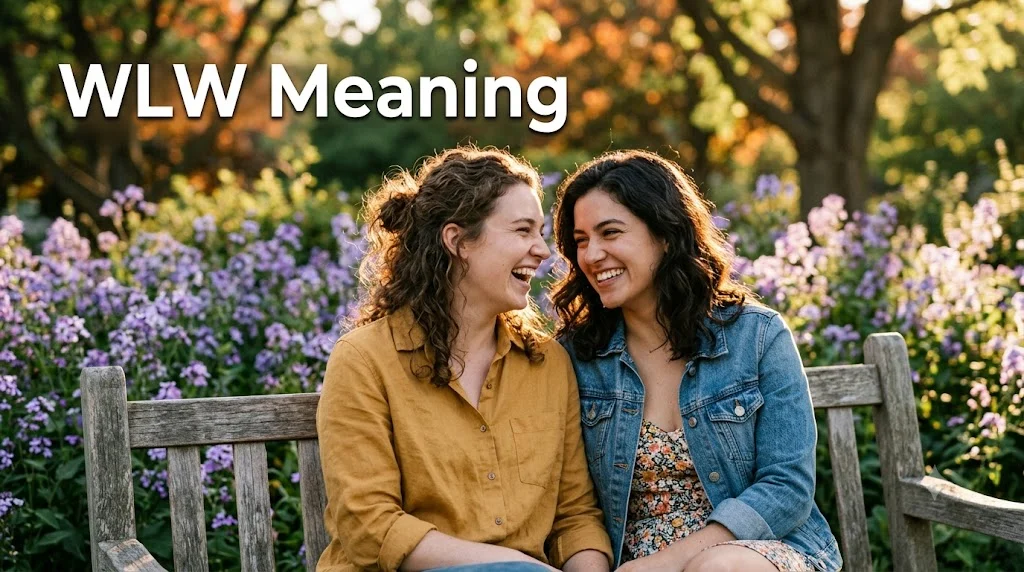
WLW stands for Women Loving Women.
WLW (Women Loving Women): An inclusive umbrella term within the LGBTQ+ community referring to women and woman-aligned people who experience romantic or sexual attraction to other women, regardless of how they specifically identify.
Three letters. Billions of TikTok views. A whole community behind them.
If you’ve ever scrolled through social media and spotted #WLW trending, seen it in someone’s bio, or received it in a text and had absolutely no idea what it meant you’re in the right place. WLW is one of those terms that feels like insider language until someone explains it, and once they do, it clicks instantly.
So let’s get into it. All of it.
What Does WLW Mean? The Core WLW
At its most basic, it’s an umbrella term used in the LGBTQ+ community to describe any woman or woman-aligned person who experiences romantic or sexual attraction to other women. That’s it. Simple, right?
But here’s the thing the simplicity is exactly what makes it powerful. WLW doesn’t demand that you pick a specific identity label. It doesn’t ask you to sort yourself neatly into “lesbian” or “bisexual” or “questioning.” It just centers one thing: the experience of a woman loving another woman.
The term does a lot of heavy lifting. It brings together a wide range of identities under one roof without erasing the differences between them. That kind of inclusivity is rare, and it’s a big part of why WLW caught on so fast especially online.
Who Does WLW Include?
WLW is broad by design. Here’s who comfortably fits under the umbrella:
- Lesbian women | women exclusively attracted to other women
- Bisexual women | women attracted to both women and other genders
- Pansexual women | women attracted to people regardless of gender
- Queer women | those who use “queer” as their preferred identity term
- Women who are questioning | not yet sure of their orientation but exploring same-sex attraction
- Non-binary and gender-nonconforming people | who feel personally connected to womanhood and find the WLW label resonates with their experience
That last point matters. WLW isn’t exclusively for cisgender women. Many non-binary individuals, especially those who are woman-aligned (meaning they have some connection to femininity or womanhood, even if they don’t identify fully as women), use and embrace the term.
What WLW is not is a label someone else puts on you. It’s a self-identifier something people choose for themselves.
The WLW Full Form and What It Actually Communicates
The WLW full form Women Loving Women says something specific about how language in the LGBTQ+ community evolved. Instead of defining someone by what they are (a label), it defines them by what they do (love). That’s a subtle but meaningful shift.
For a lot of people, especially those still figuring out their identity, saying “I’m WLW” feels less high-stakes than declaring “I’m a lesbian” or “I’m bisexual.” There’s less weight to it. Less history. Less expectation. And yet it still communicates something real and true about who you’re attracted to.
It’s a soft landing. And for a lot of people navigating their identity for the first time, that matters enormousl
WLW Meaning in Text and Online Chat
Online, WLW moves fast. It shows up in DMs, captions, comment sections, and bios. Sometimes it’s used seriously. Often it’s used casually, even jokingly. And it’s almost always instantly understood by anyone in or adjacent to queer spaces.
Here’s how people actually use it in text and chat:
In casual conversation: “omg she’s so cute, I’m having a full wlw crisis” “that scene in the show? extremely wlw coded” “my wlw friends and I are obsessed with this album”
As a content filter or search tag: Users type #WLW into search bars specifically to find content made by and for queer women. It works like a signal both for creators tagging their posts and for audiences trying to find their people.
Quick Reference: WLW in Text by Context
| Context | Example |
|---|---|
| Casual DM | “omg total wlw moment at the coffee shop today” |
| Instagram bio | “wlw 🌸 she/her” |
| TikTok caption | “#wlw #sapphic #pride” |
| Dating app bio | “looking for my wlw person” |
| Group chat | “is this show wlw? asking for a friend lol” |
| Twitter/X post | “wlw culture is overthinking every interaction ever” |
| Comment section | “the wlw representation in this film!!! 😭” |
The tone shifts depending on context but the meaning stays consistent. WLW always signals same-sex attraction between women, whether it’s said earnestly or with humor.
WLW Meaning on Social Media Platforms
The same three letters show up differently depending on where you’re reading them. Platform culture shapes how WLW gets used and it’s worth breaking that down.
WLW Meaning on TikTok
TikTok is where WLW lives loudest right now. The hashtag #WLW has accumulated billions of views and continues to grow. It’s one of the most active LGBTQ+ tags on the entire platform.
Creators use it to tag:
- Couples content and relationship milestones
- Coming-out videos
- Day-in-the-life content from a queer perspective
- Queer humor and relatable memes
- “WLW check” trends (where queer women signal their presence to each other)
TikTok’s algorithm picks up on engagement with WLW content and serves it to users who interact with similar videos. For many young queer women and questioning individuals, TikTok’s WLW corner becomes a kind of community hub often before they’ve come out to anyone in their offline life.
That’s not a small thing. For someone in a conservative environment or a place with limited LGBTQ+ visibility, finding #WLW on TikTok can be genuinely life-changing.
WLW Meaning on Instagram
Instagram’s WLW presence is more visual and aesthetics-driven. You’ll find it in:
- Couple photography with soft, warm tones
- Pride celebration posts
- Queer art and illustration
- Book and film recommendations (“this is WLW and you need to read it”)
Subhashtags like #wlwcouple, #wlwlove, #wlwpride, and #wlwart let communities get more specific. Creators who build WLW-focused accounts often grow strong, loyal audiences because they’re filling a real need queer women want to see themselves reflected in the content they consume.
WLW Meaning on Snapchat
Snapchat’s WLW usage is more private and conversational. You won’t find the massive public hashtag culture here. Instead, it shows up in:
- Friend group chats among queer circles
- Personal stories shared with a trusted audience
- Casual references: “lol classic wlw problem”
- Location-based connections at Pride events or LGBTQ+ meetups
It’s softer here. Less performance, more community.
WLW Meaning in Dating Apps
Dating apps are where WLW does some of its most practical work. On platforms like Tinder, Bumble, and especially HER (a dating and social app built specifically for queer women), WLW appears constantly.
Common phrases in dating app bios:
- “WLW only”
- “Looking for a WLW connection”
- “WLW and proud 🌈”
- “New to the WLW dating scene”
HER, in particular, uses WLW as part of its core vocabulary throughout the app it’s built into the platform’s identity and community language.
The reason WLW works so well on dating apps is that it signals orientation without requiring a specific label. A bisexual woman and a lesbian can both identify as WLW, and both know exactly what the other means.
WLW Meaning in the LGBTQ+ Community
Inside the LGBTQ+ community, WLW isn’t just an internet term. It’s a marker of belonging a shorthand that says “we share something in common.”
The term started gaining real traction in the early-to-mid 2010s, largely through Tumblr. At the time, Tumblr was the internet’s primary home for LGBTQ+ youth content, fanfiction, identity exploration, and community building. WLW filled a specific gap that other terms couldn’t quite cover.
Before WLW became common, queer women often had to choose between labels that didn’t fully fit them or explain their orientation in multiple sentences. WLW offered a shortcut one that was broad enough to include everyone while still being specific enough to mean something.
What WLW Does Inside the Community
It creates shared identity across different orientations. A lesbian and a bisexual woman might have different labels but share WLW as common ground. That shared language builds connection.
It helps people find each other online. Whether on Reddit’s r/actuallesbians, Discord servers, or Facebook groups, WLW functions as a search term and a signal.
It gives people a low-pressure starting point. Someone who’s attracted to women but hasn’t settled on a label yet can say “I think I’m WLW” without committing to something that might not feel right later.
WLW Community Spaces
| Space | Type | What Happens There |
|---|---|---|
| r/LesbianActually | Relationship advice, community chat | |
| HER App | Dating/social app | WLW dating and friendship |
| WLW Discord servers | Online community | Real-time chat and support |
| WLW BookTok | TikTok subculture | Queer book recommendations |
| Pride events | IRL | Community celebration, visibility |
| Archive of Our Own (AO3) | Fanfiction | WLW creative writing |
WLW vs. Lesbian vs. Sapphic: What’s the Actual Difference?
This is probably the most common question people ask once they understand what WLW means. The three terms feel similar and they absolutely overlap but they’re not interchangeable. Here’s how they actually differ.
The Comparison Breakdown
| Term | Who Uses It | Scope | Common Connotation |
|---|---|---|---|
| Lesbian | Women exclusively attracted to women | Specific orientation | Historically significant; a distinct identity with political and cultural weight |
| WLW | Any woman attracted to women | Broad umbrella | Inclusive, modern, community-centered, flexible |
| Sapphic | Women and non-binary people attracted to women | Broad, with poetic/classical tone | References Sappho; popular in art, literature, and aesthetic communities |
Lesbian: A Specific Identity
“Lesbian” describes a woman who is exclusively or primarily attracted to other women. It’s one of the oldest and most politically significant labels in LGBTQ+ history. The word has roots going back centuries, and the modern lesbian rights movement has a rich, complex history tied to feminism and queer activism.
Some people love the word lesbian. They reclaim it proudly. Others find it carries weight they’re not ready for or that it doesn’t quite fit their experience.
A lesbian is always WLW but not every WLW is lesbian.
Sapphic: Classical Roots, Modern Use
“Sapphic” comes from Sappho of Lesbos, an ancient Greek poet (circa 620–570 BCE) whose surviving work includes intensely romantic and erotic verses addressed to women. Both “sapphic” and “lesbian” (as a queer identity term) trace back to her.
Today, sapphic is used similarly to WLW but with a slightly different flavor. It tends to appear more in:
- Literary and artistic spaces
- Aesthetic communities (the “sapphic aesthetic” on Pinterest and Tumblr)
- Contexts where someone wants a term that feels classical or poetic
Sapphic is also arguably slightly more inclusive of non-binary people many who don’t identify as women at all still use “sapphic” if they’re attracted to women.
The Practical Difference
Think of it this way. If WLW is the community’s practical everyday shorthand, sapphic is its more romantic, literary cousin. And lesbian is the specific, historically grounded identity label within that broader community.
People mix and match these terms all the time. Someone might call themselves a lesbian in one sentence and describe their relationship as a WLW relationship in the next. That’s not contradiction it’s just how language works in a real community.
Who Can Use the Term WLW?
This question matters, and it deserves a direct answer.
WLW is a self-identifier. That means it belongs to the people who experience what it describes: women and woman-aligned people who are attracted to other women.
Here’s a clear breakdown:
Who uses WLW:
- Lesbian women
- Bisexual women
- Pansexual women
- Queer women
- Women who are questioning their orientation
- Non-binary and gender-nonconforming people attracted to women who feel personally connected to the label
Who doesn’t use WLW:
- Cisgender heterosexual people this isn’t their community term to claim
- People who want to apply it to someone else who hasn’t used it themselves
That second point is important. WLW isn’t a label you put on other people. If a public figure hasn’t identified themselves as WLW, you don’t get to do it for them. Outing people even with a term as seemingly neutral as WLW is still outing people.
What About Non-Binary People?
Many non-binary individuals use WLW, especially those who are woman-aligned or AFAB (assigned female at birth) and feel some personal or social connection to womanhood. Whether someone non-binary uses WLW is entirely their call.
The WLW community, broadly speaking, is welcoming of non-binary people who feel the label fits. But as with any identity term, the individual gets to decide not bystanders.
WLW Representation in Media and Pop Culture
Representation shaped the WLW community in a profound way. For decades, queer women were almost invisible on screen. When they did appear, they were often killed off, or their relationships were treated as scandalous side plots rather than real stories.
That changed slowly, then all at once.
WLW in Television
TV has produced some genuinely beloved WLW stories in recent years. A few standout examples:
- Gentleman Jack (HBO/BBC): Based on the real diaries of Anne Lister, a 19th-century landowner who was openly involved with women at a time when that was extraordinary. Historically rich and emotionally compelling.
- The L Word: Generation Q (Showtime): The reboot of the iconic early-2000s series, with a more diverse and inclusive cast than the original.
- Heartstopper (Netflix): While primarily a coming-of-age story about a gay couple, it includes WLW characters and is celebrated for its warm, affirming tone.
- Pose (FX): Centers trans women and gay men but includes queer women characters and explores the broader LGBTQ+ experience.
WLW in Film
- Portrait of a Lady on Fire (2019): A French film set in the 18th century. Widely regarded as one of the greatest WLW love stories ever put on screen. Directed by Céline Sciamma.
- Carol (2015): Set in 1950s New York. Cate Blanchett and Rooney Mara. Often cited as a turning point in mainstream WLW film representation.
- Booksmart (2019): Includes a lesbian storyline treated with warmth and humor, woven naturally into the main narrative.
WLW in Music
Several artists have built careers that speak explicitly to the WLW experience:
- Hayley Kiyoko | nicknamed “Lesbian Jesus” by her fans, her music videos and lyrics center WLW experiences with honesty and joy.
- King Princess | openly queer, her work deals directly with same-sex love and attraction.
- Janelle Monáe | has spoken about her pansexual identity and created music that explicitly celebrates queer love.
- girl in red | the Norwegian artist Marie Ulven became a symbol for WLW listeners, to the point where “do you listen to girl in red?” became a queer code for “are you a WLW?”
WLW in Books and Fanfiction
WLW fiction is a booming market. On TikTok’s BookTok community, WLW romance novels regularly go viral. Authors like Casey McQuiston (I Kissed Shara Wheeler), Rachel Smythe, and others have built enormous audiences writing explicitly queer women’s stories.
Archive of Our Own (AO3), the massive fanfiction platform, hosts millions of WLW stories. Entire fandoms have WLW subcultures readers who specifically seek out and write same-sex female pairings (called “femslash” in fanfic terminology).
A note on representation discourse: WLW communities care deeply about how they’re represented, not just that they’re represented. Stories that kill off WLW characters (“Bury Your Gays”), treat queer relationships as tragedy, or use lesbian relationships for shock value attract sharp, well-organized criticism from WLW audiences.
The community is vocal and it knows what it wants: stories where WLW characters get to be whole, flawed, real humans whose lives don’t end in punishment.
WLW Meaning in Dating & Relationships
Dating as a WLW has its own culture, its own vocabulary, and honestly its own set of challenges.
What Is a WLW Relationship?
A WLW relationship is simply a romantic or sexual relationship between two (or more) women or woman-aligned people. That can mean:
- A lesbian couple
- A bisexual woman and a lesbian woman
- Two bisexual women
- A queer woman and a non-binary partner who is woman-aligned
- Any combination of identities that fall under the WLW umbrella
The “WLW relationship” label is useful because it captures all of these configurations without requiring everyone involved to explain their individual identity labels in detail.
WLW Dating Culture
WLW dating culture is rich, self-aware, and often very funny about itself. A few things you’ll encounter if you spend time in WLW spaces:
The U-Haul joke. There’s a long-running piece of queer women’s humor about moving in together very fast “What does a lesbian bring on a second date? A U-Haul.” It’s a self-aware stereotype that the community has embraced with irony and affection.
Small dating pools. In many cities and especially in rural areas the WLW dating pool can feel genuinely small. This is a real, commonly discussed challenge. It creates a “everyone dated everyone” dynamic in tight WLW communities that’s both funny and occasionally complicated.
Bi erasure in WLW relationships. Bisexual women in relationships with other women sometimes face the assumption that they’re “actually lesbian.” And bisexual women in relationships with men sometimes have their WLW identity questioned. This is a real tension within and outside the community, and it’s something WLW spaces are actively working through.
Visibility challenges. WLW couples are frequently assumed to be “just friends” in public spaces. Two women holding hands or being affectionate don’t always read as a couple to strangers the way a heterosexual couple might. This erasure particularly for femme-presenting couples is something WLW people talk about constantly.
WLW on Dating Apps: A Quick Guide
| App | WLW Usage |
|---|---|
| HER | Built specifically for queer women; WLW is core platform vocabulary |
| Tinder | Has settings for women seeking women; WLW commonly used in bios |
| Bumble | Women-focused approach; WLW bios common in queer communities |
| OkCupid | Extensive orientation options; WLW used in self-descriptions |
| Feeld | Popular among queer and non-monogamous WLW communities |
WLW Flags, Symbols & Pride
Visual identity matters in the LGBTQ+ community. It always has. Flags and symbols carry real meaning they signal belonging, communicate identity, and make people visible in spaces where visibility counts.
The Lesbian Pride Flag
The most commonly used flag in WLW spaces is the lesbian pride flag a horizontal gradient of seven stripes in shades of orange, white, and pink. The colors represent:
- Dark orange: Gender nonconformity
- Orange: Independence
- Light orange: Community
- White: Unique relationships to womanhood
- Pink: Serenity and peace
- Dusty pink: Love and sex
- Dark rose/pink: Femininity
This flag replaced an older “lipstick lesbian” flag that many felt wasn’t inclusive enough of gender-nonconforming lesbians.
The Sapphic Flag
The sapphic flag is a simpler two-stripe design in shades of pink and green, often featuring a violet flower in the center. Violets carry deep historical symbolism in WLW culture they come directly from Sappho’s poetry, in which she wrote about weaving violet garlands with her beloved. The flower has been a symbol of same-sex love between women for over 2,500 years.
The Double Venus Symbol
The double Venus symbol two interlocking ♀ (female/Venus) symbols is one of the oldest and most widely recognized WLW symbols. It appears on jewelry, Pride merchandise, tattoos, and profile pictures. You’ll see it used by lesbians, bisexual women, and the broader WLW community alike.
Violets and Lavender: Historical Symbolism
Long before pride flags existed, WLW people found ways to signal their identity to each other. Violets, lavender, and the color purple have been associated with same-sex love between women since antiquity.
In the early 20th century, giving a woman violets was a recognized code among lesbian and bisexual women. The color lavender became associated with queer identity broadly. This history gives sapphic aesthetics (think: soft purples, wildflowers, vintage femininity) a meaningful cultural lineage that many WLW people consciously connect with today.
WLW Slang and Related Terms You’ll Encounter
Once you’re in WLW spaces, you’ll encounter a whole ecosystem of related language. Here are some key terms:
| Term | Meaning |
|---|---|
| Sapphic | Broad term for women/non-binary people attracted to women; has a poetic, classical connotation |
| Femslash | Fanfiction featuring female or non-binary same-sex pairings |
| WLW coded | Describes a character or media that reads as queer even if not explicitly stated |
| Comphet | Short for “compulsory heterosexuality” the social pressure that can make it hard for WLW people to recognize their own attraction |
| Gold star lesbian | A lesbian who has never been with a man; the term is debated and often criticized for being exclusionary |
| Bi-cycle | Humorous term for bisexual women who cycle through periods of feeling “more gay” or “more straight” |
| WLW check | A TikTok trend where WLW people signal their presence and find each other |
| Lesbian Jesus | Affectionate fan nickname for Hayley Kiyoko, who has become a WLW cultural icon |
| U-Haul lesbian | Reference to the stereotype of lesbian couples moving in together very quickly |
| Fruity | Casual, affectionate term for queer; often used as self-description in WLW spaces |
Compulsory Heterosexuality and WLW Identity
One concept that comes up constantly in WLW spaces especially among people who came out later in life is compulsory heterosexuality, usually shortened to “comphet.”
The term, popularized by Adrienne Rich’s 1980 essay “Compulsory Heterosexuality and Lesbian Existence,” describes the way society assumes and enforces heterosexuality as the default for women. This pressure can be so strong that many WLW people spend years sometimes decades not recognizing their own same-sex attraction.
Signs of comphet that WLW communities often discuss:
- Assuming attraction to men is expected, not actually felt
- Confusing aesthetic admiration of women with “normal female friendship”
- Feeling like attraction to women is a secret, shameful thing rather than a valid orientation
- Only recognizing WLW feelings after significant exposure to queer media or community
Understanding comphet has helped a huge number of people make sense of their own history and identity. It’s one reason why “WLW late bloomers” people who come out as WLW in their 20s, 30s, 40s, or beyond are such a visible and celebrated part of the community.
WLW Mental Health and Community Support
Being WLW in a world that still has significant homophobia and biphobia carries real mental health weight. Research consistently shows that LGBTQ+ individuals including WLW people experience higher rates of anxiety, depression, and minority stress compared to straight peers.
This isn’t because being WLW is inherently difficult. It’s because of the external pressures: family rejection, discrimination, lack of visibility, and the exhaustion of navigating a world not always built with you in mind.
WLW communities have responded to this by building robust support structures:
- Online mental health spaces specifically for queer women (subreddits, Discord servers, Facebook groups)
- LGBTQ+-affirming therapy directories to help WLW people find therapists who understand their experiences
- Crisis support lines staffed by or trained in LGBTQ+ issues (The Trevor Project, Crisis Text Line, Trans Lifeline)
- Community storytelling | sharing coming-out stories, relationship experiences, and mental health journeys openly, to reduce isolation
The WLW community talks openly about mental health in a way that’s genuinely notable. The “WLW therapy arc” is practically a meme at this point a self-aware acknowledgment that many queer women process their identities through therapy and that there’s no shame in it.
How the Language Around WLW Continues to Evolve
Language in the LGBTQ+ community moves fast. Terms that felt cutting-edge ten years ago might feel dated now. New words emerge, old ones get reclaimed or retired, and the community debates endlessly (and often productively) about what language serves everyone best.
WLW has proven remarkably durable. It’s been in heavy use since roughly 2012-2013 and shows no signs of fading. A few reasons for that staying power:
It’s genuinely inclusive. Unlike terms that center one specific orientation, WLW holds space for complexity.
It scales across platforms. It works as a hashtag, a bio word, a search term, and a conversational phrase.
It’s community-owned. No corporation or institution created or owns WLW. The community does, and they’ve kept it relevant.
It adapts. As conversations about gender identity have evolved, WLW has stretched to include non-binary people who feel connected to it, without requiring a formal “redefinition.”
Some newer terms have emerged alongside WLW “NBLW” (non-binary people loving women) is one example, acknowledging people who are attracted to women but don’t identify as women themselves. These terms expand the vocabulary rather than replacing WLW.
FAQs
What does WLW mean?
WLW stands for Women Loving Women. It’s an umbrella term in the LGBTQ+ community for women and woman-aligned people who experience romantic or sexual attraction to other women.
What does WLW mean on TikTok?
On TikTok, WLW functions as both a hashtag and an identity label. Creators tag content with #WLW to reach queer women audiences, and users search it to find community.
What does WLW mean in texting?
In text messages and online chats, WLW is used casually to refer to the experience of being a woman attracted to women.
Is WLW the same as lesbian?
Not exactly. Lesbian is a specific sexual orientation describing women exclusively attracted to other women. WLW is a broader umbrella that includes lesbians, but also bisexual women, pansexual women, queer women, and others.
Is WLW the same as sapphic?
They’re closely related and often used interchangeably, but there are differences. Sapphic has classical roots (from the ancient Greek poet Sappho) and tends to carry a more literary or aesthetic tone.
Who can use the term WLW?
Women, women-aligned people, and non-binary individuals who experience attraction to women and feel the label fits their experience. It’s a self-identifier something people choose for themselves.
What is a WLW relationship?
A WLW relationship is any romantic or sexual relationship between two women or woman-aligned people. This can include any combination of lesbian, bisexual, pansexual, queer, and woman-aligned non-binary partners.
Can non-binary people use WLW?
Many do, especially those who are woman-aligned (have some personal connection to womanhood, even if they don’t fully identify as women). Whether a non-binary person uses WLW is their personal choice to make.
Conclusion:
WLW Women Loving Women is one of the most quietly powerful terms the LGBTQ+ community has built. It does what great community language always does: it makes people feel seen without making them justify themselves.
Whether you first encountered it in a TikTok caption, a dating app bio, or a friend’s text, you now know exactly what it means and why it matters. It’s not just an acronym. It’s a community, a culture, a history, and for millions of people a way of finally putting words to something they’ve always felt.
Language like WLW matters because visibility matters. The more people understand these terms, the more room there is for queer women to exist openly, honestly, and without having to explain themselves from scratch every time.
Discover More Related Articles:
- Ethereal Meaning | A Word for Beauty Beyond Reality In 2026
- Purl Meaning | How It Is Used in Crafting For 2026
- Atria Meaning | Structure & Function in Human Heart For 2026