

Definition
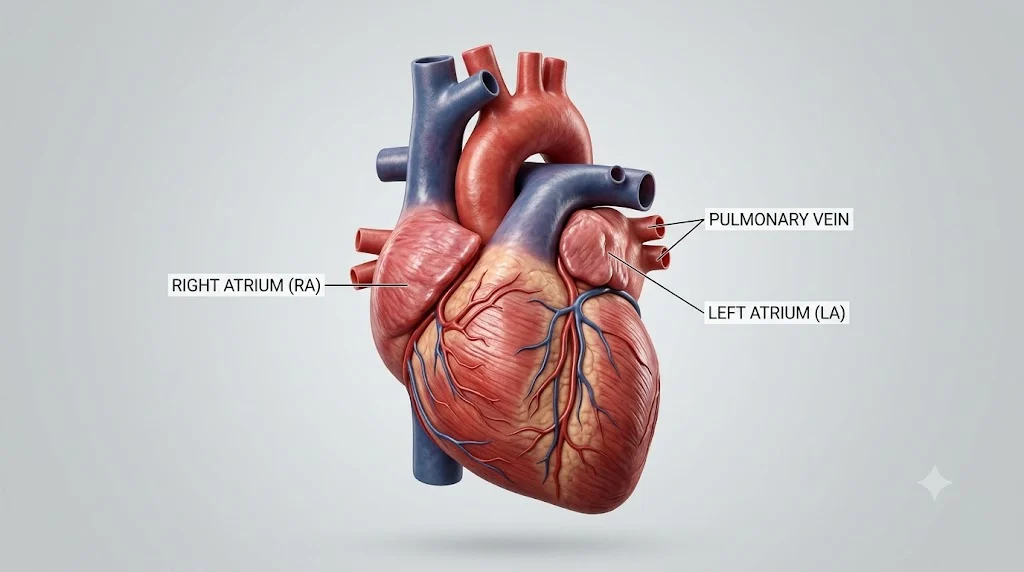
Atria is the plural form of atrium, which refers to the two upper chambers of the human heart. These chambers receive blood coming into the heart and then pass it to the lower chambers (ventricles) for pumping to the rest of the body.
Understanding atria meaning is not just about memorizing a definition. It is about understanding how your heart keeps you alive every second of your life. Every heartbeat you feel depends on the smooth work of the atria, even if you never notice them working.
The word atria appears in biology textbooks, medical reports, and heart discussions. Yet many people still wonder what it actually means. Is it a disease term?
This guide breaks everything down in a simple, clear, and deeply informative way so you understand not only the meaning of atria but also how they function inside the human body.
Atria Meaning Simple Core Idea
When people search for atria meaning, they usually want a quick and simple answer.
In the simplest form, atria are the two upper chambers of the heart. These chambers receive blood that is returning to the heart from the body and the lungs.
To make it even easier to understand, think of the heart as a house with four rooms. The atria are the two rooms on the upper floor where blood enters first before moving downstairs to be pumped out.
The singular form is atrium and the plural form is atria. One atrium, two atria.
So when someone says atria, they are talking about both upper chambers together.
What Does Atria Mean in Biology and Medicine
In biology, atria meaning refers specifically to anatomical structures inside the human heart and also inside the hearts of most mammals.
In medicine, the term atria is used in clinical descriptions, diagnostic reports, imaging results, and heart function studies. Doctors often mention atria when discussing blood flow, rhythm issues, or structural heart conditions.
The word is not casual. It is a precise medical term used to describe:
• The right atrium
• The left atrium
• Their role in circulation
• Their electrical activity
In simple terms, whenever medical professionals talk about atria, they are referring to how blood enters the heart and how the heart prepares that blood for pumping.
Atria Explained Simply for Beginners
If you are new to heart anatomy, the concept might feel technical. But it is actually very logical.
Imagine your heart as a busy train station.
• The atria are the arrival platforms
• Blood arrives from different directions
• It waits briefly
• Then moves to the ventricles for departure
This analogy helps you see why atria matter. They do not push blood with strong force. Instead, they act like waiting rooms where blood collects before the next stage.
That simple idea is the foundation of atria meaning explained simply.
Atria in Heart Anatomy Overview of Structure
To fully understand atria meaning, you need to see where they sit in the heart.
The human heart has four chambers:
• Right atrium
• Left atrium
• Right ventricle
• Left ventricle
The atria sit on top of the ventricles.
They have thinner walls compared to ventricles because their job is not to pump blood with force. Their job is to receive blood and pass it forward.
The ventricles below do the heavy pumping work.
This structure keeps blood moving in a controlled and organized direction.
Upper Chambers of the Heart What Makes Atria Unique
The atria are called upper chambers because of their position in the heart.
But their importance is not just about location. It is about function.
Here is what makes them unique:
• They receive blood from the body and lungs
• They keep blood flow continuous
• They help regulate heart rhythm
• They act as entry points into circulation
Without atria, blood would not enter the heart efficiently. The entire circulation system would lose balance.
Anatomy of Atria Structure and Design
The structure of atria is simple but highly efficient.
Each atrium has:
• A thin muscular wall
• A smooth inner lining
• Veins entering directly into it
• A connection to the ventricles below
The right atrium connects to the right ventricle. The left atrium connects to the left ventricle.
One key point is that atria do not need thick walls. They only need enough muscle to push blood into the ventricles.
This design reduces energy use and keeps the heart efficient.
Function of Atria in the Heart and Circulation
The main function of the atria is to receive blood and pass it forward.
But their role is more detailed than that.
Here is what they do:
• Collect incoming blood
• Hold blood for a short moment
• Contract gently to push blood into ventricles
• Help maintain steady blood flow
Without atria, blood would rush unevenly into the heart. That would create pressure imbalance and poor circulation.
Blood Flow Through Atria Step by Step Explanation
Blood flow in the heart follows a strict path. The atria are part of the first stage of that path.
Here is how blood moves:
From the body to the heart:
• Blood from the body enters the right atrium
• It moves into the right ventricle
• It goes to the lungs for oxygen
From the lungs back to the heart:
• Oxygen rich blood enters the left atrium
• It moves into the left ventricle
• It is pumped out to the body
The atria act as the entry points in both directions.
This is why understanding atria meaning in heart function is essential for learning circulation.
Right Atrium Meaning and Function
The right atrium plays a very specific role.
It receives blood that has already delivered oxygen to the body. This blood is low in oxygen and high in carbon dioxide.
This blood enters the right atrium through large veins.
Once inside:
• The atrium collects the blood
• It passes it into the right ventricle
• The ventricle sends it to the lungs
In simple terms, the right atrium is the entry point for used blood returning from the body.
Left Atrium Definition and Function
The left atrium handles the opposite type of blood.
It receives oxygen rich blood from the lungs.
Once blood arrives:
• It collects in the left atrium
• It moves into the left ventricle
• It gets pumped out to the body
This chamber is essential for delivering oxygen to every organ.
Without the left atrium, oxygen rich blood would not enter the heart efficiently.
Atria vs Ventricles Key Differences
Understanding atria meaning becomes clearer when compared with ventricles.
Atria:
• Upper chambers
• Receive blood
• Thin walls
• Lower pressure
Ventricles:
• Lower chambers
• Pump blood out
• Thick muscular walls
• High pressure
Atria prepare blood. Ventricles deliver blood.
Both work together to keep circulation stable.
Human Heart Anatomy and Atria Role
In the full structure of the human heart, atria are essential support chambers.
The heart depends on them to:
• Maintain flow direction
• Prevent blood congestion
• Balance pressure inside chambers
• Coordinate with electrical signals
Even though ventricles do most of the pumping, atria control the timing and filling process.
Cardiovascular System Overview and Atria Function
The cardiovascular system includes the heart, blood, and blood vessels.
Within this system, atria play a central role in:
• Receiving blood from veins
• Sending blood into ventricles
• Keeping circulation continuous
Without atria, blood flow would become chaotic and inefficient.
Oxygenated and Deoxygenated Blood in Atria
The atria handle two different types of blood.
Right atrium:
• Deoxygenated blood
• Comes from body tissues
• Low oxygen level
Left atrium:
• Oxygenated blood
• Comes from lungs
• High oxygen level
This separation ensures that oxygen rich blood reaches the body without mixing with used blood.
Atria in Medical Terminology and Clinical Use
Doctors use the term atria in many medical situations.
It appears in:
• ECG reports
• Heart ultrasound results
• Cardiac diagnosis notes
• Surgical planning documents
Common clinical conditions include:
• Irregular atrial rhythm
• Enlargement of atrial chambers
• Reduced atrial efficiency
These conditions can affect overall heart performance.
Atrial Function in Circulation System
Atria support circulation in subtle but important ways.
They:
• Help maintain smooth blood flow
• Reduce pressure spikes
• Improve ventricular filling
• Coordinate heartbeat timing
Even though they are not the main pumping chambers, they are essential for efficiency.
Atria Word Origin and Meaning History
The word atria comes from Latin origin.
Originally, atrium referred to a central hall or entrance area in Roman houses.
This idea matches heart anatomy perfectly because atria act like entry halls for blood.
Over time, the term became standard in biology and medicine.
Heart Physiology and Circulation System Overview
Heart physiology explains how the heart functions as a pump.
The process involves:
• Blood entering atria
• Blood moving into ventricles
• Blood leaving the heart through arteries
• Oxygen delivery to tissues
Atria ensure that this cycle never stops or slows down.
Atria Meaning for Students Simple Revision Guide
If you are studying, here is a simple way to remember:
• Atria are upper chambers
• They receive blood
• They pass blood to ventricles
• Right side handles used blood
• Left side handles oxygen rich blood
A quick memory trick:
Atria means arrival areas of the heart
Atria and Electrical System of the Heart
The heart does not just work mechanically. It also runs on a built in electrical system.
Atria play a major role in that system.
The heartbeat starts with an electrical signal that begins in a small area called the natural pacemaker of the heart. This signal spreads across the atria first.
Here is what happens step by step:
• Electrical impulse starts
• It spreads across the right and left atrium
• Atria contract gently
• Blood moves into ventricles
This atrial contraction is often called the “atrial kick.”
That small push actually improves how much blood fills the ventricles. It may look minor, but it boosts heart efficiency significantly.
Without this electrical coordination, blood filling would become incomplete and circulation would weaken.
Atrial Kick Why It Matters in Real Physiology
The atrial kick is the final push of blood from the atria into the ventricles.
It contributes around 10 to 20 percent of total ventricular filling in a healthy adult heart.
That might sound small, but it becomes critical when:
• Heart rate increases
• Physical activity rises
• The body needs more oxygen
During exercise, the atria help maintain proper blood flow timing so the body does not run out of oxygen supply.
If atrial function weakens, people often feel fatigue quickly because the heart cannot fill properly.
Clinical Importance of Atria in Heart Diseases
When doctors talk about atria meaning in medical practice, they are often referring to conditions that affect rhythm, structure, or blood flow.
Some of the most important conditions include:
Atrial Fibrillation
This is a condition where the atria beat irregularly instead of in a smooth rhythm.
Effects include:
• Irregular heartbeat
• Poor blood flow efficiency
• Increased risk of blood clots
It is one of the most common heart rhythm disorders in adults.
Atrial Enlargement
This happens when the atria become stretched or enlarged.
Common causes:
• High blood pressure
• Valve problems
• Long term heart strain
It can reduce how effectively blood flows into ventricles.
Atrial Septal Defect
A structural condition where there is a hole between the right and left atrium.
This causes:
• Mixing of oxygen rich and oxygen poor blood
• Increased workload on the heart
• Possible fatigue and shortness of breath
Atria in Modern Medical Imaging
Doctors use several tools to study atria in detail.
These include:
• Echocardiography
• ECG tests
• MRI scans of the heart
Each tool gives a different view:
• Echo shows movement
• ECG shows electrical activity
• MRI shows structure in detail
These tests help doctors understand how well the atria are functioning.
Even small changes in atrial size or rhythm can signal early heart disease.
Role of Atria in Blood Pressure Regulation
Atria also help regulate pressure inside the heart.
They act like flexible chambers that adjust to blood volume changes.
When blood returns faster from the body:
• Atria expand
• They hold extra blood
• They release it steadily into ventricles
This prevents sudden pressure spikes in the heart.
Without this adjustment ability, circulation would become unstable.
How Aging Affects the Atria
As people age, atrial structure and function can change.
Common changes include:
• Slight enlargement of atrial chambers
• Reduced elasticity
• Slower electrical conduction
These changes do not always cause disease, but they increase risk for conditions like atrial fibrillation.
This is why doctors monitor atrial health more closely in older adults.
Athletic Heart and Atria Adaptation
In athletes, the heart adapts differently.
The atria often become slightly larger and more efficient.
This is not harmful. It is actually a sign of adaptation.
Athletic adaptations include:
• Improved blood filling capacity
• Stronger coordination between chambers
• More efficient oxygen delivery
This allows athletes to perform intense physical activity without fatigue as quickly.
Comparing Atria in Humans and Other Animals
Atria are not unique to humans.
Most mammals have similar heart structures.
However, differences exist:
• Small animals have faster heart rates
• Larger animals have stronger ventricular output
• Birds have highly efficient atrial filling for flight endurance
Despite differences, the basic atrial function remains the same across species.
Common Misunderstandings About Atria Meaning
Many people misunderstand the term atria.
Here are some common mistakes:
Misunderstanding 1
“Atria are pumping chambers”
Truth:
Atria do not pump blood forcefully. They only move it gently into ventricles.
Misunderstanding 2
“Atria and atrium mean different things medically”
Truth:
They are the same structure. Atrium is singular and atria is plural.
Misunderstanding 3
“Atria are less important than ventricles”
Truth:
Both are essential. Without atria, ventricles would not fill properly.
Memory Tricks to Understand Atria Easily
To help you remember atria meaning, use these simple tricks:
• Atria = Arrival areas
• Atria = Assist ventricles
• Atria = Upper chambers
Another easy visualization:
Think of a building with elevators. The atria are the lobby where people enter before going upstairs or downstairs.
Quick Comparison Table for Revision
| Concept | Atria |
|---|---|
| Position | Upper heart chambers |
| Function | Receive blood |
| Pressure | Low |
| Wall thickness | Thin |
| Role in circulation | Entry stage |
| Electrical role | Starts contraction signal spread |
| Blood type handling | Oxygenated and deoxygenated depending on side |
Atria and Cardiac Output Relationship
Cardiac output is the amount of blood the heart pumps in one minute. It depends on two things:
• Heart rate
• Stroke volume
The atria influence stroke volume more than most people realize.
Here is how it works.
When the atria fill properly, they increase ventricular preload. That means the ventricles stretch a little more before contracting. This stretching improves the force of the next heartbeat.
This relationship is often explained by a simple physiological principle:
More filling leads to stronger pumping.
So when atria function well:
• Ventricles fill efficiently
• Blood volume increases per beat
• Overall circulation improves
Even a small change in atrial performance can shift cardiac output during exercise or stress.
Atria Role in Maintaining Heart Rhythm Stability
The heart does not rely on randomness. It relies on timing.
The atria help stabilize rhythm by acting as the first chamber to respond to electrical signals.
Once the electrical impulse spreads across both atria:
• They contract in a synchronized way
• They prepare ventricles for filling
• They create a smooth transition between beats
If atrial timing becomes irregular, the whole heartbeat becomes unstable. This is why atrial disorders often lead to noticeable rhythm problems.
A stable atrium means a stable heartbeat.
Pressure Differences Between Atria and Ventricles
One of the most important differences in heart anatomy is pressure.
Atria operate under low pressure conditions.
Here is why:
• Blood flows into atria naturally from veins
• No strong force is needed
• Thin walls reduce resistance
In contrast, ventricles generate high pressure to push blood throughout the body.
A simple comparison:
• Atria = low pressure receiving chambers
• Ventricles = high pressure pumping chambers
This pressure balance ensures blood flows in one direction only.
If atrial pressure becomes too high, it can signal heart disease or valve issues.
Atria and Heart Valves Connection
Atria do not work alone. They rely heavily on valves that control blood direction.
Between the atria and ventricles are valves:
• Tricuspid valve on the right side
• Mitral valve on the left side
These valves open when atria contract and close when ventricles pump.
This system ensures:
• No backward flow of blood
• One way circulation
• Efficient pressure control
Without these valves, atrial contraction would push blood in both directions and reduce efficiency.
Left Atrium Pressure and Pulmonary Circulation
The left atrium plays a critical role in managing blood returning from the lungs.
After oxygen exchange occurs in the lungs:
• Blood enters pulmonary veins
• It flows into the left atrium
• The atrium holds it briefly
• Then passes it to the left ventricle
This process maintains a delicate pressure balance.
If left atrial pressure rises too much:
• Fluid can back up into lungs
• Breathing difficulty may occur
• It may signal heart failure conditions
That is why left atrial measurements are important in cardiology.
Right Atrium and Systemic Circulation Role
The right atrium receives blood from the entire body.
This blood comes through two major veins:
• Superior vena cava
• Inferior vena cava
Once inside the right atrium:
• Blood collects from upper and lower body
• It is passed to right ventricle
• It moves toward lungs for oxygenation
The right atrium acts like a collection hub for used blood returning after delivering oxygen.
If it fails to function properly, circulation slows and fatigue increases quickly.
Electrical Conduction Pathway Through Atria
The heart’s electrical system follows a precise path.
Here is the simplified conduction flow:
• Electrical signal begins at natural pacemaker
• Signal spreads across right atrium
• Left atrium activates shortly after
• Atria contract together
• Signal moves to ventricles
This short delay between atrial and ventricular contraction is essential.
It ensures:
• Atria fill ventricles completely
• Blood does not rush prematurely
• Heartbeat remains coordinated
Even a fraction of a second delay matters in heart efficiency.
Atria Size Variations in Different Conditions
Atrial size is not fixed. It can change depending on health and activity.
Common patterns include:
Normal Healthy Atria
• Balanced size
• Strong contraction
• Efficient filling and emptying
Enlarged Atria
• Often linked to high blood pressure
• May indicate valve disease
• Can increase risk of rhythm disorders
Athletic Atria
• Slight enlargement
• Improved filling capacity
• No disease present
Doctors always interpret atrial size in context rather than isolation.
Atria and Blood Volume Regulation
Atria help regulate how much blood circulates at any time.
They contain stretch receptors that respond to blood volume changes.
When blood volume increases:
• Atria stretch slightly
• They send signals to adjust heart rate
• They help kidneys regulate fluid balance
This shows that atria are not just passive chambers. They actively participate in body regulation.
Why Atria Have Thin Walls
Atria have much thinner walls compared to ventricles.
This is because:
• They do not need to generate high pressure
• They only transfer blood to ventricles
• They focus on volume handling, not force
Thin walls allow them to:
• Expand easily
• Adjust to incoming blood
• Maintain low energy usage
This design makes the heart energy efficient.
Atria in Fetal Circulation
Before birth, atria play an even more unique role.
In fetal circulation:
• Blood flow bypasses the lungs
• Special openings allow blood mixing
• Atria help redirect oxygen rich blood
The left and right atrium communicate through a temporary opening called foramen ovale.
After birth:
• This opening closes
• Normal circulation begins
• Atria take their standard roles
This transition is one of the most important changes at birth.
Atria and Aging Related Cardiac Risk
As the body ages, atrial function gradually changes.
Common age related effects include:
• Reduced elasticity
• Slower electrical conduction
• Mild enlargement
• Higher risk of rhythm disorders
These changes are natural but require monitoring.
Doctors often track atrial health to prevent complications early.
Modern Clinical Measurement of Atrial Function
Doctors measure atrial performance using several key indicators:
• Atrial size in imaging scans
• Electrical rhythm patterns in ECG
• Blood flow speed across chambers
• Pressure differences in heart cycles
Even small abnormalities can help detect early heart disease.
Early diagnosis often focuses on atrial behavior before symptoms appear.
Atria Meaning in Real Life Understanding
Understanding atria is not just for students or doctors.
It helps you understand your own body.
Every time you:
• Run
• Walk
• Sleep
• Feel your heartbeat
Your atria are working silently in the background.
They never stop receiving blood, adjusting flow, and coordinating with the rest of the heart.
They are small chambers, but they carry massive responsibility.
Why Understanding Atria Meaning Actually Matters
Learning about atria is not just academic.
It helps you understand:
• How your heart sustains life
• Why circulation stays balanced
• How diseases develop
• Why doctors monitor heart rhythm
Even basic awareness can help you recognize early warning signs of heart issues.
FAQs
What does atria mean in biology?
It refers to the two upper chambers of the heart that receive blood.
Is atria singular or plural?
Atria is plural. The singular form is atrium.
What is the function of atria?
They receive blood and send it to ventricles for pumping.
Why are atria important?
They ensure smooth and continuous blood circulation.
What is the difference between atria and ventricles?
Atria receive blood while ventricles pump blood out.
Conclusion
In conclusion, atria essential part of the human heart and play a key role in the circulatory system. The term “atria” is the plural form of “atrium,” which refers to the two upper chambers of the heart: the right atrium and the left atrium. These chambers act as receiving rooms for blood before it moves into the lower chambers of the heart.
The main function of the atria is to collect blood entering the heart and pass it to the ventricles for pumping. The right atrium receives oxygen-poor blood from the body, while the left atrium receives oxygen-rich blood from the lungs. This separation ensures that blood flows efficiently through the body and supports proper oxygen delivery.
Atria also help maintain a smooth and continuous flow of blood within the heart. They contract gently to push blood into the ventricles, which then pump it to the lungs and the rest of the body. Without properly functioning atria, the heart would struggle to maintain an effective rhythm and circulation.
From a medical and biological perspective, understanding atria is important for studying heart health and diseases. Conditions like atrial fibrillation directly affect these chambers and can disrupt normal heart function. This makes the atria a key focus in cardiovascular research and treatment.
Overall, atria are vital structures that ensure the heart works efficiently and continuously. They may seem simple in function, but they play a powerful role in keeping the entire circulatory system balanced and healthy.
Discover More Related Articles:
- Grifter Meaning | Slang, Politics & Everyday Language In 2026
- Masochist Meaning | Signs, Traits & Relationship In 2026
- FUPA Meaning | What Does It Stand For In 2026