

Definition
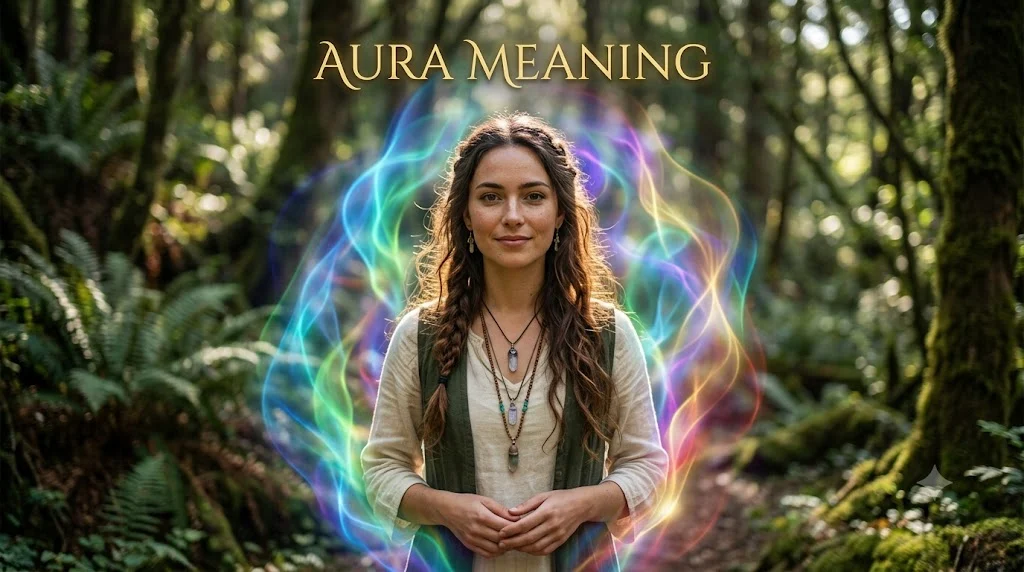
The simplest aura meaning is a distinctive atmosphere, feeling, or energy that seems to surround a person, place, or thing.
Have you ever met someone whose presence instantly filled a room? Perhaps they seemed confident, calm, inspiring, or mysterious without saying much. Many people describe this unique presence as an aura.
The term aura has fascinated people for centuries. It appears in spiritual teachings, psychological discussions, medical science, religious traditions, and even modern internet slang. Depending on the context, the meaning of aura can change dramatically.
Some people believe an aura is an invisible energy field surrounding every living being. Others see it as a person’s emotional or psychological presence. In medicine, an aura refers to warning symptoms that occur before certain neurological events such as migraines or seizures.
Because the word has multiple meanings, many people search for answers such as:
- What does aura mean?
- What is an aura around a person?
- Is aura spiritual or scientific?
- What do aura colors mean?
- What is a migraine aura?
This comprehensive guide explains every major interpretation of aura in simple language while exploring its spiritual, psychological, medical, and cultural significance.
What Does Aura Mean?
In everyday conversation, people often use the word aura to describe someone’s presence.
For example:
- “She has a positive aura.”
- “The old castle has a mysterious aura.”
- “His aura makes people feel comfortable.”
In these examples, aura refers to an impression or feeling rather than something physically visible.
Aura Meaning in Simple Words
In simple words, an aura is the energy, vibe, or presence that people associate with someone or something.
Imagine walking into two different rooms.
One room feels warm, welcoming, and peaceful.
The other feels tense, uncomfortable, and stressful.
Although the physical spaces may look similar, they create different emotional impressions. Many people would describe these impressions as different auras.
Aura Definition in English
The English definition of aura generally includes two major meanings:
| Meaning | Explanation |
|---|---|
| Atmosphere or presence | A unique quality surrounding a person or place |
| Medical symptom | A sensation that occurs before a migraine or seizure |
The word comes from an ancient Greek term meaning “breeze” or “breath.”
Over time, the meaning expanded to include invisible influences, emotional impressions, and spiritual energy.
Meaning of Aura in Different Contexts
The word aura can have different meanings depending on the situation.
| Context | Aura Meaning |
|---|---|
| Spirituality | Energy field surrounding a living being |
| Psychology | Personal presence and emotional influence |
| Medicine | Warning sign before neurological symptoms |
| Religion | Spiritual radiance or divine energy |
| Slang | Coolness, charisma, or social appeal |
Understanding the context is important because the same word may carry completely different meanings.
What Is an Aura Around a Person?
One of the most common questions people ask is, “What is an aura around a person?”
According to spiritual traditions, an aura is an invisible field of energy that surrounds the human body.
Believers suggest that this energy reflects a person’s:
- Emotional condition
- Mental state
- Spiritual development
- Physical wellbeing
- Personality traits
Although science has not confirmed the existence of spiritual auras as colorful energy fields, the concept remains popular worldwide.
Understanding the Human Aura
The human aura is often described as a subtle energy field extending beyond the physical body.
Many spiritual practitioners believe this field constantly changes according to:
- Thoughts
- Feelings
- Life experiences
- Health conditions
- Spiritual practices
In these traditions, the aura acts almost like an energetic fingerprint.
No two people have exactly the same aura because no two individuals share the same emotional and spiritual journey.
What Does a Person’s Aura Represent?
People who believe in auras often view them as reflections of inner conditions.
A person’s aura may symbolize:
| Aspect | Representation |
|---|---|
| Emotions | Happiness, sadness, stress, peace |
| Personality | Confidence, kindness, creativity |
| Mental State | Focus, confusion, clarity |
| Spiritual State | Awareness, growth, connection |
| Energy Levels | Vitality, fatigue, motivation |
Supporters of aura reading believe these characteristics influence the colors and intensity of an individual’s aura.
Why People Talk About Auras
Even individuals who do not believe in energy fields often use aura as a way to describe someone’s presence.
For instance:
- A leader may have a powerful aura.
- A teacher may have a calming aura.
- An artist may have a creative aura.
In these situations, aura becomes a metaphor for personality and emotional influence.
Aura Meaning in Spirituality
Spirituality is where the concept of aura became most widely recognized.
Across many traditions, the aura is viewed as a living energy field that reflects the state of the soul, mind, and body.
Aura Spiritual Meaning Explained
The spiritual meaning of aura refers to an energetic layer surrounding all living beings.
Many spiritual systems teach that every thought, emotion, and action affects this energy.
Positive emotions such as love, gratitude, and compassion are believed to strengthen the aura.
Negative emotions such as anger, fear, and resentment are thought to weaken or cloud it.
This belief encourages people to focus on personal growth and emotional balance.
Aura and Spiritual Energy
Many spiritual traditions connect aura with spiritual energy.
This energy is often described as:
- Life force
- Vital energy
- Universal energy
- Spiritual vibration
- Conscious awareness
Although different cultures use different names, the core concept remains similar.
The aura represents the energetic expression of a person’s inner self.
Aura and Energy Fields
Supporters of aura theory often explain the aura as a field of vibrational energy.
They believe this field:
- Interacts with other people
- Influences emotional experiences
- Reflects personal wellbeing
- Changes throughout life
Some practitioners compare the aura to a radio signal that constantly broadcasts information about an individual’s emotional and spiritual state.
Aura and Chakras
Many spiritual teachings connect aura with the chakra system.
Chakras are believed to be energy centers located throughout the body.
Common chakra locations include:
| Chakra | Location |
|---|---|
| Root Chakra | Base of spine |
| Sacral Chakra | Lower abdomen |
| Solar Plexus Chakra | Upper abdomen |
| Heart Chakra | Center of chest |
| Throat Chakra | Throat |
| Third Eye Chakra | Forehead |
| Crown Chakra | Top of head |
According to these traditions, healthy chakras contribute to a balanced aura.
When energy becomes blocked, practitioners believe the aura may become weakened or imbalanced.
Aura in Different Spiritual Traditions
Many cultures have concepts similar to auras.
Hindu Traditions
Hindu teachings often describe subtle energy systems connected to chakras and life force.
Meditation and yoga practices are believed to help strengthen this energy.
Buddhist Perspectives
Certain Buddhist traditions emphasize mindfulness and awareness rather than aura colors specifically.
However, spiritual radiance and enlightened presence are recurring themes.
New Age Spirituality
Modern New Age spirituality frequently discusses aura reading, energy healing, and aura photography.
These practices aim to explore emotional and spiritual wellbeing.
Metaphysical Interpretations
Metaphysical teachings often view the aura as a bridge between physical reality and spiritual consciousness.
In these systems, the aura serves as an energetic map of personal development.
Aura Colors and Their Meanings
One of the most fascinating aspects of aura interpretation involves aura colors.
Many spiritual practitioners believe different colors reveal different emotional, mental, and spiritual qualities.
While interpretations vary, certain color meanings appear consistently across many traditions.
What Do Aura Colors Mean?
Aura colors are believed to reflect a person’s current energy.
These colors may change over time due to:
- Emotional experiences
- Personal growth
- Relationships
- Health conditions
- Spiritual development
Some people believe multiple colors can appear in an aura simultaneously.
Aura Color Meaning Chart
| Color | Common Meaning |
|---|---|
| Red | Passion, strength, determination |
| Orange | Creativity, enthusiasm, confidence |
| Yellow | Happiness, intellect, optimism |
| Green | Healing, growth, balance |
| Blue | Communication, calmness, honesty |
| Indigo | Intuition, wisdom, perception |
| Purple | Spiritual awareness, imagination |
| Pink | Love, compassion, kindness |
| White | Purity, peace, spiritual connection |
| Gold | Enlightenment, wisdom, achievement |
| Gray | Uncertainty, emotional fatigue |
| Black | Protection, unresolved emotions |
Red Aura Meaning
A red aura is often associated with powerful energy.
Common traits linked to red include:
- Courage
- Ambition
- Physical vitality
- Determination
- Leadership
People with red aura interpretations are often viewed as action oriented individuals.
Orange Aura Meaning
Orange combines the energy of red with the warmth of yellow.
It often symbolizes:
- Creativity
- Adventure
- Social confidence
- Optimism
- Personal expression
Orange aura personalities are frequently described as energetic and outgoing.
Yellow Aura Meaning
Yellow is commonly connected to mental activity and positivity.
Traits associated with yellow include:
- Intelligence
- Curiosity
- Joy
- Optimism
- Learning
Many spiritual traditions view yellow as a sign of mental clarity and enthusiasm.
Green Aura Meaning
Green is strongly associated with healing and balance.
People often connect green auras with:
- Compassion
- Growth
- Harmony
- Healing abilities
- Emotional stability
Green remains one of the most commonly discussed aura colors.
Blue Aura Meaning
Blue represents communication and emotional calmness.
Common blue aura qualities include:
- Honesty
- Loyalty
- Trustworthiness
- Peacefulness
- Clear communication
People often describe blue energy as soothing and dependable.
Indigo Aura Meaning
Indigo is frequently linked to intuition and deep perception.
Characteristics often include:
- Insight
- Spiritual awareness
- Wisdom
- Intuition
- Reflection
Many spiritual practitioners associate indigo with the third eye chakra.
Purple Aura Meaning
Purple often symbolizes higher consciousness and imagination.
It is commonly associated with:
- Creativity
- Spiritual development
- Vision
- Inspiration
- Personal transformation
Purple remains one of the most respected aura colors in spiritual traditions.
Pink Aura Meaning
A pink aura is often connected with love, kindness, and emotional warmth.
People who are associated with a pink aura are frequently described as:
- Compassionate
- Caring
- Romantic
- Gentle
- Emotionally supportive
Many spiritual traditions view pink energy as a symbol of unconditional love. It is often linked with empathy and a genuine desire to help others.
Someone with strong pink energy may naturally make people feel safe and understood.
White Aura Meaning
A white aura is commonly associated with purity and spiritual awareness.
This color is often connected to:
- Inner peace
- Clarity
- Wisdom
- Spiritual growth
- Positive intentions
In many interpretations, white represents balance and harmony. It is sometimes viewed as a sign that a person has developed a deep connection with their values and beliefs.
Gold Aura Meaning
Gold is one of the most admired aura colors.
It is often associated with:
- Achievement
- Confidence
- Wisdom
- Leadership
- Spiritual enlightenment
Many aura readers believe gold energy reflects a person who inspires others through knowledge and experience.
Black Aura Meaning
Black aura interpretations vary widely.
Some spiritual traditions view black as:
- Emotional stress
- Exhaustion
- Unresolved challenges
- Need for healing
Others see black as a protective energy that helps shield a person from negative influences.
Because interpretations differ, black should not automatically be viewed as something negative.
Gray Aura Meaning
Gray is often associated with transition and uncertainty.
It may symbolize:
- Emotional confusion
- Self reflection
- Temporary fatigue
- Personal change
Many practitioners believe gray appears during periods of growth when a person is processing important life experiences.
Why Aura Colors May Change
Aura colors are not believed to be permanent.
Supporters of aura theory suggest that colors can shift because of:
- Emotional changes
- New relationships
- Career developments
- Personal growth
- Spiritual practices
- Stress levels
Just as moods change, aura interpretations suggest that energy patterns may change as well.
Aura Meaning and Personality
One reason the concept of aura remains popular is its connection to personality.
People often describe someone as having a strong aura even when they are not talking about spiritual energy.
In everyday language, aura frequently refers to the qualities that make a person memorable.
Can Aura Reflect Personality?
Many people believe a person’s aura reflects aspects of their character.
For example:
| Personality Trait | Common Aura Association |
|---|---|
| Confidence | Strong aura |
| Kindness | Warm aura |
| Creativity | Bright aura |
| Wisdom | Deep aura |
| Positivity | Good aura |
Whether viewed spiritually or symbolically, aura often serves as a way to describe how a person affects others.
Positive Aura Meaning
A positive aura refers to an uplifting presence that makes people feel comfortable and inspired.
Characteristics commonly associated with a positive aura include:
- Optimism
- Confidence
- Compassion
- Honesty
- Emotional balance
- Respect for others
People with a positive aura often attract others naturally because their energy feels welcoming.
Signs of a Positive Aura
Some commonly mentioned signs include:
- People enjoy spending time with you
- You remain calm under pressure
- Others trust your judgment
- You encourage and motivate people
- You handle challenges constructively
These qualities often create the impression of positive energy.
Negative Aura Meaning
A negative aura generally refers to energy that feels heavy, tense, or draining.
This does not necessarily mean someone is a bad person.
Instead, it may reflect:
- Stress
- Anxiety
- Frustration
- Emotional exhaustion
- Unresolved personal struggles
Everyone experiences difficult periods in life. Temporary emotional challenges can affect how people perceive someone’s presence.
What Does Having a Strong Aura Mean?
A strong aura usually refers to a powerful personal presence.
People often describe someone with a strong aura as:
- Confident
- Influential
- Charismatic
- Self assured
- Inspiring
Interestingly, a strong aura does not always belong to the loudest person in the room.
Sometimes the quietest person has the strongest presence because they project confidence, calmness, and authenticity.
Aura and Emotional Energy
Emotions play a major role in how people perceive each other.
For example:
- Happiness often feels contagious.
- Calmness can reduce tension.
- Confidence can inspire trust.
- Anxiety can create discomfort.
This emotional influence helps explain why people frequently use aura to describe interpersonal experiences.
Aura Meaning in Psychology
Psychology approaches aura differently from spirituality.
Rather than focusing on invisible energy fields, psychology examines perception, behavior, emotions, and social influence.
How Psychology Views Aura
Modern psychology does not officially recognize spiritual aura colors as scientifically proven phenomena.
However, psychology does recognize that people create strong impressions through:
- Facial expressions
- Body language
- Tone of voice
- Confidence
- Emotional state
These factors shape how others perceive them.
As a result, what many people call an aura may sometimes reflect psychological and social cues.
Aura as Personal Presence
Personal presence refers to the impact someone has on others.
Consider two individuals entering a room.
One appears relaxed, confident, and attentive.
The other appears nervous and distracted.
Even before either person speaks, observers form impressions.
Many people describe this impression as an aura.
Aura and First Impressions
Research consistently shows that people form first impressions quickly.
Factors influencing these impressions include:
| Factor | Impact |
|---|---|
| Posture | Confidence level |
| Eye contact | Trustworthiness |
| Facial expression | Emotional state |
| Voice | Authority and warmth |
| Appearance | Initial perception |
These elements combine to create what many describe as a person’s presence or aura.
Aura and Human Emotions
Emotions can influence entire social environments.
For example:
- A calm leader can reduce group stress.
- An enthusiastic teacher can increase engagement.
- A supportive friend can improve morale.
Because emotions spread through social interaction, people often describe emotional influence as an energetic aura.
The Psychology of Charisma
Charisma is one of the closest psychological concepts to aura.
Charismatic individuals often display:
- Confidence
- Authenticity
- Strong communication skills
- Emotional intelligence
- Social awareness
These qualities help explain why certain people naturally attract attention and admiration.
Aura Meaning in Medical Terms
The medical meaning of aura differs completely from spiritual interpretations.
In healthcare, an aura refers to a sensory or neurological symptom that occurs before certain medical conditions.
What Is a Medical Aura?
A medical aura is a warning sign that appears before symptoms of a neurological event.
It may occur before:
- Migraines
- Seizures
- Certain neurological disorders
Auras can affect vision, hearing, touch, smell, or perception.
Unlike spiritual aura concepts, medical auras are recognized and studied by healthcare professionals.
Migraine Aura Meaning
A migraine aura is a set of neurological symptoms that may occur before or during a migraine attack.
Not everyone with migraines experiences aura.
However, for those who do, symptoms can provide an early warning.
Common Migraine Aura Symptoms
Visual symptoms are the most common.
They may include:
- Flashing lights
- Zigzag patterns
- Blind spots
- Blurred vision
- Temporary vision loss
Some people experience these symptoms for several minutes before a headache begins.
Sensory Aura Symptoms
A migraine aura can also affect sensation.
Examples include:
- Tingling in the hands
- Numbness in the face
- Pins and needles sensations
- Difficulty speaking
These symptoms are usually temporary.
Visual Aura Explained
Visual aura is the most widely recognized type.
People often describe seeing:
- Bright flashes
- Sparkling lights
- Geometric shapes
- Moving patterns
These experiences result from temporary changes in brain activity rather than eye problems.
Epilepsy Aura Meaning
In epilepsy, an aura may occur before a seizure.
Doctors often consider an aura to be part of the seizure itself.
The symptoms vary depending on which part of the brain is affected.
Common Epileptic Aura Experiences
Some individuals report:
- Strange smells
- Unusual tastes
- Sudden fear
- Déjà vu sensations
- Visual disturbances
- Dizziness
Recognizing these signs can help patients prepare for an upcoming seizure.
Aura in Medical Science vs Spiritual Beliefs
The spiritual and medical meanings of aura are very different.
| Spiritual Aura | Medical Aura |
|---|---|
| Energy field | Neurological symptom |
| Connected to emotions and spirituality | Connected to brain activity |
| Often associated with colors | Usually sensory changes |
| Based on spiritual beliefs | Studied by medical science |
Understanding the difference helps avoid confusion when discussing aura in different contexts.
Aura Meaning in Slang
In recent years, the word aura has become extremely popular on social media.
Its modern slang meaning differs from both spiritual and medical definitions.
What Does Aura Mean in Modern Slang?
In slang, aura refers to someone’s overall vibe, coolness, presence, or social appeal.
People use it to describe someone who naturally attracts attention or admiration.
Examples include:
- “His aura is unmatched.”
- “She has incredible aura.”
- “That athlete gained aura points.”
In these examples, aura means charisma and influence rather than spiritual energy.
What Does Good Aura Mean?
A person with good aura is often viewed as:
- Confident
- Attractive
- Respectable
- Interesting
- Inspiring
The phrase has become especially popular among younger social media users.
What Does Bad Aura Mean?
Bad aura in slang usually refers to behavior that reduces someone’s social appeal.
Examples may include:
- Acting disrespectfully
- Being dishonest
- Seeking attention excessively
- Showing poor sportsmanship
The phrase is generally playful rather than serious.
Aura Points Meaning
One of the newest internet trends involves “aura points.”
People jokingly assign aura points when someone does something impressive.
Examples:
- Winning a competition
- Helping others unexpectedly
- Remaining calm under pressure
- Demonstrating confidence
Likewise, embarrassing actions may be said to lose aura points.
Can You See an Aura?
One of the most debated questions about aura is whether people can actually see it.
The answer depends largely on who you ask.
Spiritual practitioners, energy healers, and aura readers often believe that auras can be perceived through training, intuition, or heightened awareness. Scientists, however, have not found reliable evidence proving that colorful energy fields surrounding people can be visually detected under controlled conditions.
As a result, the topic remains a subject of personal belief rather than scientific consensus.
Spiritual Beliefs About Aura Reading
Many spiritual traditions teach that sensitive individuals can perceive subtle energy around people.
Aura readers often claim they can observe:
- Colors surrounding the body
- Changes in energy intensity
- Emotional patterns
- Spiritual development
- Energy blockages
According to these beliefs, aura reading provides insight into a person’s emotional and spiritual condition.
How Aura Readers Interpret Energy
Aura readers often focus on several factors when interpreting an aura.
These may include:
| Element | Interpretation |
|---|---|
| Color | Emotional and spiritual qualities |
| Brightness | Energy level |
| Clarity | Mental and emotional balance |
| Size | Strength of personal presence |
| Movement | Current emotional state |
Different practitioners use different methods, which explains why interpretations can vary significantly.
Scientific Perspective on Seeing Auras
Scientists generally attribute reports of seeing auras to factors such as:
- Visual afterimages
- Light sensitivity
- Eye fatigue
- Perceptual effects
- Psychological expectations
For example, staring at a brightly lit object for an extended period can create visual effects that appear as glowing outlines.
While these explanations do not address every reported experience, they offer possible scientific reasons for some aura sightings.
Why Aura Experiences Feel Real
Even when experiences are subjective, they can feel completely genuine.
Human perception is influenced by:
- Emotions
- Expectations
- Attention
- Memory
- Personal beliefs
Because of this, people may sincerely feel that they are observing energy fields around others.
How to Improve Your Aura
Whether you view aura as spiritual energy or personal presence, improving it often involves developing healthier habits and a more balanced lifestyle.
Many of the practices associated with a stronger aura also support overall wellbeing.
Develop Positive Habits
Daily habits shape how you feel and how others perceive you.
Helpful habits include:
- Practicing gratitude
- Maintaining honesty
- Being kind to others
- Staying organized
- Managing stress effectively
Small actions performed consistently often create the biggest changes over time.
Practice Meditation and Mindfulness
Meditation remains one of the most commonly recommended practices for improving aura.
Potential benefits include:
- Increased self awareness
- Reduced stress
- Improved focus
- Greater emotional control
- Enhanced sense of calm
Many spiritual traditions believe meditation helps clear and strengthen personal energy.
Improve Emotional Wellbeing
Emotional health affects every aspect of life.
Ways to improve emotional wellbeing include:
- Expressing emotions constructively
- Building supportive relationships
- Setting healthy boundaries
- Seeking help when needed
- Practicing self compassion
People who maintain emotional balance often project a more positive presence.
Build Strong Relationships
Relationships play a major role in personal energy.
Supportive connections can provide:
- Encouragement
- Stability
- Motivation
- Emotional security
Healthy relationships often contribute to what people describe as a warm and welcoming aura.
Reduce Stress and Negative Energy
Chronic stress can affect mood, confidence, and overall wellbeing.
Helpful stress management techniques include:
- Regular exercise
- Quality sleep
- Deep breathing exercises
- Time management
- Spending time in nature
These practices can improve both mental health and personal presence.
Physical Health and Aura
Many spiritual systems connect physical health with energetic wellbeing.
Healthy lifestyle habits include:
| Habit | Potential Benefit |
|---|---|
| Regular exercise | Increased vitality |
| Balanced diet | Better energy levels |
| Adequate sleep | Improved recovery |
| Hydration | Physical wellbeing |
| Stress management | Emotional balance |
Even people who do not believe in spiritual auras often notice that healthy habits improve confidence and overall presence.
Common Myths About Auras
Because aura is often discussed online, many misconceptions have developed over time.
Understanding these myths can help separate fact from speculation.
Myth: Everyone Can Physically See Auras
Many people assume aura perception is universal.
In reality, most individuals do not report consistently seeing colorful energy fields around people.
Aura perception remains a matter of personal experience and belief.
Myth: Aura Colors Never Change
Many spiritual traditions actually teach the opposite.
Aura interpretations often suggest that colors can change due to:
- Emotional growth
- Life experiences
- Health conditions
- Spiritual development
Change is considered a normal part of the aura concept.
Myth: A Bad Aura Means a Bad Person
This misunderstanding can be harmful.
A person experiencing stress, grief, anxiety, or exhaustion may appear emotionally withdrawn.
That does not mean they are a bad person.
Many aura interpretations emphasize compassion rather than judgment.
Myth: Science Has Proven Aura Colors
Currently, there is no scientific agreement confirming the existence of colored spiritual auras.
While many people believe in aura colors, the concept remains primarily spiritual and metaphysical.
Myth: Strong Aura Means Being Loud
Some assume that a strong aura requires being outgoing or dominant.
In reality, many individuals with powerful presence are:
- Quiet
- Thoughtful
- Calm
- Observant
Strength often comes from confidence and authenticity rather than volume.
Aura Meaning and Examples
Understanding aura becomes easier when viewed through practical examples.
Aura in Everyday Language
Examples:
- She has a friendly aura that makes everyone comfortable.
- The library has a peaceful aura.
- His calm aura helped reduce tension during the meeting.
Aura in Spiritual Discussions
Examples:
- Meditation is believed to strengthen the aura.
- Some people think aura colors reflect emotions.
- Spiritual healers often discuss balancing the aura.
Aura in Medical Conversations
Examples:
- She experienced a visual aura before her migraine began.
- The doctor asked whether an aura appeared before the seizure.
- The aura lasted about twenty minutes.
Aura in Social Media and Slang
Examples:
- That performance gained him serious aura points.
- She has unmatched aura.
- His confidence adds to his aura.
Frequently Asked Questions
What does aura mean?
Aura generally refers to an atmosphere, presence, energy field, or distinctive quality associated with a person, place, or thing.
What is an aura around a person?
In spiritual traditions, an aura is believed to be an energy field surrounding the body. In everyday language, it often refers to a person’s presence or vibe.
What do aura colors mean?
Aura colors are believed by many spiritual traditions to represent different emotional, mental, and spiritual qualities.
Can aura colors change?
According to aura beliefs, colors can change due to emotions, experiences, health, and personal growth.
How can I improve my aura?
Many people focus on meditation, healthy habits, emotional wellbeing, gratitude, exercise, and positive relationships.
Is aura real or symbolic?
The answer depends on perspective. Spiritual traditions often view aura as real energy, while psychology may interpret it as personal presence and emotional influence.
What causes a migraine aura?
Migraine aura is caused by temporary neurological activity changes in the brain and may involve visual or sensory disturbances.
What is the difference between aura and energy?
Aura is often described as the overall field or presence surrounding a person, while energy refers to the force or vitality believed to exist within that field.
Conclusion
The aura meaning varies depending on the context in which the word is used. In spirituality, aura refers to an energy field believed to surround every living being. In psychology, it often describes a person’s presence, charisma, and emotional influence. Modern slang uses aura to describe social appeal, confidence, and overall vibe.
What makes the concept of aura so fascinating is its versatility. The same word can describe spiritual energy, emotional impressions, medical symptoms, and cultural trends. Despite these differences, every interpretation shares a common theme: aura represents something that extends beyond physical appearance and influences how people experience the world around them.
Whether you view aura as spiritual energy, personal presence, or simply a useful metaphor, understanding its many meanings provides a deeper appreciation for one of the most intriguing concepts in language, spirituality, psychology, and human experience.
Discover More Related Articles: