
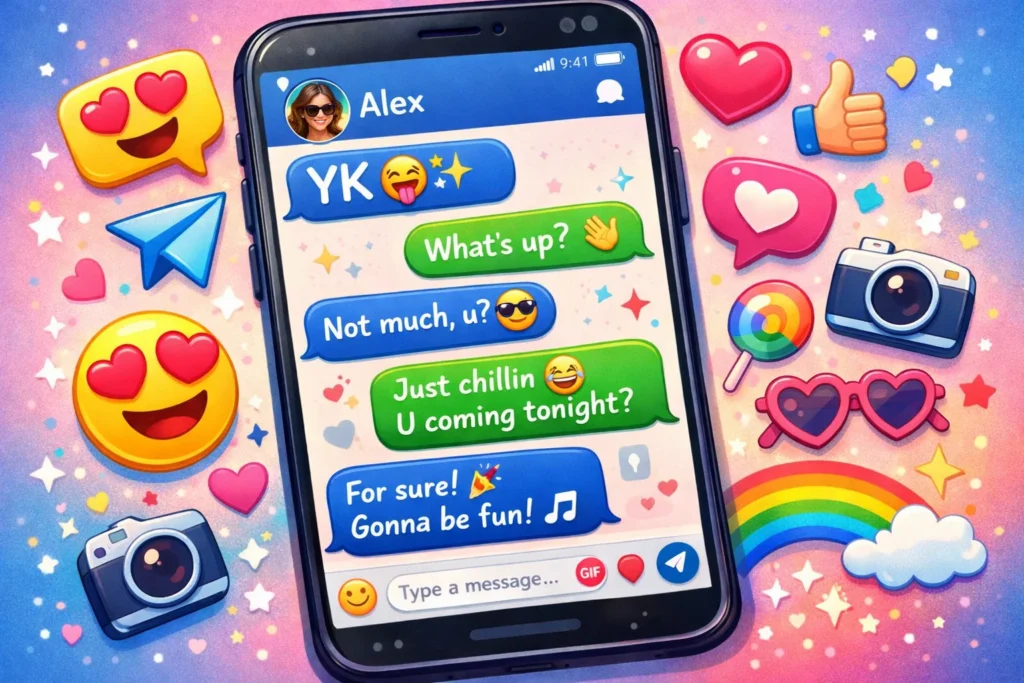

Definition:
“YK” in text messaging or online chats stands for “You Know.” It’s an abbreviation used to confirm understanding, hint at shared knowledge, or add emphasis in casual digital communication.
In the fast-paced world of texting, social media, and instant messaging, abbreviations have become a universal language. One shorthand you’ve probably seen popping up in chats is “YK”. But what does it really mean, and how should you use it?
Simply put, “YK” stands for “You Know” a short, casual way to confirm shared understanding, emphasize a point, or add a conversational flair to your messages. From playful emojis in friend chats to quick notes in group texts, this little acronym packs a surprising amount of personality.
In this article, we’ll break down the origin, usage, tone, and examples of YK, compare it with similar abbreviations, explore professional alternatives, and answer all your common questions so you can text confidently and stay in the loop of modern digital conversation.
Origin of “YK”
The abbreviation “YK” originates from Internet and texting culture in the early 2000s. As texting, instant messaging, and social media became popular, users began shortening common phrases to save time and effort.
- Texting Convenience: Just like “LOL” for “laugh out loud” or “BRB” for “be right back,” “YK” reduces the number of keystrokes.
- Informal Communication: It conveys a casual, conversational tone rather than formal language.
- Popularity Boost: Platforms like WhatsApp, Snapchat, Instagram, and Twitter helped standardize its usage globally among teens and young adults.
Fun Fact: Unlike some abbreviations that fade over time, “YK” remains widely understood because “you know” is a versatile phrase in conversation.
Usage of YK in Texting
“YK” is primarily used in informal communication, but it can serve multiple purposes depending on context and tone.
Common Uses
- Confirming Shared Knowledge
- Example: “That movie was so good, YK?”
- Meaning: The sender assumes you already understand or agree with their opinion.
- Adding Emphasis
- Example: “I’m tired, YK… like really exhausted.”
- Meaning: Strengthens the sentiment expressed.
- Filling Pauses in Conversation
- Example: “I think he’s upset… YK… just a feeling.”
- Meaning: Acts like a verbal filler, giving time to explain further.
- Softening Statements
- Example: “It wasn’t your fault, YK.”
- Meaning: Makes a statement less direct or harsh.
Tone Variations
- Friendly/Playful: “YK, we always find a way to have fun 😂”
- Neutral: “The meeting is at 3 PM, YK.”
- Dismissive/Negative: “You missed the point, YK…”
YK Examples in Context
Here’s a table illustrating how YK can be used in different texting scenarios:
| Tone | Text Example | Meaning/Context |
|---|---|---|
| Friendly | “That pizza was amazing, YK 😋” | Sharing excitement and assuming the recipient agrees |
| Neutral | “The train leaves at 7, YK.” | Informing someone with a casual confirmation |
| Playful | “We always end up lost, YK 😂” | Teasing or joking about shared experiences |
| Emphatic | “I can’t deal with this, YK!” | Adding weight to a personal sentiment |
| Dismissive | “It’s obvious what’s happening, YK.” | Slightly rude or condescending, depending on tone |
How “YK” Differs from Similar Abbreviations
| Abbreviation | Meaning | Key Difference from YK |
|---|---|---|
| YOLO | You only live once | More about life philosophy, not shared knowledge |
| BRB | Be right back | Indicates a pause, not understanding or agreement |
| FYI | For your information | Professional or neutral, not conversational like YK |
| IDK | I don’t know | Expresses lack of knowledge, opposite of YK’s confirming tone |
| TBH | To be honest | Adds honesty, YK adds shared understanding |
Insight: “YK” is unique because it implicitly involves the recipient’s awareness or agreement, which many other abbreviations don’t convey.
Alternate Meanings of YK
While “You Know” is the most common, YK can occasionally mean:
- Yard King – Rarely used, mostly in gaming or sports contexts.
- Your Kind – Very uncommon, sometimes in social media comments.
⚠️ Note: In most texting and online chat scenarios, “You Know” is the default interpretation.
Polite or Professional Alternatives to YK
Since “YK” is informal, it’s better to avoid it in work emails, professional chats, or formal writing. Here are alternatives:
| Situation | Informal | Professional/Polite |
|---|---|---|
| Confirming understanding | “YK, I’ll be there” | “As discussed, I will attend the meeting.” |
| Emphasizing a point | “It’s really tough, YK” | “Please note, this matter is urgent.” |
| Suggesting shared knowledge | “YK, that thing we talked about” | “As previously mentioned, regarding our discussion…” |
Tip: When texting colleagues or clients, replace “YK” with clear, complete phrases to maintain professionalism.
How to Use YK Correctly in Texting
- Keep it casual: Works best in informal conversations with friends or family.
- Avoid overuse: Using “YK” too often can make your texts feel lazy.
- Pair with emojis for tone: 😅, 😂, or 😉 can clarify emotion.
- Mind the context: If the recipient isn’t familiar with “YK,” consider writing out “you know.”
Example:
- Casual: “That show was hilarious, YK 😂”
- Formal/professional: “That presentation was very informative, as you know.”
YK vs Similar Phrases
Some people use full phrases or similar abbreviations interchangeably. Here’s a quick guide:
| Phrase/Abbreviation | Meaning | When to Use | Difference from YK |
|---|---|---|---|
| You know what I mean | Clarifying intent | Casual chats | Longer, slightly more explanatory |
| Ya know | Informal spoken version | Texts, memes, casual speech | Even more relaxed, often playful |
| NVM (Never mind) | Cancels a previous point | Online conversations | Opposite function; doesn’t confirm understanding |
| FYI | For your information | Professional settings | Informative, not casual agreement |
Examples with Tone and Context
Here’s a breakdown with more examples to illustrate versatility:
- Friendly/Playful
- Text: “We’re gonna crush this game tonight, YK 😎”
- Meaning: Assumes shared excitement and camaraderie.
- Neutral/Informative
- Text: “The package should arrive tomorrow, YK.”
- Meaning: Casual confirmation without emotion.
- Negative/Dismissive
- Text: “You should’ve studied more, YK…”
- Meaning: Slightly critical, can sound judgmental.
- Emphatic/Emotional
- Text: “I can’t believe this happened, YK!”
- Meaning: Expressing strong feelings, seeking understanding.
- Professional Alternative
- Text: “As you know, the deadline is Friday.”
- Meaning: Clear, polite, suitable for work-related communication.
Tips for Understanding YK in Texts
- Always consider context. Tone, emojis, and the recipient’s familiarity affect meaning.
- Not universal: Some people, especially older generations, may not know YK.
- Pair with punctuation: “YK…” can indicate hesitation, “YK!” shows emphasis.
- Combine with slang or memes: Common in Gen Z or online communities.
FAQs
1. What does YK stand for in texting?
YK stands for “You Know”, used to confirm shared knowledge or add emphasis in casual digital communication.
2. Is YK informal or professional?
YK is informal and best used in chats, texts, or social media. In professional emails, use “as you know” instead.
3. How do you pronounce YK?
It’s usually read as “you know” when speaking. Some may say each letter: “Y-K” in casual conversations.
4. Can YK be rude?
Yes, depending on tone. Used dismissively, it may sound judgmental or condescending. Emojis or punctuation can soften it.
5. Is YK the same as “ya know”?
Pretty much. “Ya know” is the more relaxed, phonetic spelling of “you know.” YK is shorter and text-friendly.
6. Can YK be used in social media captions?
Absolutely! It adds casual emphasis and relatability in posts, stories, or tweets.
7. Are there professional alternatives to YK?
Yes, phrases like “as you know” or “please note” work better in emails, reports, or workplace communication.
8. Are there other meanings for YK?
Rarely, it can mean “Yard King” or “Your Kind,” but in texting, “You Know” is overwhelmingly dominant.
Conclusion
In summary, YK is a versatile and widely used texting abbreviation meaning “You Know.” It adds emphasis, confirms shared understanding, or keeps conversations casual and engaging. While perfect for friends, social media, and informal chats, it’s best replaced with full phrases like “as you know” in professional settings.
Remember to consider context, tone, and audience when using YK, and don’t forget that emojis or punctuation can help convey your exact emotion. With these tips, you can confidently use or interpret YK in any digital conversation, keeping your texting clear, natural, and relatable.
With these insights, you can confidently use or interpret YK in any chat, text, or online conversation. Next time someone texts “YK,” you’ll know exactly what it means and how to respond naturally.
Discover More Related Articles:
- 200+Perfect Replies to “You Are an Inspiration” for Any Situation (2026)
- 150+How To Respond To “I’ve Been Busy” Without Overthinking (2026)