
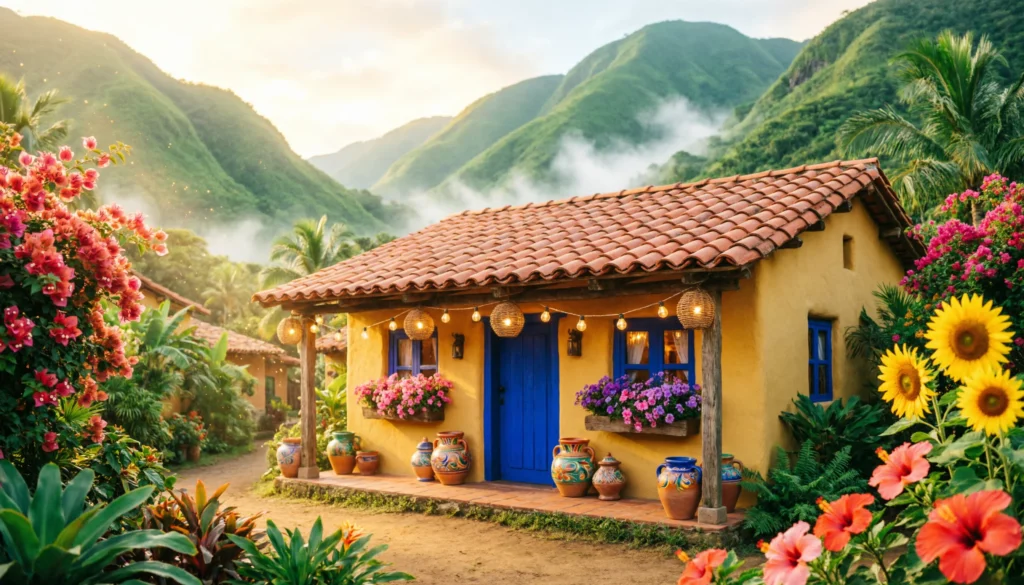

Definition
“Encanto” is a Spanish word that means “charm,” “magic,” “enchantment,” or “a special kind of beauty that captivates or delights.”
You’ve probably heard the word encanto—maybe in a song, a movie, or even a conversation—and wondered what makes it so special. It’s one of those words that feels magical even before you fully understand it.
Thanks to the global popularity of Encanto, the term has become more widely recognized beyond Spanish-speaking communities. But encanto isn’t just about a movie—it’s a deeply expressive word packed with emotion, culture, and meaning.
In this guide, you’ll learn exactly what encanto means, where it comes from, how it’s used in real life, and how it compares to similar words.
Origin of the Word “Encanto”
The word encanto comes from the Spanish language and traces its roots back to Latin:
- Latin origin: incantare (meaning “to enchant” or “to cast a spell”)
- Over time, it evolved into encantar (verb: “to charm” or “to delight”)
- The noun form became encanto
Different Meanings of “Encanto”
“Encanto” is a versatile word with several related meanings depending on context.
1. Charm or Attractiveness
Used to describe someone or something appealing.
- Ella tiene mucho encanto.
(She has a lot of charm.)
2. Magic or Enchantment
Refers to something magical or spell-like.
- El bosque estaba lleno de encanto.
(The forest was full of enchantment.)
3. Delight or Joy
Used to express pleasure or admiration.
- Fue un encanto conocerte.
(It was a delight to meet you.)
4. A Lovely Person
Sometimes used to describe someone kind or pleasant.
- Ese niño es un encanto.
(That child is adorable/a delight.)
How “Encanto” Is Used in Real Life
“Encanto” appears in everyday conversations, literature, music, and even branding.
Common Usage Scenarios:
- Compliments:
“You’re such a charm” → Eres un encanto - Describing places:
“This town has a magical feel” → Este pueblo tiene encanto - Expressing affection:
“You’re lovely!” → ¡Eres un encanto!
Tone and Context: Friendly, Neutral, or Emotional
The tone of encanto is almost always positive, but it can vary slightly:
| Context | Meaning | Tone | Example |
|---|---|---|---|
| Friendly | Compliment or affection | Warm 😊 | “You’re a delight!” |
| Neutral | Description of charm/beauty | Calm | “The place has charm.” |
| Emotional | Magical or enchanting feeling | Expressive ✨ | “It felt like pure magic.” |
Examples of “Encanto” in Sentences
Here are real-life style examples to help you understand how encanto works:
Friendly Tone 😊
- “You helped me so much—you’re an encanto!”
- “That café has so much encanto!”
Neutral Tone
- “The city is known for its historic encanto.”
- “The design has a simple but elegant encanto.”
Expressive or Emotional ✨
- “The moment felt full of encanto and wonder.”
- “Her voice carried a magical encanto.”
Why “Encanto” Became So Popular
The word gained massive global recognition due to the success of Encanto by Walt Disney Animation Studios.
Impact of the Movie:
- Introduced the word to non-Spanish speakers
- Highlighted cultural richness and emotional depth
- Reinforced the idea of “magic within everyday life”
Even though the film uses encanto in a magical sense, the word itself has always had broader meanings.
Comparison with Similar Words
“Encanto” overlaps with several English words, but none capture its full depth perfectly.
| Word | Meaning Similarity | Key Difference |
|---|---|---|
| Charm | Very close | Less magical nuance |
| Magic | Related | More literal than emotional |
| Beauty | Partial | Focuses more on appearance |
| Delight | Emotional similarity | Less poetic feeling |
| Enchantment | Closest match | More formal in English |
Quick Insight:
“Encanto” blends charm + magic + emotional warmth in a single word.
Alternate Meanings of “Encanto”
While the main meanings are positive, there are a few less common uses:
- Spell or sorcery: In older or literary contexts
- Name of places or businesses: Often used to evoke charm
- Cultural symbolism: Represents beauty, mystery, and attraction
Polite or Professional Alternatives
If you want to express similar ideas in English professionally, here are some alternatives:
- “Charming”
- “Delightful”
- “Appealing”
- “Captivating”
- “Elegant”
Example:
Instead of saying:
- “This place has encanto”
You could say:
- “This place has a charming and captivating atmosphere.”
Usage Tips: When to Use “Encanto”
Use encanto when you want to:
- Compliment someone warmly 😊
- Describe a place with personality
- Express emotional or magical appeal ✨
- Add a poetic or cultural touch to language
Avoid Using It When:
- You need very formal or technical language
- The context is negative or critical
Example Table: “Encanto” in Everyday Situations
| Situation | Sentence Example | Meaning |
|---|---|---|
| Meeting someone | “Eres un encanto.” | You’re delightful |
| Travel | “El pueblo tiene encanto.” | The town has charm |
| Romantic context | “Su sonrisa tiene encanto.” | Her smile is enchanting |
| Nature description | “El paisaje está lleno de encanto.” | The scenery is magical |
| Casual compliment | “That kid is an encanto!” | That kid is adorable |
FAQs:
1. What does “encanto” mean in English?
It means charm, magic, enchantment, or delight, depending on context.
2. Is “encanto” a positive word?
Yes, it is almost always used in a positive and affectionate way.
3. What does “eres un encanto” mean?
It means “you are delightful” or “you’re charming.”
4. Does “encanto” always mean magic?
No. While it can mean magic, it often refers to emotional charm or appeal.
5. Why is the word “encanto” popular?
It became globally popular due to the movie Encanto.
6. Can “encanto” describe a person?
Yes! It’s commonly used to describe someone kind, charming, or lovable.
7. Is “encanto” formal or informal?
It can be used in both casual and semi-formal contexts, depending on tone.
8. What is the difference between “encanto” and “amor”?
- Encanto = charm or enchantment
- Amor = love
They are related emotionally but not the same.
Conclusion:
“Encanto” is one of those rare words that carries emotion, beauty, and a sense of wonder all at once. While it translates to charm, enchantment, or magic, its real power lies in how it describes something that feels special, warm, and captivating.
From everyday compliments like “eres un encanto” to describing breathtaking places or unforgettable moments, the word adds a touch of positivity and depth to communication. Its roots in the Spanish language and its global rise in popularity especially after Encanto have made it a widely recognized and loved term.
Discover More Related Articles:
- Benign Mean in Medical Terms: Symptoms & Diagnosis In 2026
- NSA Mean in a Relationship: How to Recognize and Approach It In 2026