

Definition
Cornichon is a French word that translates directly to “little horn” in English. It comes from the French word corne, meaning horn, combined with the diminutive suffix -ichon, which signals something small. The name references the slightly curved, tapered shape of the pickle itself.
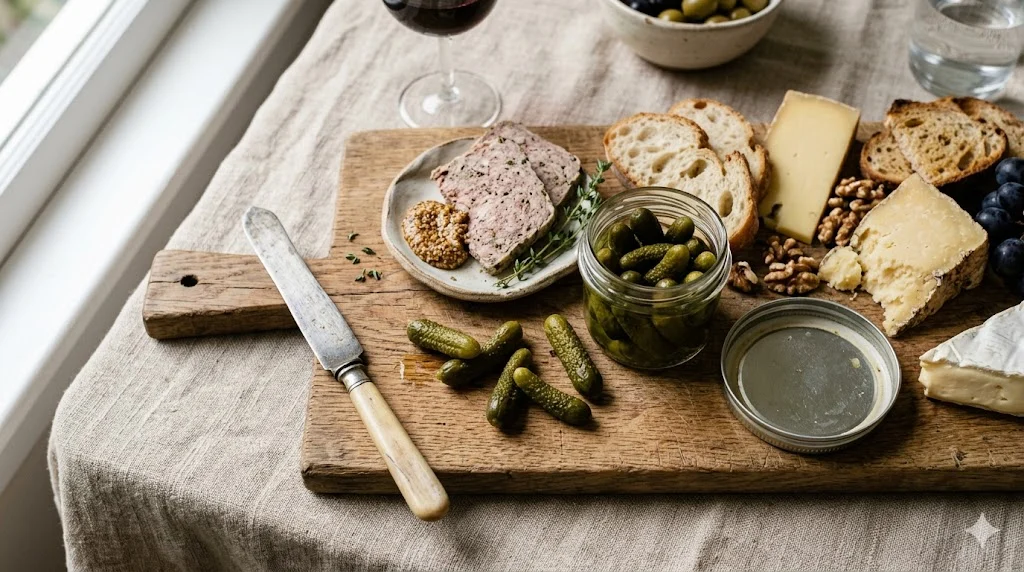
Picture this. You sit down at a French bistro. The waiter slides a wooden board toward you pâté, mustard, crusty bread, and a small cluster of tiny, glistening green pickles. You pop one in your mouth. It’s startlingly sharp. Crunchy. Tangy enough to make your jaw tighten in the best possible way. You glance at the menu. It says cornichons.
So what exactly is a cornichon? And why does this tiny pickle carry such a specific name instead of just being called… a pickle?
That’s exactly what this guide unpacks. Whether you stumbled on the word in a recipe, spotted it on a restaurant menu, or heard a French speaker use it as a mild insult, you’re about to get the full picture. The definition, the pronunciation, the origin, the flavor, the culinary uses all of it, right here.
What Does Cornichon Mean?
Let’s start with the straightforward answer.
In food terms, a cornichon is a small, tart pickled cucumber preserved in white wine vinegar alongside aromatic ingredients like tarragon, mustard seeds, and peppercorns. It’s not just any small pickle. The word describes a very specific preparation with a very specific flavor identity tied directly to French culinary tradition.
Think of it this way. “Pickle” is a broad category. Cornichon is a precise address within that category a particular street in a particular city, not just “somewhere in Europe.”
The word appears in major English dictionaries including Merriam-Webster and Oxford, where it’s defined as a small gherkin pickle made with vinegar and aromatics. It entered the English language as a loanword meaning English speakers borrowed it straight from French without translating it primarily through food writing, upscale restaurant menus, and the growing global influence of French cuisine.
Cornichon Definition: More Than Just a Pickle
Here’s where it gets interesting. The word cornichon does double duty in the French language.
In the kitchen, it’s that little tangy pickle sitting beside your charcuterie. In everyday French conversation, it’s a mild, playful insult meaning something close to “idiot” or “dummy.”
If a French friend looks at something you did and laughs “T’es un vrai cornichon!” they’re calling you a real knucklehead. It’s more affectionate than harsh, closer to “you goofball” than anything genuinely offensive. Interestingly, English has a parallel. We say someone is “in a pickle” when they’re in trouble. Both languages connected this small, puckery vegetable to human foolishness in their own way.
For the purposes of cooking and culinary writing, though, the meaning is clear and consistent across all major dictionaries:
Cornichon (noun): A small gherkin pickled in white wine vinegar with aromatics including tarragon and mustard seeds, traditional to French cuisine and commonly served as a condiment alongside charcuterie and pâté.
How to Pronounce Cornichon
Pronunciation trips up a lot of English speakers. Here’s a clean breakdown.
French pronunciation: kor-nee-SHON English pronunciation (anglicized): KOR-nih-shon IPA notation: /kɔʁ.ni.ʃɔ̃/
A few things to keep in mind:
- The r in French is guttural, coming from the back of the throat
- The final n is nasal it’s not a hard English n but a soft, humming sound
- The emphasis falls on the last syllable in French; in anglicized speech it often shifts slightly to the first
Most English speakers say “KOR-nih-shon” and that’s perfectly acceptable in an English-speaking context. If you’re in France, lean into the nasal ending. Either way, you’ll be understood.
Cornichon Origin and History: Where Does This Word Come From?
The etymology of cornichon traces back centuries in French agricultural and culinary vocabulary.
The linguistic root: Old French corne (horn) plus the diminutive suffix -ichon. French uses diminutive suffixes constantly to indicate small versions of things maison becomes maisonette, garçon becomes garçonnet. The same pattern applies here. A cornichon is simply a little horn-shaped thing.
The agricultural root: The specific cucumber variety used for cornichons (Cucumis sativus) was cultivated in France and other parts of Europe for centuries. Farmers harvested them while still immature under two inches long precisely because the younger cucumbers had tighter cell walls and produced a superior crunch when pickled.
The culinary tradition: Pickling vegetables in vinegar was a cornerstone of French rural kitchens long before refrigeration. It preserved summer produce through winter while creating flavor-forward condiments that made simple meals more interesting. The cornichon became embedded in the food culture of regions like Burgundy and the Loire Valley.
Entering English: The word moved into English food writing during the 20th century as French cuisine became an aspirational standard in American and British kitchens. Julia Child’s writing introduced many Americans to French culinary vocabulary, and words like cornichon found their way into English recipe books and restaurant menus. Today it appears comfortably in English dictionaries without any special notation for being a foreign word.
Cornichon vs. Gherkin vs. Pickle: What’s Actually the Difference?
This question comes up constantly. Let’s put it to rest once and for all.
| Feature | Cornichon | Gherkin | Dill Pickle | Bread & Butter Pickle |
|---|---|---|---|---|
| Size | Very small (1–2 inches) | Small to medium | Medium to large | Variable |
| Origin | France | UK / South Asia | Eastern Europe / USA | USA |
| Pickling liquid | White wine vinegar + aromatics | Malt or white vinegar | Dill brine | Sweet vinegar brine |
| Flavor | Sharp, tart, acidic | Mildly tangy | Savory, briny | Sweet and tangy |
| Texture | Very crunchy | Crunchy | Variable | Softer |
| Sweetness | None | Sometimes slight | Rarely | Yes |
| Aromatics | Tarragon, mustard seed, peppercorn | Variable | Dill, garlic | Mustard seed, onion |
| Primary use | Charcuterie, pâté, sauces | Snacking, garnish | Burgers, sandwiches | Sandwiches, relish |
So are cornichons and gherkins the same thing?
Not exactly though they’re closely related. Gherkin describes the cucumber variety itself: a specific small, bumpy cucurbit that’s been cultivated for pickling. Cornichon describes a French preparation and tradition using that cucumber type. It’s the difference between calling something a tomato (the ingredient) and calling it a marinara (the preparation).
In the UK, “gherkin” is the standard term for what Americans and French speakers would recognize as a cornichon-style pickle. In the US, many grocery store brands label these as “French cornichons” or simply “cornichons” to distinguish them from larger American dill pickles.
Cornichon vs. regular pickle: Pickles is the umbrella term. Any vegetable preserved in brine or vinegar qualifies. Cornichons are a very specific subset small, white-wine-vinegar-based, aromatic, intensely tart, and crunchy. A cornichon is always a pickle. But not all pickles are cornichons.
What Do Cornichons Actually Taste Like?
The flavor of a cornichon is distinctive enough that once you’ve had one, you’ll recognize it immediately in any future encounter.
Intensely tart.
The white wine vinegar delivers a sharp, clean acidity that’s brighter and more assertive than the malt vinegar used in many UK-style pickles. It’s not subtle.
Zero sweetness.
This is a key distinguishing trait. Cornichons aren’t sweet. There’s no sugar in the brine. The flavor is unapologetically sour and savory, which makes them an extraordinary counterpoint to rich, fatty foods like pâté, rillettes, and aged cheeses.
Deeply savory with aromatic layers.
The tarragon adds a faint anise-like herbal note. Mustard seeds contribute a slight sharpness. Peppercorns add warmth. None of these flavors dominate individually together they build a complex background that elevates the sourness.
Exceptionally crunchy.
The texture isn’t just a bonus; it’s integral to what makes a cornichon a cornichon. That snap when you bite down is the result of harvesting the cucumber young, salt-curing it before pickling, and processing it carefully so the cell walls stay intact.
A palate cleanser by design.
In French dining, cornichons aren’t merely a snack. They reset the palate between bites of fatty meats or rich pâté. The sharp acidity cuts through fat the way a squeeze of lemon cuts through a cream sauce. There’s genuine culinary intelligence in their presence on a charcuterie board.
How Cornichons Are Made: The Pickling Process
Understanding how cornichons are produced deepens your appreciation for what’s in the jar. There’s more craft here than most people realize.
Step 1: Choosing the right cucumber
Not every cucumber makes a good cornichon. The variety matters enormously. Traditional French cornichons use cucumbers from the Cucumis sativus species, specifically small pickling varieties like Vert de Paris or Fin de Meaux.
Step 2: Packing with aromatics
This is where cornichons get their character. The cucumbers are packed into sterilized jars alongside their aromatics:
- Tarragon (fresh or dried) | the herbal backbone
- Mustard seeds | sharp, slightly spicy
- Black peppercorns | warmth and depth
- Pearl onions or shallots savory sweetness
- Bay leaves |earthy background note
The specific combination varies between producers and home cooks, but tarragon and mustard seed are the non-negotiables in traditional French recipes.
Step 5: The brine
Traditional cornichon brine is simple: white wine vinegar, sometimes diluted slightly with water, brought to a simmer. No sugar. No artificial preservatives. The vinegar’s acidity is the preservation mechanism. The pH drops low enough that harmful bacteria can’t survive.
Step 6: Packing and sealing
Hot brine pours over the cucumbers and aromatics. Jars seal either through hot water bath canning or commercial vacuum sealing. Commercially produced cornichons typically undergo heat processing to extend shelf life.
Fermented vs. vinegar pickles: an important distinction
Cornichons are vinegar pickles, not fermented pickles. Fermented pickles (like traditional kosher dills or kimchi) rely on lacto-fermentation beneficial bacteria convert sugars to lactic acid, creating a sour, complex flavor over time. Vinegar pickles skip that biological process entirely. The vinegar provides acidity directly. The result is a brighter, sharper sourness compared to the deeper, earthier sourness of a fermented pickle. Neither approach is superior they produce genuinely different flavor profiles for different culinary purposes.
Cornichon Uses in Cooking: Where These Little Pickles Belong
The versatility of cornichons in the kitchen is genuinely underappreciated. Most people know them from charcuterie boards, but their culinary applications go much further.
On the charcuterie board
This is the cornichon’s natural habitat. A well-assembled board of cured meats, pâté, rillettes, and aged cheeses almost demands cornichons as a counterpoint. Their acidity performs a functional role cutting through fat, resetting the palate, and providing textural contrast between creamy pâté and crunchy pickle.
In Steak Tartare
Raw beef tartare is one of France’s most iconic dishes. Finely chopped cornichons are a standard component, contributing the acidity that balances the richness of raw meat. Without them, the dish becomes heavier and less complex.
In Sandwiches
French jambon beurre the deceptively simple ham and butter baguette sandwich sometimes includes cornichons for exactly the reason they work on a charcuterie board. The tang cuts through the butter and the salt of the ham. A few thin slices do meaningful work.
Cornichon in French Cuisine: A Condiment With Serious Pedigree
Cornichons aren’t a garnish afterthought in French cooking. They occupy a specific, respected position in the French culinary structure what the French call condiments accompagnateurs, meaning accompaniments that serve a functional gastronomic purpose rather than a purely decorative one.
The French approach to rich food has always included deliberate acid counterpoints. Think of the mustard with charcuterie, the vinaigrette on the green salad that follows a rich main course, the squeeze of lemon on oysters. Cornichons fit neatly into this philosophy. They’re not there to look pretty. They’re there to make the food taste better by providing contrast.
In Burgundy especially, where the local food culture centers on rich preparations like boeuf bourguignon, coq au vin, and dijon-sauced dishes, cornichons appear regularly both in recipes and as table condiments. The regional pride around cornichon production is real some French producers advertise their cornichons with the same seriousness that wine producers advertise their terroir.
Where to Buy Cornichons
Cornichons have gone from specialty store exclusive to reasonably mainstream in most Western markets.
Trusted brands to look for:
- Maille | perhaps the most recognized French brand, widely available internationally
- Roland | widely distributed in US grocery stores
- Edmond Fallot | a Burgundy-based producer known for quality mustard and cornichons
- Capitaine Cook | a classic French brand popular in European markets
- Trader Joe’s | carries affordable cornichons under their own label
Where to find them:
- Specialty grocery stores and gourmet food shops
- Whole Foods Market (usually in the condiment aisle)
- Cost Plus World Market
- Larger mainstream supermarkets in the international foods section
- Amazon and French import food websites
What to look for on the label:
- White wine vinegar listed as the primary acid not malt vinegar
- Tarragon in the ingredient list this is the key aromatic marker
- No sugar in the ingredient list sweet versions are a different product
- Small cucumber size indicated
- Minimal ingredient list quality cornichons don’t need many additives
What to avoid:
Jars labeled “sweet,” “bread and butter,” or “dill” are different products entirely. Some brands label tiny pickles as “cornichon-style” when they’re actually just small dill pickles in a different brine. Read the ingredient list.
Can You Make Cornichons at Home?
Absolutely and homemade cornichons are genuinely rewarding if you approach them correctly.
The biggest challenge: finding the right cucumbers
This is where most home attempts fail. You need a specific small pickling cucumber variety, not regular slicing cucumbers from the supermarket. Look for seeds labeled Vert de Paris, Paris Pickling, or Cornichon de Bourbonne at specialty seed suppliers. Grow them yourself or find a farmers market vendor who grows them. Harvest when they’re under two inches long don’t wait.
The basic process:
- Wash freshly harvested cucumbers and scrub gently with a stiff brush
- Pack in coarse or kosher salt for at least 4 hours (overnight is better)
- Rinse thoroughly and dry completely
- Sterilize glass jars
- Pack cucumbers tightly into jars with tarragon sprigs, mustard seeds, peppercorns, pearl onions, and bay leaves
- Bring white wine vinegar to a simmer (you can dilute 3:1 vinegar to water for a slightly milder result)
- Pour hot brine over cucumbers, leaving about half an inch of headspace
- Seal and process in a hot water bath for 10 minutes, or simply refrigerate and consume within 3 months
Cornichon vs. Pickle: Common Questions Answered Clearly
Are cornichons sweet or sour?
Sour. Definitively, unapologetically sour. There’s no sweetness in traditional cornichons. The brine contains no sugar, and the white wine vinegar delivers a sharp, clean acidity. If you encounter a sweet version, it’s been Americanized or mislabeled.
Why are they so small?
Because the cucumbers are harvested early and deliberately kept small. At one to two inches, the cucumber is immature the seeds are undeveloped, the flesh is dense, and the skin is firm. This produces a superior pickled product: crunchy, flavorful, and intensely concentrated.
Are cornichons fermented?
No. Cornichons are vinegar-pickled, not lacto-fermented. The acidity comes from white wine vinegar, not bacterial fermentation. This makes them shelf-stable without refrigeration (before opening) and produces a brighter, sharper sourness than fermented pickles.
Cornichon Nutrition Facts
Cornichons won’t show up on anyone’s nutritional radar as a significant food source, but the basics are worth knowing.
| Nutrient | Per 3 cornichons (approx. 30g) |
|---|---|
| Calories | 3–5 kcal |
| Carbohydrates | 0.5–1g |
| Sugar | 0g |
| Sodium | 200–350mg |
| Fiber | 0.3g |
| Fat | 0g |
| Protein | 0g |
| Vitamin K | Small amount |
The sodium content is the only meaningful nutritional consideration. Pickling brine is salt-forward by design, and people on sodium-restricted diets should account for cornichon consumption, though realistically the quantities eaten are small.
The absence of sugar and calories makes cornichons a guilt-free flavor addition to meals something genuinely rare in the condiment world, where ketchup, relish, and most other condiments carry significant sugar loads.
The Cultural Weight of a Small Pickle
It would be easy to dismiss the cornichon as a minor footnote in culinary history. It’s just a pickle, after all. But that framing misses something important about French food culture.
French cuisine has always treated condiments as participants in a meal, not merely decorations. The mise en place the careful arrangement of ingredients and accompaniments reflects a philosophy that every element on the plate has a job. The cornichon’s job is to cut through richness, reset the palate, and add textural contrast. It does that job exceptionally well.
The fact that a tiny pickled cucumber gets its own specific name, its own cultural history, and its own distinct preparation tradition tells you something about the seriousness with which French cuisine approaches even the smallest details. In a culture where bread has regional variations, where cheese has protected designations of origin, and where mustard from Dijon is meaningfully different from mustard from anywhere else it makes complete sense that a little pickle would have its own identity.
The cornichon earns its name. The name tells a story. And the story, small as it is, is worth knowing.
FAQs
What does cornichon mean in English?
Cornichon translates literally to “little horn” in English, describing the small, curved shape of the pickle. In food terms, it refers to a specific type of small, tart.
What does cornichon mean in French?
In French, cornichon has two meanings. In culinary contexts, it’s the small pickled cucumber described throughout this article.
Is a cornichon the same as a pickle?
A cornichon is a type of pickle, but not all pickles are cornichons. Pickle is the broad category; cornichon is a specific preparation within that category defined by its French origin, small size, white wine vinegar brine, and aromatic ingredients.
What’s the difference between a cornichon and a gherkin?
Gherkin describes the cucumber variety; cornichon describes the French culinary preparation. Most cornichons use gherkin-type cucumbers, but the words aren’t interchangeable.
How do you pronounce cornichon correctly?
In French: kor-nee-SHON with a nasal final syllable. Anglicized: KOR-nih-shon. Either pronunciation is understood in English-speaking contexts.
Where do cornichons come from?
France, specifically from rural French culinary tradition where pickling small cucumbers in vinegar was a practical preservation technique.
What do cornichons taste like?
Sharp, intensely tart, and acidic with herbal aromatic notes from tarragon and mustard seed. No sweetness. Very crunchy. They’re designed as a palate cleanser that cuts through rich, fatty foods.
What are cornichons used for in cooking?
They appear in classic French sauces like tartare and gribiche, alongside charcuterie and pâté, in sandwiches, in steak tartare, and as garnishes for cold meat platters.
Conclusion
Here’s the thing about understanding what cornichon means. It’s not just trivia for a dinner party.
Knowing that this word comes from French, that it means “little horn,” that it describes a specific preparation rather than a generic pickle that knowledge changes how you use cornichons in a kitchen. You understand why they belong next to pâté and not in a burger.
Words carry context. And in food, context is often the difference between understanding what you’re eating and just eating it.
The cornichon is small. The name is old. The flavor is sharp and immediate. And the culinary tradition behind it stretches back through centuries of French kitchens where cooks understood something fundamental: that sometimes the smallest element on the plate does the most important work.
Next time you see that little jar on a charcuterie board, you’ll know exactly what you’re reaching for. And now you know exactly what to call it.
Discover More Related Articles:
- Ditto Meaning | From a Girl or Guy In 2026
- Naive Meaning | Chat, Social Media & Everyday Conversation In 2026
- Sigma Meaning | Text Messages, Memes & Online Chats In 2026