Quick Answer 🔥
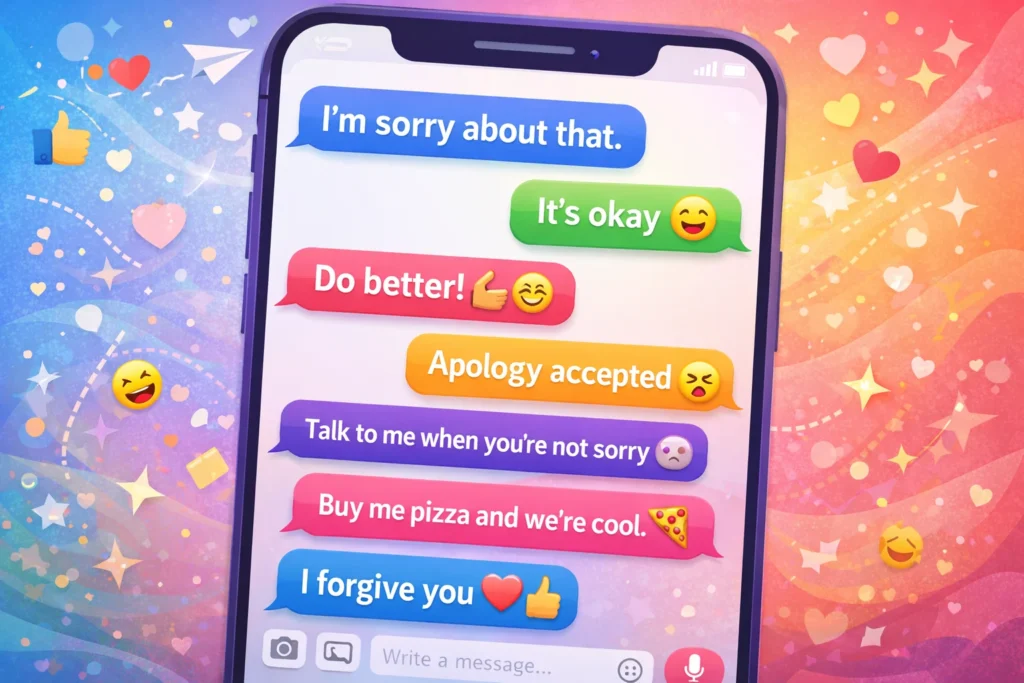
When someone says “I’m sorry about that,” the best response depends on your relationship and the situation. Top alternatives include: “No worries at all,” “It happens,” “I appreciate the apology,” “All good, don’t stress,” and “Thanks for saying that.”
We’ve all been there. Someone forgets to reply to your text, shows up late to a meeting, or accidentally hurts your feelings, and they follow it up with a simple “I’m sorry about that.” While the apology is important, your response can shape the entire tone of the interaction. Whether you’re chatting with friends, replying to a coworker, or texting a crush, choosing the right words helps maintain harmony and express your personality.
That’s why having a list of the best responses to “I’m sorry about that” is incredibly useful. From funny and flirty to professional and heartfelt, the right reply can turn an awkward moment into a meaningful connection. Let’s explore a variety of text-message-ready responses that fit every mood and situation.
Funny Responses
- “Apology accepted… this time.”
Example: Used when a friend makes a small, harmless mistake.
Meaning: Lightheartedly forgives while teasing. - “You’re forgiven, but I’m still charging a late fee.”
Example: Perfect when someone is late to meet you.
Meaning: Adds humor while accepting the apology. - “It’s okay, I’ll let it slide… for snacks.”
Example: Ideal among close friends.
Meaning: Playfully suggests compensation. - “No worries, my therapist and I will discuss it.”
Example: Used jokingly for minor inconveniences.
Meaning: Exaggerates the situation for comedic effect. - “I’ll try to recover from this tragedy.”
Example: When the issue is trivial.
Meaning: Dramatically humorous acceptance. - “You’re lucky I’m in a forgiving mood today.”
Example: Friendly banter with someone close.
Meaning: Teasing while forgiving. - “All good, but I expect cookies.”
Example: Casual settings with friends or family.
Meaning: Accepts the apology with a playful request. - “It’s fine, I’ll just add it to your permanent record.”
Example: Light teasing in informal settings.
Meaning: Jokingly suggests long-term consequences. - “No worries, I’ve already written a dramatic movie about it.”
Example: When exaggerating a minor issue.
Meaning: Uses humor to diffuse tension. - “Apology accepted. World peace restored.”
Example: After a small misunderstanding.
Meaning: Signals closure with humor. - “You’re forgiven, but my memory is excellent.”
Example: Friendly teasing among close friends.
Meaning: Playful reminder while accepting. - “It’s okay, I’ll survive.”
Example: Casual and humorous response.
Meaning: Downplays the issue. - “All good, I’ve already filed a complaint with the universe.”
Example: For minor inconveniences.
Meaning: Adds a quirky sense of humor. - “I’ll let it go… after a dramatic sigh.”
Example: Lighthearted acceptance.
Meaning: Signals forgiveness with playful drama. - “Don’t worry, my forgiveness is on sale today.”
Example: Fun response among friends.
Meaning: Shows easygoing forgiveness.
Polite Responses
- “Thank you for the apology.”
Example: Professional or respectful settings.
Meaning: Acknowledges the apology gracefully. - “I appreciate you saying that.”
Example: When someone sincerely apologizes.
Meaning: Shows gratitude and acceptance. - “No problem at all.”
Example: Everyday situations.
Meaning: Indicates the issue was minor. - “It’s completely understandable.”
Example: When circumstances were beyond their control.
Meaning: Expresses empathy. - “I understand, thank you.”
Example: Formal or semi-formal interactions.
Meaning: Combines empathy with appreciation. - “All is forgiven.”
Example: Friendly yet respectful contexts.
Meaning: Signals closure. - “I appreciate your honesty.”
Example: When someone admits a mistake.
Meaning: Values transparency. - “Please don’t worry about it.”
Example: To reassure someone.
Meaning: Reduces their guilt. - “It happens to everyone.”
Example: When the mistake is common.
Meaning: Normalizes the situation. - “Thank you for letting me know.”
Example: Professional environments.
Meaning: Appreciates communication. - “No harm done.”
Example: Minor issues.
Meaning: Confirms that everything is fine. - “I completely understand.”
Example: When the situation was unavoidable.
Meaning: Demonstrates empathy. - “That’s okay, I appreciate the effort.”
Example: When someone tried their best.
Meaning: Recognizes intention. - “We’re all good.”
Example: Casual yet polite settings.
Meaning: Signals resolution. - “Thank you for taking responsibility.”
Example: Professional or serious contexts.
Meaning: Acknowledges accountability.
Professional Responses
- “Thank you for your apology.”
Example: Workplace communication.
Meaning: Formal acknowledgment. - “I appreciate you addressing this.”
Example: After a work-related error.
Meaning: Recognizes responsibility. - “No problem, thank you for the update.”
Example: When delays occur.
Meaning: Maintains professionalism. - “I understand, let’s move forward.”
Example: After resolving an issue.
Meaning: Focuses on progress. - “Thank you for your transparency.”
Example: When honesty is valued.
Meaning: Encourages open communication. - “It’s not an issue, thank you for informing me.”
Example: Minor workplace mistakes.
Meaning: Reassures the sender. - “I appreciate your prompt response.”
Example: When the apology is timely.
Meaning: Acknowledges quick action. - “Thank you for clarifying the situation.”
Example: After misunderstandings.
Meaning: Emphasizes resolution. - “No worries, these things happen.”
Example: Semi-formal workplace interactions.
Meaning: Shows understanding. - “I value your accountability.”
Example: When someone takes responsibility.
Meaning: Reinforces professionalism. - “Thanks for bringing this to my attention.”
Example: When informed of an issue.
Meaning: Appreciates communication. - “Apology accepted, let’s proceed.”
Example: Moving forward after a mistake.
Meaning: Signals closure. - “I appreciate your effort to resolve this.”
Example: During problem-solving.
Meaning: Encourages collaboration. - “Thank you for acknowledging the oversight.”
Example: Formal business settings.
Meaning: Recognizes responsibility. - “We can consider the matter resolved.”
Example: Finalizing an issue.
Meaning: Provides formal closure.
Flirty Responses
- “You’re forgiven… but you owe me a coffee date.”
Example: When a crush apologizes for being late.
Meaning: Turns forgiveness into a playful invitation. - “I guess I can forgive you, especially with that smile.”
Example: Light flirting after a minor mistake.
Meaning: Adds charm and affection. - “Apology accepted, but I expect cuddles as compensation.”
Example: Romantic partners.
Meaning: Expresses affection playfully. - “You’re lucky you’re cute.”
Example: Casual flirtation.
Meaning: Forgives while complimenting. - “I’ll forgive you if you take me out.”
Example: When hinting at a date.
Meaning: Suggests spending time together. - “It’s okay, I can’t stay mad at you.”
Example: Romantic contexts.
Meaning: Shows affection and forgiveness. - “You’re forgiven, but only because I like you.”
Example: Playful confession of interest.
Meaning: Expresses romantic feelings. - “I suppose I’ll let it slide this time.”
Example: Gentle teasing with romantic undertones.
Meaning: Flirty acceptance. - “Make it up to me with dinner?”
Example: Suggesting a date.
Meaning: Turns apology into an opportunity. - “It’s fine, your charm makes up for it.”
Example: Lighthearted romantic response.
Meaning: Compliments the person. - “I forgive you… this time.”
Example: Playful teasing.
Meaning: Suggests continued interaction. - “Only if I get to see you soon.”
Example: When wanting to meet.
Meaning: Expresses desire for connection. - “You’re forgiven, but I’m keeping score.”
Example: Flirty teasing.
Meaning: Adds playful tension. - “I’ll accept your apology over dessert.”
Example: Romantic invitation.
Meaning: Suggests a date. - “It’s okay, I kind of like when you need my forgiveness.”
Example: Playful romantic banter.
Meaning: Adds flirtatious intrigue.
Chill and Casual Responses
- “No worries.”
Example: Everyday conversations.
Meaning: Indicates the issue is minor. - “All good.”
Example: Quick text replies.
Meaning: Signals everything is fine. - “It’s fine.”
Example: Informal settings.
Meaning: Downplays the situation. - “Don’t stress about it.”
Example: Reassuring a friend.
Meaning: Reduces guilt. - “You’re good.”
Example: Casual conversations.
Meaning: Shows acceptance. - “No big deal.”
Example: Minor inconveniences.
Meaning: Minimizes the issue. - “It happens.”
Example: When mistakes are common.
Meaning: Expresses understanding. - “We’re cool.”
Example: Among friends.
Meaning: Confirms there’s no conflict. - “All sorted.”
Example: After resolving an issue.
Meaning: Indicates closure. - “No harm done.”
Example: Small misunderstandings.
Meaning: Reassures the other person. - “You’re fine, really.”
Example: Comforting someone.
Meaning: Emphasizes forgiveness. - “Nothing to worry about.”
Example: Casual reassurance.
Meaning: Reduces anxiety. - “It’s all good on my end.”
Example: Friendly communication.
Meaning: Confirms acceptance. - “We’re still friends.”
Example: After minor disagreements.
Meaning: Reinforces the relationship. - “No issues here.”
Example: Informal yet clear response.
Meaning: Signals resolution.
Sarcastic Responses
- “Oh no, how will I ever recover?”
Example: When the mistake is trivial.
Meaning: Uses sarcasm to downplay the issue. - “Well, this changes everything.”
Example: Light sarcasm among friends.
Meaning: Indicates the situation isn’t serious. - “I’ll try to move on with my life.”
Example: Minor inconveniences.
Meaning: Dramatic sarcasm. - “Consider yourself forgiven… for now.”
Example: Playful teasing.
Meaning: Adds mock seriousness. - “I suppose I can manage.”
Example: Friendly sarcasm.
Meaning: Suggests the issue was minor. - “This will take years of therapy.”
Example: Joking exaggeration.
Meaning: Adds humor. - “I’ll put it in my memoir.”
Example: Casual banter.
Meaning: Highlights triviality. - “The emotional damage is immeasurable.”
Example: Meme-inspired humor.
Meaning: Exaggerates for comedic effect. - “I expected nothing less.”
Example: Friendly teasing.
Meaning: Sarcastic acknowledgment. - “I guess I’ll survive.”
Example: Minor issues.
Meaning: Downplays with sarcasm. - “This betrayal will not be forgotten.”
Example: Among close friends.
Meaning: Dramatic sarcasm. - “Let me check my forgiveness schedule.”
Example: Playful sarcasm.
Meaning: Adds humor. - “Fine, but I’m telling everyone.”
Example: Light teasing.
Meaning: Not meant seriously. - “I’ll need some time to process this.”
Example: Minor inconveniences.
Meaning: Mock seriousness. - “Apology noted for future reference.”
Example: Friendly sarcasm.
Meaning: Signals playful acknowledgment.
Cute Responses
- “Aww, it’s okay.”
Example: When comforting someone.
Meaning: Gentle reassurance. - “You’re forgiven, always.”
Example: Close relationships.
Meaning: Expresses unconditional forgiveness. - “No worries, friend.”
Example: Warm and friendly tone.
Meaning: Shows affection. - “It’s all okay, promise.”
Example: Reassuring someone anxious.
Meaning: Emphasizes comfort. - “Don’t be sad, it’s fine.”
Example: When someone feels guilty.
Meaning: Offers emotional support. - “I appreciate you saying that.”
Example: Warm acknowledgment.
Meaning: Values sincerity. - “Everything’s okay now.”
Example: After resolving an issue.
Meaning: Signals closure. - “You’re too sweet to stay mad at.”
Example: Close friendships or romance.
Meaning: Expresses affection. - “It’s okay, hugs fix everything.”
Example: Among loved ones.
Meaning: Suggests emotional comfort. - “All better now.”
Example: Lighthearted reassurance.
Meaning: Indicates resolution. - “I know you didn’t mean it.”
Example: When intent matters.
Meaning: Shows understanding. - “You’re forgiven with a smile.”
Example: Friendly warmth.
Meaning: Signals positivity. - “No worries, sunshine.”
Example: Playful affection.
Meaning: Adds warmth. - “It’s okay, we’re good.”
Example: Everyday reassurance.
Meaning: Confirms harmony. - “All is well again.”
Example: After minor conflicts.
Meaning: Indicates peace.
Confident Responses
- “Apology accepted.”
Example: When asserting closure.
Meaning: Direct and self-assured. - “Thank you for acknowledging that.”
Example: When accountability matters.
Meaning: Shows self-respect. - “I appreciate your honesty.”
Example: Serious situations.
Meaning: Values transparency. - “Let’s move forward.”
Example: After resolving an issue.
Meaning: Focuses on progress. - “I accept your apology.”
Example: Clear and assertive.
Meaning: Signals closure. - “We’re good now.”
Example: Establishing resolution.
Meaning: Confident reassurance. - “I respect you for saying that.”
Example: When someone takes responsibility.
Meaning: Acknowledges maturity. - “Thank you for taking responsibility.”
Example: Serious contexts.
Meaning: Reinforces accountability. - “I’m glad we cleared that up.”
Example: After misunderstandings.
Meaning: Signals resolution. - “Consider it settled.”
Example: Formal or assertive tone.
Meaning: Indicates finality. - “I value your accountability.”
Example: Professional settings.
Meaning: Shows respect. - “Let’s put this behind us.”
Example: Moving on from conflict.
Meaning: Encourages closure. - “I acknowledge your apology.”
Example: Formal interactions.
Meaning: Neutral acceptance. - “Thank you for addressing the issue.”
Example: Workplace communication.
Meaning: Appreciates initiative. - “We can move forward from here.”
Example: After resolution.
Meaning: Emphasizes progress.
Emotional Responses
- “Thank you, that means a lot to me.”
Example: When the apology is heartfelt.
Meaning: Expresses emotional appreciation. - “I’m glad you said that.”
Example: After a meaningful apology.
Meaning: Shows relief. - “I appreciate your sincerity.”
Example: Serious emotional contexts.
Meaning: Values authenticity. - “It hurt, but I’m ready to move forward.”
Example: When healing from conflict.
Meaning: Acknowledges pain while forgiving. - “Thank you for understanding my feelings.”
Example: After emotional discussions.
Meaning: Validates empathy. - “Your apology helps a lot.”
Example: When seeking closure.
Meaning: Expresses emotional relief. - “I’m grateful for your honesty.”
Example: When someone admits fault.
Meaning: Appreciates vulnerability. - “I forgive you.”
Example: Deep emotional reconciliation.
Meaning: Signals genuine forgiveness. - “This means more than you know.”
Example: Heartfelt situations.
Meaning: Emphasizes emotional impact. - “I value our relationship too much to hold onto this.”
Example: Close relationships.
Meaning: Prioritizes connection. - “Thank you for making things right.”
Example: After reconciliation.
Meaning: Shows appreciation. - “I feel better after hearing that.”
Example: Emotional healing.
Meaning: Expresses relief. - “Your apology truly matters to me.”
Example: Sincere contexts.
Meaning: Highlights importance. - “I’m ready to move on together.”
Example: Relationship repair.
Meaning: Signals unity. - “Thank you for caring enough to apologize.”
Example: Deep emotional appreciation.
Meaning: Recognizes effort.
Sweet Responses
- “It’s okay, I know your heart.”
Example: Close relationships.
Meaning: Expresses trust. - “No worries at all, truly.”
Example: Gentle reassurance.
Meaning: Emphasizes forgiveness. - “I appreciate you so much.”
Example: When valuing the person.
Meaning: Shows affection. - “Everything is okay between us.”
Example: Restoring harmony.
Meaning: Signals peace. - “You’re forgiven, always.”
Example: Deep connections.
Meaning: Demonstrates unconditional forgiveness. - “Thank you for being honest with me.”
Example: When sincerity matters.
Meaning: Appreciates openness. - “It means a lot that you said that.”
Example: Emotional reassurance.
Meaning: Values the apology. - “No need to worry, we’re good.”
Example: Comforting someone.
Meaning: Reduces guilt. - “I’m just glad we talked about it.”
Example: After resolving conflict.
Meaning: Emphasizes communication. - “You matter more to me than the mistake.”
Example: Close relationships.
Meaning: Prioritizes the bond. - “All is forgiven, truly.”
Example: Heartfelt reconciliation.
Meaning: Signals genuine forgiveness. - “I’m thankful for you.”
Example: Expressing appreciation.
Meaning: Reinforces connection. - “It’s okay, we all make mistakes.”
Example: Offering reassurance.
Meaning: Shows empathy. - “I appreciate your kindness.”
Example: When sincerity is evident.
Meaning: Acknowledges goodwill. - “Everything’s better now.”
Example: After resolving tension.
Meaning: Signals closure.
Clever Responses
- “Apology received and processed.”
Example: Playful yet intelligent tone.
Meaning: Acknowledges acceptance. - “Consider your slate wiped clean.”
Example: Friendly reassurance.
Meaning: Signals forgiveness. - “We’ll call it even.”
Example: After mutual mistakes.
Meaning: Establishes balance. - “Mistakes make the story interesting.”
Example: Philosophical situations.
Meaning: Adds perspective. - “Growth unlocked.”
Example: Modern, meme-style response.
Meaning: Emphasizes learning. - “Lesson learned, moving on.”
Example: After resolving issues.
Meaning: Signals progress. - “Your apology has been approved.”
Example: Light humor.
Meaning: Playful acceptance. - “Consider this a reset.”
Example: After misunderstandings.
Meaning: Indicates a fresh start. - “All systems back to normal.”
Example: Tech-savvy humor.
Meaning: Signals resolution. - “Peace treaty signed.”
Example: Friendly reconciliation.
Meaning: Indicates harmony. - “We’re back on track.”
Example: After delays or issues.
Meaning: Emphasizes progress. - “Harmony restored.”
Example: Playful yet thoughtful.
Meaning: Signals closure. - “Balance has been reestablished.”
Example: Philosophical tone.
Meaning: Suggests equilibrium. - “Apology acknowledged and accepted.”
Example: Semi-formal contexts.
Meaning: Clear acceptance. - “Let’s turn the page.”
Example: Moving forward.
Meaning: Encourages a fresh start.
FAQs
What does “I’m sorry about that” mean?
It’s a common way to acknowledge a mistake, inconvenience, or misunderstanding and express regret.
Can the phrase have emotional or flirty interpretations?
Yes. Depending on the context and tone, it can signal genuine remorse, affection, or even open the door for playful or romantic interactions.
What is the best professional response?
Polite and concise replies like “Thank you for your apology” or “I appreciate you addressing this” work best in formal settings.
What should I say if I don’t actually mean it?
You can remain neutral with responses such as “Noted” or “Thank you for letting me know,” which acknowledge the apology without expressing full forgiveness.
Is humor appropriate when responding?
Humor is appropriate for minor issues and casual relationships but should be avoided in serious or professional situations.
Conclusion
Knowing the best responses to “I’m sorry about that” empowers you to handle everyday conversations with confidence and style. Whether you choose humor, warmth, professionalism, or a touch of flirtation, your reply can strengthen relationships and set the tone for future interactions.
The right words not only acknowledge the apology but also reflect your personality and emotional intelligence.
Feel free to save this list, share it with friends, or bookmark it for future use. The next time someone apologizes, you’ll have the perfect response ready to make the moment meaningful, memorable, and uniquely you.
Discover More Related Articles:
- 180+ Best Responses to Peace Out: Funny, and Cool Replies (2026)
- 150+ Best Responses When Someone Says Mhm: Funny & Flirty (2026)

Respoflow.com features content written by Matthew Cooper, a writer who focuses on clear, practical guides about everyday language and communication.
He creates easy-to-follow articles that help readers respond confidently in real-life and digital conversations.
Matthew’s work is aimed at delivering useful, reader-first content that feels natural and reliable.