
Definition:
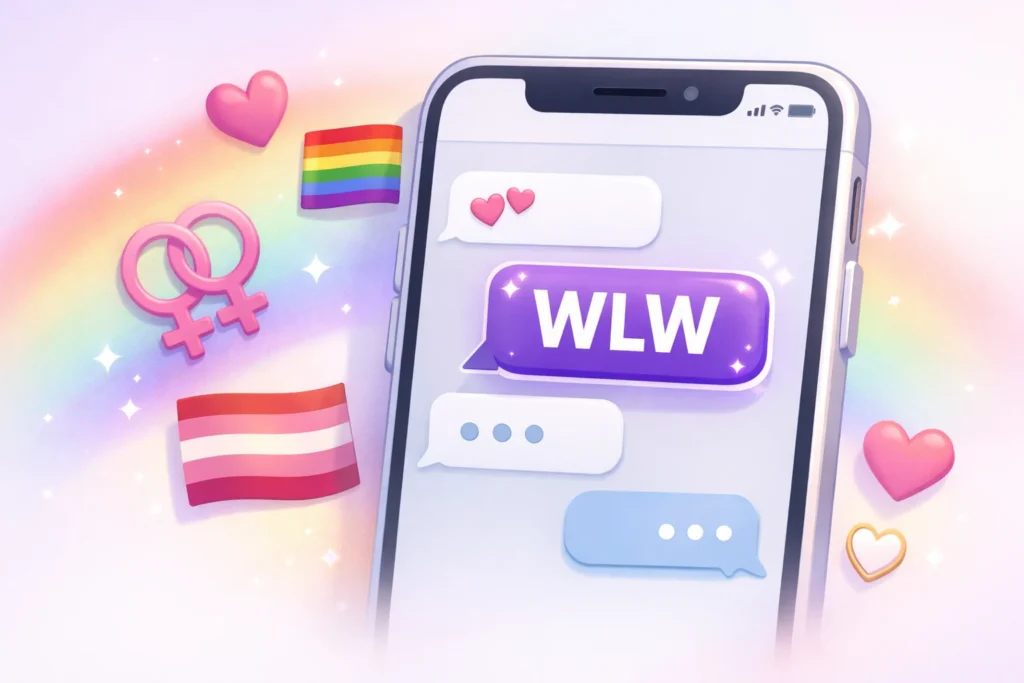
WLW in text means “women loving women,” a term used to describe women who are romantically or emotionally attracted to other women, including lesbian, bisexual, and queer women.
If you’ve come across the term WLW in a message, social media post, or comment section and felt confused, you’re definitely not alone. Internet slang evolves fast, and abbreviations like WLW are now widely used in LGBTQ+ discussions, dating apps, and online communities.
At first glance, it might look like a random mix of letters. But WLW carries an important and meaningful message. It is used to describe relationships, identities, and experiences of women who are attracted to other women.
In today’s digital communication, where short forms dominate texting culture, understanding terms like WLW helps avoid confusion and promotes respectful communication.
Origin and Popularity of WLW
The abbreviation WLW (women loving women) gained popularity through online LGBTQ+ spaces, forums, and social media platforms. It became widely used as a more inclusive and flexible term compared to traditional labels.
Why WLW became popular:
- Inclusivity: It includes lesbians, bisexual women, pansexual women, and queer women.
- Neutral expression: It focuses on attraction rather than strict identity labels.
- Online communication: Short forms are easier for bios, hashtags, and texting.
- Community visibility: Used to represent shared experiences among women who love women.
WLW is often seen in:
- TikTok bios
- Instagram captions
- Twitter/X discussions
- Dating apps
- LGBTQ+ blogs and forums
What WLW Means in Text Messaging
In everyday texting, WLW is used to quickly describe romantic or emotional attraction between women.
Common uses in text:
- “She’s WLW, so she prefers dating women.”
- “This movie has great WLW representation.”
- “I’m WLW and proud 🌈”
It is not usually used in formal writing but appears frequently in casual conversations, especially online.
Real-World Examples of WLW in Context
Understanding WLW becomes easier when you see it in real conversations.
Example Table:
| Context Type | Example Sentence | Meaning |
|---|---|---|
| Casual chat | “Are you WLW?” | Asking if someone is a woman who likes women |
| Social media | “Finally a WLW romance series I love!” | A show featuring women loving women |
| Identity statement | “I’m WLW and happy to be part of this community.” | Self-identification |
| Discussion | “WLW representation in media is improving.” | Talking about LGBTQ+ visibility |
Tone and Context of WLW Usage
WLW is generally used in a neutral to positive tone, but context matters.
1. Friendly / Positive Tone
- “This WLW couple is so cute 💕”
- “Love seeing WLW stories in movies.”
2. Neutral Informative Tone
- “WLW stands for women loving women.”
- “WLW is used in LGBTQ+ discussions.”
3. Sensitive or Misused Context (less common)
Sometimes people misunderstand or misuse it:
- Using it as a label without understanding identity
- Reducing it to stereotypes
- Asking intrusive personal questions
👉 It’s important to use WLW respectfully, especially when discussing real identities.
Comparison with Related LGBTQ+ Terms
To understand WLW better, it helps to compare it with similar abbreviations.
WLW vs MLM vs Sapphic
| Term | Meaning | Who It Refers To |
|---|---|---|
| WLW | Women loving women | Women attracted to women |
| MLM | Men loving men | Men attracted to men |
| Sapphic | Women attracted to women (broader poetic term) | Women + non-binary people in some contexts |
| Lesbian | Woman exclusively attracted to women | Identity label |
| Bisexual woman | Woman attracted to more than one gender | Identity label |
Key difference:
- WLW = umbrella term (inclusive)
- Lesbian/Bisexual = identity labels (more specific)
Alternate Meanings of WLW
In most modern internet usage, WLW almost always means “women loving women.”
However, rarely, it may be confused with older or unrelated uses such as:
- Company or brand abbreviations
- Usernames or gaming tags
👉 Still, in texting and social media, WLW is almost always related to LGBTQ+ meaning.
When and How to Use WLW Properly
Using WLW correctly ensures respectful communication.
Do’s:
- Use it in LGBTQ+ discussions
- Use it in supportive or inclusive contexts
- Respect identity when someone uses the term for themselves
Don’ts:
- Don’t assume someone’s identity based on WLW
- Don’t use it in a mocking or sarcastic way
- Don’t over-ask personal questions
Polite and Professional Alternatives
If you want to express the same idea more formally, you can use:
- “Women who are attracted to women”
- “Same-gender female relationships”
- “LGBTQ+ women”
- “Female same-sex relationships”
These are better suited for academic, workplace, or formal writing.
Why WLW Matters in Online Communication
WLW is more than just slang—it represents visibility and identity.
Its importance includes:
- Representation in media and entertainment
- Building supportive online communities
- Normalizing diverse relationships
- Helping people find shared experiences
In digital spaces, WLW helps people express identity quickly while connecting with others who relate.
Common Misunderstandings About WLW
Some confusion often surrounds the term:
- Misunderstanding 1: It only means lesbians
✔ Reality: It includes all women attracted to women - Misunderstanding 2: It is offensive
✔ Reality: It is a neutral/positive identity term - Misunderstanding 3: It’s just slang
✔ Reality: It’s also a community and identity descriptor
FAQs
1. What does WLW mean in texting?
WLW means “women loving women,” referring to women who are attracted to other women.
2. Is WLW the same as lesbian?
Not exactly. WLW is a broader term that includes lesbians, bisexual women, and others.
3. Is WLW a slang word?
Yes, but it is also used as an identity and community term in LGBTQ+ spaces.
4. Where is WLW commonly used?
It is commonly used on social media platforms, dating apps, and LGBTQ+ discussions.
5. Can men use WLW?
Men do not identify as WLW since it specifically refers to women.
6. Is WLW offensive?
No, it is not offensive when used respectfully and in the right context.
7. What is the difference between WLW and sapphic?
Sapphic is a broader poetic term, while WLW is a direct abbreviation.
8. Why do people use WLW instead of full words?
Because it is shorter, inclusive, and commonly understood in online communities.
Conclusion
Understanding what WLW means in text helps you navigate modern digital communication more confidently. It stands for “women loving women” and is widely used in LGBTQ+ spaces to describe attraction, identity, and relationships among women.
While it may seem like just another internet abbreviation, WLW carries real meaning and represents inclusivity, identity, and community. Whether you see it in a chat, social media post, or comment section, knowing its meaning ensures respectful and informed communication.
Discover More Related Articles:
- Lamentation Mean in the Bible: Why It Matters for Christians in 2026
- Adam Mean in the Bible: Symbolism, and Impact in 2026