
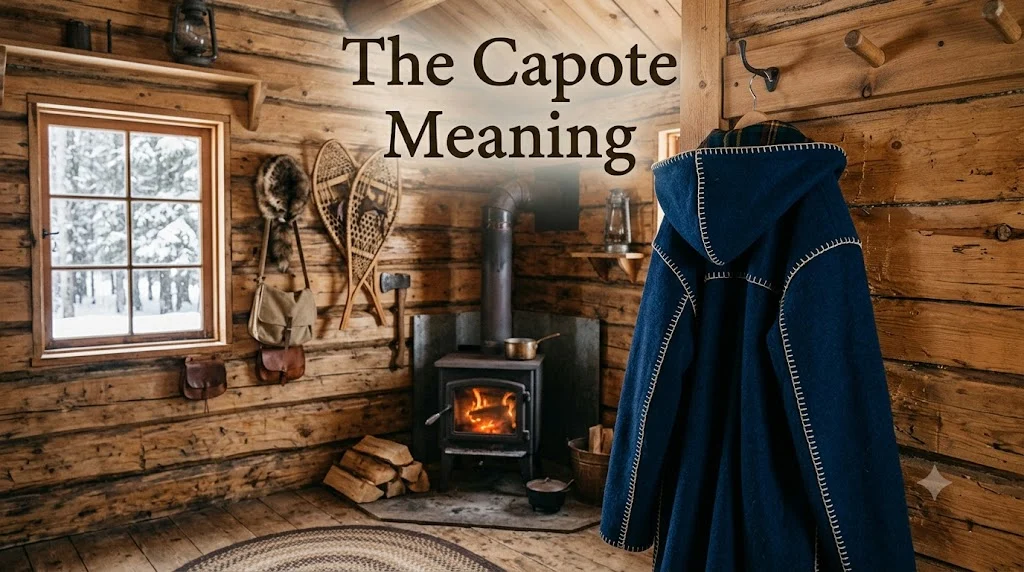

Definition
A capote is a long cloak or coat with a hood, traditionally worn in cold regions, especially by soldiers, hunters, or French-Canadian people in the past.
Picture yourself standing on the frozen banks of the Saint Lawrence River in the winter of 1750. The wind whips across the ice with brutal intensity. Your fingers go numb despite the thick mittens. Your ears ache from the cold. Yet somehow your core remains warm. The secret lies wrapped around your shoulders in the form of a single remarkable garment.
That garment is a capote.
The capote meaning extends far beyond a simple dictionary definition. This hooded coat represents survival, cultural fusion, and centuries of human ingenuity. It tells the story of Indigenous peoples and European settlers coming together to conquer one of the harshest climates on Earth.
Today we will explore every facet of this fascinating word and garment. We will uncover its origins, trace its journey across continents, and examine how it continues to appear in modern language. By the end you will understand exactly what a capote is, why it matters, and how to use the word correctly.
So grab a warm drink and settle in. This journey through history promises to be as rich and layered as the coat itself.
What Is the Capote Meaning?
Let us start with the most fundamental question. What does capote mean in its simplest form?
A capote is a long hooded cloak or overcoat. It typically wraps around the body and fastens with a belt or sash. The garment provides substantial protection against cold weather and precipitation.
The capote definition in English describes it specifically as a coat with a hood. This distinguishes it from ordinary cloaks or capes that lack head coverage. The hood makes all the difference when you face freezing rain or driving snow.
Breaking Down the Capote Meaning
When we examine the capote meaning more closely we find several key characteristics:
- Length: Most capotes extend to the knees or below. This provides maximum coverage for the wearer.
- Hood: The hood is an essential feature. It protects the head and neck from harsh elements.
- Material: Traditionally capotes were made from wool blankets or animal hides. The thick fabric traps body heat effectively.
- Wrap Style: Unlike modern coats with front zippers, capotes wrap across the body. This overlapping design blocks wind more efficiently.
- Fastening: A belt, sash, or simple tie secures the garment around the waist.
Capote Meaning in English Usage
In English we use capote as a noun. It refers specifically to this historical style of outerwear. You might encounter it in literature about early American history or Canadian frontier life.
Here are some examples of capote meaning in context:
The fur trader wrapped his capote tightly against the biting wind.
She inherited a beautiful wool capote from her Quebecois grandmother.
The museum displayed a capote made from a Hudson’s Bay Company blanket.
Distinguishing Capote From Similar Garments
Many people confuse the capote with other types of coats and cloaks. Understanding these differences helps clarify the capote definition.
| Garment | Hood | Wraps | Length | Key Feature |
|---|---|---|---|---|
| Capote | Yes | Yes | Knee length or longer | Made from blanket or hide |
| Cloak | Sometimes | Yes | Varies | No sleeves, drapes over shoulders |
| Cape | No | Sometimes | Short | Covers shoulders only |
| Coat | Sometimes | No | Varies | Front opening with buttons or zipper |
| Poncho | Sometimes | Yes | Varies | Simple rectangular shape |
The hooded cloak meaning might seem similar but capotes offer more structured protection. They often feature sleeves or arm slits for better mobility.
How to Pronounce Capote Correctly
Pronunciation causes endless confusion around this word. Many people say it like Truman Capote’s last name. That is completely wrong.
Capote Pronunciation Guide
The correct capote pronunciation in American English is kuh-POHT.
Let us break that down:
- The first syllable sounds like “kuh”
- The second syllable rhymes with “boat”
- The emphasis falls on the second syllable
In British English the pronunciation is similar but the vowel sound shifts slightly:
- kuh-POHT remains the standard
- The “o” sound is a bit shorter and rounder
Common Mispronunciations to Avoid
Many people incorrectly say “ka-POH-tay” or “CAP-oh-tee.” These mistakes happen because of Truman Capote. The famous author pronounced his surname differently. His family name has Italian roots with a distinct pronunciation.
So remember when you are discussing the garment, always use kuh-POHT. Nobody wants to look like they just stepped off a movie set while discussing historical clothing.
Phonetic Spellings for Reference
- American English: /kəˈpoʊt/
- British English: /kəˈpəʊt/
- French pronunciation: /ka.pɔt/
Say it out loud a few times. Kuh-POHT. Does that feel natural? With practice it will become second nature.
The Etymology of Capote: Tracing Word Origins
Understanding where words come from adds depth to our knowledge. The capote origin story takes us across the Atlantic and through centuries of linguistic evolution.
Capote Etymology in French
The capote etymology begins in France. The word comes from the French term “cape.” This means a cloak or cape.
French speakers added the suffix “-ote” to create a diminutive form. So capote literally means “little cape” or “hooded cape.”
This suffix appears in many French words. It often indicates something smaller or more specific than the root word. In this case it transformed “cape” into a garment with more precise features.
Adoption Into English
English borrowed capote from French in the early 1800s. The Oxford English Dictionary notes its first recorded use around 1812.
At that time English speakers were encountering the garment frequently. The fur trade brought French Canadians and British traders into close contact. They needed a word for this practical winter clothing.
The adoption was seamless. The word already sounded natural to English ears. Its meaning remained clear and specific.
Spanish and Italian Connections
Interestingly Spanish and Italian have similar words. The Spanish “capote” refers to a bullfighter’s cape. This garment differs significantly from the hooded coat we have been discussing.
The Italian “capotto” means an overcoat or greatcoat. This shares roots with the French version but developed independently.
These linguistic cousins show how clothing terminology travels across cultures. Each region adapted the basic concept to local needs.
The Indigenous Influence
While the word comes from Europe, the garment itself reflects Indigenous ingenuity. The capote origin in North America cannot be separated from First Nations knowledge.
Indigenous peoples had been making warm winter clothing for thousands of years. They used animal hides, furs, and sophisticated tanning techniques. When European blankets became available they adapted these into coats.
The resulting capote blended European materials with Indigenous design. This cultural fusion created something entirely new and remarkably effective.
The Capote’s Role in Canadian History
The capote meaning becomes truly rich when we explore its historical context. This garment played a vital role in shaping North American history.
The Fur Trade Era
The fur trade dominated the Canadian economy for centuries. Companies like the Hudson’s Bay Company and the North West Company sent traders deep into the wilderness.
These men needed practical clothing. They could not bring delicate European garments into the harsh frontier. They needed something warm, durable, and easy to repair.
The capote answered this need perfectly.
Hudson’s Bay Company Blanket Coats
The Hudson’s Bay Company created their famous point blankets. These wool blankets featured colored stripes that indicated their size. The company traded these blankets with Indigenous peoples for furs.
Indigenous women quickly recognized the blankets’ potential. They began cutting and sewing them into hooded coats. The thick wool provided exceptional warmth. The distinctive stripes became a fashion statement.
These blanket coats soon became known as capotes. They represented status, practicality, and cultural exchange.
The Indigenous Contribution
We must recognize the Indigenous role in creating the capote. First Nations women possessed incredible sewing skills. They used sinew thread and bone needles to create waterproof seams.
These women adapted European textiles to traditional garment patterns. They understood the body’s needs in cold weather better than any European tailor. Their designs maximized warmth while allowing freedom of movement.
The capote thus represents Indigenous knowledge as much as European material culture. This fact matters greatly for understanding its full significance.
The Voyageurs and Coureurs des Bois
French Canadian voyageurs became famous for their capotes. These canoe men paddled massive freight canoes across endless lakes and rivers. They portaged heavy loads over brutal trails.
Their capotes protected them during travel. They also served as blankets at night. One garment could keep a man warm whether he was paddling or sleeping.
The coureurs des bois took this practicality even further. These independent traders lived among Indigenous communities. They adopted many Indigenous customs, including wearing capotes year-round.
The Metis Connection
The Metis people emerged from the union of European and Indigenous cultures. Their distinctive identity included unique clothing traditions.
Metis capotes often featured elaborate beadwork. Women decorated the hoods and hems with floral patterns. These designs reflected both European and Indigenous aesthetics.
Different colors carried different meanings. Blue capotes often indicated Catholic faith. White suggested Protestant affiliation. Grey represented those who belonged to neither group.
These color choices showed how clothing expressed identity and belief. The capote became a canvas for personal and cultural expression.
The Capote as National Dress
By the late 1800s the capote had become a symbol of Canadian identity. Many people considered it a form of national dress. It represented the country’s unique history and character.
This recognition came despite the garment’s humble origins. A coat made from a traded blanket had achieved iconic status. It now appeared in paintings, photographs, and patriotic imagery.
The capote meaning had expanded beyond mere clothing. It now represented resilience, cultural mixing, and the Canadian spirit.
Different Types of Capotes Across Cultures
Not all capotes look the same. Different communities created their own versions. Each type reflects specific needs and traditions.
The Quebecois Habitant Capote
French Canadian settlers created a distinctive capote style. This version typically reached knee length. It often had no buttons or clasps. Instead the wearer secured it with a colorful sash.
The habitant capote featured a large hood. This hood could be pulled up or folded back. In cold weather it provided complete head protection.
Men typically wore their capotes open at the front. This allowed easy access to their tools and weapons. Women often pinned their capotes closed for warmth and modesty.
The Indigenous Hide Capote
Many Indigenous communities preferred capotes made from animal hides. Moose hide and caribou hide were common choices. These materials provided excellent protection from wind and moisture.
Hide capotes required extensive preparation. The hide had to be tanned, stretched, and softened. This process could take weeks. But the results were worth the effort.
Indigenous capotes often featured fur trim around the hood. This rim helped keep the face warm. It also added a decorative element.
The Metis Beaded Capote
Metis capotes stand out for their elaborate decoration. Women spent countless hours adding beadwork to these garments.
The beadwork featured floral motifs. These designs often included roses, leaves, and vines. The patterns showed both European and Indigenous influences.
Each capote told a story through its decoration. Certain patterns indicated family connections or personal achievements. The beadwork represented a form of visual language.
The Military Capote
European armies also adopted capote-style coats. These military versions were often more structured and formal.
The French army used capotes as greatcoats. Soldiers wore them over their uniforms in cold weather. The coats provided warmth without restricting movement.
British regiments stationed in Canada also wore capotes. These garments proved essential during winter campaigns. Without them soldiers could not survive the harsh conditions.
The Modern Capote Interpretation
Contemporary designers sometimes draw inspiration from the capote. You can find modern capote-style coats in fashion collections.
These contemporary versions often use lighter materials. They may include modern fastenings like zippers. Some retain the distinctive wrap style while updating other elements.
While not identical to historical garments, these modern interpretations keep the capote meaning alive. They introduce new generations to this classic design.
Capote Meaning in French Language
French speakers use capote for multiple purposes. Understanding these uses helps prevent confusion.
Standard French Meaning
In standard French capote means a hooded coat or cloak. This aligns with the English definition. French dictionaries define it as a long overcoat with a hood.
The French usage tends to be more formal. You might find it in literature or historical descriptions. Modern French speakers often use other terms for contemporary coats.
Military Usage
French military contexts use capote to describe specific uniform coats. The capote d’uniforme refers to a soldier’s greatcoat.
These military capotes were essential for European winters. They kept soldiers warm during campaigns and garrison duty. The French army used capotes well into the 20th century.
Carriage and Vehicle Usage
French also uses capote to describe certain vehicle features. A capote de voiture refers to a convertible car’s folding roof.
Similarly a capote de landau describes the folding hood on a baby carriage. This usage extends the original meaning. The capote still covers and protects.
Slang Meanings in French
French slang includes several capote meanings. These colloquial uses differ significantly from the standard definition.
Capote anglaise is a common French term for a condom. This slang phrase literally means “English capote.” The origin of this expression remains unclear but it has been used for many years.
The French use capote in other slang contexts too. It can mean to fail or make a mistake. These meanings are less common but worth knowing.
French Expressions and Idioms
French speakers use capote in several fixed expressions. These idioms show how the word has evolved in everyday language.
Prendre une capote means to be reprimanded or scolded. The exact origin is uncertain but likely relates to being “covered” in criticism.
Avoir la capote might suggest someone is well protected. This could refer to being prepared or well-armed.
Capote Meaning in Spanish Language
Spanish also employs capote in various ways. The Spanish capote meaning emphasizes different cultural contexts.
Standard Spanish Definition
In Spanish capote means a cape or cloak. The Spanish version often lacks a hood. This distinguishes it from the French-inspired garment.
Bullfighting provides the most famous Spanish context. Matadors use capotes during corridas. The capote is the larger cape used before the muleta appears.
Bullfighting Terminology
Spanish bullfighting has specific capote terminology. The capote de paseo is the elaborate cape worn during the parade. This garment is usually embroidered and decorated.
The capote de brega is the working cape used during the fight. This version is heavier and more practical. It must withstand significant wear and tear.
Slang Usage in Spanish
Like French, Spanish includes slang capote meanings. In some regions capote means condom. This usage mirrors the French slang.
Regional variations exist across Spanish-speaking countries. In some places capote means a type of blanket. In others it refers to a large hat.
The capote meaning slang thus varies considerably. Travelers should be aware of this before using the word casually.
Spanish Idioms
Several Spanish idioms involve capote. These expressions add color to the language.
Meterse en camisa de once varas actually relates to capote contexts. It means getting involved in something complicated. The phrase refers to the voluminous clothing of earlier centuries.
Sacar los trapitos al sol means airing dirty laundry. It does not directly mention capote but relates to clothing generally.
Modern Capote Usage and Slang
Language evolves constantly. Today capote appears in contexts far removed from historical clothing.
Capote Meaning Slang in English
English slang occasionally uses capote. The meaning relates to emotional reactions rather than clothing.
In some online communities capote means to overreact or lose control. Someone might say “Don’t capote over this” to tell someone to calm down.
This usage appears mostly in specific subcultures. You will not find it in formal writing or standard dictionaries. But it shows how words can take on unexpected meanings.
Pop Culture References
Truman Capote remains the most famous person associated with the word. The author’s name creates confusion but also provides cultural connections.
The film “Capote” brought the name to wider audiences. Philip Seymour Hoffman won an Oscar for his portrayal. This movie increased public familiarity with the word.
Contemporary Fashion
Some designers continue to use capote as a style descriptor. You might find capote-inspired pieces in winter collections.
These modern garments usually reference historical designs. They may use modern materials while maintaining traditional silhouettes. The capote meaning in fashion suggests heritage and quality.
Social Media Usage
The capote meaning appears on social media platforms. Users might post about historical clothing or their own fashion choices.
Instagram features many posts about vintage capotes. Pinterest boards collect images of historical and modern versions. These platforms keep the word alive in public consciousness.
The Future of the Word
Will capote survive as a common English word? Only time will tell. But its historical significance suggests it will remain in use.
Historians and fashion enthusiasts will continue using the word accurately. Museums will display capotes with proper labels. Literature will reference the garment when describing historical scenes.
How to Identify an Authentic Capote
If you encounter a historical garment you might wonder if it qualifies as a capote. Several features distinguish genuine capotes from other coats.
Key Features Checklist
- Hood: The garment must include a hood. This is essential to the capote meaning.
- Wrap Construction: Authentic capotes wrap across the body rather than opening down the center.
- Traditional Materials: Wool blankets or hides indicate historical authenticity. Modern materials might suggest a contemporary piece.
- Sash or Belt: Most capotes use a sash or belt for fastening. Some have simple ties.
- Length: Knee length or longer is typical. Shorter garments are likely capes or jackets.
Points to Distinguish
| Feature | Authentic Capote | Similar Garment |
|---|---|---|
| Hood | Always present | Often absent |
| Fastening | Sash or belt | Buttons or zipper |
| Opening | Wraps across | Center front |
| Material | Wool or hide | Various materials |
| Length | Knee or longer | Varies |
Historical vs. Modern Versions
Historical capotes show signs of age and use. They may have repairs, stains, or wear patterns. These details add to their authenticity.
Modern capote reproductions usually feature cleaner construction. They might use materials unavailable historically. Some use synthetic fabrics or modern dyes.
Materials to Look For
Wool remains the most common authentic material. Hudson’s Bay Company blankets are particularly prized. These feature distinctive colored stripes.
Hide capotes require careful inspection. The tanning process leaves specific marks. Professional authentication may be needed for valuable pieces.
Famous Capotes in Museums
Several major museums display capotes. These institutions help preserve our understanding of the garment.
The Canadian Museum of History
This museum holds an extensive collection of capotes. Their examples span different eras and cultures. Visitors can see the evolution of the garment.
The museum also provides educational materials. These explain the capote meaning and historical context. Their online exhibits reach audiences worldwide.
The Hudson’s Bay Company Archives
The HBC archives preserve company records and artifacts. These include many examples of blanket coats. The archive helps researchers study the capote’s development.
The Metis Nation Collections
Cultural centers across Canada preserve Metis clothing. These collections include elaborately decorated capotes. They show the artistry of Metis beadwork.
Museum of Civilization in Quebec
This museum focuses on Quebec’s history. Their capote collection is particularly strong. Visitors can see habitant and military versions side by side.
The Capote in Literature and Art
The capote appears throughout Canadian literature and art. Writers and artists recognized its cultural significance early on.
Literary References
Early Canadian novels often mention capotes. Characters wear them on voyages, in winter scenes, and during adventures.
Susanna Moodie wrote about capotes in her pioneer memoirs. She described settlers wearing them for warmth and protection.
Robert Service mentioned capotes in his Yukon poetry. His characters braved the northern winter in these practical coats.
Visual Art Depictions
Canadian painters frequently included capotes in their works. The garment appeared in scenes of fur traders, voyageurs, and Indigenous peoples.
Cornelius Krieghoff painted many capote scenes. His works show habitants wearing their distinctive blue coats. These paintings preserve the garment’s appearance.
Modern References
Contemporary writers sometimes use capotes for historical authenticity. Historical novels mention them when describing frontier life.
Non-fiction works about the fur trade include capote discussions. These books provide detailed information about the garment’s construction and use.
FAQs
What is the basic capote meaning?
A capote is a noun describing a long hooded cloak or overcoat. It originated in French and became important in Canadian history.
How do you pronounce capote?
The correct American pronunciation is kuh-POHT. The emphasis is on the second syllable. The “e” at the end is silent.
Where did the capote originate in history?
The capote developed in North America during the fur trade era. It blended Indigenous design with European materials.
What does capote mean in French?
In French capote can mean a hooded coat, a car roof, or a condom. The specific meaning depends on context and region.
What does capote mean in Spanish?
In Spanish capote usually refers to a bullfighter’s cape. It may also mean condom in some regions.
Is a capote the same as a cloak?
No. Capotes always feature hoods and often have sleeves. Cloaks lack hoods and drape over the shoulders without sleeves.
What materials were used for capotes?
Historical capotes used wool blankets or animal hides. Modern versions may use various materials.
Can I buy a capote today?
Yes. Several companies produce capote reproductions. These are popular for reenactments and historical fashion.
Conclusion
The capote meaning has traveled far from its humble origins. What began as a practical coat became a cultural icon. It represents survival, innovation, and the blending of diverse traditions.
When you understand the capote definition you gain insight into Canadian history. You see the fur trade through the eyes of those who lived it. You appreciate the Indigenous knowledge that made these garments possible.
Next time you see a photograph of a fur trader or voyageur you will know exactly what they are wearing. You will understand why the capote mattered so much. And you will pronounce it correctly.
Whether you encounter capote in historical research, fashion discussions, or casual conversation you will be prepared. The word carries centuries of meaning within its six letters.
So remember the capote. Remember its story. And the next time winter winds blow, spare a thought for those who braved them wearing nothing but wool and ingenuity.
Discover More Related Articles:
- Cringe Mean | Why Some Content Makes People Uncomfortable In 2026
- Collate Meaning | Sorting & Organizing Data In 2026