
Definition
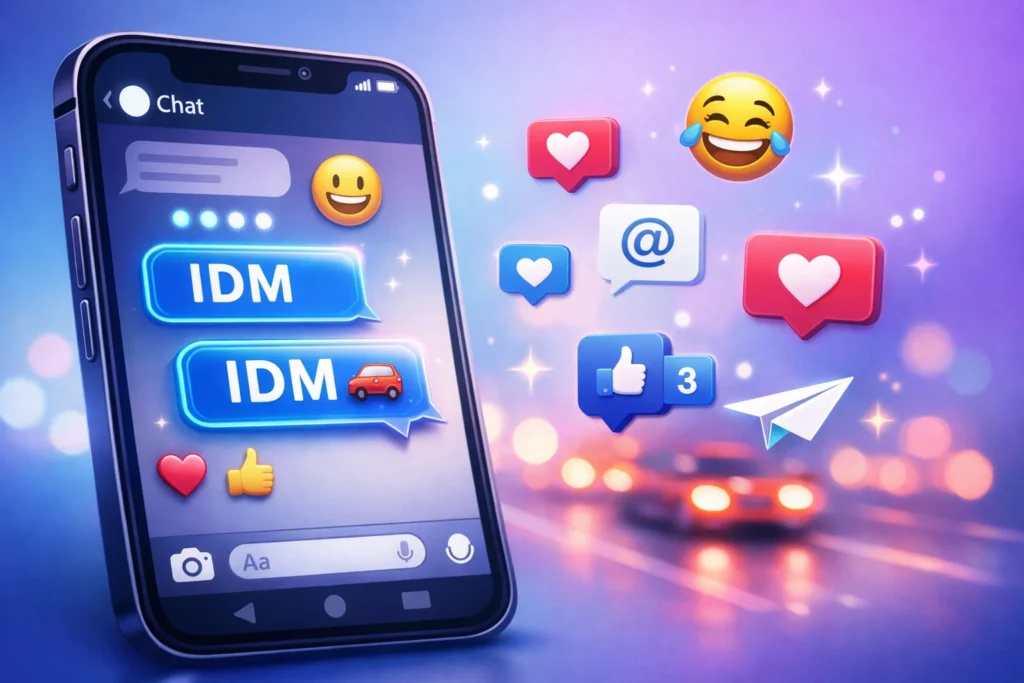
IDM in chat stands for “I Don’t Mind.” It is a casual abbreviation used in texting, social media, and online conversations to show that you are okay with something, flexible about a choice, or not strongly opinionated about a situation.
In simple terms, “IDM” = I Don’t Mind = I’m fine with it / I have no problem with it.
👉 It is commonly used in informal communication when someone wants to respond quickly and politely without going into detail.
Example:
- “Do you want pizza or burgers?”
- “IDM 🙂” (meaning: I’m okay with either)
Origin and Popularity of IDM
The abbreviation IDM emerged from early internet chatting culture, especially in SMS texting, MSN Messenger, and online forums where users preferred short forms to save time and characters.
Over time, it became popular due to:
- Fast-paced texting culture 📱
- Social media platforms like WhatsApp, Snapchat, and Instagram DMs
- Gaming chats where quick responses are important 🎮
Today, IDM is widely used among teens and young adults, especially in casual conversations where tone is relaxed and friendly.
How IDM is Used in Chat
IDM is used to express neutrality, agreement, or flexibility. It helps avoid long replies while still sounding polite.
Common Uses of IDM:
- Agreeing without preference
- Showing flexibility
- Responding casually
- Avoiding decision-making pressure
Examples in Real Conversations:
1. Making Plans
- A: “Movie or dinner tonight?”
- B: “IDM, you choose.”
2. Group Chat
- A: “Let’s meet at 5 or 6?”
- B: “IDM 👍”
3. Casual Decision
- A: “Tea or coffee?”
- B: “IDM, both are fine.”
IDM in Different Contexts
Although IDM usually means “I Don’t Mind,” its tone can slightly change depending on the context.
1. Friendly Conversations 🙂
Used to sound relaxed and easy-going:
- “IDM, I’m good with anything!”
2. Neutral Responses 😐
Used when someone has no strong opinion:
- “IDM. Whatever works for you.”
3. Slightly Dismissive Tone 😶
If used alone, it can sometimes feel less enthusiastic:
- “IDM.” (short and neutral, may feel cold in some cases)
Examples of IDM in Conversations
| Situation | Conversation | Meaning |
|---|---|---|
| Making plans | “Pizza or burgers?” – “IDM” | No preference |
| Time selection | “Meet at 4 or 5?” – “IDM” | Either is fine |
| Decision-making | “Which color do you like?” – “IDM” | No strong choice |
| Group chat | “We’re watching a movie tonight.” – “IDM 👍” | Okay with plan |
| Casual reply | “Do you care?” – “IDM” | Not concerned |
Tone and Interpretation of IDM
Even though IDM is simple, tone matters a lot in chat communication.
Positive Tone 😊
- Friendly and cooperative
- Shows flexibility
- Helps smooth conversations
Example:
- “IDM, you decide 😊”
Neutral Tone 😐
- No strong emotion
- Just informational
Example:
- “IDM.”
Negative or Dismissive Tone ⚠️
- Can feel uninterested if used abruptly
Example:
- “IDM.” (short reply in serious conversation may feel cold)
👉 Tip: Adding emojis or extra words makes IDM sound more friendly.
IDM vs Similar Chat Abbreviations
Many abbreviations in texting express similar ideas. Here’s how IDM compares:
| Abbreviation | Meaning | Usage Difference |
|---|---|---|
| IDM | I Don’t Mind | Neutral, flexible response |
| IDC | I Don’t Care | More negative or indifferent |
| IG | I Guess | Uncertain agreement |
| IMHO | In My Honest Opinion | Opinion-based statement |
| FWIW | For What It’s Worth | Suggestive opinion |
👉 Key takeaway:
IDM = polite neutrality
IDC = emotional indifference (can sound rude)
Alternate Meanings of IDM
While in chat IDM usually means “I Don’t Mind,” it can also have other meanings depending on context:
1. Internet Download Manager 💻
- A software used to download files faster from the internet
- Common in tech discussions
2. Intelligent Dance Music 🎧
- A genre of electronic music
- Used in music industry conversations
3. Identity Management (IT field)
- Related to cybersecurity and access control systems
👉 However, in texting and casual chat, “I Don’t Mind” is the most common meaning.
Polite Alternatives to IDM
Sometimes you may want to sound more expressive than just “IDM.” Here are better alternatives:
Friendly Alternatives:
- “I’m good with anything 😊”
- “Whatever you prefer!”
- “No problem at all”
- “I’m fine either way”
Slightly More Formal:
- “I don’t have a preference.”
- “That works for me.”
- “I’m flexible.”
👉 These alternatives are useful in work chats or formal messaging where abbreviations may feel too casual.
When NOT to Use IDM
Even though IDM is useful, there are times when it may not be appropriate:
Avoid IDM when:
- You are in formal or professional emails 📧
- The decision is important and needs clarity
- You want to express a strong opinion
- The conversation requires detailed feedback
Example (Not ideal):
- Manager: “Which strategy should we choose?”
- Reply: “IDM.”
👉 Better response:
- “I recommend the first option because…”
Why IDM is Popular in Modern Chat Culture
IDM remains widely used because:
- It saves time ⏱️
- It avoids conflict in decision-making
- It keeps conversations smooth
- It sounds polite and non-demanding
- It fits fast digital communication styles
In short, IDM helps people stay casual, flexible, and socially smooth in everyday texting.
FAQs
1. What does IDM mean in texting?
IDM means “I Don’t Mind,” used to show neutrality or flexibility.
2. Is IDM rude in chat?
No, IDM is usually polite, but short replies may feel neutral or slightly cold depending on tone.
3. What is IDM used for?
It is used when you don’t have a preference in a decision.
4. Does IDM mean I don’t care?
No, IDM is softer. “I don’t care” (IDC) can sound rude, but IDM is polite.
5. Can IDM be used in formal messages?
It is better to avoid IDM in formal or professional communication.
6. What is IDM in WhatsApp chat?
On WhatsApp, IDM means you are okay with any option or decision.
7. Is IDM slang or abbreviation?
Yes, IDM is a casual texting abbreviation used in online slang.
8. What should I reply instead of IDM?
You can say:
- “I’m fine with anything”
- “Your choice works for me”
- “No preference”
Conclusion
IDM in chat is a simple yet widely used abbreviation that means “I Don’t Mind.” It is commonly used in texting, social media, and online conversations to show flexibility and agreement without strong opinions.
While IDM is useful for quick replies, understanding its tone is important. In casual chats, it works perfectly, but in formal situations, it’s better to use clearer and more professional phrases.
Discover More Related Articles:
- 250+ Polite Responses to “Oh Wow”: Funny Conversation Starter for 2026
- 200+ Funny, and Cute Responses to “Oh My Gosh OMG” for 2026