
Definition
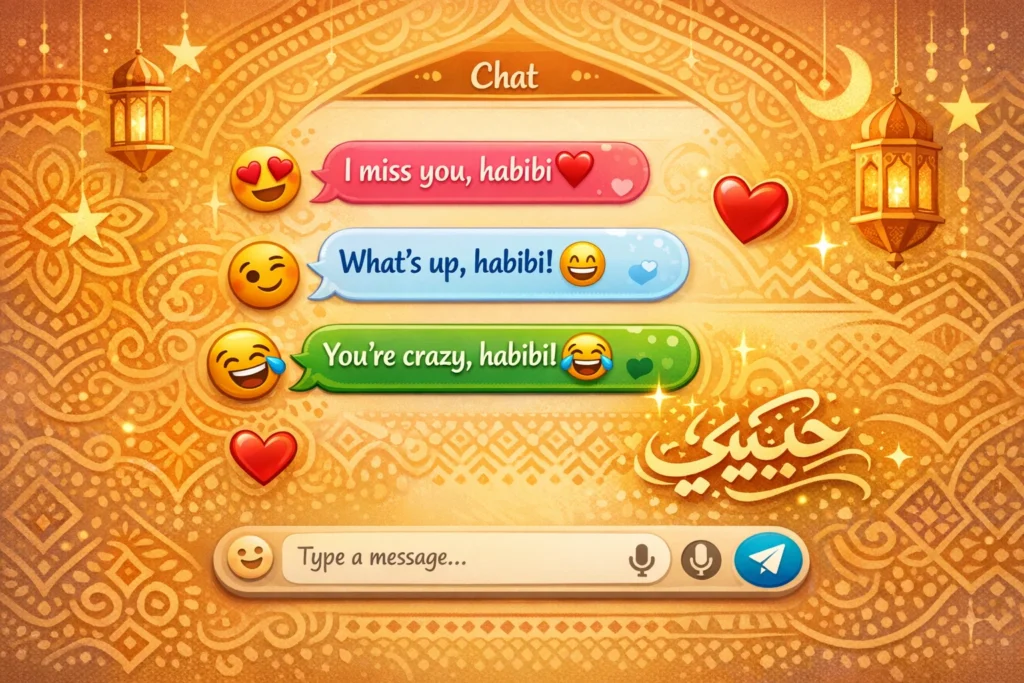
Habibi is an Arabic term of endearment that literally means “my love,” “my dear,” or “my darling.” In text messages and online chats, it is commonly used to show affection, friendliness, or emotional closeness.
If you’ve spent even a little time on social media, TikTok comments, or chatting with international friends, you’ve probably seen the word “habibi” pop up everywhere. Maybe someone called you “habibi 😌” in a text and you weren’t sure if it was romantic, friendly, or just slang.
That confusion is totally normal.
The phrase has gone viral far beyond its Arabic roots and is now used globally in memes, DMs, captions, and even casual conversations between people who don’t speak Arabic at all. But here’s the interesting part: the meaning of “habibi” can shift depending on who says it, how it’s said, and the relationship between the people talking.
In this guide, you’ll learn exactly what “habibi” means in text, where it comes from, how it’s used in real conversations, and how to respond when someone calls you that.
Origin of Habibi and Cultural Background
The word “habibi” comes from Arabic, one of the most widely spoken languages in the world.
It is derived from the root word “hubb,” which means love.
Key breakdown:
- Habibi (حبيبي) = “my beloved” (masculine form)
- Habibti (حبيبتي) = “my beloved” (feminine form)
Traditionally, it is used in Arabic-speaking countries like:
- Egypt
- Lebanon
- UAE
- Saudi Arabia
- Jordan
Over time, thanks to music, movies, and social media, the word became global slang.
Today, people use it even outside Arabic culture, especially in casual texting and internet humor.
What Does Habibi Mean in Text Messages
In texting, “habibi” is not always strictly romantic. Its meaning depends heavily on tone and context.
Common meanings in text:
- My love (romantic context ❤️)
- My friend (friendly tone 😊)
- Hey buddy / bro (casual slang 😎)
- Sweet or playful teasing (flirty vibe 😉)
So if someone texts you “habibi,” they could be:
- Showing affection
- Being playful
- Joking casually
- Or expressing closeness
It’s not a one-size-fits-all word.
Real-Life Usage Examples (With Context)
Friendly Usage
- “How are you doing, habibi?”
Meaning: A warm, friendly check-in message.
Romantic Usage
- “Good night, habibi ❤️”
Meaning: A loving or intimate message between partners.
Casual Internet Slang
- “Relax, habibi 😂 it’s not that serious.”
Meaning: Light teasing or joking tone.
Supportive Usage
- “Don’t worry, habibi, you got this.”
Meaning: Encouragement and emotional support.
Slightly Sarcastic Usage
- “Oh habibi, what did you do now?” 😏
Meaning: Playful criticism or teasing.
Tone Breakdown Table
| Context | Example | Meaning |
|---|---|---|
| Romantic | “I miss you, habibi ❤️” | Deep affection |
| Friendly | “See you later, habibi” | Casual friend vibe |
| Funny | “Calm down habibi 😂” | Light teasing |
| Supportive | “You’ll be okay, habibi” | Emotional comfort |
| Sarcastic | “Nice job, habibi 🙃” | Playful criticism |
Why “Habibi” Became So Popular Online
The word went viral for a few reasons:
1. Social Media Influence
TikTok, Instagram reels, and memes helped spread it globally.
2. Music and Pop Culture
Arabic songs often repeat “habibi,” making it catchy and memorable.
3. Easy Emotional Expression
People love short words that express emotion quickly.
4. Meme Culture
“Habibi come to Dubai” style jokes made it widely recognizable.
Now it’s used even by people who don’t speak Arabic at all.
When You Should and Shouldn’t Use Habibi
When It’s Okay:
- With close friends
- In playful conversations
- If the other person uses it first
- In casual online chats
When to Be Careful:
- Professional conversations
- Formal messages
- With people who might misunderstand it
- When tone could be misread as flirty
Habibi vs Similar Words
| Word | Meaning | Tone |
|---|---|---|
| Habibi | My dear / love | Warm, flexible |
| Bro | Friend / buddy | Casual |
| Babe | Romantic partner | Flirty |
| Dear | Polite affection | Formal/warm |
| Love | Strong affection | Romantic/friendly |
Key difference:
“Habibi” is more emotionally flexible than most English equivalents.
Alternate Meanings of Habibi
While the primary meaning is “my love,” in modern internet slang it can also imply:
- “Relax, friend”
- “Chill out, buddy”
- “You’re being dramatic 😄”
- “Don’t worry about it”
So it often acts more like a vibe than a literal translation.
How to Respond When Someone Says Habibi
Friendly Replies:
- “Heyyy 😄”
- “What’s up!”
- “Haha habibi right back at you”
Playful Replies:
- “Only if I’m your habibi too 😏”
- “Don’t start calling everyone that 😂”
Neutral Replies:
- “Hey, how are you?”
- “What’s going on?”
If You’re Confused:
- “Wait, what does habibi mean in your context?”
Polite or Professional Alternatives
If you want similar warmth without slang, you can use:
- “My friend”
- “Dear”
- “Take care”
- “Appreciate you”
- “All the best”
These are safer for formal communication.
FAQs
1. What does habibi mean in simple words?
It means “my love” or “my dear,” used to show affection or closeness.
2. Is habibi romantic or friendly?
It can be both, depending on context and relationship.
3. Can I call a friend habibi?
Yes, many people use it casually among friends.
4. Is habibi flirty in text?
It can be flirty if used with emojis or romantic tone.
5. What is the female version of habibi?
The female form is “habibti.”
6. Is habibi offensive?
No, it is generally positive and affectionate.
7. Why do people say habibi online?
Because it became a popular internet slang term and meme.
8. Can non-Arabs use habibi?
Yes, but it’s best used respectfully and in casual settings.
Conclusion
“Habibi” is more than just a word it’s a feeling wrapped in a simple expression. Whether it’s used in a friendly chat, a romantic message, or a funny meme, its meaning always depends on tone and context.
In texting, it can switch from “my love” to “bro” in seconds, which is exactly why it became so popular online. If you use it, just be mindful of the situation and relationship so your message feels natural and appropriate.
At the end of the day, “habibi” is all about connection, warmth, and expressing emotion in a simple, human way.
Discover More Related Articles: