

Definition
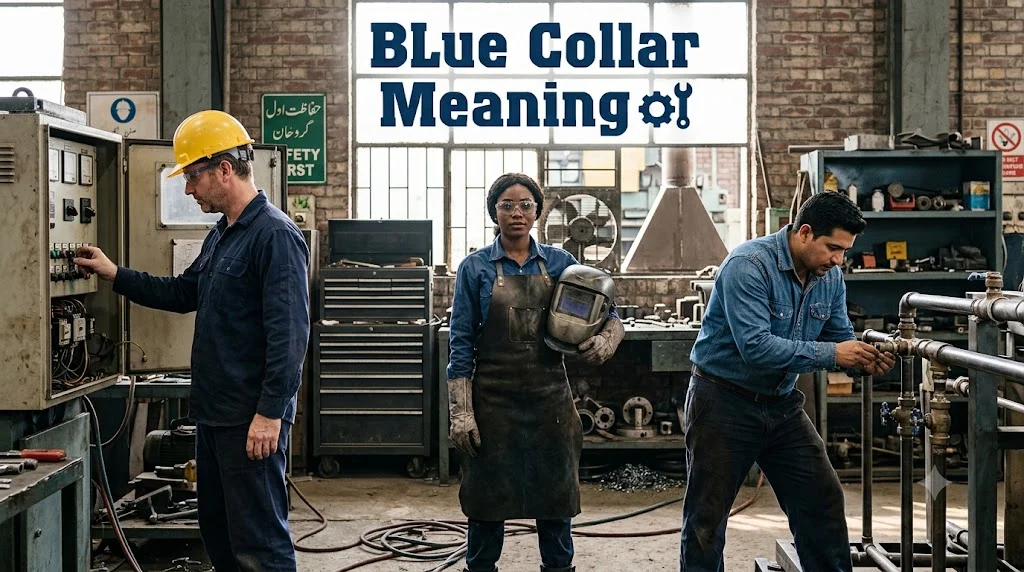
Blue collar meaning refers to workers who perform physical or skilled manual labor. They usually earn hourly wages instead of an annual salary. Their work happens with their hands, tools, machines, or equipment.
That’s the core blue collar definition.
You hear the term “blue collar” all the time. But what does it actually mean today?
Most people picture a construction worker or a factory line. That’s not wrong. But it’s also not the whole story.
Here’s the truth. Blue collar meaning has shifted over the years. It used to be about dirty hands and low status. Now it includes six figure salaries and high tech skills.
Let me explain what blue collar really means. You’ll get real examples. You’ll see how much these jobs pay. And you’ll understand why the old blue versus white collar battle doesn’t make sense anymore.
Blue Collar Meaning
Let’s skip the dictionary nonsense.
But here’s what most people miss. Many blue collar workers today need serious technical knowledge. An electrician reads complex diagrams. A CNC machinist writes code. A diesel mechanic uses diagnostic software.
So don’t confuse “manual” with “simple.” That mistake will cost you.
The name itself comes from a practical reason. Manual laborers wore durable blue fabrics like denim and chambray. Dark blue hid grease, dirt, and sweat better than white shirts. Office workers wore white dress shirts because they stayed clean all day.
One small clothing choice created a hundred years of class labels.
Real Examples of Blue Collar Jobs
You need concrete examples. A blue collar job meaning without examples is just hot air.
Here are common blue collar occupations across different industries.
| Job Title | Industry | Typical Training Path | Average Hourly Wage (US) |
|---|---|---|---|
| Electrician | Construction | Apprenticeship (4 5 years) | $30 $40 |
| Plumber | Residential & Commercial | Apprenticeship + license | $28 $38 |
| Welder | Manufacturing | Trade school (6 12 months) | $22 $32 |
| HVAC Technician | Industrial & Residential | Certification + field hours | $25 $35 |
| Heavy Equipment Operator | Mining & Transport | On the job + CDL | $24 $34 |
| Factory Assembler | Manufacturing | Short term training (2 4 weeks) | $17 $22 |
| Maintenance Mechanic | Warehousing & Facilities | Trade certificate | $26 $36 |
| Truck Driver | Logistics | CDL (4 8 weeks) | $24 $32 |
| Carpenter | Construction | Apprenticeship or trade school | $23 $31 |
| Line Installer | Utilities | Multi year apprenticeship | $35 $45 |
Notice something interesting. The highest paying roles often require the longest training. That’s not a coincidence.
Examples of blue collar jobs also include less obvious positions. A commercial diver. A wind turbine technician. A surgical instrument repair specialist. All blue collar work.
Blue Collar vs White Collar: The Real Differences
People love this comparison. But most get it wrong.
The simple version looks like this.
Blue collar workers typically:
- Work with their hands and tools
- Earn hourly wages or shift pay
- Clock in and out for overtime
- Wear uniforms or safety gear
- Report to a shop floor, job site, or plant
White collar workers typically:
- Work at desks with computers
- Earn annual salaries
- Have exempt status (no overtime pay)
- Wear business or business casual clothes
- Report to an office or work remotely
But here’s where it gets messy.
A surgeon stands for hours and uses physical skill. That’s manual labor. But we call them white collar because of education and pay structure. A construction project manager wears a hard hat on site but earns a salary and never touches a wrench. Is that blue or white?
The line blurs more every year.
Many blue collar vs white collar jobs now overlap. A factory technician monitors automated systems from a control room. That’s physical work. But they also use computers and data dashboards. Some call that “gray collar.” More on that in a moment.
Here’s what actually matters. Blue collar vs white collar pay gaps have narrowed in skilled trades. A master electrician in a major city earns $100,000 plus. That’s more than many teachers, social workers, and junior accountants.
So drop the old assumption that blue means poor. It doesn’t.
Other Collar Colors You Should Know
The world doesn’t split neatly into blue and white. Several other categories exist.
Pink collar describes service, care, and clerical roles. Think nurses, waitstaff, receptionists, daycare workers, and home health aides. These jobs often require emotional labor and people skills. Historically, they’ve been female dominated and underpaid.
Gray collar mixes manual and technical skills. Examples include IT support technicians, lab assistants, medical equipment repairers, and some engineering techs. These workers need hands on ability plus computer knowledge.
Green collar covers renewable energy and environmental jobs. Solar panel installers, wind turbine technicians, environmental remediation workers, and energy efficiency specialists. This sector is growing fast.
Gold collar refers to rare, highly specialized knowledge workers. Doctors, lawyers, scientists, and executives. These roles demand advanced degrees and offer high pay.
Why does this matter? Because calling someone “blue collar” doesn’t tell you their income, education, or social status anymore. The categories are leaking.
Is Blue Collar Still a Class Marker?
Yes and no.
Traditionally, blue collar class meaning tied directly to working class identity. Less formal education. Union membership. Hourly pay. Job site work. Limited upward mobility.
That picture still exists for some roles. But it’s no longer the full picture.
Consider this. A union elevator installer in New York City can earn $150,000 with benefits. That’s top 20 percent household income. Yet the job is unquestionably **blue collar work**. Meanwhile, a non profit administrator might earn $45,000 with a master’s degree. That’s white collar but lower income.
So which one has more class status? The answer isn’t simple.
Blue collar culture has also changed. Social media now celebrates skilled trades. YouTube channels dedicated to machining, welding, and woodworking have millions of subscribers. Young people see trades as viable careers, not fallback options.
That said, prejudice still exists. Parents still push four year degrees over apprenticeships. Schools still cut shop class budgets. Some people still look down on “getting your hands dirty.”
But that attitude is fading. Labor shortages in skilled trades are forcing a rethink.
Blue Collar Salary Reality: No Fluff Numbers
Let’s talk money. Real numbers. No vague claims.
The Bureau of Labor Statistics (BLS) tracks wages across hundreds of occupations. Here are actual median annual wages for common blue collar professions.
| Occupation | Median Annual Wage (2024) | Top 10 Percent Earners |
|---|---|---|
| Elevator Installer | $102,000 | $140,000+ |
| Electrical Power Line Tech | $85,000 | $115,000+ |
| Plumber | $62,000 | $100,000+ |
| Electrician | $61,000 | $99,000+ |
| HVAC Technician | $55,000 | $85,000+ |
| Welder | $48,000 | $70,000+ |
| Truck Driver | $52,000 | $80,000+ |
| Carpenter | $51,000 | $80,000+ |
| Factory Worker | $38,000 | $55,000+ |
| Construction Laborer | $40,000 | $65,000+ |
Notice the spread. Some blue collar jobs pay lower than fast food managers. Others pay more than accountants.
Here’s a key fact many miss. Blue collar salary figures often exclude overtime. Many tradespeople work 45 to 50 hours per week. Time and a half for those extra hours adds up fast.
Example: An electrician earns $30 per hour base. A 50 hour week means 40 hours at $30 ($1,200) plus 10 hours at $45 ($450). That’s $1,650 per week or $85,800 per year. And that’s before night shift differentials, holiday pay, or prevailing wage premiums on government jobs.
So when you see a median wage of $61,000 for electricians, remember that many earn significantly more.
The lowest paying blue collar jobs tend to be in food processing, janitorial services, and agricultural labor. Those roles often pay near minimum wage with limited benefits. That’s the reality. Not all blue collar work pays well. But the skilled end of the spectrum does.
How to Become a Blue Collar Worker Today
You don’t need a four year degree. But you absolutely need training.
Here are the three main paths into blue collar occupations.
Apprenticeships
Apprenticeships combine paid on the job training with classroom instruction. You earn while you learn. Most last three to five years. You graduate with a journeyman license and zero student debt.
Typical apprenticeship trades: electrician, plumber, carpenter, sheet metal worker, line installer, elevator constructor.
Wages start at 40 to 50 percent of journeyman rate. You get raises every six to twelve months as you gain hours.
Trade Schools and Vocational Programs
Trade schools offer focused training in six to twenty four months. You learn in a shop environment from experienced instructors. Costs range from $5,000 to $30,000. That’s far less than a bachelor’s degree.
Common trade school paths: welding, HVAC, diesel mechanics, medical equipment repair, commercial driving, machining.
Warning: Some for profit trade schools charge too much and deliver too little. Research programs carefully. Community colleges often offer cheaper, better options.
Direct Entry with Certification
Some blue collar jobs don’t require formal apprenticeships or trade school. You can start with a certification and learn the rest on the job.
Examples: truck driving (CDL license), forklift operator (OSHA certification), construction laborer (safety cards), industrial cleaning (hazardous waste cert).
These roles have lower barriers to entry. But they also tend to pay less and offer fewer advancement opportunities.
Union vs Non Union
Unions strongly influence many blue collar industries. The International Brotherhood of Electrical Workers (IBEW), United Association of Plumbers and Pipefitters (UA), and International Union of Operating Engineers (IUOE) run major apprenticeship programs.
Union blue collar workers typically earn higher wages, get better benefits, and have stronger job protection. But you pay dues and follow union rules.
Non union work offers more flexibility. You can switch employers easily. You might advance faster if you’re ambitious. But you lose collective bargaining power.
Neither choice is objectively better. It depends on your industry and location.
Common Myths About Blue Collar Work
Let me bust some persistent lies.
Myth 1: Blue Collar Means Unskilled
This one makes me laugh. Try diagnosing a bad control board on a commercial freezer. Or welding a pipe that carries natural gas. Or rebuilding a diesel engine with no service manual.
The term “unskilled labor” barely applies anymore. Most blue collar jobs require hundreds or thousands of hours of training. Even “entry level” construction work demands safety knowledge, tool proficiency, and physical competence.
The real difference isn’t skill. It’s the type of skill. Cognitive and social skills dominate white collar work. Technical and physical skills dominate blue collar work. Both require intelligence.
Myth 2: You’ll Destroy Your Body by 50
Some blue collar jobs are hard on the body. Roofing. Concrete finishing. Underground mining. Repetitive assembly line work. Those roles have high injury rates and physical tolls.
But many trades are much gentler. An HVAC technician carries tools and climbs ladders, but they’re not lifting hundred pound bags of cement all day. A CNC machinist stands at a control panel. A commercial electrician spends plenty of time on diagnosis and planning, not just pulling cable.
Smart workers also protect themselves. Knee pads. Back braces. Hearing protection. Stretching routines. Job rotation. Good employers enforce safety protocols.
Myth 3: No Career Growth
This is completely false.
Blue collar career path options include:
- Lead worker or crew supervisor
- Project manager or estimator
- Safety officer or compliance specialist
- Union representative or business agent
- Independent contractor or business owner
- Vocational instructor or apprenticeship coordinator
A plumber who starts their own company can earn $200,000 plus. An electrician who becomes a master electrician can pull permits and run large jobs. A welder who gets certified in underwater or nuclear welding commands premium rates.
There’s no ceiling. Just different ladders.
Myth 4: It’s Only for Men
Women make up a small but growing share of blue collar workers. According to the Department of Labor, women hold about 3 percent of construction trades jobs and 30 percent of manufacturing roles.
Those numbers are too low. But they’re rising.
Organizations like Women in Non Traditional Careers (WINC), Chicago Women in Trades, and Tradeswomen Inc. actively recruit and train female tradespeople. Many union apprenticeship programs prioritize women applicants to improve diversity.
The work itself doesn’t care about gender. Strength requirements have dropped with better tools and equipment. An electrician needs knowledge and precision, not brute force. A welder needs steady hands and good eyesight.
If you’re a woman interested in the trades, don’t let the old stereotype stop you. The pay is good. The demand is high. And the culture is slowly changing.
The Future of Blue Collar Work
Will robots take these jobs?
Let me give you an honest answer. Some will go away. Most will not.
Automation and AI
Factories have already automated repetitive assembly tasks. Welding robots exist. Automated palletizers exist. CNC machines run for hours without human input.
But here’s the limit. Automation struggles with variation and physical context.
A robot can weld the same joint on the same car door ten thousand times. That same robot cannot walk into an old house, figure out why the lights flicker, and replace the faulty breaker. The environment changes too much.
AI won’t fix your sink. AI won’t rewire a three way switch. Physical dexterity and on the fly problem solving remain very hard for machines.
The most automatable blue collar jobs are predictable, repetitive, and stationary. Think factory line work. The least automatable jobs involve repair, construction, maintenance, and field service. Those require mobility, diagnosis, and adaptation.
Labor Shortages
Here’s the real story. The skilled trades are facing a massive worker shortage.
Why? For twenty years, schools pushed every student toward four year degrees. Shop classes disappeared. Vocational programs got cut. Parents told kids that trades were for low achievers.
Now the average electrician is in their 40s. The average welder is even older. Thousands are retiring every year. And there aren’t enough young people replacing them.
That shortage creates leverage for blue collar workers. Employers compete for skilled tradespeople. Wages rise. Benefits improve. Signing bonuses appear.
The National Association of Home Builders reports that labor shortages are the single biggest constraint on housing construction. The American Welding Society predicts a shortage of 400,000 welders by 2028.
If you’re considering a blue collar career, the timing is excellent.
Growing Industries
Some blue collar industries are expanding faster than others.
High growth areas include:
- Renewable energy (solar and wind installation)
- Electric vehicle repair and charging station installation
- Medical equipment maintenance
- HVAC with energy efficiency focus
- Commercial refrigeration (groceries, cold storage)
- Data center cooling and electrical systems
These fields combine traditional blue collar work with modern technology. You still use your hands. But you also understand electronics, software, and system integration.
Wages and Benefits
Expect blue collar employment trends to push wages higher over the next decade. The supply of skilled workers isn’t keeping up with demand.
Look for more companies to offer:
- Tuition reimbursement for trade school
- Paid apprenticeship programs
- Four day work weeks
- Profit sharing and bonuses
- Better health and retirement benefits
Some employers already offer these. More will follow as competition heats up.
FAQs
Is a firefighter blue collar?
Yes. Firefighters perform physical labor, work shifts, wear uniforms, and often belong to unions. That fits the blue collar definition clearly.
Are nurses blue collar?
This one is debated. Nursing involves physical work (lifting patients, standing for hours). But it also requires advanced education and carries professional status.
Can blue collar workers work from home?
Rarely. The core of blue collar work requires physical presence. You can’t fix a furnace over Zoom. Some exceptions exist for estimators, dispatchers, and supervisors who might work remotely part time.
What’s the best blue collar job for pay and work life balance?
Elevator installers and power line technicians top the pay charts. But they often work overtime and respond to emergencies. HVAC and appliance repair offer better schedules with solid pay.
Do blue collar jobs require a degree?
No. Apprenticeships, trade schools, and certifications replace degrees completely. Some community college programs offer associate degrees in trades, but those are optional.
Are blue collar jobs safe?
Safety varies wildly by industry. Construction and mining have higher injury rates. Electrical work has shock risks. But modern safety regulations (OSHA), equipment, and training have dramatically reduced fatal injuries.
What’s the difference between blue collar and working class?
They overlap heavily but aren’t identical. Working class refers to socioeconomic position based on income, education, and job type. Blue collar refers to the nature of the work itself. Most blue collar workers are working class.
Conclusion
The term blue collar refers to workers who typically perform skilled or manual labor in industries such as construction, manufacturing, transportation, maintenance, and trade professions. These jobs are essential to keeping communities, businesses, and economies running smoothly.
Today, blue-collar work includes a wide range of careers that often require specialized training, certifications, or hands-on experience rather than a traditional four-year college degree. Understanding the meaning of blue collar helps recognize the value, expertise, and contribution of workers who build, repair, produce, and maintain the world around us every day.
Discover More Related Articles:
- Unhinged Meaning | Psychology & Everyday Language In 2026
- AWOL Mean | When Someone Disappears Without Notice In 2026