
Definition
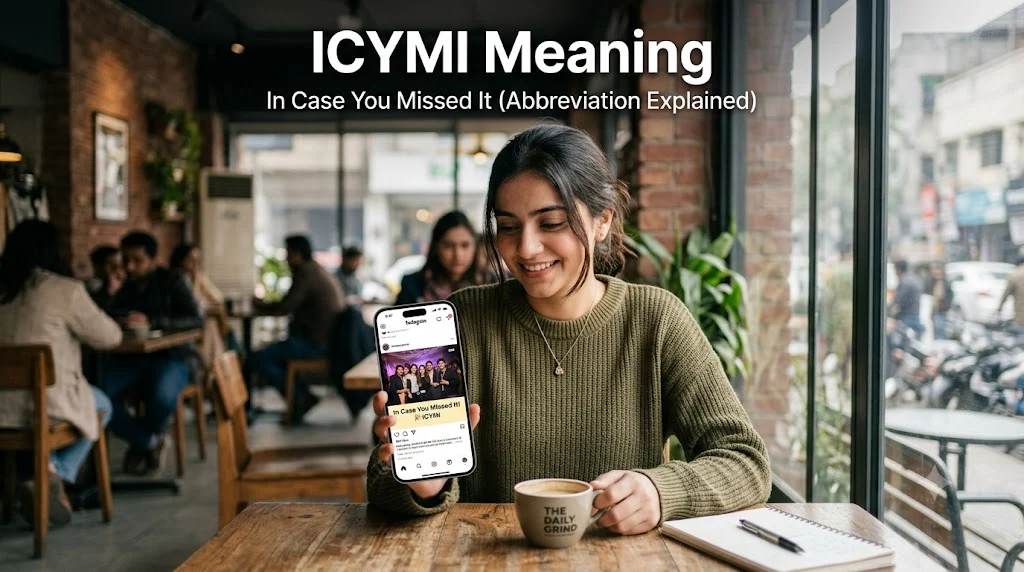
ICYMI stands for “In Case You Missed It.”
If you ever hear someone pronounce it out loud, it sounds like: “eye-see-why-em-eye.” Most people, though, just read it silently as the full phrase “in case you missed it.”
You’re scrolling through Instagram when you spot it in a caption: “ICYMI we dropped something huge last night.” Or maybe a coworker slips it into an email subject line and you sit there for a second thinking, wait, what does that even mean?
Don’t worry. You’re not alone. ICYMI is one of those internet acronyms that feels like it’s everywhere once you notice it and yet a surprising number of people still aren’t 100% sure what it means or when to use it.
This guide covers everything. The ICYMI definition, its origin story, how it’s used across every major platform, when it works brilliantly, when it falls flat, and why marketers are obsessed with it. By the end, you’ll know this acronym inside out.
Let’s get into it.
What Does ICYMI Mean? The Simple ICYMI
That’s it. Four words. Five letters. One extremely useful phrase.
You use it when you want to draw someone’s attention to something that already happened or was already shared giving them a second shot at catching it. Think of it as a polite tap on the shoulder. “Hey, this existed. You might’ve scrolled past it. Here it is again.”
Breaking Down the ICYMI Full Form Letter by Letter
| Letter | Stands For |
|---|---|
| I | In |
| C | Case |
| Y | You |
| M | Missed |
| I | It |
Simple, right? But here’s the thing those five letters carry a very specific tone. ICYMI isn’t urgent. It doesn’t demand your attention the way “BREAKING” or “URGENT” does. It’s more like a friendly heads-up. Casual. Conversational. Low pressure.
The Feeling Behind ICYMI
The acronym implies a few things at once:
- “This is worth your time.” You’re not just resharing for the sake of it. There’s something valuable here.
- “No pressure.” You’re not guilt-tripping someone for missing it.
- “The world moves fast.” It acknowledges that feeds are noisy and people can’t catch everything.
That combination of helpfulness and low stakes is exactly why ICYMI caught on so fast and stayed relevant for so long.
The Origin and History of ICYMI
Where Did ICYMI Come From?
ICYMI didn’t show up overnight. It grew organically out of the early social media era, specifically the chaotic, fast-moving world of Twitter around 2010 to 2012.
Back then, Twitter’s reverse-chronological feed meant that anything you posted could disappear into the void within hours. Journalists, bloggers, and early content creators needed a way to resurface their work without sounding like they were begging for clicks. Prefacing a retweet or a link with “ICYMI” felt natural. It acknowledged the pace of the internet and gave readers permission to engage without feeling like they’d missed a memo.
By 2013 to 2015, the phrase had crossed over from Twitter power users into mainstream digital culture. Email newsletters started using it in subject lines. Facebook pages worked it into their recap posts. It was officially a thing.
When Did It Hit the Dictionary?
Merriam-Webster officially added ICYMI to its dictionary as part of a broader update recognizing internet slang as legitimate language. This was a turning point it signaled that ICYMI wasn’t just niche Twitter jargon anymore. It was standard English in the digital age.
Other major slang databases, including Dictionary.com and Urban Dictionary (which had tracked it even earlier), confirmed the definition: “in case you missed it used especially on social media to introduce or draw attention to a previously posted item.”
ICYMI in the Context of Internet Language History
ICYMI didn’t emerge in isolation. It was part of a massive wave of internet shorthand that exploded alongside social media’s rise. Acronyms like FYI, LOL, BRB, and IDK had already paved the way. ICYMI was just the next evolution one specifically designed for the content-sharing, attention-economy era of the internet.
What made it different from older acronyms is its editorial purpose. Most internet slang expresses emotion or replaces common phrases. ICYMI, on the other hand, serves a functional communication and content strategy role. That’s what made it stick in professional contexts too.
The phrase “in case you missed it” itself predates the internet by decades. People said it in conversation and used it in print journalism long before anyone thought to shrink it into five letters. What the internet did was compress it into shorthand and give it a specific, recognizable function in the digital content ecosystem.
Think about it this way: the telegraph era gave us “ETA.” The corporate memo era gave us “FYI.” The social media era gave us “ICYMI.” Every communication shift creates its own vocabulary and ICYMI is a direct product of the feed-based, algorithm-driven internet we all live in now.
How ICYMI Is Used Across Every Major Platform
Here’s where it gets interesting. ICYMI doesn’t look exactly the same everywhere. Its tone shifts depending on the platform and knowing those nuances makes you a smarter communicator.
ICYMI on X
Twitter, now X, is basically where ICYMI was born. It remains one of the most natural homes for the acronym.
Journalists use it constantly to reshare reporting that broke hours or days earlier. Creators use it to loop in new followers on older threads. Brands use it to extend the reach of announcements that got buried in fast-moving timelines.
Common Twitter/X usage patterns:
- “ICYMI here’s the full thread on why this policy matters”
- “ICYMI: the interview we posted Tuesday has now been viewed 2M times”
- “We dropped our biggest announcement of the year on Monday. ICYMI, here’s a recap.”
One distinctive Twitter behavior: using ICYMI at the start of a tweet feels natural because it mirrors how people talk when forwarding an email. Short, to the point, slightly self-aware.
ICYMI on Instagram
Instagram’s algorithm means even your most loyal followers might not see everything you post. That’s exactly the gap ICYMI fills on this platform.
Influencers use it in captions to redirect followers to a recent Reel or an older post that’s performing well again. Brands use it in Stories and feed captions alike. It works especially well in conjunction with a link in bio update.
Example Instagram usages:
- “ICYMI we released our holiday collection two days ago and it’s almost sold out 👀”
- “ICYMI: I shared my full morning routine in last week’s Reel. Still getting so many questions about it, so here’s the link again!”
The exclamation points, emojis, and casual language all fit ICYMI’s friendly energy perfectly on Instagram.
ICYMI on Facebook
Facebook usage skews slightly older and more editorial. You’ll see ICYMI in brand page posts, news organization recaps, and community group announcements more than in personal posts between friends.
Facebook brands typically use it like this:
- Weekly recap posts: “ICYMI this week on our page here’s everything we shared”
- Article reshares: “ICYMI: Our piece on [topic] from Thursday got a lot of attention. Read it here.”
- Event reminders: “ICYMI registration for our webinar closes tonight.”
The tone stays helpful and non-pushy, which aligns with how Facebook audiences tend to prefer communication from brands.
ICYMI on TikTok
TikTok brought ICYMI into short-form video culture in a new way. Creators often overlay the text “ICYMI” at the start of a video that references a previous clip essentially stitching context across multiple pieces of content.
You’ll also see it in comment sections and video captions when someone is responding to a trend that started days or weeks earlier. TikTok’s “For You Page” algorithm is unpredictable enough that ICYMI serves as a genuine catch-up tool, not just a stylistic choice.
TikTok-specific patterns:
- Text overlay: “ICYMI Part 2 → watch Part 1 first”
- Caption: “ICYMI this went viral last week and people are still asking questions”
- Duet or stitch context: “ICYMI the original video before I respond”
ICYMI on LinkedIn
LinkedIn is where ICYMI gets its most professional outfit. The platform’s audience of professionals, executives, and job seekers means the acronym shows up in thought leadership posts, newsletter roundups, and article reposts rather than memes or casual banter.
LinkedIn usage examples:
- “ICYMI I published a piece last week on the future of remote work. It’s generated some great discussion in the comments.”
- “ICYMI: Our team’s research report on AI adoption dropped on Tuesday. 12 pages of data you’ll actually want to read.”
- “I shared this post six months ago. ICYMI it’s even more relevant today.”
On LinkedIn, ICYMI signals self-awareness without arrogance. It says: “I know you’re busy. Here’s something worth two minutes of your time.” That’s a message that lands well with a professional crowd.
One interesting LinkedIn-specific behavior: users often pair ICYMI with a short summary of why the older content is newly relevant. For example, tying an old post about inflation to a recent economic announcement. That context-layering makes the reshare feel earned rather than lazy. It’s the difference between recycling and remixing.
LinkedIn’s algorithm also favors posts that generate comments in the first hour. ICYMI posts, because they resurface proven content, often earn faster engagement than brand-new material which means they can actually outperform original posts on reach.
ICYMI in Email Newsletters
This might be where ICYMI does its most consistent, reliable work. Email newsletters have adopted the phrase as a subject line staple, and for good reason it works.
Major media brands including Morning Brew, The Hustle, The Skimm, and dozens of others use ICYMI sections as a regular newsletter feature. It’s a low-effort way to surface older content to subscribers who joined after that content was originally sent.
Newsletter subject line examples:
- “ICYMI: This week’s top five reads”
- “Don’t miss these ICYMI edition”
- “ICYMI: The story everyone was talking about on Tuesday”
Email marketers have found that ICYMI subject lines perform well because they create curiosity without creating pressure. The reader thinks, “Oh, did I miss something good?” and opens the email to find out.
Beyond subject lines, many newsletters have built dedicated ICYMI sections into their recurring format. These sections typically appear near the end of the newsletter after the main content as a brief roundup of two to five older pieces worth revisiting. For new subscribers especially, this section functions as an introduction to the newsletter’s back catalog.
Some newsletters have found that ICYMI sections receive higher click-through rates than the main editorial content in certain issues. The reason is simple: the content has already been proven. It performed well the first time. Resurfacing it to a fresh audience or at a relevant moment is just smart editorial timing.
ICYMI in Text Messages and DMs
At the most casual end of the spectrum, ICYMI lives in everyday texting and direct messaging. Between friends, it often carries a slightly different energy sometimes gossipy, sometimes excited, occasionally sarcastic.
Texting ICYMI examples:
- “ICYMI she literally posted about it last night 😭”
- “ICYMI they announced the tour dates this morning, tickets go on sale at noon”
- “ICYMI your ex just got engaged lol”
- “ICYMI the meeting got moved to Thursday”
In text conversations, ICYMI often replaces the longer phrase “just so you know” or “did you see that.” It’s faster to type and carries a slightly more dramatic implication like whatever follows is genuinely something you shouldn’t have missed.
Real-World ICYMI Usage Examples
Sometimes the best way to understand a phrase is to see it in action across multiple real-life situations. Here are 15 example sentences showing exactly how ICYMI gets used:
| Context | Example Sentence |
|---|---|
| Social media caption | “ICYMI our biggest sale of the year ends tonight at midnight.” |
| Text to a friend | “ICYMI she posted a whole story about it last night.” |
| Email subject line | “ICYMI: Everything that happened in tech this week” |
| News recap | “ICYMI: Here’s everything from the summit you need to know.” |
| Group chat | “ICYMI they moved the party to Saturday not Friday.” |
| Marketing post | “ICYMI we launched our new app on Tuesday and it already has 10k downloads.” |
| LinkedIn article | “ICYMI I published a deep dive on content strategy last week.” |
| TikTok caption | “ICYMI this video got 4M views last week and people are still asking questions.” |
| Newsletter section header | “ICYMI: Our five most-read stories this month” |
| Brand Instagram Story | “ICYMI — we announced our collab yesterday. Tap to see it.” |
| Customer email | “ICYMI: Your order shipped and is arriving tomorrow.” |
| Twitter thread | “ICYMI: The full breakdown is in the thread below. Worth a read.” |
| Professional Slack message | “ICYMI the deadline moved up to Friday, heads up everyone.” |
| Podcast description | “ICYMI our most downloaded episode is linked in the bio.” |
| YouTube community post | “ICYMI last week’s video on budgeting just hit 1M views!” |
ICYMI Tone and Context: When to Use It and When to Skip It
Knowing the ICYMI meaning is one thing. Knowing when it actually works and when it doesn’t is what separates a sharp communicator from someone who just learned a new acronym.
When ICYMI Works Brilliantly
Resharing time-sensitive content. If an announcement, product launch, or piece of news went live 24 to 72 hours ago, ICYMI is your friend. The window is long enough that people might’ve missed it but short enough that it’s still relevant.
Newsletter recaps. Weekly or monthly roundups practically beg for ICYMI. It sets the expectation perfectly: here’s a collection of things worth catching up on.
Reaching new followers or subscribers. If your audience has grown recently, ICYMI lets you resurface older content for the people who weren’t around when you first shared it.
Evergreen content reminders. Something you published six months ago that’s still useful? ICYMI gives you a natural, non-awkward reason to share it again.
Event recaps. You hosted a webinar, live stream, or conference. ICYMI anchors the recap post perfectly.
When ICYMI Misses the Mark
Brand new content. If you’re posting something for the first time, ICYMI doesn’t apply. By definition, there’s nothing to have missed yet. Using it on fresh content is a contradiction and it confuses your audience.
Formal documents and official communications. Legal notices, academic papers, formal business proposals ICYMI doesn’t belong anywhere near them. It’s casual by nature and clashes with formal registers.
Overuse kills the impact. If every single post starts with ICYMI, the phrase loses its meaning entirely. It becomes background noise. Use it strategically, not habitually.
Sensitive or serious topics. There’s something tonally off about leading with ICYMI on genuinely heavy content. “ICYMI: here’s the tragedy that happened yesterday” reads as flippant. Context always matters.
The Formal-to-Casual Spectrum of ICYMI
Most Formal ←——————————————————→ Most Casual
LinkedIn post | Email newsletter | Facebook | Twitter | Instagram | TikTok | Texting
The further right you go, the more playful and personality-driven your ICYMI usage can be. The further left, the more straightforward and value-focused it should stay.
ICYMI vs. Other Popular Internet Acronyms
ICYMI is part of a large family of internet shorthand. Understanding how it relates to other common acronyms helps you use the right one in the right situation.
| Acronym | Full Form | Best Used For | Tone |
|---|---|---|---|
| ICYMI | In Case You Missed It | Resurfacing old content or news | Casual, helpful |
| FYI | For Your Information | Sharing new info proactively | Neutral, slightly formal |
| TBH | To Be Honest | Expressing a candid opinion | Casual, direct |
| IMO | In My Opinion | Sharing a personal take | Conversational |
| IMHO | In My Humble Opinion | Same as IMO, slightly softer | Modest, casual |
| SMH | Shaking My Head | Expressing disbelief or disappointment | Sarcastic, expressive |
| IDK | I Don’t Know | Expressing uncertainty | Casual, informal |
| BRB | Be Right Back | Signaling a short absence | Very casual |
| IRL | In Real Life | Contrasting digital vs physical | Neutral |
| TMI | Too Much Information | Flagging oversharing | Playful, sometimes awkward |
| AFAIK | As Far As I Know | Qualifying uncertain information | Careful, conversational |
ICYMI vs. FYI: What’s the Actual Difference?
People mix these two up surprisingly often. Here’s the clean distinction:
FYI is forward-looking. You’re sharing something new, something the person hasn’t encountered yet. “FYI the meeting moved to 3pm.”
ICYMI is backward-looking. You’re referencing something that already happened or was already shared. “ICYMI the meeting recap is in the shared folder.”
One introduces. The other resurfaces. Simple as that.
The Psychology Behind Why ICYMI Works So Well
There’s a reason this five-letter acronym has lasted over a decade in the wild world of internet slang. It’s not just convenient. It taps into something real about how humans process information, attention, and social belonging.
It Acknowledges the Chaos of Modern Information
Nobody can keep up with everything. The average person in 2024 spent roughly six and a half hours per day consuming digital media, according to data aggregated by DataReportal. Millions of posts, articles, videos, and messages compete for attention every single hour. ICYMI doesn’t pretend otherwise. It says, implicitly: “Hey, the world is loud. You probably didn’t see this. That’s okay.”
That acknowledgment is surprisingly powerful. Instead of demanding attention, it offers a second chance. That’s a much softer ask and people respond to soft asks more warmly than to urgent ones.
It Triggers Mild FOMO Without Being Manipulative
FOMO fear of missing out is one of the most studied psychological drivers in social media behavior. Brands exploit it constantly, often in heavy-handed ways: “Last chance!”, “Only 2 left!”, “Everyone’s talking about this!”
ICYMI activates a gentler version of the same feeling. When you see it, your brain registers: “Something happened. Other people probably know about it. Do I?” That’s a light FOMO nudge just enough to spark curiosity, not enough to feel manipulative. That’s a delicate balance, and ICYMI hits it almost perfectly.
It Signals Curation, Not Desperation
There’s a big psychological difference between a brand that constantly shouts “LOOK AT THIS” and one that occasionally says “in case you missed it.” The second version implies that the person doing the sharing has standards. They’re not resharing everything just the stuff that actually deserves a second look.
That curatorial signal matters. It builds trust. When ICYMI is used thoughtfully and selectively, it positions the sender as someone who respects your time and attention. Used carelessly or constantly, it loses that quality entirely.
Social Proof Embedded in the Phrase
“In case you missed it” implies that others have already seen it. There’s a crowd somewhere that caught this when it first happened. You’re joining them now, a little late, but you’re joining them. That’s a subtle social proof mechanism the idea that this thing exists in a shared social context, not just as a broadcast message.
It’s the digital equivalent of a friend leaning over and saying, “Did you hear about this? Everyone’s been talking about it.” That framing makes the content feel more significant than a cold link drop ever could.
ICYMI in Marketing and Content Strategy
Ask any digital marketer about ICYMI and you’ll get an immediate nod of recognition. This acronym has quietly become one of the most effective content recycling tools in the industry.
Why Marketers Love ICYMI
Content creation takes enormous time and resources. A blog post, video, or campaign that only gets one round of exposure represents an inefficient use of that investment. ICYMI gives marketers a culturally natural, audience-friendly way to get more mileage out of content without it feeling like desperate recycling.
It also respects the audience’s intelligence. Rather than pretending something is brand new when it isn’t, ICYMI is transparent: “This already exists. You might’ve missed it. Here it is.” Audiences appreciate that honesty, especially in an era when people are increasingly cynical about brand communication.
Proven Marketing Applications of ICYMI
Email marketing:
A/B tests run by email platforms including Mailchimp and Campaign Monitor have consistently shown that subject lines with ICYMI perform above average for open rates, particularly for re-engagement campaigns. The phrase triggers mild FOMO (fear of missing out) without being manipulative.
Social media content calendars:
Smart content calenders include a dedicated “ICYMI slot” typically a Friday or Sunday post where a team resurfaces the best-performing content from that week or the previous month. This is standard practice at media companies, SaaS brands, and creator-led businesses.
Product launch follow-ups:
A product drops on Monday. By Wednesday, new visitors to your page haven’t seen the announcement. ICYMI bridges that gap in a natural, non-salesy way.
Newsletter growth:
When new subscribers join a mailing list, a welcome sequence that includes ICYMI emails featuring the most valuable older newsletters dramatically improves early engagement. It’s onboarding through content.
Best Practices for Using ICYMI in Marketing
- Pair it with a value statement. Don’t just say ICYMI and drop a link. Tell the reader why they should care. “ICYMI: Our guide to doubling email open rates still our most-shared post of the year.”
- Time it right. 24 to 72 hours after original publish is the sweet spot for social. For newsletters, a week or a month out works well.
- Don’t overdo it. If your entire social presence is ICYMI posts, something is wrong with your original content strategy.
- Track performance. ICYMI posts and emails are trackable. If they consistently outperform original content, that’s useful data about what your audience actually values.
Is ICYMI Still Relevant in 2025?
Short answer: absolutely yes.
Here’s why the acronym hasn’t aged out like some internet slang tends to. Content overload isn’t getting better it’s getting worse. The average person now encounters thousands of pieces of content every single day. Social media algorithms are less chronological than ever, meaning even people who follow you closely might miss 70 to 80 percent of what you post.
ICYMI solves a real problem. It’s not just slang for slang’s sake. It serves a genuine communicative and strategic function. That’s why it’s crossed from casual texting into professional newsletters, brand marketing, and journalism without losing its relevance.
Compare it to something like “on fleek” a phrase that had a very specific cultural moment and then faded fast. ICYMI has no such expiration date because the problem it solves (people missing content in a noisy digital world) isn’t going anywhere.
A few data points that tell the story:
- Newsletter usage of “ICYMI” as a subject line or section header grew significantly between 2018 and 2024 according to email marketing platform reports.
- LinkedIn posts that include ICYMI in the opening line tend to generate higher comment engagement because the phrase signals something worth pausing for.
- TikTok creators regularly use ICYMI to bridge episodic content, making it an organic part of series-style storytelling.
The acronym has, in essence, been institutionalized. It’s no longer just slang. It’s standard digital language.
A Quick Reference Glossary of Related Internet Acronyms
If ICYMI is new to you, chances are a few of its close relatives are too. Here’s a handy reference guide for the most common internet acronyms you’ll encounter in texting, social media, and online chat:
| Acronym | Full Form | Example Usage |
|---|---|---|
| ICYMI | In Case You Missed It | “ICYMI — the results were posted this morning.” |
| FYI | For Your Information | “FYI the office is closed on Friday.” |
| TBH | To Be Honest | “TBH I didn’t expect it to work that well.” |
| IMO | In My Opinion | “IMO this is the best approach.” |
| IMHO | In My Humble Opinion | “IMHO they made the wrong call.” |
| SMH | Shaking My Head | “SMH this happens every time.” |
| IDK | I Don’t Know | “IDK what they were thinking.” |
| BRB | Be Right Back | “BRB grabbing coffee.” |
| IRL | In Real Life | “We actually met IRL last month.” |
| TMI | Too Much Information | “Okay that’s TMI honestly.” |
| AFAIK | As Far As I Know | “AFAIK the event is still happening.” |
| NGL | Not Gonna Lie | “NGL that was impressive.” |
| TBF | To Be Fair | “TBF they did warn us.” |
| IMY | I Miss You | “IMY, when are you back?” |
| HMU | Hit Me Up | “HMU when you’re free.” |
FAQs
What does ICYMI mean in texting?
In texting, ICYMI means “In Case You Missed It.” People use it to share something that already happened a piece of news, a social media post, or an announcement with someone who may not have seen it yet.
What does ICYMI stand for?
ICYMI stands for In Case You Missed It. Each letter represents one word in the phrase.
How do you use ICYMI in a sentence?
You put ICYMI at the beginning of a message or post, followed by the information or content you’re resurfacing. For example: “ICYMI the final scores from last night’s game are in.”
Is ICYMI formal or informal?
ICYMI is primarily informal and casual. It fits perfectly in texting, social media captions, and newsletters. On more professional platforms like LinkedIn, it’s acceptable but should be used with context and clear value.
When did ICYMI become popular?
ICYMI gained traction around 2010 to 2012 on Twitter, primarily among journalists and early content creators. It went mainstream between 2013 and 2015 and has been a consistent part of digital communication ever since.
Can you use ICYMI in a professional email?
Yes, with caveats. ICYMI works well in marketing emails, newsletters, and casual internal Slack or team messages. But avoid it in formal business correspondence, official company communications, or any email where you need to project authority and professionalism.
What’s the difference between ICYMI and FYI?
FYI shares new information the recipient hasn’t encountered yet. ICYMI resurfaces something that already exists. FYI = introducing. ICYMI = reminding.
Is ICYMI used on all social media platforms?
Yes, though the tone and frequency vary by platform. It’s most native to X (Twitter), where it originated. It’s also heavily used on Instagram, LinkedIn, Facebook, TikTok, and in email newsletters.
Conclusion:
Let’s bring it all together.
ICYMI means “In Case You Missed It.” It’s a five-letter internet acronym that does a surprisingly powerful job: it resurfaces content, shares missed updates, and gives both individuals and brands a friendly, low-pressure way to say “hey, this existed and it’s worth your time.”
It was born on Twitter around 2010. It spread into journalism, content marketing, and everyday texting. It’s now on every major platform X, Instagram, Facebook, TikTok, LinkedIn and it holds down a permanent spot in email newsletter subject lines worldwide.
What makes ICYMI genuinely useful isn’t just the convenience of shorthand. It’s the tone it carries: helpful, casual, self-aware, and respectful of the reader’s time. In a world drowning in content, that combination matters more than most people realize.
Whether you’re a creator looking to extend the life of your best posts, a marketer building a smarter content calendar, or just someone who wants to decode what their group chat is saying you’ve now got the full picture.
And the next time you see ICYMI pop up in a caption or a text message, you’ll know exactly what it means, exactly why it’s there, and whether you want to use it yourself. That’s the whole point not just knowing what it stands for, but understanding what makes it work.
Discover More Related Articles:
- Unhinged Meaning | Psychology & Everyday Language In 2026
- AWOL Mean | When Someone Disappears Without Notice In 2026