
Definition
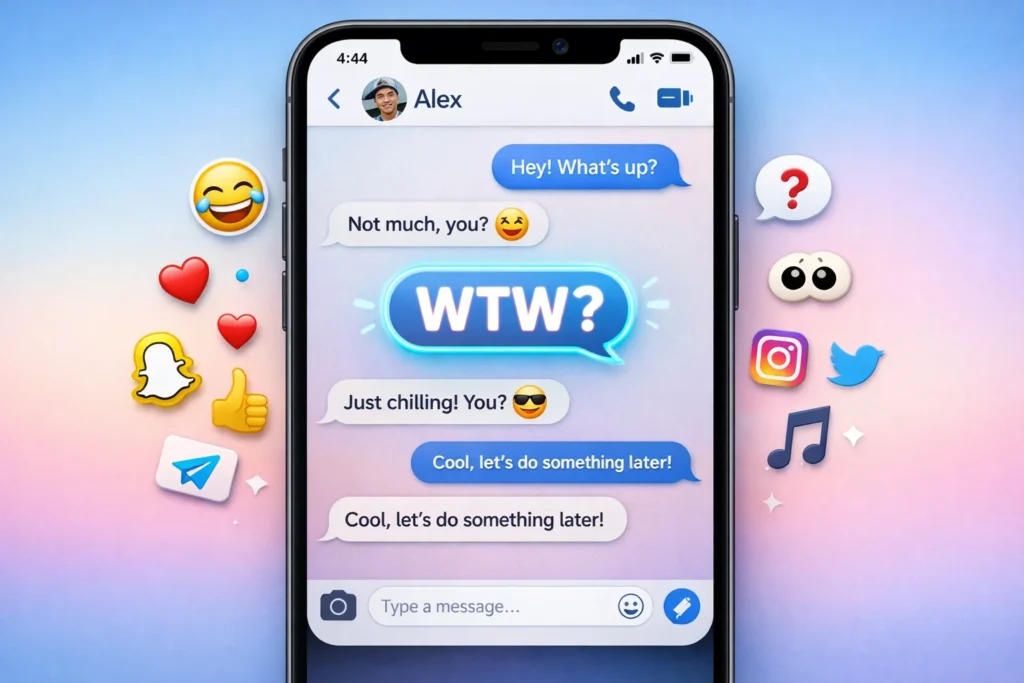
WTW stands for “What’s the Word?” in text messaging and online chat. It’s a casual way of asking “What’s going on?”, “What’s the plan?”, or “What are you up to?” depending on the context.
If you’ve spent any time texting, scrolling through social media, or chatting in online groups, chances are you’ve seen “WTW” pop up. It’s short, quick, and surprisingly flexible—exactly what modern communication thrives on.
But here’s the catch: WTW doesn’t always mean the same thing. Depending on tone, context, and even punctuation, it can signal anything from casual curiosity to making plans—or even a slightly impatient nudge.
This guide breaks down everything you need to know about what WTW means in text, how to use it naturally, and when to avoid it altogether.
What Does WTW Mean in Text?
At its core, WTW = “What’s the Word?”
It’s commonly used to:
- Ask what someone is doing
- Check if there are any plans
- Start a conversation casually
- See if someone wants to hang out
Simple Meaning Breakdown
| Acronym | Full Form | Meaning in Context |
|---|---|---|
| WTW | What’s the Word | What’s up? / What’s happening? |
Origin and Popularity of WTW
Where Did “WTW” Come From?
The phrase “What’s the word?” has been around for decades, originally used in spoken English as a way to ask for updates or news.
With the rise of texting and social media:
- The phrase got shortened to WTW
- It became popular in youth slang and online culture
- Platforms like Instagram, Snapchat, and WhatsApp boosted its use
Why It Became Popular
WTW fits perfectly into modern communication because it is:
- Short and fast ⏱️
- Casual and friendly 😊
- Flexible in meaning 🔄
In a world where people prefer quick replies, WTW is an easy go-to phrase.
How WTW Is Used in Real Life
WTW is highly context-based. Here are the most common ways people use it:
1. Asking What Someone Is Doing
“WTW tonight?”
Meaning: What are you doing tonight?
2. Making Plans
“WTW this weekend?”
Meaning: Any plans? Want to hang out?
3. Starting a Conversation
“Hey, WTW?”
Meaning: What’s up?
4. Checking the Vibe
“WTW with you lately?”
Meaning: What’s going on in your life?
Tone Matters: Friendly vs Neutral vs Dismissive
Just like many texting abbreviations, tone depends on context and punctuation.
Friendly Tone 😊
- “WTW bro?”
- “WTW tonight 😄”
👉 Feels casual and inviting
Neutral Tone 😐
- “WTW”
- “WTW?”
👉 Simple, no strong emotion
Slightly Dismissive or Lazy Tone 😶
- “wtw”
- “wtw…?”
👉 Can feel low-effort or uninterested if overused
Real-Life Examples of WTW in Text Conversations
Casual Chat
- A: “Hey”
- B: “WTW?”
👉 Meaning: What’s up?
Planning to Hang Out
- A: “WTW tonight?”
- B: “Nothing much, you?”
👉 Meaning: Want to do something?
Checking In
- A: “Haven’t talked in a while”
- B: “Yeah, WTW?”
👉 Meaning: What’s going on?
Example Table: WTW in Different Contexts
| Scenario | Message Example | Meaning | Tone |
|---|---|---|---|
| Greeting | “WTW?” | What’s up? | Neutral |
| Making plans | “WTW tonight?” | Any plans? | Friendly |
| Checking updates | “WTW with you?” | What’s going on? | Friendly |
| Lazy texting | “wtw” | What? / What’s up? | Slightly dull |
| Excited vibe | “WTW 😄🔥” | What’s happening? (excited) | Energetic |
WTW vs Similar Text Slang
WTW is often confused with other abbreviations. Here’s how it compares:
WTW vs WYD
- WTW = What’s going on / plans
- WYD = What are you doing
👉 WYD is more specific; WTW is broader
WTW vs WSG
- WTW = What’s the word
- WSG = What’s good
👉 Both are greetings, but WSG feels more slang-heavy
WTW vs SUP
- WTW = What’s the word
- SUP = What’s up
👉 SUP is more universal; WTW is trendier
Quick Comparison Table
| Slang | Meaning | Usage Style |
|---|---|---|
| WTW | What’s the word | Trendy, flexible |
| WYD | What are you doing | Direct |
| WSG | What’s good | Casual/slang-heavy |
| SUP | What’s up | Classic, common |
Alternate Meanings of WTW
While “What’s the Word?” is the most common meaning, WTW can sometimes stand for:
- Walk the Walk – used in motivational contexts
- Worth the Wait – used in reviews or captions
- What to Watch – used in entertainment discussions
👉 However, in texting and chats, “What’s the Word?” is almost always the intended meaning.
When Should You Use WTW?
Good Situations to Use WTW
- Texting friends casually
- Starting a conversation
- Making informal plans
- Chatting on social media
When to Avoid WTW
- Professional emails
- Formal conversations
- Talking to teachers or supervisors
- Business communication
👉 It can come across as too casual or unclear
Polite or Professional Alternatives to WTW
If you want a more formal or respectful tone, try these instead:
Casual but Polite
- “What’s going on?”
- “What are you up to?”
- “Any plans today?”
Professional Alternatives
- “What’s your availability?”
- “Do you have any updates?”
- “Would you like to connect today?”
Tips for Using WTW Naturally
Here are a few quick tips to sound natural and confident:
- ✔ Add context: “WTW tonight?” instead of just “WTW”
- ✔ Use emojis to soften tone 😊
- ✔ Match the other person’s texting style
- ✔ Avoid overusing it—it can sound lazy
FAQs:
- What does WTW mean in texting?
WTW means “What’s the Word?” and is used to ask what’s going on or if there are any plans. - Is WTW the same as “What’s up?”
Yes, in most casual chats WTW is similar to “What’s up?”, but it can also be used when asking about plans or updates. - How do you reply to WTW?
You can reply depending on the situation, such as “Nothing much, you?”, “Just chilling”, or “Not sure yet, what’s up?” - Is WTW rude?
No, it’s not rude. However, it can feel a bit short or casual if used without context. - Can WTW mean something else?
Yes, it can also mean “Worth the Wait” or “Walk the Walk,” but these meanings are less common in texting. - Is WTW formal or informal?
WTW is informal slang and is mainly used in casual conversations with friends or on social media. - What’s the difference between WTW and WYD?
WTW is broader and asks about plans or updates, while WYD specifically asks what someone is doing right now. - Should I use WTW in professional messages?
No, it’s better to avoid it in professional settings. Use clearer phrases like “Do you have any updates?” or “What’s your availability?”
Conclusion:
WTW is a simple but popular texting abbreviation that stands for “What’s the Word?” It’s widely used in casual conversations to ask what someone is doing, check for plans, or start a friendly chat. While it works well in informal texting with friends or on social media, it’s not suitable for professional communication.
Understanding WTW helps you keep up with modern slang and respond naturally in everyday chats. Just remember to use it in the right context, match the tone of the conversation, and switch to clearer language when speaking formally.
Discover More Related Articles:
- Benign Mean in Medical Terms: Symptoms & Diagnosis In 2026
- NSA Mean in a Relationship: How to Recognize and Approach It In 2026