Quick Answer
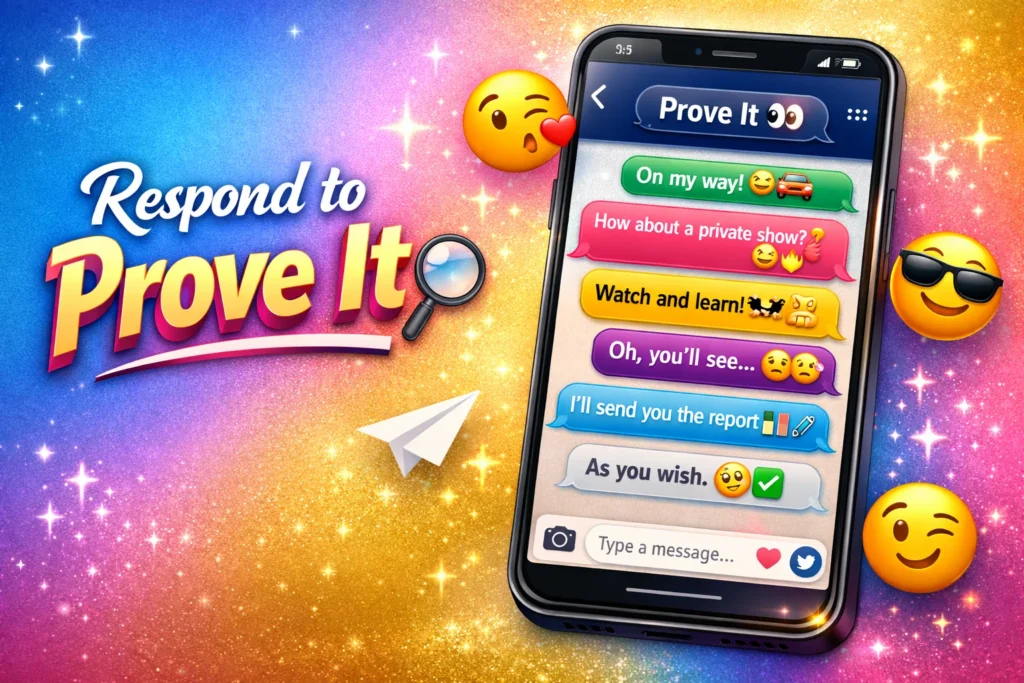
When someone says “prove it,” they’re usually challenging your words in a playful, skeptical, or serious way. The best reply depends on your relationship, the tone, and the situation. A confident, funny, or clever response can keep the conversation engaging without trying too hard.
Top replies: Watch me, You’ll see soon, Actions speak louder than words, Challenge accepted, Time will tell
Someone drops a casual “prove it,” and suddenly the conversation gets interesting. Maybe it’s your crush teasing you over text, your best friend doubting your skills, or a coworker questioning your confidence. It can feel playful, flirty, competitive, or even a little challenging depending on the situation.
Knowing how to respond to “prove it” can help you keep the conversation fun instead of awkward. The right comeback shows confidence, humor, or charm without sounding defensive. Whether you’re texting, chatting in DMs, joking with friends, or trying to impress someone special, having a few ready-to-use replies makes things much easier. Here are some of the best responses you can copy, tweak, and make your own.
Funny Responses to “Prove It”
- You’ll have to subscribe first.
Example: Great when you’re joking with a friend who loves internet humor.
Meaning: It playfully acts like your proof is premium content. - I’m still waiting for the director to yell “Action!”
Example: Perfect when keeping the mood light.
Meaning: It jokes that your big moment hasn’t started yet. - Do I get bonus points if I do?
Example: Best for playful conversations.
Meaning: It turns the challenge into a game. - Hold on, my proof is buffering.
Example: Great for texting.
Meaning: It uses internet humor to buy time. - My lawyer advised me not to.
Example: Funny among close friends.
Meaning: It pretends the situation is way more serious than it is. - That’s classified information.
Example: Perfect for teasing someone.
Meaning: It playfully keeps the mystery alive. - I’m accepting donations before I begin.
Example: Great for sarcastic humor.
Meaning: It jokes that proving it costs money. - You ask for a lot.
Example: Works in casual chats.
Meaning: It playfully calls them demanding. - Patience, young grasshopper.
Example: Great with friends.
Meaning: It humorously says they need to wait. - I’m waiting for dramatic background music.
Example: Perfect for theatrical personalities.
Meaning: It makes the moment feel like a movie. - Only if snacks are involved.
Example: Great for food lovers.
Meaning: It turns the challenge into a fun bargain. - Can I phone a friend first?
Example: Funny in group chats.
Meaning: It references game shows for humor. - I left my evidence at home.
Example: Perfect for casual teasing.
Meaning: It jokes about not being prepared. - Let’s pretend I already did.
Example: Great when everyone is laughing.
Meaning: It playfully skips the challenge. - You’re making this sound like homework.
Example: Perfect for relaxed conversations.
Meaning: It jokes that proving something feels like extra work.
Clever Responses to “Prove It”
- Actions speak louder than words.
Example: Great when you’re confident in your abilities.
Meaning: It suggests your results will do the talking. - Give it time.
Example: Perfect when success takes patience.
Meaning: It confidently says the proof is coming. - You’ll figure it out soon enough.
Example: Great for creating curiosity.
Meaning: It hints that the truth will become obvious. - Watch closely.
Example: Best before showing your skills.
Meaning: It builds anticipation. - The evidence is on its way.
Example: Perfect for playful confidence.
Meaning: It promises results soon. - I’ll let the outcome answer that.
Example: Great in competitive situations.
Meaning: It shifts attention to future results. - Judge me after I finish.
Example: Useful during projects.
Meaning: It asks for patience before being evaluated. - You’ll have your answer soon.
Example: Perfect for building suspense.
Meaning: It confidently delays the proof. - I don’t rush good results.
Example: Great when quality matters.
Meaning: It values patience over speed. - The proof is already happening.
Example: Good when progress is visible.
Meaning: It suggests they’re simply not noticing yet. - Results are better than promises.
Example: Great for serious conversations.
Meaning: It emphasizes action over talk. - Keep watching.
Example: Perfect for confident personalities.
Meaning: It invites them to witness your success. - Time usually settles these debates.
Example: Great when facts will eventually speak.
Meaning: It trusts time to reveal the truth. - I’ll let reality handle that.
Example: Good for staying calm.
Meaning: It shows quiet confidence. - You’ll thank yourself for doubting me later.
Example: Perfect for playful confidence.
Meaning: It suggests your success will surprise them.
Confident Responses to “Prove It”
- Watch me.
Example: Perfect before taking action.
Meaning: It shows complete confidence. - Challenge accepted.
Example: Great for friendly competition.
Meaning: It embraces the challenge. - I don’t need to convince you.
Example: Best when staying calm.
Meaning: It shows self-assurance. - You’ll see soon enough.
Example: Great for future goals.
Meaning: It confidently promises results. - I’m already working on it.
Example: Perfect during a project.
Meaning: It says actions are already underway. - I’ll let my results speak.
Example: Great in professional settings.
Meaning: It values performance over arguments. - Just keep watching.
Example: Perfect for competitive moments.
Meaning: It builds confidence without bragging. - You won’t need convincing for long.
Example: Great before proving yourself.
Meaning: It predicts success. - I believe in myself enough already.
Example: Useful when someone doubts you.
Meaning: It shows strong self-confidence. - I prefer showing over talking.
Example: Great in everyday conversations.
Meaning: It focuses on action. - I’m not worried.
Example: Perfect under pressure.
Meaning: It communicates calm confidence. - The outcome will handle it.
Example: Great when results are coming.
Meaning: It trusts the process. - I know what I’m capable of.
Example: Best when someone questions you.
Meaning: It reflects self-belief. - Just wait.
Example: Great for short text replies.
Meaning: It creates anticipation. - You’ll remember this conversation later.
Example: Perfect before proving yourself.
Meaning: It confidently predicts you’ll be right.
Flirty Responses to “Prove It”
- Come closer and find out.
Example: Great for playful flirting with your crush.
Meaning: It keeps the conversation exciting. - Only if you promise not to blush.
Example: Perfect for lighthearted flirting.
Meaning: It teases them in a cute way. - I thought my smile was enough proof.
Example: Best in romantic chats.
Meaning: It uses charm instead of arguments. - You’re going to make me show off.
Example: Great for playful banter.
Meaning: It turns the challenge into flirting. - Buy me coffee first.
Example: Perfect for someone you like.
Meaning: It jokingly asks for a date. - You’ll have to earn that.
Example: Great for teasing.
Meaning: It keeps a little mystery. - Careful what you wish for.
Example: Perfect when feeling confident.
Meaning: It hints they may be surprised. - Maybe I like keeping you curious.
Example: Great for DMs.
Meaning: It keeps the flirtation going. - Guess you’ll have to stick around.
Example: Perfect for someone interested in you.
Meaning: It encourages them to stay engaged. - Patience looks good on you.
Example: Great for playful teasing.
Meaning: It compliments while delaying the proof. - I’m worth the suspense.
Example: Best for confident flirting.
Meaning: It shows playful self-confidence. - You’ll get your proof at the right time.
Example: Great for slow-burn flirting.
Meaning: It builds anticipation. - You’re asking for VIP access.
Example: Perfect for playful confidence.
Meaning: It jokes that not everyone gets special treatment. - Maybe I’ll surprise you.
Example: Great for romantic conversations.
Meaning: It keeps them intrigued. - Keep doubting me. It makes this more fun.
Example: Perfect for flirty banter.
Meaning: It turns skepticism into playful chemistry.
Sarcastic Responses to “Prove It”
- Sure, let me prepare a PowerPoint.
Example: Perfect when someone is being overly skeptical.
Meaning: It sarcastically suggests they’re asking for too much. - Would you like charts and graphs too?
Example: Great for playful banter with friends.
Meaning: It exaggerates the amount of proof they expect. - I’ll get back to you after my TED Talk.
Example: Best for casual group chats.
Meaning: It humorously acts like proving it requires a presentation. - I’ll submit the paperwork shortly.
Example: Great when keeping things light.
Meaning: It mocks the seriousness of the request. - Should I notarize it too?
Example: Perfect for sarcastic texting.
Meaning: It jokes that official documents aren’t necessary. - Hang on while I gather the witnesses.
Example: Funny among close friends.
Meaning: It playfully overreacts to the challenge. - You’re taking this way too seriously.
Example: Great for teasing.
Meaning: It points out their dramatic attitude. - I’ll add it to my to do list.
Example: Perfect for laid-back conversations.
Meaning: It humorously delays the request. - Wow, tough crowd today.
Example: Great after making a joke.
Meaning: It playfully reacts to their disbelief. - I’ll need a committee’s approval first.
Example: Funny in work chats.
Meaning: It jokes that proving it requires permission. - Is there a deadline for this assignment?
Example: Great with classmates or coworkers.
Meaning: It sarcastically compares the situation to homework. - You really woke up choosing doubt today.
Example: Perfect for internet-savvy humor.
Meaning: It playfully calls out their skepticism. - I’ll send a formal report next week.
Example: Great in casual conversations.
Meaning: It mocks the need for evidence. - I’ll let customer service handle this.
Example: Funny for online chats.
Meaning: It treats the conversation like a business complaint. - That’s above my pay grade.
Example: Great for workplace humor.
Meaning: It jokes that proving it isn’t your job.
Polite Responses to “Prove It”
- I’d be happy to when the time is right.
Example: Great for respectful conversations.
Meaning: It stays calm and courteous. - I understand why you’d ask.
Example: Perfect when someone has doubts.
Meaning: It acknowledges their perspective. - I’ll do my best to show you.
Example: Great in professional situations.
Meaning: It expresses willingness without sounding defensive. - I appreciate your honesty.
Example: Best during serious discussions.
Meaning: It respects their opinion. - Hopefully my actions will answer that.
Example: Great for building trust.
Meaning: It focuses on future results. - Fair enough.
Example: Perfect when accepting the challenge.
Meaning: It shows maturity. - I’ll let my work speak for itself.
Example: Great in the workplace.
Meaning: It values actions over words. - That’s a reasonable request.
Example: Useful during discussions.
Meaning: It calmly accepts accountability. - I’ll show you as soon as I can.
Example: Perfect when results take time.
Meaning: It promises proof respectfully. - Thanks for giving me the opportunity.
Example: Great for interviews or work.
Meaning: It turns doubt into motivation. - I respect your opinion.
Example: Good during disagreements.
Meaning: It keeps the conversation positive. - Let’s revisit this later.
Example: Perfect when proof isn’t available yet.
Meaning: It asks for patience. - I hope I can change your mind.
Example: Great in thoughtful conversations.
Meaning: It expresses confidence politely. - Time will tell.
Example: Works in almost any situation.
Meaning: It lets future results speak. - I appreciate the challenge.
Example: Great for staying professional.
Meaning: It treats skepticism as motivation.
Cute Responses to “Prove It”
- You’re adorable when you’re skeptical.
Example: Great for texting your crush.
Meaning: It turns doubt into a compliment. - You’ll see soon, promise.
Example: Perfect for sweet conversations.
Meaning: It reassures them gently. - Trust me just a little.
Example: Great for romantic chats.
Meaning: It asks for faith in a cute way. - I like surprising people.
Example: Perfect for playful texting.
Meaning: It builds curiosity. - Spoilers aren’t my thing.
Example: Great for teasing.
Meaning: It keeps the mystery alive. - Can I get a tiny head start first?
Example: Cute with friends or a crush.
Meaning: It asks for patience playfully. - You’ll smile when I do.
Example: Great for positive conversations.
Meaning: It promises a happy outcome. - Good things take a little time.
Example: Perfect when waiting for results.
Meaning: It encourages patience. - Don’t ruin the surprise.
Example: Great for fun conversations.
Meaning: It hints something exciting is coming. - Believe in me for five minutes.
Example: Cute in text messages.
Meaning: It asks for temporary trust. - I was hoping you’d be curious.
Example: Great for flirty chats.
Meaning: It enjoys keeping them interested. - You’ll thank me later.
Example: Perfect for playful confidence.
Meaning: It promises a good result. - Just wait for the plot twist.
Example: Great for movie lovers.
Meaning: It builds excitement. - I’m saving the best part.
Example: Cute during playful teasing.
Meaning: It keeps anticipation high. - Pinky promise.
Example: Great with someone close.
Meaning: It expresses sincerity in a sweet way.
Chill And Casual Responses to “Prove It”
- You’ll see.
Example: Perfect for everyday texting.
Meaning: It keeps things relaxed and confident. - No rush.
Example: Great when results take time.
Meaning: It stays calm under pressure. - Give it a minute.
Example: Best when you’re already working on it.
Meaning: It asks for patience. - We’ll find out soon.
Example: Great before an event.
Meaning: It lets time decide. - Let’s see what happens.
Example: Perfect for uncertain situations.
Meaning: It keeps expectations realistic. - Guess we’ll know soon.
Example: Great in friendly competitions.
Meaning: It leaves the outcome open. - I’m not stressing about it.
Example: Perfect when staying cool.
Meaning: It shows confidence without pressure. - We’ll cross that bridge when we get there.
Example: Great for future plans.
Meaning: It avoids unnecessary worry. - One step at a time.
Example: Perfect during long-term goals.
Meaning: It focuses on steady progress. - Stay tuned.
Example: Great for social media style humor.
Meaning: It creates curiosity. - We’ll talk after it’s done.
Example: Perfect for projects.
Meaning: It prefers results over promises. - That’s the plan.
Example: Great when someone doubts you.
Meaning: It calmly confirms your intentions. - I got this.
Example: Perfect before taking action.
Meaning: It shows quiet confidence. - Nothing to worry about.
Example: Great for reassuring someone.
Meaning: It projects calm and control. - Just watch.
Example: Perfect as a short text reply.
Meaning: It confidently lets actions do the talking.
Brutal Responses to “Prove It”
- I don’t need your approval.
Example: Great when someone constantly doubts you.
Meaning: It shows you aren’t seeking validation. - Your opinion doesn’t change the facts.
Example: Perfect during a heated debate.
Meaning: It reminds them that reality matters more than opinions. - Believe what you want.
Example: Best when ending an argument.
Meaning: It shows you’re done trying to convince them. - I’m not here to impress you.
Example: Great for dealing with negativity.
Meaning: It sets a confident boundary. - Keep doubting me.
Example: Perfect before proving yourself.
Meaning: It turns their skepticism into motivation. - Results don’t ask for permission.
Example: Great in competitive situations.
Meaning: It emphasizes success over opinions. - I’ll let success answer you.
Example: Perfect when you’re confident.
Meaning: It trusts achievements to do the talking. - You can watch from the sidelines.
Example: Great when someone refuses to believe in you.
Meaning: It suggests they’ll only witness your success. - I’m too busy proving it to myself.
Example: Best for personal goals.
Meaning: It values self-growth over outside approval. - You’ll catch up eventually.
Example: Great for witty confidence.
Meaning: It implies they’ll understand later. - Your doubt isn’t my problem.
Example: Useful when someone is overly critical.
Meaning: It refuses to carry someone else’s negativity. - I don’t argue with disbelief.
Example: Great for staying composed.
Meaning: It avoids pointless debates. - Think whatever helps you sleep.
Example: Perfect for a sarcastic edge.
Meaning: It dismisses their opinion without arguing. - Not everyone recognizes potential immediately.
Example: Great for self-confidence.
Meaning: It suggests they’ll realize your value later. - The scoreboard will explain it.
Example: Perfect for sports or competition.
Meaning: It lets results settle the discussion.
Professional Responses to “Prove It”
- I’ll let the results speak for themselves.
Example: Great during meetings or presentations.
Meaning: It shows confidence through performance. - I’ll provide the evidence shortly.
Example: Perfect for work discussions.
Meaning: It reassures them professionally. - Let’s review the facts together.
Example: Useful when discussing data.
Meaning: It focuses on objective information. - I’m confident the outcome will demonstrate that.
Example: Great for project updates.
Meaning: It trusts measurable results. - I’ll follow up with supporting information.
Example: Best in emails or reports.
Meaning: It promises clear evidence. - That’s a fair question.
Example: Great when handling feedback.
Meaning: It acknowledges their concern respectfully. - I appreciate your skepticism.
Example: Perfect during constructive discussions.
Meaning: It treats doubt as part of the process. - Let’s evaluate the final outcome.
Example: Great before making conclusions.
Meaning: It encourages patience. - The data should answer that.
Example: Perfect in analytical conversations.
Meaning: It relies on facts instead of opinions. - I’ll demonstrate that through my work.
Example: Great in the workplace.
Meaning: It emphasizes action. - I’ll keep you updated.
Example: Useful for ongoing projects.
Meaning: It promises transparency. - The progress will become clear soon.
Example: Great for long-term goals.
Meaning: It asks for patience. - Let’s revisit this after completion.
Example: Perfect before a deadline.
Meaning: It delays judgment until the work is finished. - I’ll make sure the results are measurable.
Example: Great for performance discussions.
Meaning: It focuses on accountability. - I’m confident the outcome will meet expectations.
Example: Perfect during presentations.
Meaning: It communicates calm confidence.
Creative Responses to “Prove It”
- The plot is still loading.
Example: Great for movie lovers.
Meaning: It treats life like an unfolding story. - The trailer wasn’t the whole movie.
Example: Great for teasing.
Meaning: It hints there’s much more to see. - Every legend starts with disbelief.
Example: Perfect for motivational moments.
Meaning: It compares your journey to a success story. - Stay tuned for the plot twist.
Example: Great for texting.
Meaning: It builds suspense. - This chapter isn’t finished yet.
Example: Perfect for personal growth.
Meaning: It reminds them your story is still unfolding. - The fireworks come later.
Example: Great for exciting plans.
Meaning: It promises a memorable finish. - The best scenes haven’t happened yet.
Example: Perfect for optimistic conversations.
Meaning: It encourages patience. - Every masterpiece takes time.
Example: Great for creative people.
Meaning: It values quality over speed. - Watch the magic unfold.
Example: Perfect before revealing something exciting.
Meaning: It creates anticipation. - I’m saving the grand finale.
Example: Great for playful conversations.
Meaning: It hints at an impressive ending. - The next episode answers everything.
Example: Perfect for TV fans.
Meaning: It keeps people curious. - Consider this the opening scene.
Example: Great for new beginnings.
Meaning: It says the journey has just started. - The story writes itself from here.
Example: Useful before taking action.
Meaning: It trusts the process. - You’re watching the trailer, not the movie.
Example: Great for confident teasing.
Meaning: It says they haven’t seen your full potential.
Emotional Responses to “Prove It”
- I hope one day you believe me.
Example: Great during heartfelt conversations.
Meaning: It expresses sincerity. - I’m trying my best.
Example: Perfect when opening up emotionally.
Meaning: It shows honesty and effort. - I guess time will have to show you.
Example: Great when trust has been damaged.
Meaning: It relies on future actions. - I wish my words were enough.
Example: Best in meaningful relationships.
Meaning: It expresses disappointment gently. - I understand why you feel that way.
Example: Great during emotional discussions.
Meaning: It shows empathy. - I’ll keep earning your trust.
Example: Perfect after making a mistake.
Meaning: It shows commitment to improvement. - I don’t expect instant trust.
Example: Great for rebuilding relationships.
Meaning: It respects the other person’s feelings. - I care more than you realize.
Example: Perfect for someone close to you.
Meaning: It expresses genuine emotion. - I hope my actions help.
Example: Great after apologizing.
Meaning: It focuses on meaningful change. - I know trust takes time.
Example: Perfect for serious conversations.
Meaning: It recognizes that confidence must be earned. - I won’t stop trying.
Example: Great for close friendships or relationships.
Meaning: It shows determination. - I believe actions heal doubts.
Example: Perfect after conflict.
Meaning: It values consistent effort. - You’ll see the real me eventually.
Example: Great in new relationships.
Meaning: It asks for patience. - I understand your hesitation.
Example: Useful during honest conversations.
Meaning: It validates their concerns. - I hope I can change your mind someday.
Example: Perfect for rebuilding trust.
Meaning: It expresses hope without pressure.
FAQs
What does “prove it” mean?
It means someone wants evidence that what you said is true. Depending on the situation, it can be serious, playful, flirty, or teasing.
Is “prove it” sometimes flirty?
Yes. Many people use “prove it” as playful flirting to keep the conversation going and create a little mystery.
How should I respond professionally to “prove it”?
Stay calm and focus on facts. Replies like “I’ll let the results speak for themselves” or “I’ll provide the evidence shortly” work well.
What if I don’t actually want to prove it?
You can politely set a boundary with replies like “Believe what you want” or “I don’t feel the need to convince anyone.”
Is humor a good response to “prove it”?
Absolutely. Funny replies can make the conversation more enjoyable, especially with friends, your crush, or someone who is clearly joking.
Conclusion
The next time someone says “prove it,” you’ll have plenty of clever, funny, flirty, confident, and professional replies ready to go. The best response isn’t always about winning the conversation. It’s about matching the mood and expressing yourself naturally.
Sometimes a simple “Watch me” is all you need, while other moments call for humor, charm, or quiet confidence. Save your favorite responses, try different styles, and see which ones fit your personality best. A great comeback can leave a lasting impression, spark a laugh, or even turn a challenge into an unforgettable conversation.
Discover More Related Articles:
- 200+ How to Respond to You Look Like Trouble | That Actually Work In 2026
- 200+ Compliment Replies to You Have Beautiful Eyes | That Are Sweet & Flirty In 2026
- 181+ When He Says You Look So Innocent Replies | That Leave Him Smiling In 2026

Respoflow.com features content written by Matthew Cooper, a writer who focuses on clear, practical guides about everyday language and communication.
He creates easy-to-follow articles that help readers respond confidently in real-life and digital conversations.
Matthew’s work is aimed at delivering useful, reader-first content that feels natural and reliable.