
Definition:
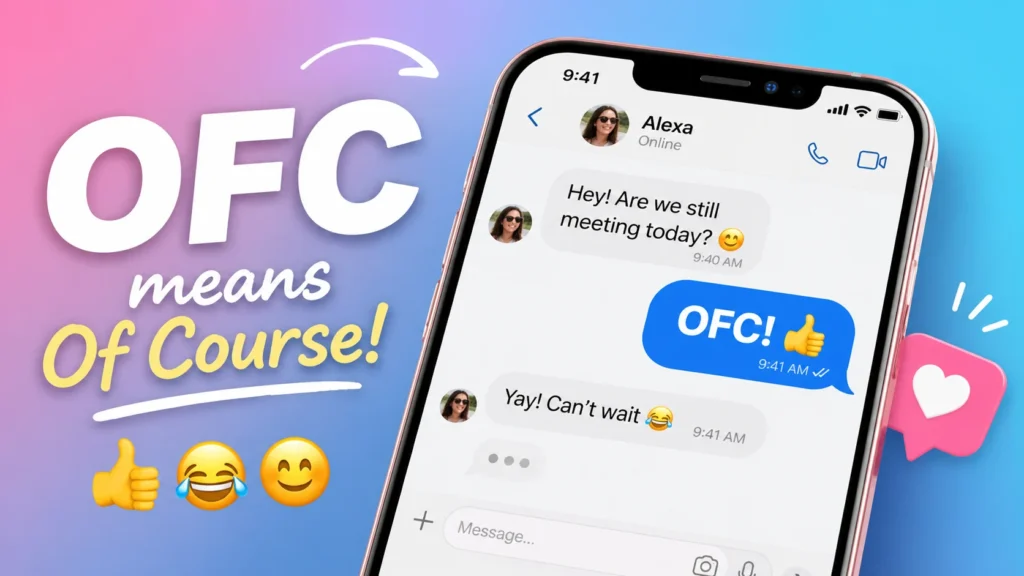
OFC in text means “of course.” It is an informal internet abbreviation used in texting and online conversations to quickly express agreement, confirmation, or something that is obviously true or naturally expected.
In today’s fast-paced digital world, where messages are often short and instant, abbreviations like “OFC” have become a normal part of everyday communication. If you’ve ever received a reply like “ofc 👍” or “ofc I’ll be there,” you’ve already seen this slang in action. But what exactly does it mean, when should you use it, and does it always carry the same tone? Let’s break it down in detail.
Origin and Popularity of OFC
The abbreviation “OFC” comes from the phrase “of course.” It started gaining popularity in early internet chat rooms, gaming communities, and SMS texting, where users wanted to save time and type faster.
As mobile messaging apps like WhatsApp, Instagram, Snapchat, and Discord became mainstream, short forms like OFC spread rapidly. Today, it is widely used across:
- Text messages
- Social media replies
- Online gaming chats
- Casual emails (rarely in professional settings)
The rise of emoji culture also helped OFC evolve. People often pair it with emojis like 👍😂 or 😊 to soften the tone or make it more expressive.
Meaning of OFC in Texting
At its core, OFC simply means “of course.” But the meaning can slightly change depending on context, tone, and punctuation.
Basic meaning:
- Yes, definitely
- Naturally
- Sure, no problem
- Obviously (in some cases)
Example meanings in conversation:
- “Can you help me?” → “OFC!”
- “Are you coming?” → “OFC I am.”
- “Do you like pizza?” → “OFC 🍕”
Even though it looks simple, OFC can carry different emotional tones depending on how it’s used.
Real-World Usage of OFC
OFC is mostly used in casual conversations. It is rarely used in formal writing or professional communication because it is considered slang.
Where OFC is commonly used:
- Texting friends and family
- Gaming chats (especially fast replies)
- Social media comments
- Group chats
- Casual online conversations
Where you should avoid it:
- Job emails
- Academic writing
- Formal business communication
- Professional reports
Using OFC in the wrong setting can make you appear too informal or unprofessional.
Examples of OFC in Different Contexts
Here are real-life styled examples showing how OFC changes tone depending on usage:
Friendly Tone
- A: “Wanna hang out later?”
B: “OFC! 😊”
Neutral Tone
- A: “Did you submit the assignment?”
B: “OFC I did.”
Slightly Dismissive Tone (context matters)
- A: “Do you even understand this?”
B: “OFC I do.”
Excited Tone
- A: “Are you coming to the party?”
B: “OFC!! Can’t wait 🎉”
As you can see, punctuation and emojis strongly influence how OFC feels in conversation.
Usage Table of OFC
| Situation | Example Message | Tone |
|---|---|---|
| Agreeing with a friend | “OFC I’ll help you” | Friendly |
| Confirming plans | “OFC I’m coming” | Neutral |
| Expressing excitement | “OFC!! Let’s go 🎉” | Enthusiastic |
| Short reply | “OFC” | Neutral/quick |
| Slightly firm response | “OFC I know that” | Confident |
Tone and Emotional Meaning of OFC
Even though OFC is short, it can express different tones depending on context:
1. Friendly Tone
Used between close friends or casual chats:
- “OFC I’ve got your back 👍”
2. Confident Tone
Shows certainty:
- “OFC I can do it.”
3. Playful Tone
Often used with emojis:
- “OFC 😂 why wouldn’t I?”
4. Slightly Dismissive Tone
Can feel a bit sharp if used without emojis:
- “OFC I know.”
Understanding tone is important because digital communication lacks voice and facial expressions.
Comparison: OFC vs Similar Text Abbreviations
Here’s how OFC compares with other common expressions:
Difference OFC vs “Obviously”
- OFC: Casual, friendly
- Obviously: More direct, sometimes sounds rude
Using OFC vs “Yeah / Yep”
- OFC: Stronger confirmation
- Yeah: Softer, less enthusiastic
OFC vs “Sure”
- OFC: More confident and natural
- Sure: Neutral and polite
Comparing OFC vs “Idk (I don’t know)”
- Completely opposite meanings
- OFC = certainty
- IDK = uncertainty
Alternate Meanings of OFC
Although “of course” is the primary meaning, OFC can sometimes be used differently in specific contexts:
- Online Gaming: “Of course” used as quick team confirmation
- Business slang (rare): Sometimes mistaken for “Office” in shorthand notes
- Internet slang: Always “of course” in casual chat contexts
However, in 99% of texting situations, OFC means only one thing: of course.
Polite or Professional Alternatives to OFC
Since OFC is informal, here are better alternatives for formal communication:
Instead of OFC, you can say:
- “Of course”
- “Certainly”
- “Absolutely”
- “Yes, I will”
- “Sure, I’d be happy to”
Example transformation:
- Casual: “OFC I can help.”
- Formal: “Certainly, I would be happy to help.”
Using full words helps maintain professionalism in emails and workplace communication.
Why People Prefer Using OFC
There are several reasons why OFC remains popular:
- Saves time while typing
- Easy to understand
- Common across platforms
- Feels casual and friendly
- Fits modern texting style
In digital conversations, speed and simplicity often matter more than grammar perfection.
Common Mistakes When Using OFC
Even though OFC is simple, users sometimes misuse it:
- Using it in formal emails ❌
- Overusing it in serious conversations ❌
- Using it without tone indicators (can seem rude) ❌
- Assuming everyone understands slang ❌
To avoid confusion, always consider your audience.
FAQs:
1. What does OFC mean in texting?
OFC means “of course,” used to show agreement or confirmation in casual chats.
2. Is OFC rude?
Not usually, but it can sound blunt if used without emojis or context.
3. Is OFC formal or informal?
It is strictly informal and should be avoided in professional communication.
4. Can OFC mean anything else?
Rarely. In texting, it almost always means “of course.”
5. How do I respond to OFC?
You can continue the conversation normally or acknowledge it with thanks or another message.
6. Is OFC used in professional emails?
No, it is not recommended in workplace or formal emails.
7. What is the full form of OFC?
The full form is “of course.”
8. Is OFC still popular in 2026?
Yes, it remains widely used in texting, social media, and online chats.
Conclusion
OFC is a simple yet powerful abbreviation that stands for “of course.” It has become a staple in modern digital communication due to its speed, simplicity, and versatility. While it works perfectly in casual conversations, it is not suitable for formal or professional settings.
Understanding OFC also means understanding tone, context, and audience. A short message like “OFC 👍” can feel friendly, confident, or even slightly firm depending on how it’s used. That’s what makes internet slang both interesting and expressive.
If you want to communicate naturally online, knowing terms like OFC helps you stay fluent in modern texting culture—but always remember to switch to full words when professionalism matters.
Discover More Related Articles:
- B Width Mean in Shoes: Fit, Sizing, and Comfort Tips for 2026
- Repentance Mean in the Bible: Powerful Truth Most People Miss In 2026