
Definition
ASL in text most commonly means “Age, Sex, Location.” It is an internet slang abbreviation used in chat rooms and messaging to ask someone for basic personal information, usually in casual or anonymous online conversations.
If you’ve ever been scrolling through social media, chatting on Snapchat, or texting friends and suddenly seen someone type “ASL?”, you might have paused for a second and wondered what it actually means. Is it slang? Is it an abbreviation? Or does it mean something completely different depending on the situation?
The truth is, ASL is one of those short internet terms that can confuse people because it has more than one meaning. In texting culture, context is everything—and ASL is a perfect example of that.
In this guide, you’ll learn exactly what ASL means in text, where it came from, how people use it today, and how to respond properly when someone sends it to you. We’ll also explore examples, tone, comparisons with similar slang, and polite alternatives so you never feel lost in online conversations again.
In modern usage, especially on social media, ASL is sometimes used jokingly or as shorthand to ask “How old are you, what is your gender, and where are you from?”
Origin of ASL in Internet Language
The abbreviation ASL (Age, Sex, Location) dates back to the early days of the internet—especially the late 1990s and early 2000s.
Early Internet Chat Rooms
Platforms like:
- AOL Chat Rooms
- Yahoo Messenger
- IRC (Internet Relay Chat)
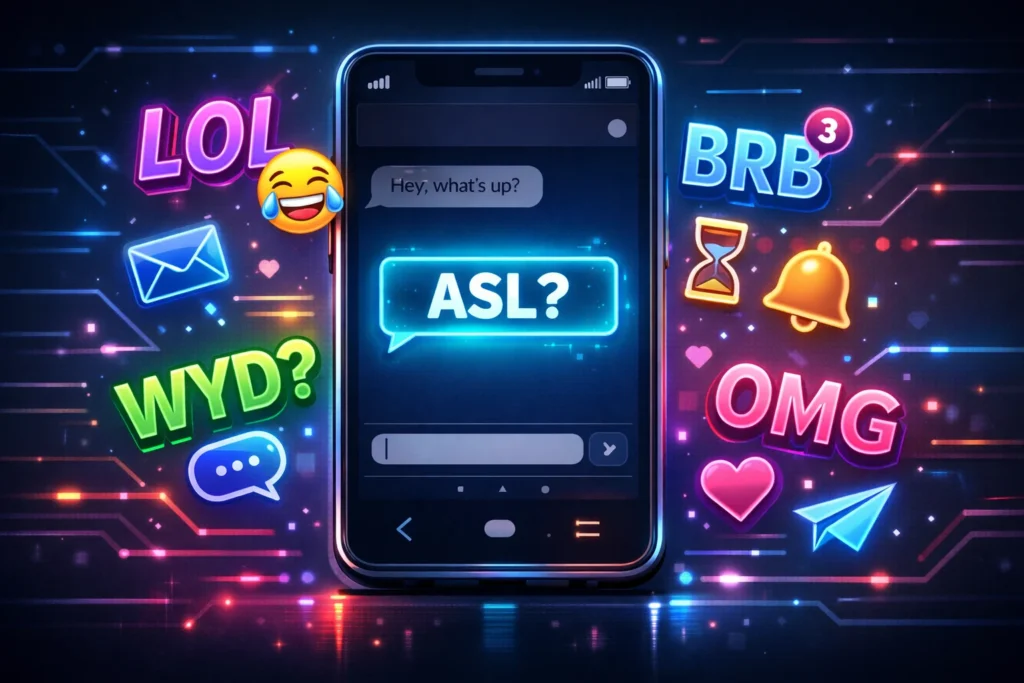
were popular spaces where users often interacted anonymously. Because typing speed mattered and conversations were fast, users created shortcuts like:
- BRB (Be Right Back)
- LOL (Laugh Out Loud)
- ASL (Age, Sex, Location)
Why ASL Became Popular
ASL became popular because:
- People chatted with strangers online
- Users wanted quick personal introductions
- It was part of internet “small talk”
At that time, it was often the first message someone sent to a stranger.
How ASL Is Used in Texting Today
Even though ASL is an old internet slang term, it is still used today—but differently.
Modern Usage Includes:
- Casual joking among friends
- TikTok or meme culture
- Flirty or curious conversations
- Sarcastic responses online
However, in many modern contexts, asking “ASL?” directly can feel:
- Too personal
- Outdated
- Slightly intrusive
So people often use it playfully rather than seriously.
Examples of ASL in Conversations
To fully understand ASL, let’s look at how it appears in real texting situations.
1. Neutral Conversation
Person A: Hey 👋
Person B: Hey
Person A: ASL?
Person B: 17 / Female / Pakistan
2. Friendly Chat
Person A: ASL? just curious 😄
Person B: 20 / Male / Karachi
3. Flirty Context
Person A: You seem interesting 👀 ASL?
Person B: Haha 19 / Female / Islamabad
4. Sarcastic or Joke Use
Person A: I bet I know everything about you
Person B: Oh really? ASL then 😂
5. Dismissive Tone
Person A: ASL?
Person B: Why does that matter?
Tone and Meaning in ASL Usage
ASL is very sensitive to tone. The same abbreviation can feel completely different depending on how it’s used.
Friendly Tone 😊
- Used in casual introductions
- Feels light and harmless
Neutral Tone 😐
- Simple information exchange
- No emotional weight
Flirty Tone 😉
- Used to show interest
- Can be part of online attraction
Negative or Dismissive Tone 😒
- Can feel intrusive
- May be seen as outdated or inappropriate
ASL Meaning Variations (Alternate Meanings)
Although “Age, Sex, Location” is the most common meaning in texting, ASL can also mean other things depending on context:
1. American Sign Language
This is the most important alternate meaning.
- A complete visual language used by deaf and hard-of-hearing communities
- Not related to texting slang
2. As Hell (slang variation)
Sometimes people mistakenly interpret ASL as shorthand for exaggeration, but this is not widely accepted.
Important Note:
If someone says “ASL” in a serious or educational context, it usually refers to American Sign Language, not slang.
Comparison With Similar Internet Slang
Here’s how ASL compares with other common texting abbreviations:
| Term | Meaning | Usage Context |
|---|---|---|
| ASL | Age, Sex, Location | Chat introductions |
| A/S/L | Same meaning (older style) | Early internet chats |
| BRB | Be Right Back | Short pause in chat |
| WYD | What You Doing | Casual conversation starter |
| HMU | Hit Me Up | Invitation to talk |
| POV | Point of View | Storytelling or memes |
ASL is more personal compared to general slang like “BRB” or “WYD.”
Polite or Safer Alternatives to ASL
Since ASL can feel too direct, many people now prefer softer ways to ask similar questions.
Instead of ASL, you can say:
- “Where are you from?”
- “How old are you (if you don’t mind sharing)?”
- “What do you do?”
- “Nice to meet you! Tell me a bit about yourself 😊”
These alternatives feel:
- More respectful
- Less intrusive
- More natural in modern texting
Labelled Example Table of ASL Usage
| Situation | ASL Meaning | Example Message | Tone |
|---|---|---|---|
| Chat room intro | Age, Sex, Location | “ASL?” | Neutral |
| Friendly chat | Basic intro | “Hey ASL?” | Friendly |
| Flirty talk | Interest check | “ASL? 👀” | Flirty |
| Meme/joke | Sarcasm | “ASL then 😂” | Funny |
| Rejection | Boundary setting | “Why ASL?” | Negative |
Why ASL Feels Outdated Today
Even though ASL is still understood, it is not as commonly used today for several reasons:
1. Privacy Awareness
People are more careful about sharing personal details online.
2. Social Media Evolution
Platforms like Instagram, TikTok, and Snapchat encourage identity-based profiles instead of anonymous chatting.
3. Safer Communication Norms
Users prefer gradual conversation instead of direct personal questions.
When You Should Use ASL (and When You Shouldn’t)
Use ASL When:
- Talking with friends who understand slang
- Joking online
- Nostalgic internet conversations
Avoid ASL When:
- Talking to strangers
- Professional communication
- Formal or respectful conversations
- When privacy is important
Common Mistakes People Make With ASL
- Thinking it only means “American Sign Language”
- Using it in serious conversations
- Asking it too early in a chat
- Not considering tone or privacy
FAQs
1. What does ASL mean in texting?
ASL means “Age, Sex, Location,” used to ask basic personal details in chat.
2. Is ASL still used today?
Yes, but mostly in jokes, memes, or casual online conversations.
3. Is ASL rude to ask?
It can be, depending on context. It may feel too personal if asked too early.
4. What does ASL stand for in slang?
It stands for Age, Sex, Location.
5. What does ASL mean on TikTok?
Usually it is used jokingly or as a nostalgic internet slang reference.
6. Does ASL mean American Sign Language in texting?
Not usually in texting slang, but in educational or serious contexts, yes.
7. How should I respond to ASL?
You can reply with your age, gender, and location—or politely ask why they need it.
8. Is ASL outdated?
Yes, it is considered old internet slang but still understood.
Conclusion
The meaning of ASL in text is simple but context-dependent. Most commonly, it stands for Age, Sex, Location, a classic internet slang term from early chat rooms. While it is still recognized today, its usage has become less common due to privacy awareness and modern communication styles.
If you see ASL in a conversation, always pay attention to tone. It might be friendly, flirty, or even just a joke. And if you want to sound more natural and modern, there are many softer alternatives you can use instead.
Understanding slang like ASL helps you navigate online conversations confidently and avoid confusion in digital communication.
Discover More Related Articles:
- What does similar mean in math: Complete Beginner’s Guide In 2026
- A Bed Bug Look Like: Size, Shape & Color In 2026