Quick Answer 🔥
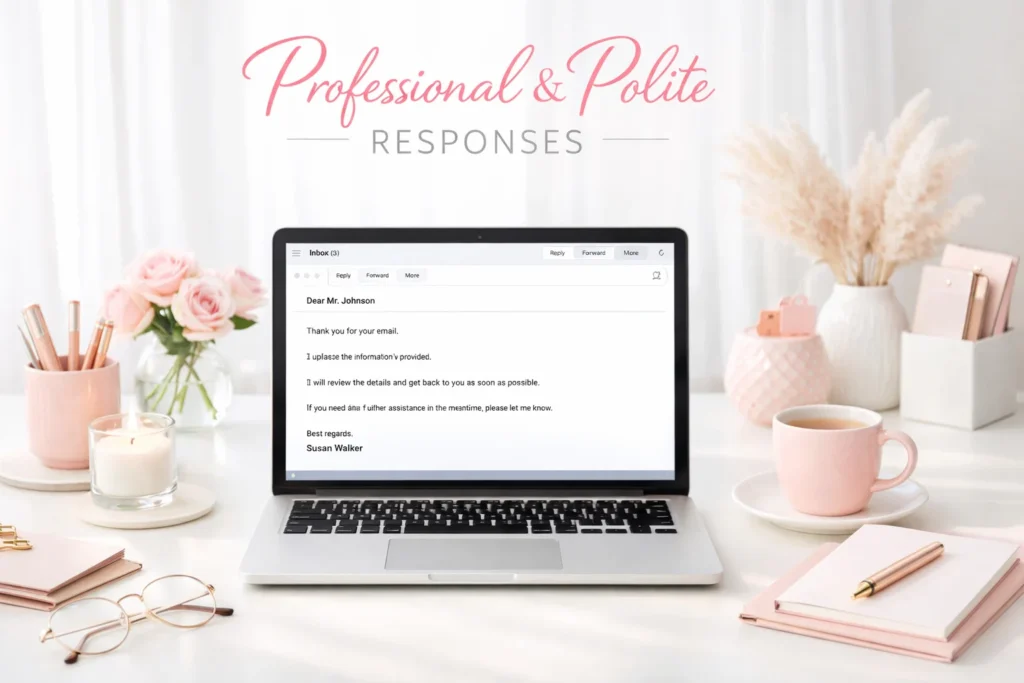
The best professional, polite, and formal responses are clear, respectful, and confident without sounding stiff. Whether you’re replying to a boss, client, colleague, or formal message, the right words instantly elevate your image.
Thank you for your time, I truly appreciate it, Noted with thanks, I look forward to it, Please let me know how I can assist
We’ve all been there. You’re staring at a work email, a LinkedIn DM, or a formal text thinking… “How do I respond without sounding awkward?” In professional spaces, your reply is your reputation. One wrong tone and suddenly you feel either too cold or way too casual.
That’s why having ready-to-use Professional / Polite / Formal Responses is a game changer. Whether you’re replying to your manager, a client, a professor, or even someone you just met, the way you respond shapes how people see you.
The goal is simple. Sound respectful, confident, and effortless. Not robotic. Not over-the-top. Just smooth, classy communication that gets the job done and leaves a good impression.
Let’s upgrade your reply game.
Polite Responses
Thank you for letting me know.
Example: Used when someone updates you about a schedule change.
Meaning: Shows appreciation and acknowledgment.
I truly appreciate your time.
Example: After a meeting or interview.
Meaning: Expresses gratitude respectfully.
That sounds wonderful, thank you.
Example: When someone offers help.
Meaning: Warm and appreciative reply.
I’m grateful for the opportunity.
Example: When offered a project or task.
Meaning: Shows humility and professionalism.
Many thanks for your support.
Example: After receiving assistance at work.
Meaning: Polite acknowledgment of help.
I completely understand.
Example: When someone explains a delay.
Meaning: Shows patience and maturity.
Please feel free to reach out.
Example: Ending a professional email.
Meaning: Invites communication politely.
That works perfectly for me.
Example: Confirming a meeting time.
Meaning: Smooth and agreeable.
I appreciate the clarification.
Example: After receiving detailed instructions.
Meaning: Shows attentiveness.
Thank you for your consideration.
Example: After submitting a proposal.
Meaning: Respectful and formal gratitude.
Noted with thanks.
Example: Acknowledging instructions.
Meaning: Confirms receipt professionally.
I value your feedback.
Example: After performance review comments.
Meaning: Shows openness to growth.
I look forward to it.
Example: Before an upcoming meeting.
Meaning: Positive anticipation.
That’s very kind of you.
Example: After receiving praise.
Meaning: Gracious response.
Much appreciated.
Example: Quick reply to assistance.
Meaning: Short but respectful thanks.
Professional Responses
I will proceed accordingly.
Example: After receiving instructions from a manager.
Meaning: Confirms action confidently.
Please advise on the next steps.
Example: When awaiting direction.
Meaning: Shows initiative.
I’ll ensure this is completed promptly.
Example: Assigned a deadline-sensitive task.
Meaning: Signals responsibility.
Thank you for bringing this to my attention.
Example: When informed about an issue.
Meaning: Professional acknowledgment.
I’ll review this and revert shortly.
Example: When sent documents to check.
Meaning: Promises timely response.
This aligns well with our objectives.
Example: During strategic discussions.
Meaning: Shows business awareness.
I appreciate the update.
Example: After project progress information.
Meaning: Professional courtesy.
Let’s coordinate to finalize this.
Example: Before closing a deal.
Meaning: Collaborative tone.
I’ll keep you posted.
Example: When managing ongoing tasks.
Meaning: Reassures communication.
Thank you for your prompt response.
Example: After quick email reply.
Meaning: Recognizes efficiency.
I’m happy to assist.
Example: When offering help formally.
Meaning: Cooperative attitude.
I understand the priority.
Example: When task urgency is clarified.
Meaning: Shows seriousness.
This has been noted.
Example: Acknowledging key information.
Meaning: Confirms receipt clearly.
Please confirm receipt.
Example: Sending important documents.
Meaning: Ensures clarity.
I appreciate your guidance.
Example: After receiving advice.
Meaning: Respectful professionalism.
Formal Responses
It is my pleasure.
Example: After being thanked formally.
Meaning: Courteous and refined.
I sincerely appreciate your consideration.
Example: In formal correspondence.
Meaning: Deep gratitude.
Kindly let me know your availability.
Example: Scheduling meetings.
Meaning: Respectful request.
I remain at your disposal.
Example: Ending formal letters.
Meaning: Offers assistance politely.
Please accept my gratitude.
Example: After receiving recognition.
Meaning: Classic formal tone.
I acknowledge receipt.
Example: Confirming documents received.
Meaning: Clear and official.
Thank you for your cooperation.
Example: During collaborative efforts.
Meaning: Professional respect.
Your assistance is greatly valued.
Example: After project support.
Meaning: Formal appreciation.
I look forward to your response.
Example: Waiting for approval.
Meaning: Anticipatory and respectful.
With sincere thanks.
Example: Ending formal message.
Meaning: Polite closure.
I appreciate your prompt attention.
Example: Regarding urgent matters.
Meaning: Recognizes effort.
Thank you for your understanding.
Example: Explaining delays.
Meaning: Courteous reassurance.
Your time is greatly appreciated.
Example: After consultation.
Meaning: Respectful gratitude.
I welcome your feedback.
Example: After sharing proposal.
Meaning: Professional openness.
Please do not hesitate to contact me.
Example: Closing formal email.
Meaning: Encourages communication.
Confident Responses
Consider it done.
Example: Assigned a clear task.
Meaning: Strong assurance.
I’ve got this covered.
Example: Taking ownership of work.
Meaning: Confidence and control.
Absolutely, I’ll handle it.
Example: When delegated responsibility.
Meaning: Positive leadership tone.
That’s well within scope.
Example: Discussing capabilities.
Meaning: Professional confidence.
I’m on it.
Example: Quick acknowledgment.
Meaning: Immediate action.
I’ll make it happen.
Example: After receiving a goal.
Meaning: Determined mindset.
Rest assured, it’s being addressed.
Example: Calming concerns.
Meaning: Professional reassurance.
I’m aligned with this direction.
Example: Strategy discussions.
Meaning: Shows agreement confidently.
This can be arranged.
Example: Client requests.
Meaning: Capability and poise.
Happy to take the lead.
Example: Volunteering in meetings.
Meaning: Initiative.
I’m confident we can achieve this.
Example: Team discussions.
Meaning: Motivational tone.
That’s a priority.
Example: Urgent assignment.
Meaning: Serious commitment.
I’ll ensure high standards.
Example: Quality-related task.
Meaning: Professional pride.
Fully noted.
Example: Receiving instruction.
Meaning: Crisp acknowledgment.
I appreciate the trust.
Example: Given responsibility.
Meaning: Grateful confidence.
Respectful Workplace Responses
Thank you for your leadership.
Example: Addressing a senior colleague.
Meaning: Shows respect.
I value your perspective.
Example: During discussion.
Meaning: Acknowledges expertise.
Your guidance is appreciated.
Example: After mentoring session.
Meaning: Professional gratitude.
I’ll defer to your judgment.
Example: When senior makes final call.
Meaning: Respectful acknowledgment.
That’s a helpful insight.
Example: During brainstorming.
Meaning: Validates input.
I’m grateful for the collaboration.
Example: After team project.
Meaning: Team appreciation.
Thank you for the opportunity to contribute.
Example: After presenting ideas.
Meaning: Professional humility.
I respect that decision.
Example: When outcome differs from yours.
Meaning: Mature acceptance.
I appreciate the transparency.
Example: During open discussions.
Meaning: Values honesty.
Your feedback is noted.
Example: Performance review.
Meaning: Professional acceptance.
I’m thankful for the support.
Example: After assistance.
Meaning: Respectful acknowledgment.
I recognize the effort involved.
Example: Project completion.
Meaning: Appreciates work done.
Thank you for your patience.
Example: When resolving delays.
Meaning: Courtesy.
That’s very insightful.
Example: Senior advice.
Meaning: Respectful praise.
I’ll reflect on that.
Example: Constructive criticism.
Meaning: Thoughtful professionalism.
Client-Friendly Responses
We appreciate your business.
Example: Closing client email.
Meaning: Professional gratitude.
Thank you for your continued trust.
Example: Long-term client message.
Meaning: Relationship appreciation.
We’re happy to support your needs.
Example: Offering services.
Meaning: Client-focused tone.
Your satisfaction is important to us.
Example: Handling concerns.
Meaning: Service commitment.
We value your feedback.
Example: After service delivery.
Meaning: Openness to improvement.
Let’s schedule a convenient time.
Example: Arranging call.
Meaning: Flexible professionalism.
We’ll prioritize this request.
Example: Urgent client need.
Meaning: Commitment.
Thank you for the opportunity.
Example: New project start.
Meaning: Business gratitude.
We’re reviewing this carefully.
Example: Client query.
Meaning: Thoughtful handling.
We’ll follow up shortly.
Example: Pending response.
Meaning: Timely reassurance.
We appreciate your patience.
Example: During processing delay.
Meaning: Polite acknowledgment.
It’s a pleasure working with you.
Example: Ongoing partnership.
Meaning: Warm professionalism.
We’re committed to excellence.
Example: Service statement.
Meaning: Quality focus.
Your request has been received.
Example: Confirmation email.
Meaning: Clear communication.
We look forward to continued collaboration.
Example: End of contract period.
Meaning: Relationship building.
Email Ending Responses
Best regards.
Example: Closing formal email.
Meaning: Standard professional sign-off.
Kind regards.
Example: Slightly warmer closing.
Meaning: Polite finish.
Warm regards.
Example: Friendly professional tone.
Meaning: Soft closure.
Sincerely.
Example: Formal letters.
Meaning: Traditional ending.
Respectfully.
Example: Addressing authority.
Meaning: Shows deference.
With appreciation.
Example: After assistance.
Meaning: Grateful closing.
Yours faithfully.
Example: Official correspondence.
Meaning: Highly formal sign-off.
Thank you once again.
Example: Concluding message.
Meaning: Reinforces gratitude.
Looking forward to your reply.
Example: Awaiting response.
Meaning: Encourages follow-up.
Have a productive day.
Example: Business email closing.
Meaning: Positive professionalism.
Wishing you success.
Example: Before major event.
Meaning: Encouraging tone.
Appreciatively.
Example: After support.
Meaning: Expresses thanks.
With best wishes.
Example: Semi-formal message.
Meaning: Friendly respect.
Gratefully.
Example: After favor.
Meaning: Warm appreciation.
Thank you kindly.
Example: Polite close.
Meaning: Courteous ending.
Gracious Responses To Praise
That’s very kind of you to say.
Example: After receiving compliments.
Meaning: Humble gratitude.
I truly appreciate that.
Example: Public recognition.
Meaning: Sincere thanks.
I’m honored by your words.
Example: Formal praise setting.
Meaning: Deep appreciation.
Thank you, that means a lot.
Example: After heartfelt feedback.
Meaning: Emotional acknowledgment.
I’m grateful for your support.
Example: Team encouragement.
Meaning: Recognizes backing.
I couldn’t have done it alone.
Example: Team success.
Meaning: Shares credit.
Your encouragement matters.
Example: Mentor compliment.
Meaning: Values input.
I appreciate the recognition.
Example: Award scenario.
Meaning: Professional humility.
That motivates me greatly.
Example: Performance praise.
Meaning: Inspired reaction.
I’m thankful for the opportunity.
Example: After achievement.
Meaning: Gratitude.
Your words are encouraging.
Example: Positive review.
Meaning: Emotional validation.
I value your confidence in me.
Example: Given responsibility.
Meaning: Appreciates trust.
That’s incredibly thoughtful.
Example: Kind message.
Meaning: Warm acknowledgment.
I’m sincerely thankful.
Example: Formal appreciation.
Meaning: Deep gratitude.
I’m glad to contribute.
Example: Project praise.
Meaning: Cooperative humility.
Calm And Composed Responses
Understood.
Example: Clear instruction received.
Meaning: Direct acknowledgment.
That makes sense.
Example: Explanation given.
Meaning: Logical acceptance.
I appreciate the clarity.
Example: After detailed explanation.
Meaning: Values transparency.
I’ll take that into account.
Example: Advice given.
Meaning: Thoughtful response.
That’s noted.
Example: Receiving updates.
Meaning: Calm confirmation.
I see your point.
Example: Discussion setting.
Meaning: Recognizes perspective.
Let’s proceed thoughtfully.
Example: Important decision.
Meaning: Careful approach.
I understand completely.
Example: Complex explanation.
Meaning: Full comprehension.
Thank you for explaining.
Example: Clarifying issue.
Meaning: Appreciative tone.
We’ll handle this carefully.
Example: Sensitive matter.
Meaning: Responsible mindset.
That’s clear.
Example: Instruction completed.
Meaning: Simple acknowledgment.
I’ll review this thoroughly.
Example: Before decision.
Meaning: Careful action.
Point taken.
Example: Feedback received.
Meaning: Accepts correction.
I respect your viewpoint.
Example: Differing opinions.
Meaning: Mature reply.
Let’s move forward.
Example: Closing discussion.
Meaning: Progress-focused.
Thoughtful Responses
I appreciate the insight.
Example: After advice.
Meaning: Values wisdom.
That gives me perspective.
Example: During reflection.
Meaning: Shows growth.
Thank you for sharing that.
Example: Personal story shared.
Meaning: Empathetic response.
I’ll give this serious thought.
Example: Big decision ahead.
Meaning: Responsible approach.
Your point is well taken.
Example: Constructive feedback.
Meaning: Professional maturity.
I value this discussion.
Example: Deep conversation.
Meaning: Respectful tone.
That’s worth considering.
Example: Strategic planning.
Meaning: Open-mindedness.
I appreciate your honesty.
Example: Direct feedback.
Meaning: Respects transparency.
This is helpful guidance.
Example: Mentorship scenario.
Meaning: Grateful learning.
I’m thankful for your candor.
Example: Honest critique.
Meaning: Values truth.
That broadens my view.
Example: New idea introduced.
Meaning: Intellectual appreciation.
I respect the thought behind this.
Example: Proposal discussion.
Meaning: Acknowledges effort.
I’m reflecting on that.
Example: Serious feedback.
Meaning: Contemplative response.
This is insightful.
Example: Presentation feedback.
Meaning: Professional praise.
I appreciate the depth of this conversation.
Example: Strategic meeting.
Meaning: Values substance.
FAQs
What do Professional / Polite / Formal Responses mean?
They are respectful, well-structured replies used in work, academic, or serious social settings.
Are formal responses always serious?
Not necessarily. They can be warm and friendly while still maintaining professionalism.
Can professional replies be used in texts?
Yes, especially when texting colleagues, clients, or networking contacts.
What if I don’t genuinely feel grateful?
Keep it neutral and respectful. Simple acknowledgments like Noted or Understood work perfectly.
Is humor appropriate in formal replies?
Light humor can work in relaxed workplaces, but when in doubt, keep it polished and respectful.
Conclusion
Your words are your personal brand. The right Professional / Polite / Formal Responses instantly make you sound confident, capable, and classy. Whether you’re replying to a manager, client, professor, or colleague, small tweaks in tone can completely transform how you’re perceived.
Save this list. Screenshot your favorites. Try a new response this week and notice how smoothly conversations flow.
Because professionalism isn’t about sounding stiff. It’s about sounding secure, respectful, and intentional.
Now go reply like the polished pro you are.
Discover More Related Articles:
- 220+ Best Responses To How Are You: That Feel Natural for 2026
- 260+ Best Responses To Nice To Meet You: That Spark Attraction in 2026

Lucas Evans is a content writer at Respoflow.com, focused on conversation replies, texting culture, and everyday communication. He creates clear, practical guides that help readers choose the right words with confidence. His writing is simple, reader-friendly, and designed for real-life use.