
Definition:
“Means a lot” is an expression used to convey that something is deeply appreciated, valued, or emotionally significant to someone. It can express gratitude, affection, or importance in both casual and formal contexts.
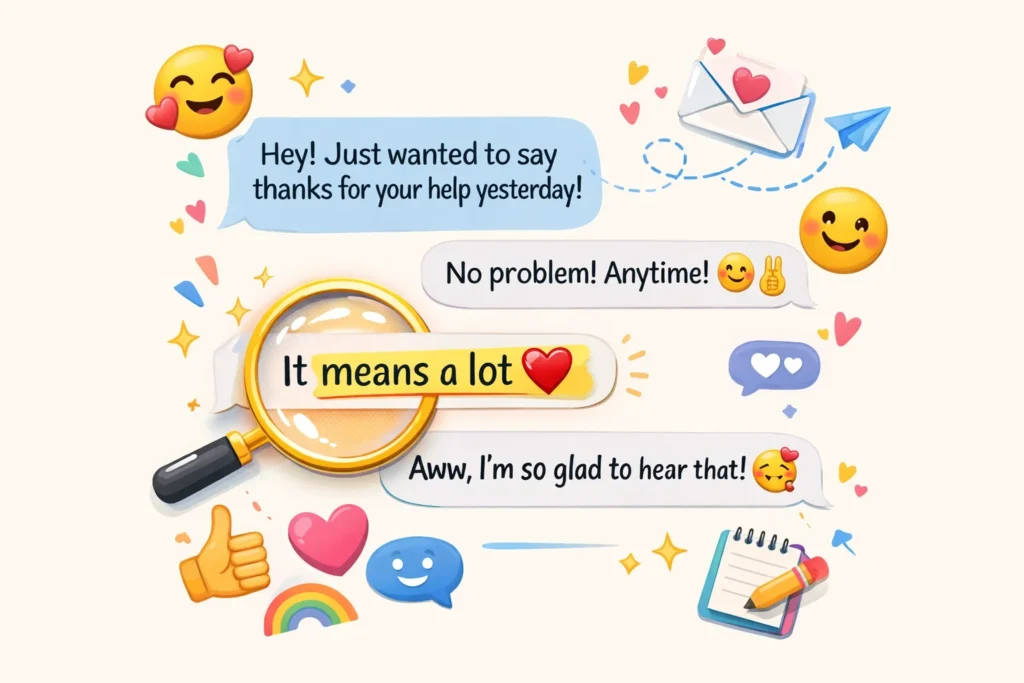
In our daily conversations—whether in texts, social media, or face-to-face chats you’ve probably heard someone say, “That really means a lot.” But what exactly does it mean, and why do people use it so often? At its core, “means a lot” is a simple yet powerful way to express appreciation, emotional significance, or gratitude.
From heartfelt thank-yous to professional acknowledgments, this phrase captures the value of someone’s words, actions, or support.
In this article, we’ll break down the meaning of “means a lot”, explore its origins, show real-world examples, explain the tone variations, compare it with similar expressions, and offer professional alternatives.
By the end, you’ll not only understand this phrase but also know how to use it effectively in any situation making your communication feel more sincere and impactful.
Origin of “Means a Lot”
The phrase “means a lot” originates from the early use of the verb mean in English, which has long carried the sense of “to have importance or value.” By combining it with a lot, the expression intensifies the significance of an action, gesture, or statement.
Historically, English speakers have used variations of this phrase in literature and everyday conversation since at least the 19th century. Its popularity surged with digital communication, social media, and texting, where concise expressions of gratitude or sentiment became essential.
Popularity and Real-World Usage
“Means a lot” is widely used in both spoken and written English. Its appeal lies in its versatility—it can express:
- Gratitude: “Thanks for helping me today—it really means a lot.”
- Emotional significance: “Your support during this time means a lot to me.”
- Recognition: “Getting this award means a lot after all the hard work.”
In digital contexts, including text messages, chats, and social media, people often use the phrase to convey sincerity quickly. Emojis like ❤️, 🙏, or 😊 are frequently added for warmth and emphasis:
- “Your message made me smile 😊—it means a lot!”
- “Thanks for listening 🙏, it really means a lot to me.”
Tone and Context
The phrase adapts easily to different tones depending on context:
| Tone Type | Example | Context/Effect |
|---|---|---|
| Friendly/Informal | “You remembered my birthday? That means a lot!” | Casual conversations with friends or family |
| Neutral/Formal | “Your feedback means a lot to our team.” | Professional emails, formal acknowledgments |
| Emotional/Intense | “Your support during tough times means a lot.” | Emotional expression, showing deep appreciation |
| Dismissive/Negative | “Yeah, that means a lot… not really.” | Sarcastic or uninterested tone |
💡 Tip: Context and intonation are key. In writing, pairing with emojis, punctuation, or additional phrases can clarify the intended tone.
Examples in Everyday Communication
Here’s how “means a lot” is commonly used across situations:
Table: Examples by Context
| Context | Example Sentence | Meaning/Effect |
|---|---|---|
| Gratitude (Text) | “Thanks for the help! It really means a lot ❤️” | Shows appreciation and warmth |
| Work/Professional Email | “Your guidance on this project means a lot to me.” | Professional recognition and gratitude |
| Emotional Support | “Your kind words mean a lot right now.” | Expressing emotional significance |
| Sarcasm/Dismissive | “Oh, you wrote a long reply… that means a lot 🙄” | Indicates sarcasm or lack of genuine interest |
| Romantic/Intimate | “Every time you listen to me, it means a lot.” | Shows affection or emotional closeness |
Comparison with Similar Terms
“Means a lot” is similar to other phrases expressing importance or gratitude, but subtle differences exist:
| Phrase | Usage Context | Difference from “Means a Lot” |
|---|---|---|
| Appreciate it | General thanks | Slightly less emotional; more straightforward |
| I’m grateful | Formal or emotional gratitude | More formal and reflective |
| Significant | Emotional or factual importance | Less personal; more analytical |
| Valuable to me | Personal importance | Directly expresses personal value |
| Thanks a ton | Casual thanks | Informal and energetic, less emotionally deep |
💡 Insight: “Means a lot” is versatile—it can straddle casual and formal situations while retaining a personal touch.
Alternate Meanings
While generally positive, “means a lot” can have nuanced or alternative interpretations depending on tone:
- Sarcasm/Irony: Often paired with eye-roll emojis or ellipses.
- “Oh, you remembered my name… that means a lot 🙄.”
- Literal Interpretation: Rare, but in specific contexts, it could literally indicate quantity.
- “Each contribution means a lot to the final total.”
Polite or Professional Alternatives
When writing formally or professionally, consider these alternatives:
- “I sincerely appreciate your support.”
- “Your assistance is highly valued.”
- “I am grateful for your contribution.”
- “Your feedback is important to me.”
These alternatives maintain the sentiment while sounding polished and professional.
Usage Tips for Maximum Impact
- Add context: Pair with specific actions for clarity.
- ✅ “Your advice on my presentation means a lot—it helped me succeed.”
- Use sparingly in formal writing: Overuse can dilute professionalism.
- Emojis for digital communication: Convey warmth and tone.
- Tone alignment: Ensure tone matches intent—friendly, emotional, sarcastic.
FAQs
1. What does “means a lot” mean in texting?
It expresses that something is appreciated or emotionally significant. Emojis often accompany it to emphasize sentiment.
2. Is “means a lot” formal or informal?
It is versatile. Informal in casual conversation and text, but can be professional in emails or acknowledgments.
3. Can “means a lot” be sarcastic?
Yes. Tone, punctuation, and emojis can indicate sarcasm or dismissiveness.
4. What is a polite alternative to “means a lot”?
Phrases like “I sincerely appreciate it” or “Your support is highly valued” are polite alternatives.
5. How do you use “means a lot” in a professional email?
Example: “Your guidance on this report means a lot to our team and will improve our results.”
6. What emojis are commonly used with “means a lot”?
❤️, 🙏, 😊, 🥰 are commonly used to add warmth and emphasis.
7. Is “means a lot” positive or negative?
It is generally positive but can be negative or sarcastic depending on context.
8. Can “means a lot” be used romantically?
Yes. It’s often used to show emotional closeness, affection, or appreciation for a partner’s support.
Conclusion
The phrase “means a lot” is a simple yet powerful way to express appreciation, emotional significance, or gratitude. Its flexibility makes it suitable for:
- Friendly messages
- Professional emails
- Emotional expressions
- Casual or sarcastic remarks
💡 Practical Tip: Match the tone and context, add context for clarity, and consider emojis in digital communication to convey your feelings authentically. Using “means a lot” thoughtfully ensures your message resonates deeply, whether it’s a text to a friend or a note to a colleague.
Discover More Related Articles:
- 200+Perfect Replies to “You Are an Inspiration” for Any Situation (2026)
- 235+ Best Responses To I Miss You: That Melt Hearts in 2026