
Definition:
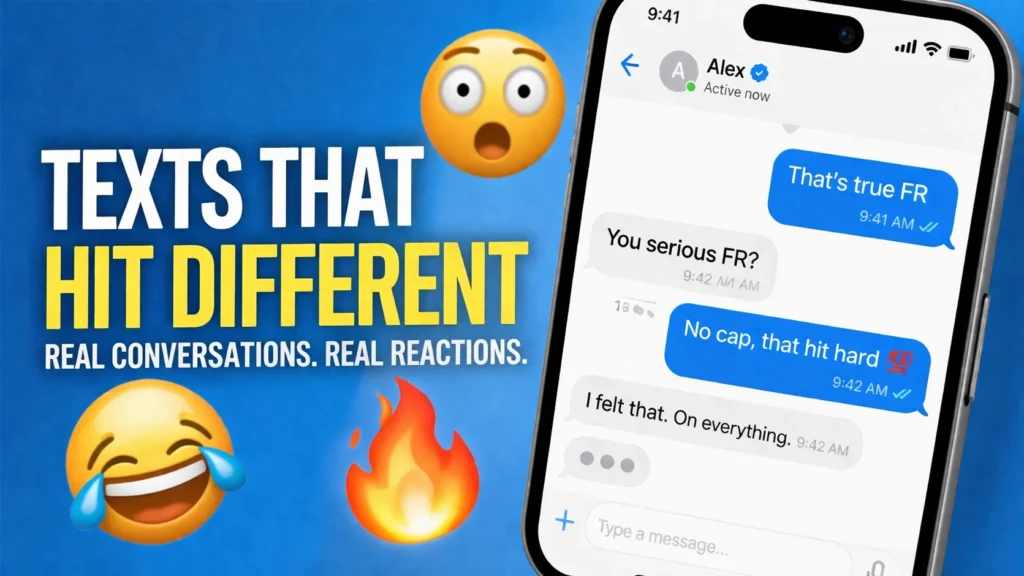
“FR” in text messaging stands for “for real.” It is commonly used in chats, social media, and online conversations to express agreement, sincerity, emphasis, or to confirm that something is true or serious.
If you’ve spent any time texting, scrolling through social media, or chatting in online communities, you’ve probably seen “FR” pop up again and again. It’s short, simple, and powerful but what exactly does it mean, and how should you use it?
In today’s fast-paced digital world, abbreviations like “FR” help people communicate quickly while still adding tone and emotion. Whether you’re agreeing with someone, emphasizing a point, or asking if something is genuine, “FR” has become a go-to slang term.
In this detailed guide, you’ll learn everything about the meaning of “FR” in text, including its origin, tone, examples, comparisons, alternatives, and practical usage tips.
Origin and Evolution of “FR” in Text
Understanding where “FR” comes from helps you use it more naturally and confidently.
Key Points About Its Origin:
- Short form of “for real”: The phrase “for real” has been used in spoken English for decades.
- Texting culture influence: As texting became popular, people shortened common phrases for speed.
- Social media boost: Platforms like Twitter, TikTok, and Instagram helped popularize “FR.”
- Youth slang adoption: Younger users widely adopted it, making it mainstream.
- Casual communication trend: Fits perfectly into informal, relaxed conversations.
Evolution Over Time:
- Initially used to question sincerity: “FR?”
- Later used to agree strongly: “That movie was amazing FR.”
- Now used in multiple tones agreement, emphasis, or disbelief.
Primary Meaning of “FR” in Text
The main meaning of “FR” is simple but versatile.
Core Meaning:
- For Real = Seriously / Truly / Honestly
How It Functions:
- Adds emphasis
- Shows agreement
- Confirms truth
- Expresses disbelief
Quick Examples:
- “That test was hard FR.” → Emphasizing difficulty
- “You got tickets? FR?” → Asking if it’s true
- “I love this song FR.” → Genuine feeling
How “FR” Is Used in Different Contexts
“FR” can change meaning slightly depending on how it’s used in a sentence.
1. Agreement
- “That place is the best FR.”
- Shows strong agreement with someone’s opinion.
2. Emphasis
- “I’m tired FR.”
- Adds seriousness to a statement.
3. Questioning
- “You met them FR?”
- Asks if something is واقعی (real/true).
4. Confirmation
- “We’re leaving at 5 FR.”
- Confirms a plan or statement.
5. Emotional Expression
- “I miss those days FR 😔”
- Shows genuine feelings.
Tone and Meaning Variations of “FR”
Tone matters a lot when using “FR.”
Positive Tone:
- “That food was amazing FR 😍”
- Expresses excitement or happiness
Neutral Tone:
- “I’ll call you later FR.”
- Simple confirmation
Slightly Negative or Dismissive:
- “You still believe that? FR?”
- Shows disbelief or mild sarcasm
Tone Indicators:
- Emojis can soften or strengthen tone
- Question marks add curiosity or doubt
- Caps (FR) can add emphasis
Example Table: “FR” in Real Conversations
| Context Type | Example Sentence | Meaning | Tone |
|---|---|---|---|
| Agreement | “That show is good FR.” | Strong agreement | Positive |
| Question | “You did that FR?” | Is it true? | Curious |
| Emphasis | “I’m busy FR.” | Serious statement | Neutral |
| Emotion | “I miss you FR 😢” | Genuine feeling | Emotional |
| Doubt | “You think that works? FR?” | Slight disbelief | Negative |
When to Use “FR”
Using “FR” correctly improves your communication.
Ideal Situations:
- Casual chats with friends
- Social media comments
- Informal texting
- Group conversations
- Expressing emotions quickly
Why It Works:
- Saves time
- Adds personality
- Feels natural in modern communication
- Easy to understand
When NOT to Use “FR”
While popular, “FR” isn’t always appropriate.
Avoid Using In:
- Formal emails
- Professional communication
- Academic writing
- Job applications
- Business conversations
Example:
❌ “I completed the report FR.”
✅ “I have completed the report successfully.”
Comparison with Similar Slang Terms
“FR” is often confused with other abbreviations. Here’s how it compares:
FR vs Other Common Terms:
| Term | Meaning | Difference |
|---|---|---|
| FR | For real | Emphasis or agreement |
| TBH | To be honest | Introduces honesty |
| NGL | Not gonna lie | Casual honesty |
| ONG | On God | Strong emphasis |
| IMO | In my opinion | Personal view |
Key Insight:
- “FR” is more about confirmation and sincerity
- Others focus on opinions or honesty framing
Alternate Meanings of “FR”
Although “for real” is the most common meaning, “FR” can have other interpretations depending on context.
Possible Alternate Meanings:
- France (in geographic context)
- Frame Rate (in gaming/tech)
- Father (rare, context-specific)
- For Rent (in ads)
Important Tip:
Always look at the context to understand the correct meaning.
Polite and Professional Alternatives to “FR”
If you want to sound more formal, here are better options:
Alternatives:
- “Seriously”
- “Honestly”
- “Truly”
- “Indeed”
- “In fact”
- “Genuinely”
Example Conversion:
- Casual: “That’s true FR.”
- Professional: “That is indeed true.”
Practical Usage Tips for “FR”
Using “FR” effectively requires understanding tone and context.
Helpful Tips:
- Use it at the end of sentences for emphasis
- Combine with emojis for emotional clarity
- Avoid overusing it in every message
- Match tone with the conversation
- Use “FR?” when asking for confirmation
- Keep it casual and friendly
- Avoid mixing with formal language
- Use lowercase (fr) for relaxed tone
- Use uppercase (FR) for emphasis
- Pair with slang for natural flow
- Don’t use in serious professional settings
- Understand audience before using
- Keep messages clear and simple
- Use sparingly for better impact
- Practice in casual chats first
“FR” in Social Media and Pop Culture
“FR” is widely used across platforms.
Where You’ll See It:
- Instagram comments
- TikTok captions
- Twitter/X posts
- Snapchat chats
- YouTube comments
Why It’s Popular:
- Quick expression of emotion
- Fits short-form content
- Easy to type and understand
- Adds authenticity
Common Mistakes to Avoid
Even simple slang can be misused.
Frequent Errors:
- Using “FR” in formal writing
- Misunderstanding tone
- Overusing it in every sentence
- Confusing it with other abbreviations
- Using it without context
Example:
❌ “This is important FR FR FR.”
✔ “This is important FR.”
FAQs:
1. What does FR mean in texting?
“FR” means “for real,” used to show seriousness, agreement, or confirmation.
2. Is FR rude or offensive?
No, it’s generally neutral but can sound dismissive depending on tone.
3. Can FR be used in professional messages?
No, it’s best for casual conversations only.
4. What does “FR?” mean with a question mark?
It means “Are you serious?” or “Is that true?”
5. Is FR the same as TBH?
No, FR emphasizes truth, while TBH introduces honesty.
6. Why do people use FR so much?
Because it’s short, expressive, and fits modern texting style.
7. Can FR be used with emojis?
Yes, emojis enhance tone and clarity.
8. What is the difference between “fr” and “FR”?
Lowercase is casual; uppercase adds emphasis.
Conclusion:
“FR” is a simple yet powerful abbreviation that has become a staple in modern digital communication. It stands for “for real” and is used to express sincerity, agreement, or emphasis in a quick and relatable way. While it works perfectly in casual conversations and social media, it’s important to avoid using it in formal or professional settings.
To use “FR” effectively, focus on context, tone, and audience. When used correctly, it can make your messages feel more natural, expressive, and engaging. Keep it simple, don’t overuse it, and match it with the right tone and you’ll sound like a pro in modern texting.
Discover More Related Articles:
- 180+ Best Responses to Peace Out: Funny, and Cool Replies (2026)
- 150+ Best Responses When Someone Says Mhm: Funny & Flirty (2026)