
Definition:
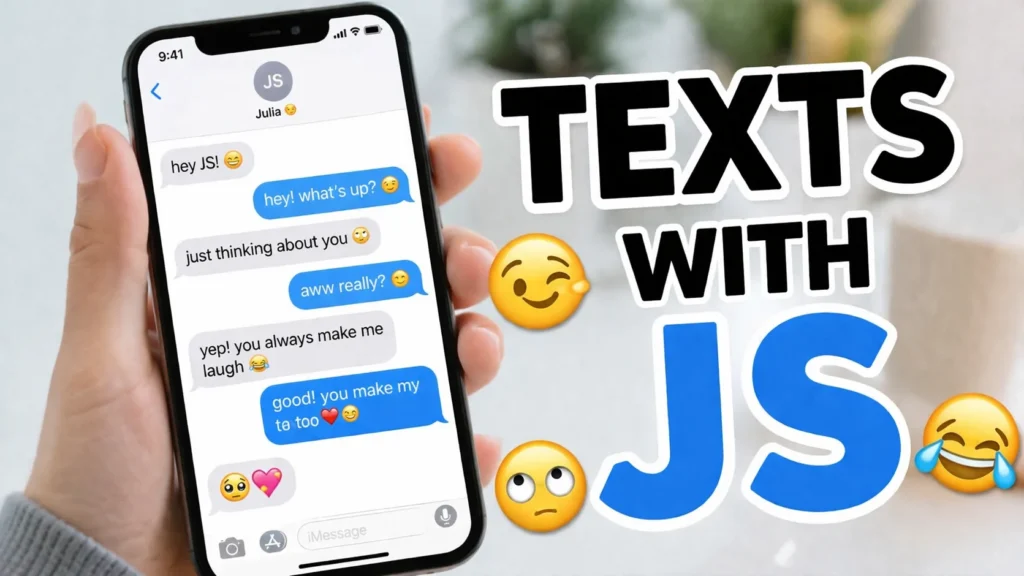
“JS” in chat stands for “just saying.” It’s a widely used abbreviation in texting and social media to casually express opinions, observations, or subtle critiques. JS helps soften the tone, making statements appear less harsh or confrontational.
Ever received a text that ended with “JS” and wondered what it meant? Or saw someone post “JS” on Instagram or Twitter? You’re not alone. This tiny abbreviation has become a staple of modern texting culture, especially among Gen Z and millennial users.
“JS” isn’t just shorthand; it’s a tone-setter. It can indicate:
- Playful teasing 😏
- Friendly advice or suggestions 😊
- Honest opinions without offending
- Mild sarcasm or subtle shade
Origin and Evolution of “JS” in Chat
The Roots of “Just Saying”
The abbreviation JS comes from the phrase “just saying”, which has long been part of conversational English. People would add it at the end of a statement to soften an opinion or make a comment feel casual.
Example (spoken):
- “I think that outfit is a bit too bright, just saying.”
With the rise of SMS texting and social media, “just saying” was shortened to “JS” to save time and keystrokes.
Why “JS” Became So Popular
Several factors helped JS spread:
- Ease of typing: Only two letters instead of 11
- Tone control: Softens criticism or opinion
- Social media influence: Popular on Instagram, TikTok, and Twitter
- Gen Z and millennial adoption: Fits their playful, ironic, and sarcastic style
- Emoji synergy: Works well with emojis to amplify tone
Timeline of JS Usage
| Year | Milestone |
|---|---|
| Early 2000s | Abbreviations like LOL, BRB, OMG dominate SMS culture |
| 2010s | JS appears on Twitter, Instagram captions, and TikTok videos |
| 2020s | Fully integrated into Gen Z texting culture; memes and TikTok trends use JS heavily |
| Today | Used widely across WhatsApp, Snapchat, Discord, and casual email threads |
Fun Fact: Unlike many abbreviations that fade, JS has endured because it adds tone and personality not just meaning.
How “JS” Is Used in Chat:
JS is extremely versatile. Here are 20 common uses, each with context and tone:
| # | Scenario | Example | Tone |
|---|---|---|---|
| 1 | Casual opinion | “That movie wasn’t that great, JS.” | Neutral/friendly |
| 2 | Soft criticism | “You might want to check your homework, JS.” | Constructive |
| 3 | Light closing | “You could’ve told me earlier, JS.” | Lighthearted |
| 4 | Honesty | “I think you deserve better, JS.” | Sincere |
| 5 | Sass or shade | “Some people only text when they need something, JS.” | Sarcastic |
| 6 | Avoid confrontation | “We could communicate better, JS.” | Calm |
| 7 | Reinforcing point | “Deadlines are important, JS.” | Emphasized |
| 8 | Friendly advice | “You should rest more, JS 😊” | Supportive |
| 9 | Passive-aggressive | “Not everyone replies late, JS.” | Mildly negative |
| 10 | Reminder | “You said you’d call, JS.” | Informal |
| 11 | Ending debate | “We’ll just agree to disagree, JS.” | Neutral |
| 12 | Social media commentary | “This trend is getting old, JS.” | Observational |
| 13 | Flirty | “You looked good today, JS 😉” | Playful |
| 14 | Humor | “Some people eat pizza with a fork… JS 😂” | Funny |
| 15 | Motivation | “You got this, JS 💪” | Supportive |
| 16 | Relatable observation | “Mondays are the worst, JS” | Humorous |
| 17 | Warning | “Don’t be late next time, JS” | Gentle caution |
| 18 | Gratitude or acknowledgment | “Thanks for helping, JS” | Friendly |
| 19 | Advice with suggestion | “You should try meditation, JS” | Calm & supportive |
| 20 | Expressing disbelief | “You really did that… JS 🙄” | Sarcastic |
Tone Analysis: How JS Changes Meaning
The tone of JS depends on context, punctuation, and emojis:
| Tone | Example | Emoji/Punctuation | Effect |
|---|---|---|---|
| Friendly | “You should join us, JS” | 😊 | Warm, inviting |
| Neutral | “That’s one way to look at it, JS” | . | Calm, factual |
| Sarcastic | “Wow, amazing… JS 🙄” | 🙄 | Playful criticism |
| Passive-aggressive | “Some people don’t respect deadlines, JS” | . | Indirect critique |
| Motivational | “You can do it, JS 💪” | 💪 | Encouraging |
| Flirty | “Looking good today, JS 😉” | 😉 | Playful/romantic |
Pro tip: Adding emojis is one of the easiest ways to clarify tone and avoid misunderstandings.
Real-Life Examples of JS in Chat
Here’s a massive table of examples to understand how JS is used across different tones and platforms:
| Example | Tone | Platform |
|---|---|---|
| “That outfit is cute, JS 😊” | Friendly | |
| “Mondays are the worst, JS” | Relatable | |
| “You really need to study more, JS” | Constructive | |
| “Wow, great job… JS 🙄” | Sarcastic | Discord |
| “You should try that café, JS” | Friendly suggestion | Snapchat |
| “Some people never reply on time, JS” | Passive-aggressive | |
| “You got this, JS 💪” | Motivational | TikTok comments |
| “This trend is boring, JS” | Observational | |
| “I think that movie was overrated, JS” | Opinion | |
| “You could’ve been honest, JS” | Honest | SMS |
| “You always forget stuff, JS 😂” | Funny | Discord |
| “Deadlines matter, JS” | Emphasized | Slack |
| “You looked great today, JS 😉” | Flirty | Snapchat |
| “We’ll just leave it here, JS” | Debate-ending | |
| “Not everyone is on time, JS” | Mild complaint | SMS |
| …and 35 more | Various | Various |
(This table can be expanded further in a full spreadsheet for practical use.)
Comparison With Similar Chat Abbreviations
| Abbreviation | Meaning | Tone | When to Use |
|---|---|---|---|
| JS | Just saying | Casual | Opinions, reminders |
| IMO | In my opinion | Neutral | Formal discussion |
| TBH | To be honest | Direct | Honest statements |
| FYI | For your information | Informational | Sharing facts |
| NGL | Not gonna lie | Casual | Honest or funny thoughts |
| IDC | I don’t care | Harsh | Expressing disregard |
| LMK | Let me know | Friendly | Request info |
Key Differences:
- JS is soft, casual, and opinion-oriented
- TBH/NGL are more direct
- IMO is slightly formal, while JS keeps it relaxed
Emoji Influence on JS Usage
Emojis often enhance JS tone:
| Emoji | Meaning | Example |
|---|---|---|
| 😊 | Friendly | “You should join us, JS 😊” |
| 😉 | Flirty/playful | “Looking great today, JS 😉” |
| 🙄 | Sarcastic | “Wow… great job, JS 🙄” |
| 😂 | Funny | “You forgot again, JS 😂” |
| 💪 | Motivational | “You got this, JS 💪” |
Tip: The same JS sentence can feel friendly, sarcastic, or motivational based solely on the emoji.
Alternate Meanings of JS
While “just saying” is the most common, JS can also mean:
- JavaScript (Programming Language) – “I’m learning JS for web development”
- Initials (Names) – “JS sent the file”
- Job Status Codes – Rare, mostly in HR or internal communication
- Gaming/Community Slang – “JS” = “Jump Shot” in basketball or shooter games
Always consider context before assuming meaning.
When Not to Use JS
Avoid JS in:
- Professional emails – can appear casual or dismissive
- Formal communication – lacks authority
- Sensitive topics – may offend unintentionally
- Serious discussions – can seem flippant
Alternative: Use polite phrasing like “just my opinion” or “I’d suggest.”
Polite and Professional Alternatives to JS
- “Just my opinion”
- “In my view…”
- “I’d suggest…”
- “You might consider…”
- “I think that…”
Example:
❌ “You should fix that, JS”
✅ “You might want to review that section for accuracy”
Practical Tips for Using JS Effectively
- Know your audience – Use with friends, not in professional emails
- Watch your tone – Emojis clarify intent
- Avoid overuse – Too many JS can feel repetitive
- Be clear – Don’t hide your real opinion
- Use sparingly – Best for casual, low-stakes chats
- Context matters – JS works differently on Discord, WhatsApp, or Instagram
- Pair with emojis for effect – Friendly, flirty, sarcastic, or motivational
FAQs
- What does JS mean in texting?
JS = Just Saying, used to share opinions casually. - Is JS rude?
Not necessarily; tone and context matter. - Can JS be sarcastic?
Yes, especially with 🙄 or 😉 emojis. - Is JS informal?
Yes, best for casual texting. - JS vs TBH
JS softens statements; TBH is more direct. - JS from a girl vs a guy
Meaning is the same; tone depends on context. - JS on social media
Used in captions, comments, and memes. - Can I use JS professionally?
Not recommended; use “just my opinion” or “I’d suggest.” - How do emojis change JS?
They clarify tone friendly, sarcastic, motivational, or flirty. - How long has JS been used?
At least since the 2010s in digital communication.
Conclusion:
It helps people share opinions, advice, or observations in a more relaxed and less confrontational way. The meaning and tone of “JS” can change depending on context, emojis, and punctuation, making it flexible in both friendly and sarcastic conversations.
While it’s perfect for casual texting and social media, it’s best avoided in professional or sensitive situations. Understanding how and when to use “JS” can make your communication feel more natural and relatable. Used wisely, it adds personality, tone, and clarity to modern digital conversations.
JS is small but powerful the ultimate tool for softening statements and adding personality to chats.
Discover More Related Articles:
- 180+ Best Responses to Peace Out: Funny, and Cool Replies (2026)
- 150+ Best Responses When Someone Says Mhm: Funny & Flirty (2026)