
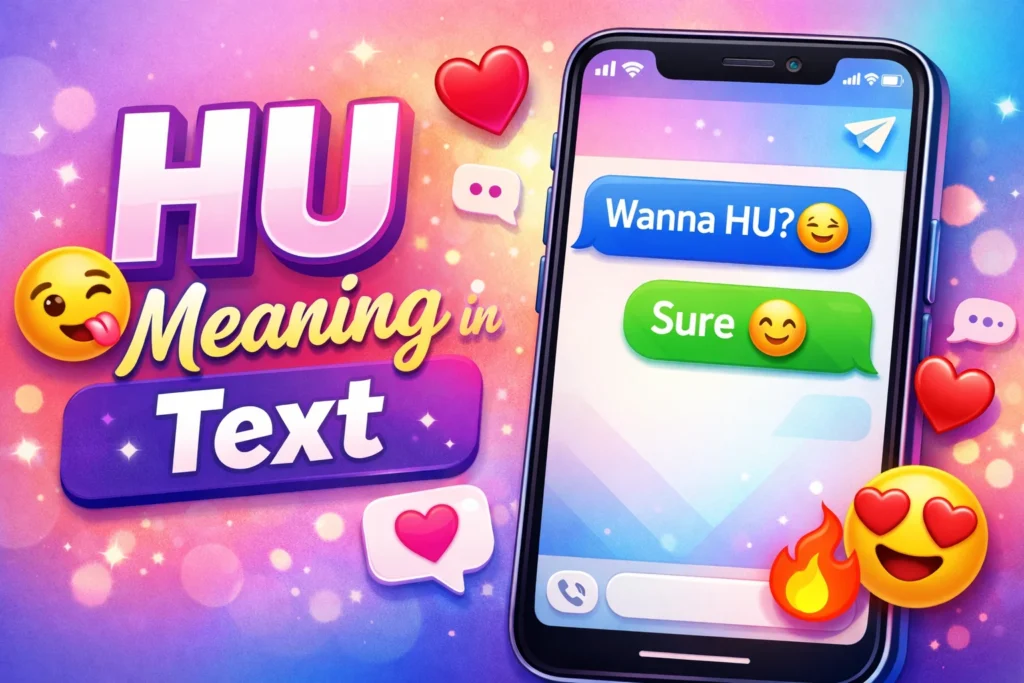

Definition:
“HU” in text usually means “Hook Up.” It refers to meeting someone (often romantically or casually), though the exact meaning can vary depending on context, tone, and the relationship between the people involved.
In the fast-paced world of texting and social media, abbreviations and slang are everywhere. One such term you might have seen is “HU”. But what does it actually mean? Is it just a casual way to say hello, or does it hint at something more? Understanding abbreviations like HU is essential, especially if you want to avoid miscommunication in messages.
In this guide, we’ll break down HU meaning in text, explore its origins, show real-world examples, compare it to similar abbreviations, and give tips on how and when to use it. By the end, you’ll feel confident spotting HU in any conversation and knowing exactly how to respond.
What Does HU Mean in Texting?
In today’s fast-paced digital conversations, abbreviations like HU help people communicate quickly and casually. If you’ve seen someone text “HU?” or “Wanna HU?”, it can feel confusing if you’re not familiar with the slang.
At its core, HU most commonly stands for “Hook Up.” However, the meaning can shift slightly based on context:
- Casual meet-up (friendly or romantic)
- Romantic or intimate encounter
- Checking availability (“Are you free to meet?”)
Understanding the tone and context is key to interpreting it correctly.
Origin and Popularity of “HU”
The abbreviation HU comes from shortening the phrase “hook up”, which has been part of informal English for decades. Originally, “hook up” simply meant to meet or connect, but over time, especially in texting culture, it developed more nuanced meanings.
Why Did “HU” Become Popular?
- Texting culture: Short forms save time
- Social media influence: Apps like Snapchat, Instagram, and WhatsApp encourage quick replies
- Youth slang: Frequently used among teens and young adults
- Privacy & subtlety: It can imply something without being too direct
Today, HU is widely used in casual chats, especially when planning to meet someone.
Common Uses of HU in Text Messages
The meaning of “HU” can vary depending on the conversation. Here are the most common interpretations:
1. Casual Meet-Up
Sometimes, HU simply means meeting someone without any romantic implication.
Example:
- “Hey, wanna HU later and grab coffee?” ☕
👉 Friendly and casual tone
2. Romantic or Flirty Context
In many cases, HU suggests a romantic or flirtatious meet-up.
Example:
- “We should HU tonight 😉”
👉 Flirty tone
3. Intimate or Suggestive Meaning
In certain contexts, HU may imply a more private or intimate encounter.
Example:
- “Are you down to HU?”
👉 Suggestive tone (depends on relationship)
4. Quick Availability Check
Sometimes it’s just a quick way to ask if someone is free.
Example:
- “HU?”
👉 Short for “Do you want to meet up?”
Example Table: HU Meaning in Different Contexts
| Text Message | Meaning | Tone | Context Type |
|---|---|---|---|
| “Wanna HU later?” | Meet up | Friendly | Casual |
| “Let’s HU tonight 😉” | Romantic meet-up | Flirty | Dating |
| “You free to HU?” | Check availability | Neutral | General |
| “We should HU at your place” | Possibly intimate meeting | Suggestive | Private |
| “HU after class?” | Hang out | Casual | Everyday life |
Tone and Context: Why It Matters
Understanding tone is essential when interpreting HU. The same abbreviation can mean different things depending on:
- Relationship: Friends vs romantic interest
- Time of day: Late-night messages often feel more suggestive
- Emojis used: 😉 😏 ❤️ can change the meaning
- Conversation history: Previous messages give clues
Tone Breakdown
- Friendly: “Let’s HU and study 📚”
- Neutral: “Can we HU tomorrow?”
- Flirty: “We should HU soon 😘”
- Suggestive: “Come over and HU”
HU vs Similar Texting Abbreviations
Many abbreviations in texting have similar meanings. Here’s how HU compares to others:
| Abbreviation | Meaning | Difference from HU |
|---|---|---|
| HMU | Hit Me Up | Means “contact me,” not necessarily meet |
| WYA | Where You At | Asking location |
| WYD | What You Doing | Asking current activity |
| Link Up | Meet in person | More neutral and clear than HU |
| Hang Out | Spend time together | Always friendly, less ambiguous |
Alternate Meanings of HU
Although “Hook Up” is the most common meaning, HU can have other interpretations depending on context:
- Hold Up → “HU, I’ll be there in a minute”
- Heads Up → Informal shorthand in fast typing
- Human → Rare, context-specific use
- Hurry Up → Sometimes used in gaming or casual chat
⚠️ These meanings are less common in texting slang but still possible.
When Should You Use HU?
Using HU depends on your comfort level and relationship with the other person.
Good Situations to Use HU
- Casual chats with friends
- Informal texting
- When both people understand the slang
Situations to Avoid
- Professional communication
- Formal messages
- Conversations with someone you don’t know well
Polite or Professional Alternatives to HU
If you want to sound more clear, respectful, or professional, consider these alternatives:
Instead of “HU,” Say:
- “Would you like to meet up?”
- “Let’s get together sometime.”
- “Are you available to hang out?”
- “Shall we meet later?”
- “Would you like to catch up?”
These options remove ambiguity and make your message clearer.
Real-Life Usage Tips
To avoid misunderstandings, keep these tips in mind:
- ✅ Add context: “HU for coffee?” is clearer than just “HU?”
- ✅ Use emojis carefully: They can change tone
- ✅ Know your audience: Not everyone understands slang
- ❌ Avoid assumptions: Don’t assume romantic meaning
- ❌ Don’t use in formal settings
FAQs:
1. What does HU stand for in texting?
HU usually means “Hook Up,” referring to meeting someone, either casually or romantically.
2. Does HU always mean something romantic?
No. Often, it simply means meeting up with someone, especially among friends.
3. Is HU appropriate to use with anyone?
Not really. HU is best used in casual conversations with people who understand texting slang.
4. What’s the difference between HU and HMU?
- HU: Meet up
- HMU: Contact me (more general, not necessarily about meeting)
5. Can HU mean something inappropriate?
Sometimes. Depending on context, it may imply a private or intimate meeting.
6. Is HU commonly used today?
Yes. It’s especially popular among younger users on social media and messaging apps.
7. How do I respond to “HU?” in a text?
You can reply depending on your intent:
- “Sure, when?”
- “Not today, maybe later”
- “What did you have in mind?”
8. What’s a safer alternative to HU?
For clearer communication, use phrases like “meet up” or “hang out” instead of HU.
Conclusion:
The abbreviation HU is a simple yet flexible piece of texting slang that usually means “Hook Up” or meeting someone. However, its meaning can shift from friendly to romantic or even suggestive depending on context.
To use HU effectively:
- Pay attention to context and emojis
- Know your audience and relationship
- Opt for clearer alternatives like “meet up” or “hang out” in professional or uncertain situations
When in doubt, choose clarity over slang especially in important conversations.
Discover More Related Articles:
- 200+Perfect Replies to “You Are an Inspiration” for Any Situation (2026)
- 235+ Best Responses To I Miss You: That Melt Hearts in 2026